
Recent from talks
Arktika 2007
Knowledge base stats:
Talk channels stats:
Members stats:
Arktika 2007
Arktika 2007 (Russian: Российская полярная экспедиция "Арктика-2007") was a 2007 expedition in which Russia performed the first ever crewed descent to the ocean bottom at the North Pole, as part of research related to the 2001 Russian territorial claim, one of many territorial claims in the Arctic, made possible, in part, because of Arctic shrinkage. As well as dropping a titanium tube containing the Russian flag, the submersibles collected specimens of Arctic flora and fauna and apparently recorded video of the dives. The "North Pole-35" (abbreviated as "NP-35") manned drifting ice station was established.
On January 10, 2008, three expedition members who performed the descent to the ocean bottom at the North Pole, (Anatoly Sagalevich, Yevgeny Chernyaev, and Artur Chilingarov) were awarded the title Hero of the Russian Federation "for courage and heroism showed in extremal conditions and successful completion of High-Latitude Arctic Deep-Water Expedition."
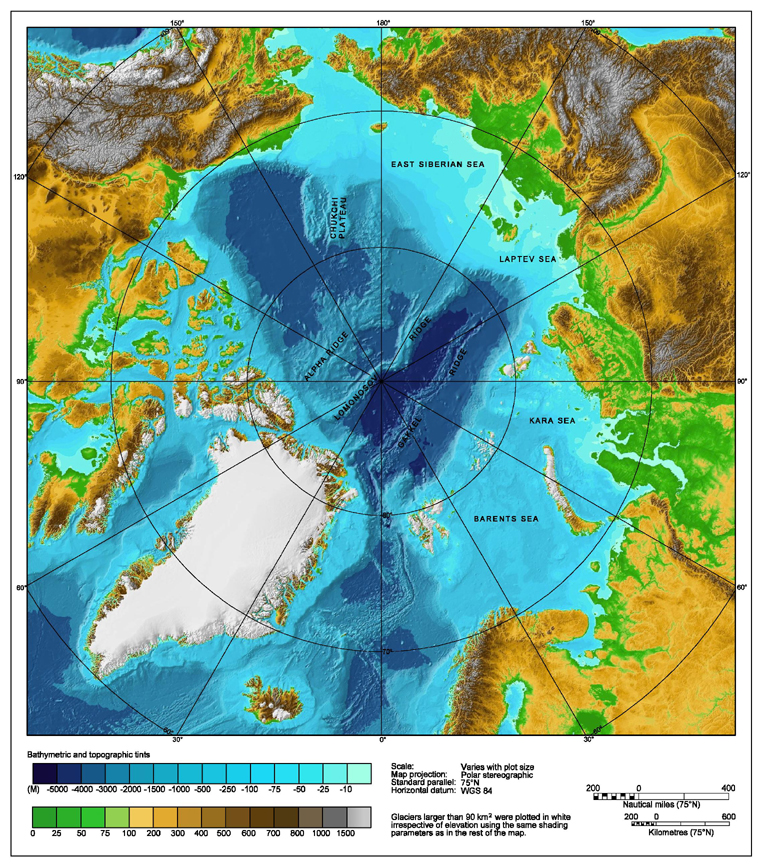
The expedition, part of the Russian program for the 2007–2008 International Polar Year, used the Akademik Fedorov research ship, with both MIR submersibles on board and the nuclear-powered icebreaker Rossiya led it through the Arctic ice. The ships had two Mi-8 helicopters and geological probe devices, and Il-18 aircraft with gravimetric devices. Its aim was to investigate the structure and evolution of the Earth's crust in the Arctic regions neighbouring Eurasia, such as the regions of Mendeleev Ridge, Alpha Ridge and Lomonosov Ridge, to discover whether they are linked with the Siberian shelf.
The base ship Akademik Fedorov left Saint Petersburg on July 10, 2007, for the expedition. Off Baltiysk, it took aboard the two MIR Deep Submergence Vehicles manufactured by the Finnish company Rauma Oceanics from Akademik Mstislav Keldysh On July 22 the vessel arrived at Murmansk, and sailed for the North Pole three days later, behind the nuclear icebreaker Rossiya. After five hours, the Akademik Fedorov began drifting in the Barents Sea because the electric motor driving its propeller failed. The Rossiya, 20 hours ahead by that time, turned to help. Nine hours later the crew of Akademik Fedorov repaired the motor and the ship continued its voyage, staying close to the Rossiya. On July 27 The icebreaker landed a group of marine biologists on the Kheysa island, the site of Russia's Krenkel observatory to conduct research for the International Polar Year.
On July 29 the Akademik Fedorov approached a large ice-hole, surrounded by thick ice at 82°29′N 64°28′E / 82.483°N 64.467°E, 47 miles (76 km) north of Franz Josef Land. There, the submersibles, each with one person on board, performed test dives. Anatoly Sagalevich took the MIR-1 down at 9:36 Moscow Time and Yevgeny Chernyaev followed at the controls of MIR-2 at 10:00. At 10:32 MIR-1 reached the seabed at a depth of 1,311 metres (4,301 ft), and by 11:10 MIR-2 also was at the ocean bottom. Both surfaced at 14:20.
Descents were carried out on August 2, 2007, in both MIR Deep Submergence Vehicles. The MIR-1's crew consisted of pilot Anatoly Sagalevich (researcher of the Oceanology Institute), Russian polar explorer Arthur Chilingarov and businessman Vladimir Gruzdev. The MIR-2's crew comprised pilot Yevgeny Chernyaev of Russia, Australian adventurer Mike McDowell, and Swede Frederik Paulsen Jr., head of Ferring Pharmaceuticals).
MIR-1 began its dive at 9:28 Moscow Time and at 12:08 reached the seabed 4,261 metres (13,980 ft) below the North Pole. MIR-2 began its dive at 9:47 and at 12:35 reached the seabed 4,302 metres (14,114 ft) down. At 12:35 the bathyscaphes were 500 metres (1,600 ft) apart and MIR-1 moved near MIR-2. At 13:46 both submersibles began to ascend, with MIR-1 surfacing at 18:08 and MIR-2 at 19:15.
On the seabed, 4,261 metres (13,980 ft) below the Polar ice, MIR-1 planted a 1-metre (3 ft 3 in) tall titanium Russian flag, made at Kaliningrad's "Fakel" 'design bureau.' It also left a time capsule, containing a message for future generations and a flag of the pro-President Vladimir Putin United Russia party. Soil and water samples of the seabed were taken during the mission.
Hub AI
Arktika 2007 AI simulator
(@Arktika 2007_simulator)
Arktika 2007
Arktika 2007 (Russian: Российская полярная экспедиция "Арктика-2007") was a 2007 expedition in which Russia performed the first ever crewed descent to the ocean bottom at the North Pole, as part of research related to the 2001 Russian territorial claim, one of many territorial claims in the Arctic, made possible, in part, because of Arctic shrinkage. As well as dropping a titanium tube containing the Russian flag, the submersibles collected specimens of Arctic flora and fauna and apparently recorded video of the dives. The "North Pole-35" (abbreviated as "NP-35") manned drifting ice station was established.
On January 10, 2008, three expedition members who performed the descent to the ocean bottom at the North Pole, (Anatoly Sagalevich, Yevgeny Chernyaev, and Artur Chilingarov) were awarded the title Hero of the Russian Federation "for courage and heroism showed in extremal conditions and successful completion of High-Latitude Arctic Deep-Water Expedition."
The expedition, part of the Russian program for the 2007–2008 International Polar Year, used the Akademik Fedorov research ship, with both MIR submersibles on board and the nuclear-powered icebreaker Rossiya led it through the Arctic ice. The ships had two Mi-8 helicopters and geological probe devices, and Il-18 aircraft with gravimetric devices. Its aim was to investigate the structure and evolution of the Earth's crust in the Arctic regions neighbouring Eurasia, such as the regions of Mendeleev Ridge, Alpha Ridge and Lomonosov Ridge, to discover whether they are linked with the Siberian shelf.
The base ship Akademik Fedorov left Saint Petersburg on July 10, 2007, for the expedition. Off Baltiysk, it took aboard the two MIR Deep Submergence Vehicles manufactured by the Finnish company Rauma Oceanics from Akademik Mstislav Keldysh On July 22 the vessel arrived at Murmansk, and sailed for the North Pole three days later, behind the nuclear icebreaker Rossiya. After five hours, the Akademik Fedorov began drifting in the Barents Sea because the electric motor driving its propeller failed. The Rossiya, 20 hours ahead by that time, turned to help. Nine hours later the crew of Akademik Fedorov repaired the motor and the ship continued its voyage, staying close to the Rossiya. On July 27 The icebreaker landed a group of marine biologists on the Kheysa island, the site of Russia's Krenkel observatory to conduct research for the International Polar Year.
On July 29 the Akademik Fedorov approached a large ice-hole, surrounded by thick ice at 82°29′N 64°28′E / 82.483°N 64.467°E, 47 miles (76 km) north of Franz Josef Land. There, the submersibles, each with one person on board, performed test dives. Anatoly Sagalevich took the MIR-1 down at 9:36 Moscow Time and Yevgeny Chernyaev followed at the controls of MIR-2 at 10:00. At 10:32 MIR-1 reached the seabed at a depth of 1,311 metres (4,301 ft), and by 11:10 MIR-2 also was at the ocean bottom. Both surfaced at 14:20.
Descents were carried out on August 2, 2007, in both MIR Deep Submergence Vehicles. The MIR-1's crew consisted of pilot Anatoly Sagalevich (researcher of the Oceanology Institute), Russian polar explorer Arthur Chilingarov and businessman Vladimir Gruzdev. The MIR-2's crew comprised pilot Yevgeny Chernyaev of Russia, Australian adventurer Mike McDowell, and Swede Frederik Paulsen Jr., head of Ferring Pharmaceuticals).
MIR-1 began its dive at 9:28 Moscow Time and at 12:08 reached the seabed 4,261 metres (13,980 ft) below the North Pole. MIR-2 began its dive at 9:47 and at 12:35 reached the seabed 4,302 metres (14,114 ft) down. At 12:35 the bathyscaphes were 500 metres (1,600 ft) apart and MIR-1 moved near MIR-2. At 13:46 both submersibles began to ascend, with MIR-1 surfacing at 18:08 and MIR-2 at 19:15.
On the seabed, 4,261 metres (13,980 ft) below the Polar ice, MIR-1 planted a 1-metre (3 ft 3 in) tall titanium Russian flag, made at Kaliningrad's "Fakel" 'design bureau.' It also left a time capsule, containing a message for future generations and a flag of the pro-President Vladimir Putin United Russia party. Soil and water samples of the seabed were taken during the mission.
Recent media