Hubbry Logo
Audre LordeAudre LordeMain
Open search
Audre Lorde
Community hub
Audre Lorde
logo
8 pages, 0 posts
0 subscribers
Be the first to start a discussion here.
Audre Lorde
Audre Lorde
from Wikipedia

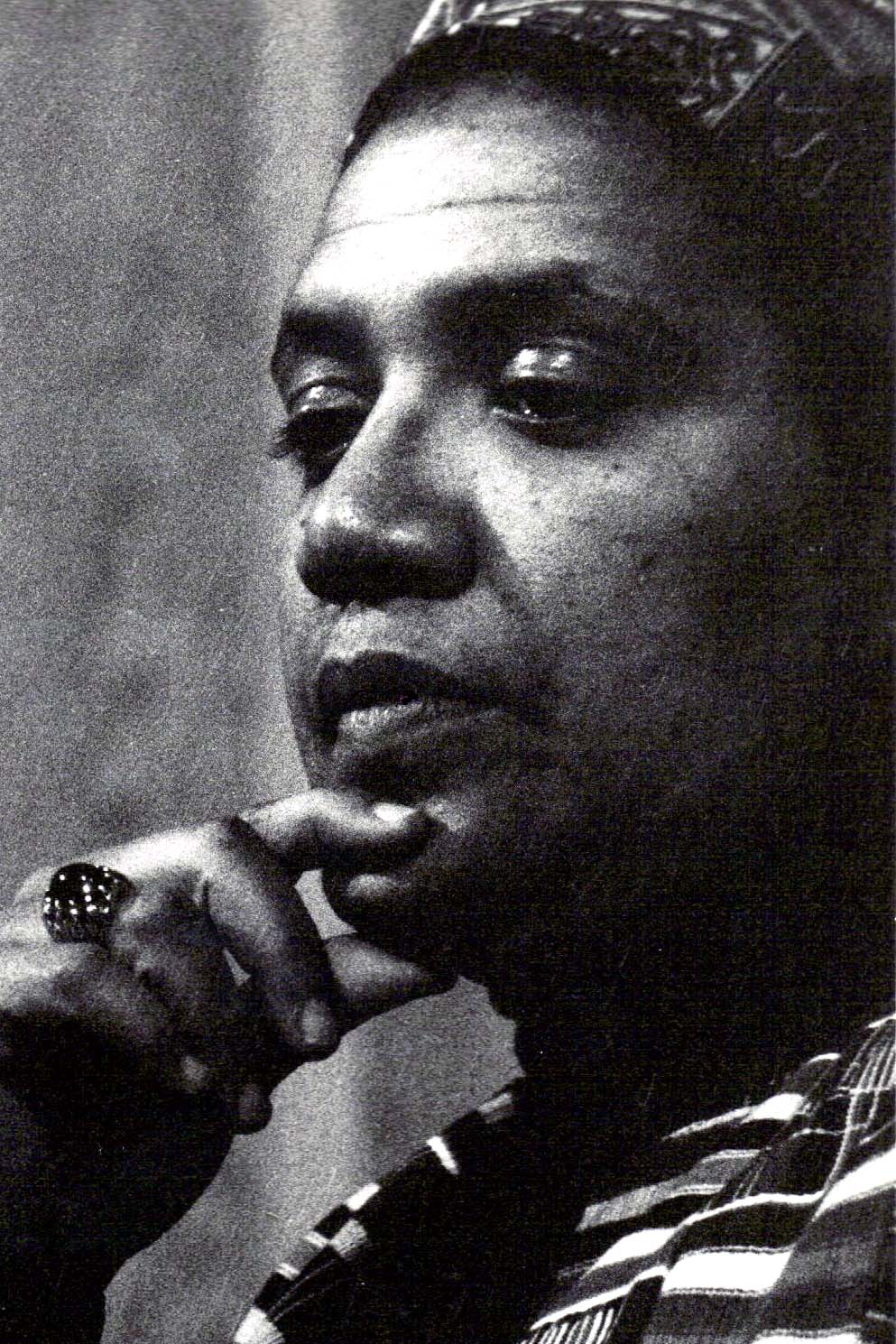
Audre Lorde (/ˈɔːdri ˈlɔːrd/ AW-dree LORD; born Audrey Geraldine Lorde; February 18, 1934 – November 17, 1992) was an American writer, professor, philosopher, intersectional feminist, poet, and civil rights activist. She was a self-described "Black, lesbian, feminist, socialist, mother, warrior, poet" who dedicated her life and talents to confronting all forms of injustice and oppression. She believed that there could be "no hierarchy of oppressions" among "those who share the goals of liberation and a workable future for our children".[2][3]

Key Information

As a poet, she is well known for technical mastery and emotional expression, as well as her poems that express anger and outrage at civil and social injustices she observed throughout her life. She was the recipient of national and international awards and the founding member of Kitchen Table: Women of Color Press.[4] As a spoken word artist, her delivery has been called powerful, melodic, and intense by the Poetry Foundation.[3] Her poems and prose largely deal with issues related to civil rights, feminism, lesbianism, illness, disability, and the exploration of Black female identity.[5][3][6]

Early life

[edit]

Audre Lorde was born on February 18, 1934, in New York City to Caribbean immigrants Frederick Byron Lorde and Linda Gertrude Belmar Lorde. Her father, Frederick Byron Lorde (Byron), was born on April 20, 1898, in Barbados. Her mother, Linda Gertrude Belmar Lorde, was born in 1902 on the island Carriacou in Grenada. Lorde's mother was a light-skinned Black woman but sometimes passed as Spanish,[7] for employment opportunities. Lorde's father was darker than the Belmar family liked, and they only allowed the couple to marry because of Byron's charm, ambition, and persistence.[8] After their immigration, the new family settled in Harlem, a diverse neighborhood in upper Manhattan, New York. Lorde was the youngest of three daughters. Lorde was nearsighted to the point of being legally blind. At the age of four she learned to read at the same time she learned to talk, with the help of Augusta Braxton Baker, then children's librarian at the 135th Street Branch of the New York Public Library.[9] Her mother taught her to write at around the same time.

Born Audrey Geraldine Lorde, she chose to drop the "y" from her first name while still a child, explaining in Zami: A New Spelling of My Name that she was more interested in the artistic symmetry of the "e"-endings in the two side-by-side names "Audre Lorde" than in spelling her name the way her parents had intended.[10][7]

Lorde's relationship with her parents was difficult from a young age. She spent very little time with her father and mother, who were both busy maintaining their property management business in the tumultuous economy after the Great Depression. When she did see them, they were often cold or emotionally distant. In particular, Lorde's relationship with her mother, who was deeply suspicious of people with darker skin than hers (which Lorde had) and the outside world in general, was characterized by "tough love" and strict adherence to family rules.[11] Lorde's difficult relationship with her mother figured prominently in her later poems, such as Coal's "Story Books on a Kitchen Table"[3]

As a child, Lorde struggled with communication, and came to appreciate the power of poetry as a form of expression.[12] She even described herself as thinking in poetry.[13] She memorized a great deal of poetry, and would use it to communicate, to the extent that, "If asked how she was feeling, Audre would reply by reciting a poem."[14] Around the age of twelve, she began writing her own poetry and connecting with others at her school who were considered "outcasts", as she felt she was.[14]

Raised Catholic, Lorde attended parochial schools before moving on to Hunter College High School, a secondary school for intellectually gifted students. Poet Diane di Prima was a classmate and friend. While attending Hunter, Lorde published her first poem in Seventeen magazine after her school's literary journal rejected it for being inappropriate. Also in high school, Lorde participated in poetry workshops sponsored by the Harlem Writers Guild, but noted that she always felt like somewhat of an outcast from the Guild. She felt she was not accepted because she "was both crazy and queer but [they thought] I would grow out of it all".[12][15][16] Lorde graduated from Hunter College High School in 1951.

Zami places her father's death from a stroke around New Year's 1953.[17]

Career

[edit]
Audre Lorde. Photograph by Elsa Dorfman.

In 1954, she spent a pivotal year as a student at the National Autonomous University of Mexico, a period she described as a time of affirmation and renewal. During this time, she confirmed her identity on personal and artistic levels as both a lesbian and a poet.[14] On her return to New York, Lorde attended Hunter College, and graduated in the class of 1959. While there, she worked as a librarian, continued writing, and became an active participant in the gay culture of Greenwich Village. She furthered her education at the Columbia University School of Library Service, earning a master's degree in library science in 1961. During this period, she worked as a public librarian in nearby Mount Vernon, New York.[14]

In 1968 Lorde was writer-in-residence at Tougaloo College in Mississippi.[18] Lorde's time at Tougaloo College, like her year at the National University of Mexico, was a formative experience for her as an artist. She led workshops with her young, black undergraduate students, many of whom were eager to discuss the civil rights issues of that time. Through her interactions with her students, she reaffirmed her desire not only to live out her "crazy and queer" identity, but also to devote attention to the formal aspects of her craft as a poet. Her book of poems, Cables to Rage, came out of her time and experiences at Tougaloo.[12]

A three-story, gray-blue, Neo-Colonial style home with a gabled roofline, open porch, columns, and a pediment with a sunburst decoration. Picture includes shrubs and a trashcan on the front lawn, and the third story is partially obscured by leaves.
Audre Lorde's residence in Stapleton Heights, Staten Island, now a New York City Historical Landmark.

From 1972 to 1987, Lorde resided on Staten Island. During that time, in addition to writing and teaching she co-founded Kitchen Table: Women of Color Press.[19]

In 1977, Lorde became an associate of the Women's Institute for Freedom of the Press (WIFP).[20] WIFP is an American nonprofit publishing organization. The organization works to increase communication between women and connect the public with forms of women-based media.

Lorde taught in the Education Department at Lehman College from 1969 to 1970,[21] then as a professor of English at John Jay College of Criminal Justice (both part of the City University of New York, CUNY) from 1970 to 1981. There, she fought for the creation of a black studies department.[22] In 1981, she went on to teach at her alma mater, Hunter College (also CUNY), as the distinguished Thomas Hunter chair.[23] As a queer Black woman, she was an outsider in a white male dominated field and her experiences in this environment deeply influenced her work. New fields such as African American studies and women's studies advanced the topics that scholars were addressing and garnered attention to groups that had previously been rarely discussed. With this newfound academic environment, Lorde was inspired to not only write poetry but also essays and articles about queer, feminist, and African American studies.[24]

In 1980, together with Barbara Smith and Cherríe Moraga, she co-founded Kitchen Table: Women of Color Press, the first U.S. publisher for women of color.[1]

In 1981, Lorde was among the founders of the Women's Coalition of St. Croix,[12] an organization dedicated to assisting women who have survived sexual abuse and intimate partner violence. In the late 1980s, she also helped establish Sisterhood in Support of Sisters (SISA) in South Africa to benefit black women who were affected by apartheid and other forms of injustice.[3]

In 1985, Audre Lorde was a part of a delegation of black women writers who had been invited to Cuba. The trip was sponsored by The Black Scholar and the Union of Cuban Writers. She embraced the shared sisterhood as black women writers. They visited Cuban poets Nancy Morejon and Nicolas Guillen. They discussed whether the Cuban revolution had truly changed racism and the status of lesbians and gays there.[25]

The Berlin years

[edit]
Lorde in Berlin, pictured with May Ayim.

In 1984, Lorde started a visiting professorship in West Berlin at the Free University of Berlin. She was invited by FU lecturer Dagmar Schultz who had met her at the UN "World Women's Conference" in Copenhagen in 1980.[26] During her time in Germany, Lorde became an influential part of the then-nascent Afro-German movement.[27] Together with a group of black women activists in Berlin, Audre Lorde coined the term "Afro-German" in 1984 and, consequently, gave rise to the Black movement in Germany.[28] During her many trips to Germany, Lorde became a mentor to a number of women, including May Ayim, Ika Hügel-Marshall, and Helga Emde.[29][30] Instead of fighting systemic issues through violence, Lorde thought that language was a powerful form of resistance and encouraged the women of Germany to speak up instead of fight back.[31] Her impact on Germany reached more than just Afro-German women; Lorde helped increase awareness of intersectionality across racial and ethnic lines.[29] Audre Lorde provided a safe space for these Black German women to process and handle their emotions in any way that they seemed fit. To be othered by mainstream German society, and to be defined through others' perceptions of one's apparent “faults” (mixed heritage) can destroy one's sense of self. In addition, many of these women weren't able to fully express all facets of their being and found being pigeonholed by society immensely restrictive. Audre Lorde was able to begin to bridge the gap between these women's perceived identity by the German public and their self-actualized being. Lorde created a space for which these women could discuss their experiences and grow a Black German epistemology. This is not to say that Lorde single-handedly started this identification of a pro-Black German identity but more so that she offered these German women a model for kinship, self-naming, and intellectual activism.[32]

In December 1989, the month after the fall of the Berlin Wall, Lorde wrote her poem "East Berlin 1989"[33] conveying her views of this historic event. In the poem, while Lorde voices her alarm about increased violent racism against Afro-Germans and other Black people in Berlin due to the new free movement of East Germans, she also more broadly and fundamentally decries the triumph of capitalist democratic freedoms and Western influences, demonstrating her deep skepticism about, and resistance to, the "Peaceful Revolution" that would lead to the transition of Communist East Germany to parliamentary liberal democracy, market capitalism, and ultimately German reunification.

Lorde's impact on the Afro-German movement was the focus of the 2012 documentary by Dagmar Schultz. Audre Lorde: The Berlin Years 1984–1992 was accepted by the Berlin Film Festival, Berlinale, and had its World Premiere at the 62nd Annual Festival in 2012.[34] The film has gone on to film festivals around the world, and continued to be viewed at festivals until 2018.[35] The documentary has received seven awards, including Winner of the Best Documentary Audience Award 2014 at the 15th Reelout Queer Film + Video Festival, the Gold Award for Best Documentary at the International Film Festival for Women, Social Issues, and Zero Discrimination, and the Audience Award for Best Documentary at the Barcelona International LGBT Film Festival.[36] Audre Lorde: The Berlin Years revealed the previous lack of recognition that Lorde received for her contributions towards the theories of intersectionality.[27]

Lorde was State Poet of New York from 1991 to 1992.

Poetry

[edit]
Audre Lorde (left) with writers Meridel Le Sueur (middle) and Adrienne Rich (right) at a writing workshop in Austin, Texas, 1980

Lorde focused her discussion of difference not only on differences between groups of women but between conflicting differences within the individual. "I am defined as other in every group I'm part of," she declared. "Yet without community," Lorde wrote, "there is certainly no liberation, no future, only the most vulnerable and temporary armistice between me and my oppression".[37]: 12–13  She described herself both as a part of a "continuum of women"[37]: 17  and a "concert of voices" within herself.[37]: 31 

Her conception of her many layers of selfhood is replicated in the multi-genres of her work. Critic Carmen Birkle wrote: "Her multicultural self is thus reflected in a multicultural text, in multi-genres, in which the individual cultures are no longer separate and autonomous entities but melt into a larger whole without losing their individual importance."[38] Her refusal to be placed in a particular category, whether social or literary, was characteristic of her determination to come across as an individual rather than a stereotype. Lorde considered herself a "lesbian, mother, warrior, poet" and used poetry to get this message across.[3]

Early works

[edit]

Lorde's poetry was published very regularly during the 1960s – in Langston Hughes' 1962 New Negro Poets, USA; in several foreign anthologies; and in black literary magazines. During this time, she was also politically active in civil rights, anti-war, and feminist movements.

In 1968, Lorde published The First Cities, her first volume of poems. It was edited by Diane di Prima, a former classmate and friend from Hunter College High School. The First Cities has been described as a "quiet, introspective book",[3] and Dudley Randall, a poet and critic, asserted in his review of the book that Lorde "does not wave a black flag, but her Blackness is there, implicit, in the bone".[39]

Her second volume, Cables to Rage (1970), which was mainly written during her tenure as poet-in-residence at Tougaloo College in Mississippi, addressed themes of love, betrayal, childbirth, and the complexities of raising children. It is particularly noteworthy for the poem "Martha", in which Lorde openly confirms her homosexuality for the first time in her writing: "[W]e shall love each other here if ever at all".

Nominated for the National Book Award for poetry in 1974,[40] From a Land Where Other People Live (Broadside Press) shows Lorde's personal struggles with identity and anger at social injustice. The volume deals with themes of anger, loneliness, and injustice, as well as what it means to be a black woman, mother, friend, and lover.[14]

1974 saw the release of New York Head Shop and Museum, which gives a picture of Lorde's New York through the lenses of both the civil rights movement and her own restricted childhood:[3] stricken with poverty and neglect and, in Lorde's opinion, in need of political action.[14]

Wider recognition

[edit]

Despite the success of these volumes, it was the release of Coal in 1976 that established Lorde as an influential voice in the Black Arts Movement, and the large publishing house behind it – Norton – helped introduce her to a wider audience. The volume includes poems from both The First Cities and Cables to Rage, and it unites many of the themes Lorde would become known for throughout her career: her rage at racial injustice, her celebration of her black identity, and her call for an intersectional consideration of women's experiences. Lorde followed Coal up with Between Our Selves (also in 1976) and Hanging Fire (1978).

In Lorde's volume The Black Unicorn (1978), she describes her identity within the mythos of African female deities of creation, fertility, and warrior strength. This reclamation of African female identity both builds and challenges existing Black Arts ideas about pan-Africanism. While writers like Amiri Baraka and Ishmael Reed utilized African cosmology in a way that "furnished a repertoire of bold male gods capable of forging and defending an aboriginal Black universe," in Lorde's writing "that warrior ethos is transferred to a female vanguard capable equally of force and fertility".[41]

Lorde's poetry became more open and personal as she grew older and became more confident in her sexuality. In Sister Outsider: Essays and Speeches, Lorde states, "Poetry is the way we help give name to the nameless so it can be thought... As they become known to and accepted by us, our feelings and the honest exploration of them become sanctuaries and spawning grounds for the most radical and daring ideas."[42] Sister Outsider also elaborates Lorde's challenge to European-American traditions.[43]

Prose

[edit]

The Cancer Journals (1980) and A Burst of Light (1988) both use non-fiction prose, including essays and journal entries, to bear witness to, explore, and reflect on Lorde's diagnosis, treatment, recovery from breast cancer, and ultimately fatal recurrence with liver metastases.[12][44] In both works, Lorde deals with Western notions of illness, disability, treatment, cancer and sexuality, and physical beauty and prosthesis, as well as themes of death, fear of mortality, survival, emotional healing, and inner power.[14]

Lorde's deeply personal book Zami: A New Spelling of My Name (1982), subtitled a "biomythography", chronicles her childhood and adulthood. The narrative deals with the evolution of Lorde's sexuality and self-awareness.[12]

Sister Outsider

[edit]

In Sister Outsider: Essays and Speeches (1984), Lorde asserts the necessity of communicating the experience of marginalized groups to make their struggles visible in a repressive society.[12] She emphasizes the need for different groups of people (particularly White women and African-American women) to find common ground in their experiences in life, but also to face difference directly, and use it as a source of strength rather than alienation. She repeatedly emphasizes the need for community in the struggle to build a better world. How to constructively channel the anger and rage incited by oppression is another prominent theme throughout her works, and in this collection in particular.[14]

Her most famous essay, "The Master's Tools Will Never Dismantle the Master's House", is included in Sister Outsider. Lorde questions the scope and ability for change to be instigated when examining problems through a racist, patriarchal lens. She insists that women see differences between other women not as something to be tolerated, but something that is necessary to generate power and to actively "be" in the world. This will create a community that embraces differences, which will ultimately lead to liberation. Lorde elucidates, "Divide and conquer, in our world, must become define and empower."[45] Also, people must educate themselves about the oppression of others because expecting a marginalized group to educate the oppressors is the continuation of racist, patriarchal thought. She explains that this is a major tool utilized by oppressors to keep the oppressed occupied with the master's concerns. She concludes that to bring about real change, we cannot work within the racist, patriarchal framework because change brought about in that will not remain.[45]

Also in Sister Outsider is the essay, "The Transformation of Silence into Language and Action". Lorde discusses the importance of speaking, even when afraid, because otherwise silence immobilizes and chokes us. Many people fear to speak the truth because of the real risks of retaliation, but Lorde warns, "Your silence does not protect you." Lorde emphasizes that "the transformation of silence into language and action is a self-revelation, and that always seems fraught with danger."[46] People are afraid of others' reactions for speaking, but mostly for demanding visibility, which is essential to live. Lorde adds, "We can sit in our corners mute forever while our sisters and ourselves are wasted, while our children are distorted and destroyed, while our earth is poisoned; we can sit in our safe corners mute as bottles, and we will still be no less afraid."[46] "People are taught to respect their fear of speaking more than silence, but ultimately, the silence will choke us anyway, so we might as well speak the truth." Lorde writes that we can learn to speak even when we are afraid.

In "Age, Race, Class, and Sex: Women Redefining Difference", Lorde emphasizes the importance of educating others. However, she stresses that in order to educate others, one must first be educated. Empowering people who are doing the work does not mean using privilege to overstep and overpower such groups; but rather, privilege must be used to hold door open for other allies. Lorde describes the inherent problems within society by saying, "racism, the belief in the inherent superiority of one race over all others and thereby the right to dominance. Sexism, the belief in the inherent superiority of one sex over the other and thereby the right to dominance. Ageism. Heterosexism. Elitism. Classism." Lorde finds herself among some of these "deviant" groups in society, which set the tone for the status quo and what "not to be" in society.[47] Lorde argues that women feel pressure to conform to their "oneness" before recognizing the separation among them due to their "manyness", or aspects of their identity. She stresses that this behavior is exactly what "explains feminists' inability to forge the kind of alliances necessary to create a better world".[48]

In relation to non-intersectional feminism in the United States, Lorde famously said:[43][49]

Those of us who stand outside the circle of this society's definition of acceptable women; those of us who have been forged in the crucibles of difference -- those of us who are poor, who are lesbians, who are Black, who are older -- know that survival is not an academic skill. It is learning how to take our differences and make them strengths. For the master's tools will never dismantle the master's house. They may allow us temporarily to beat him at his own game, but they will never enable us to bring about genuine change. And this fact is only threatening to those women who still define the master's house as their only source of support.

— Audre Lorde, The Master's Tools Will Never Dismantle the Master's House, Sister Outsider: Essays and Speeches (1984)

Film

[edit]

Lorde had several films that highlighted her journey as an activist in the 1980s and 1990s.[50]

The Berlin Years: 1984–1992 documented Lorde's time in Germany as she led Afro-Germans in a movement that would allow black people to establish identities for themselves outside of stereotypes and discrimination. After a long history of systemic racism in Germany, Lorde introduced a new sense of empowerment for minorities. As seen in the film, she walks through the streets with pride despite stares and words of discouragement. Including moments like these in a documentary was important for people to see during that time. It inspired them to take charge of their identities and discover who they are outside of the labels put on them by society. The film also educates people on the history of racism in Germany. This enables viewers to understand how Germany reached this point in history and how the society developed. Through her promotion of the study of history and her example of taking her experiences in her stride, she influenced people of many different backgrounds.[51]

The film documents Lorde's efforts to empower and encourage women to start the Afro-German movement. What began as a few friends meeting in a friend's home to get to know other black people, turned into what is now known as the Afro-German movement. Lorde inspired black women to refute the designation of "Mulatto", a label which was imposed on them, and switch to the newly coined, self-given "Afro-German", a term that conveyed a sense of pride. Lorde inspired Afro-German women to create a community of like-minded people. Some Afro-German women, such as Ika Hügel-Marshall, had never met another black person and the meetings offered opportunities to express thoughts and feelings.[52]

Body of a Poet: 1995 was written as a tribute biopic written to honor Lorde. The film centers on the efforts of a young group of lesbians of color. The film celebrates the life and work of Audre Lorde from her birth to her death.[53]

Theory

[edit]

Her writings are based on the "theory of difference", the idea that the binary opposition between men and women is overly simplistic; although feminists have found it necessary to present the illusion of a solid, unified whole, the category of women itself is full of subdivisions.[54]

Lorde identified issues of race, class, age and ageism, sex and sexuality and, later in her life, chronic illness and disability; the latter becoming more prominent in her later years as she lived with cancer. She wrote of all of these factors as fundamental to her experience of being a woman. She argued that, although differences in gender have received all the focus, it is essential that these other differences are also recognized and addressed. "Lorde," writes Carmen Birkle [de], "puts her emphasis on the authenticity of experience. She wants her difference acknowledged but not judged; she does not want to be subsumed into the one general category of 'woman.'"[55] This theory is today known as intersectionality.

While acknowledging that the differences between women are wide and varied, most of Lorde's works are concerned with two subsets that concerned her primarily – race and sexuality. In Ada Gay Griffin and Michelle Parkerson's documentary A Litany for Survival: The Life and Work of Audre Lorde, Lorde says, "Let me tell you first about what it was like being a Black woman poet in the '60s, from jump. It meant being invisible. It meant being really invisible. It meant being doubly invisible as a Black feminist woman and it meant being triply invisible as a Black lesbian and feminist".[56]

Front cover art for the 1984 publication of the book Sister Outsider by Audre Lorde.

In her essay "The Erotic as Power", written in 1978 and collected in Sister Outsider, Lorde theorizes the Erotic as a site of power for women only when they learn to release it from its suppression and embrace it, without the sexualized meaning it often holds in mainstream society. She proposes that the Erotic needs to be explored and experienced wholeheartedly, because it exists not only in reference to sexuality and the sexual, but also as a feeling of enjoyment, love, and thrill that is felt towards any task or experience that satisfies women in their lives, be it reading a book or loving one's job.[57] She dismisses "the false belief that only by the suppression of the erotic within our lives and consciousness can women be truly strong. But that strength is illusory, for it is fashioned within the context of male models of power."[58] She explains how patriarchal society has misnamed it and used it against women, causing women to fear it. Women also fear it because the erotic is powerful and a deep feeling. Women must share each other's power rather than use it without consent, which is abuse. They should do it as a method to connect everyone in their differences and similarities. Utilizing the erotic as power allows women to use their knowledge and power to face the issues of racism, patriarchy, and our anti-erotic society.[57] She claims that the erotic can be used as a source of power for women to live with passion in all areas of their life. With the erotic guiding life, Lorde encourages women to use the erotic as a compass to identify what holds value in women's lives. Furthermore, Lorde criticizes the idea of compulsory heterosexuality and the idea that women's happiness will come through marriage, god, or religion. The idea of the erotic will empower women to not settle for what is conventionally expected or safe leaning into the idea of resisting patriarchal values put in place over women and their sexuality. Lorde sees the suppression of the erotic or conformity to heterosexual norms as a form of control over women. In order to assume control over oneself, she urges women to reclaim the erotic and assert control. She erases the erotic differences that lie between varying sexualities in order to promote these desires as a creative force for revolutionary change.[57] While rejecting compulsory heterosexuality, this is a prevalent motif in Uses of the Erotic, and it still carries some heteronormative undertones. The erotic Lorde proposes both promotes this ideal, as "the aim of each thing which we do is to make our lives and the lives of our children richer and more possible. Within the celebration of the erotic in all our endeavours, my work becomes a conscious decision - a longed-for bed which I enter gratefully and from which I rise up empowered," explaining how wielding the erotic as preserving the future for women and children alike.[59] Another feminist philosopher, Lee Edelman, discusses the culture of heteronormativity as a structure upheld through reproduction and the perception of children as the future which relates to this quote as lending to heteronormative culture, despite her rejection of it. Lorde also lends to this reproductive theory by her establishing the root of the erotic as a, “deeply female and spiritual plane, firmly rooted in the power of our unexpressed or unrecognized feeling,” imbuing to women that it is inherent to their womanhood. This supports a binary reality by asserting an essentialist view of gender and sex. Essentialism is debated among third-wave feminists and illustrated how intersectionality in third-wave feminism is approached differently than that of fourth-wave feminism.

Feminist thought

[edit]

Lorde set out to confront issues of racism in feminist thought. She maintained that a great deal of the scholarship of White feminists served to augment the oppression of black women, a conviction that led to angry confrontation, most notably in a blunt open letter addressed to the fellow radical lesbian feminist Mary Daly, to which Lorde claimed she received no reply.[60] Daly's reply letter to Lorde,[61] dated four months later, was found in 2003 in Lorde's files after she died.[62]

This fervent disagreement with notable White feminists furthered Lorde's persona as an outsider: "In the institutional milieu of black feminist and black lesbian feminist scholars ... and within the context of conferences sponsored by White feminist academics, Lorde stood out as an angry, accusatory, isolated black feminist lesbian voice".[63]

The criticism was not one-sided: many White feminists were angered by Lorde's brand of feminism. In her 1984 essay "The Master's Tools Will Never Dismantle the Master's House",[64] Lorde attacked what she believed was underlying racism within feminism, describing it as unrecognized dependence on the patriarchy. She argued that, by denying difference in the category of women, White feminists merely furthered old systems of oppression and that, in so doing, they were preventing any real, lasting change. Her argument aligned White feminists who did not recognize race as a feminist issue with White male slave-masters, describing both as "agents of oppression".[65]

Lorde's comments on feminism

[edit]

Lorde held that the key tenets of feminism were that all forms of oppression were interrelated; creating change required taking a public stand; differences should not be used to divide; revolution is a process; feelings are a form of self-knowledge that can inform and enrich activism; and acknowledging and experiencing pain helps women to transcend it.[66]

In Lorde's "Age, Race, Class, and Sex: Women Redefining Difference", she writes: "Certainly there are very real differences between us of race, age, and sex. But it is not those differences between us that are separating us. It is rather our refusal to recognize those differences, and to examine the distortions which result from our misnaming them and their effects upon human behavior and expectation." More specifically she states: "As White women ignore their built-in privilege of Whiteness and define woman in terms of their own experience alone, then women of color become 'other'."[67] Self-identified as "a forty-nine-year-old Black lesbian feminist socialist mother of two,[67] Lorde is considered as "other, deviant, inferior, or just plain wrong"[67] in the eyes of the normative "White male heterosexual capitalist" social hierarchy. "We speak not of human difference, but of human deviance,"[67] she writes. In this respect, her ideology coincides with womanism, which "allows Black women to affirm and celebrate their color and culture in a way that feminism does not."

Lorde defines racism, sexism, ageism, heterosexism, elitism and classism altogether and explains that an "ism" is an idea that what is being privileged is superior and has the right to govern anything else.[citation needed] Lorde argues that a mythical norm is what all bodies should be. According to Lorde, the mythical norm of US culture is White, thin, male, young, heterosexual, Christian, financially secure.[67]

Influences on black feminism

[edit]

Lorde's work on black feminism continues to be examined by scholars today. Jennifer C. Nash examines how black feminists acknowledge their identities and find love for themselves through those differences.[68] Nash cites Lorde, who writes: "I urge each one of us here to reach down into that deep place of knowledge inside herself and touch that terror and loathing of any difference that lives there. See whose face it wears. Then the personal as the political can begin to illuminate all our choices."[68] Nash explains that Lorde is urging black feminists to embrace politics rather than fear it, which will lead to an improvement in society for them. Lorde adds, "Black women sharing close ties with each other, politically or emotionally, are not the enemies of Black men. Too frequently, however, some Black men attempt to rule by fear those Black women who are more ally than enemy."[69]

Lorde's 1979 essay "Sexism: An American Disease in Blackface" is a sort of rallying cry to confront sexism in the black community in order to eradicate the violence within it.[6] Lorde insists that the fight between black women and men must end to end racist politics.

In 1981, Lorde and a fellow writer friend, Barbara Smith founded Kitchen Table: Women of Color Press which was dedicated to helping other black feminist writers by provided resources, guidance and encouragement. Lorde encouraged those around her to celebrate their differences such as race, sexuality or class instead of dwelling upon them, and wanted everyone to have similar opportunities.

Personal identity

[edit]

Throughout Lorde's career she included the idea of a collective identity in many of her poems and books. She did not just identify with one category but she wanted to celebrate all parts of herself equally.[70]

She was known to describe herself as black, lesbian, political activist, feminist, poet, mother, etc. In her novel Zami: A New Spelling of My Name, Lorde focuses on how her many different identities shape her life and the different experiences she has because of them. She shows us that personal identity is found within the connections between seemingly different parts of one's life, based on experiences, and that one's authority to speak comes from these experiences. Personal identity is often associated with the visual aspect of a person, but as Lies Xhonneux theorizes when identity is singled down to just what you see, some people, even within minority groups, can become invisible.[71]

Lorde's work also focused on the importance of acknowledging, respecting and celebrating our differences as well as our commonalities in defining identity. In The Master's Tools, she wrote that many people choose to pretend the differences between us do not exist, or that these differences are insurmountable, adding, "Difference must be not merely tolerated, but seen as a fund of necessary polarities between which our creativity can spark like a dialectic."[72]

Lorde urged her readers to delve into and discover these differences, discussing how ignoring differences can lead to ignoring any bias and prejudice that might come with these differences, while acknowledging them can enrich our visions and our joint struggles. She wrote that we need to constructively deal with the differences between people and recognize that unity does not equal identicality. In I Am Your Sister, she urged activists to take responsibility for learning this, even if it meant self-teaching, "...which might be better used in redefining ourselves and devising realistic scenarios for altering the present and constructing the future".[73]

In The Cancer Journals she wrote "If I didn't define myself for myself, I would be crunched into other people's fantasies for me and eaten alive." She stressed the idea of personal identity being more than just what people see or think of a person, but something that must be defined by the individual, based on the person's experiences. "The House of Difference" is a phrase that originates in Lorde's identity theories. Her idea was that everyone is different from each other and it is these collective differences that make us who we are, instead of one small aspect in isolation. Focusing on all of the aspects of one's identity brings people together more than choosing one small piece to identify with.[74]

Lorde's works "Coal" and "The Black Unicorn" are two examples of poetry that encapsulates her black, feminist identity. Each poem focuses on the idea of identity, and how identity itself is not straightforward. Many Literary critics assumed that "Coal" was Lorde's way of shaping race in terms of coal and diamonds. Lorde herself stated that those interpretations were incorrect because identity was not so simply defined and her poems were not to be oversimplified.

While highlighting Lorde's intersectional points through a lens that focuses on race, gender, socioeconomic status/class and so on, we must also embrace one of her salient identities; Lorde was not afraid to assert her differences, such as skin color and sexual orientation, but used her own identity against toxic black male masculinity. Lorde used those identities within her work and used her own life to teach others the importance of being different. She was not ashamed to claim her identity and used it to her own creative advantages.

While highlighting Lorde's intersectional points through a lens that focuses on race, gender, socioeconomic status/class and so on, we must also embrace one of her salient identities, lesbianism. She was a lesbian and navigated spaces interlocking her womanhood, gayness and blackness in ways that trumped White feminism, predominantly White gay spaces and toxic black male masculinity. Lorde used those identities within her work and ultimately it guided her to create pieces that embodied lesbianism in a light that educated people of many social classes and identities on the issues black lesbian women face in society.

Contributions to the third-wave feminist discourse

[edit]

Around the 1960s, second-wave feminism became centered around discussions and debates about capitalism as a "biased, discriminatory, and unfair"[75] institution, especially within the context of the rise of globalization.

Third-wave feminism emerged in the 1990s after calls for "a more differentiated feminism" by first-world women of color and women in developing nations, such as Audre Lorde, who maintained her critiques of first-world feminism for tending to veer toward "third-world homogenization". This term was coined by radical dependency theorist, Andre Gunder Frank, to describe the inconsideration of the unique histories of developing countries (in the process of forming development agendas).[75] Audre Lorde was critical of the first-world feminist movement "for downplaying sexual, racial, and class differences" and the unique power structures and cultural factors which vary by region, nation, community, etc.[76]

Other feminist scholars of this period, like Chandra Talpade Mohanty, echoed Lorde's sentiments. Collectively they called for a "feminist politics of location, which theorized that women were subject to particular assemblies of oppression, and therefore that all women emerged with particular rather than generic identities".[76] While they encouraged a global community of women, Audre Lorde, in particular, felt the cultural homogenization of third-world women could only lead to a disguised form of oppression with its own forms of "othering" women in developing nations into figures of deviance and non-actors in theories of their own development.

Essay

[edit]

Originally published in Sister Outsider, a collection of essays and speeches, Audre Lorde cautioned against the "institutionalized rejection of difference" in her essay, "Age, Race, Class, and Sex: Women Redefining Difference", fearing that when "we do not develop tools for using human difference as a springboard for creative change within our lives[,] we speak not of human difference, but of human deviance".[43] Lorde saw this already happening with the lack of inclusion of literature from women of color in the second-wave feminist discourse. Poetry, considered lesser than prose and more common among lower class and working people, was rejected from women's magazine collectives which Lorde claims have robbed "women of each other's energy and creative insight". She found that "the literature of women of Color [was] seldom included in women's literature courses and almost never in other literature courses, nor in women's studies as a whole"[43] and pointed to the "othering" of women of color and women in developing nations as the reason. By homogenizing these communities and ignoring their difference, "women of Color become 'other,' the outside whose experiences and tradition is too 'alien' to comprehend",[43] and thus, seemingly unworthy of scholarly attention and differentiated scholarship. Lorde expands on this idea of rejecting the other saying that it is a product of our capitalistic society. Psychologically, people have been trained to react to discontentment by ignoring it. When ignoring a problem does not work, they are forced to either conform or destroy. She contends that people have reacted in this matter to differences in sex, race, and gender: ignore, conform, or destroy. Instead, she states that differences should be approached with curiosity or understanding. Lorde denounces the concept of having to choose a superior and an inferior when comparing two things. In the case of people, expression, and identity, she claims that there should be a third option of equality. However, Lorde emphasizes in her essay that differences should not be squashed or unacknowledged. There is no denying the difference in experience of black women and White women, as shown through example in Lorde's essay, but Lorde fights against the premise that difference is bad.

Audre Lorde called for the embracing of these differences. In the same essay, she proclaimed, "now we must recognize difference among women who are our equals, neither inferior nor superior, and devise ways to use each other's difference to enrich our visions and our joint struggles"[43] Doing so would lead to more inclusive and thus, more effective global feminist goals. Lorde writes that women must "develop new definitions of power and new patterns of relating across difference. The old definitions have not served us". By unification, Lorde writes that women can reverse the oppression that they face and create better communities for themselves and loved ones. Lorde theorized that true development in third-world communities would and even "the future of our earth may depend upon the ability of all women to identify and develop new definitions of power and new patterns of relating across differences."[43] In other words, the individual voices and concerns of women and color and women in developing nations would be the first step in attaining the autonomy with the potential to develop and transform their communities effectively in the age (and future) of globalization.

Speeches

[edit]

In a keynote speech at the National Third-World Gay and Lesbian Conference on October 13, 1979, titled, "When will the ignorance end?" Lorde reminded and cautioned the attendees, "There is a wonderful diversity of groups within this conference, and a wonderful diversity between us within those groups. That diversity can be a generative force, a source of energy fueling our visions of action for the future. We must not let diversity be used to tear us apart from each other, nor from our communities that is the mistake they made about us. I do not want us to make it ourselves... and we must never forget those lessons: that we cannot separate our oppressions, nor yet are they the same"[77] In other words, while common experiences in racism, sexism, and homophobia had brought the group together and that commonality could not be ignored, there must still be a recognition of their individualized humanity.

Years later, on August 27, 1983, Audre Lorde delivered an address as part of the "Litany of Commitment" at the March on Washington for Jobs and Freedom. "Today we march," she said, "lesbians and gay men and our children, standing in our own names together with all our struggling sisters and brothers here and around the world, in the Middle East, in Central America, in the Caribbean and South Africa, sharing our commitment to work for a joint livable future. We know we do not have to become copies of each other to be able to work together. We know that when we join hands across the table of our difference, our diversity gives us great power. When we can arm ourselves with the strength and vision from all of our diverse communities, then we will in truth all be free at last."[77]

Interview

[edit]

Afro-German feminist scholar and author Dr. Marion Kraft interviewed Audre Lorde in 1986 to discuss a number of her literary works and poems. In this interview, Audre Lorde articulated hope for the next wave of feminist scholarship and discourse. When asked by Kraft, "Do you see any development of the awareness about the importance of differences within the White feminist movement?" Lorde replied with both critiques and hope:[78]

Well, the feminist movement, the White feminist movement, has been notoriously slow to recognize that racism is a feminist concern, not one that is altruistic, but one that is part and parcel of feminist consciousness... I think, in fact, though, that things are slowly changing and that there are White women now who recognize that in the interest of genuine coalition, they must see that we are not the same. Black feminism is not White feminism in Blackface. It is an intricate movement coming out of the lives, aspirations, and realities of Black women. We share some things with White women, and there are other things we do not share. We must be able to come together around those things we share.

Miriam Kraft summarized Lorde's position when reflecting on the interview; "Yes, we have different historical, social, and cultural backgrounds, different sexual orientations; different aspirations and visions; different skin colors and ages. But we share common experiences and a common goal. Our experiences are rooted in the oppressive forces of racism in various societies, and our goal is our mutual concern to work toward 'a future which has not yet been' in Audre's words."[78]

Lorde and womanism

[edit]

Lorde's criticism of feminists of the 1960s identified issues of race, class, age, gender and sexuality. Similarly, author and poet Alice Walker coined the term "womanist" in an attempt to distinguish black female and minority female experience from "feminism". While "feminism" is defined as "a collection of movements and ideologies that share a common goal: to define, establish, and achieve equal political, economic, cultural, personal, and social rights for women" by imposing simplistic opposition between "men" and "women",[67] the theorists and activists of the 1960s and 1970s usually neglected the experiential difference caused by factors such as race and gender among different social groups.

Womanism and its ambiguity

[edit]

Womanism's existence naturally opens various definitions and interpretations. Alice Walker's comments on womanism, that "womanist is to feminist as purple is to lavender", suggests that the scope of study of womanism includes and exceeds that of feminism. In its narrowest definition, womanism is the black feminist movement that was formed in response to the growth of racial stereotypes in the feminist movement.

In a broad sense, however, womanism is "a social change perspective based upon the everyday problems and experiences of Black women and other women of minority demographics," but also one that "more broadly seeks methods to eradicate inequalities not just for Black women, but for all people" by imposing socialist ideology and equality. However, because womanism is open to interpretation, one of the most common criticisms of womanism is its lack of a unified set of tenets. It is also criticized for its lack of discussion of sexuality.

Lorde actively strove for the change of culture within the feminist community by implementing womanist ideology. In the journal "Anger Among Allies: Audre Lorde's 1981 Keynote Admonishing the National Women's Studies Association", it is stated that her speech contributed to communication with scholars' understanding of human biases. While "anger, marginalized communities, and US Culture" are the major themes of the speech, Lorde implemented various communication techniques to shift subjectivities of the "White feminist" audience.[79]

She further explained that "we are working in a context of oppression and threat, the cause of which is certainly not the angers which lie between us, but rather that virulent hatred leveled against all women, people of color, lesbians and gay men, poor people – against all of us who are seeking to examine the particulars of our lives as we resist our oppressions, moving towards coalition and effective action."[79]

Womanism and sexuality

[edit]

Contrary to this, Lorde was very open to her own sexuality and sexual awakening. In Zami: A New Spelling of My Name, her "biomythography" (a term coined by Lorde that combines "biography" and "mythology") she writes, "Years afterward when I was grown, whenever I thought about the way I smelled that day, I would have a fantasy of my mother, her hands wiped dry from the washing, and her apron untied and laid neatly away, looking down upon me lying on the couch, and then slowly, thoroughly, our touching and caressing each other's most secret places."[80] According to scholar Anh Hua, Lorde turns female abjection – menstruation, sexuality, and incest with the mother – into scenes of female relationship and connection.[80]

Lorde's impact on lesbian society has been significant.[81] Lorde donated some of her manuscripts and personal papers to the Lesbian Herstory Archives.[82]

Personal life

[edit]

In 1962, Lorde married attorney Edwin Rollins, who was a White, gay man.[3] Audre had been living openly as a lesbian since college, however due to LGBTQ+ discrimination, they both decided to remain closeted. Audre and Edwin maintained an open relationship, allowing each other to pursue same-sex relationships.[24] She and Rollins divorced in 1970 after having two children, Elizabeth and Jonathan. In 1966, Lorde became head librarian at Town School Library in New York City, where she remained until 1968.[14]

During her time in Mississippi in 1968, she met Frances Clayton, a White lesbian and professor of psychology who became her romantic partner until 1989. They raised Lorde's children together, and they lived openly as a lesbian couple.[83]

Lorde was briefly romantically involved with the sculptor and painter Mildred Thompson after meeting her in Nigeria at the Second World Black and African Festival of Arts and Culture (FESTAC 77). The two were involved during the time that Thompson lived in Washington, D.C.[83]

Lorde and her final life partner, black feminist Dr. Gloria Joseph, resided together on Joseph's native land of St. Croix. Lorde and Joseph had been seeing each other since 1981 [citation needed], and after Lorde's liver cancer diagnosis, she officially left Clayton for Joseph, moving to St. Croix in 1986. The couple remained together until Lorde's death. Together they founded several organizations such as the Che Lumumba School for Truth, Women's Coalition of St. Croix, U.S. Virgin Islands, Sisterhood in Support of Sisters in South Africa, and Doc Loc Apiary.[84]

Last years

[edit]

Lorde was first diagnosed with breast cancer in 1978 and underwent a mastectomy. Six years later, she found out her breast cancer had metastasized in her liver. After her first diagnosis, she wrote The Cancer Journals, which won the American Library Association Gay Caucus Book of the Year Award in 1981.[14] She was featured as the subject of a documentary called A Litany for Survival: The Life and Work of Audre Lorde, which shows her as an author, poet, human rights activist, feminist, lesbian, a teacher, a survivor, and a crusader against bigotry.[85] She is quoted as saying: "What I leave behind has a life of its own. I've said this about poetry; I've said it about children. Well, in a sense I'm saying it about the very artifact of who I have been."[86]

From 1991 until her death, she was the New York State Poet laureate.[87] When designating her as such, then-governor Mario Cuomo said of Lorde, "Her imagination is charged by a sharp sense of racial injustice and cruelty, of sexual prejudice... She cries out against it as the voice of indignant humanity. Audre Lorde is the voice of the eloquent outsider who speaks in a language that can reach and touch people everywhere."[88] In 1992, she received the Bill Whitehead Award for Lifetime Achievement from Publishing Triangle. In 2001, Publishing Triangle instituted the Audre Lorde Award to honour works of lesbian poetry.[89]

Lorde died of breast cancer at the age of 58 on November 17, 1992, in St. Croix, where she had been living with Gloria Joseph.[5] In an African naming ceremony before her death, she took the name Gamba Adisa, which means "Warrior: She Who Makes Her Meaning Known".[90]

Honors

[edit]

Legacy

[edit]

The Callen-Lorde Community Health Center, an organization in New York City named for Michael Callen and Lorde, is dedicated to providing medical health care to the city's LGBT population without regard to ability to pay. Callen-Lorde is the only primary care center in New York City created specifically to serve the LGBT community.[92]

The Audre Lorde Project, founded in 1994, is a Brooklyn-based organization for LGBT people of color. The organization concentrates on community organizing and radical nonviolent activism around progressive issues within New York City, especially relating to LGBT communities, AIDS and HIV activism, pro-immigrant activism, prison reform, and organizing among youth of color.[93]

In June 2019, Lorde was one of the inaugural fifty American "pioneers, trailblazers, and heroes" inducted on the National LGBTQ Wall of Honor within the Stonewall National Monument (SNM) in New York City's Stonewall Inn.[94][95] The SNM is the first U.S. national monument dedicated to LGBTQ rights and history,[96] and the wall's unveiling was timed to take place during the 50th anniversary of the Stonewall riots.[97]

In 2014, Lorde was inducted into the Legacy Walk, an outdoor public display in Chicago, Illinois, that celebrates LGBTQ history and people.[98][99]

The Audre Lorde Award is an annual literary award presented by Publishing Triangle to honor works of lesbian poetry, first presented in 2001.[100]

In June 2019, Lorde's residence in Staten Island[101] was given landmark designation by the New York City Landmarks Preservation Commission.[102][103]

For their first match of March 2019, the women of the United States women's national soccer team each wore a jersey with the name of a woman they were honoring on the back; Megan Rapinoe chose the name of Lorde.[104]

The archives of Audre Lorde are located across various repositories in the United States and Germany. The Audre Lorde Papers are held at Spelman College Archives in Atlanta. As the description in its finding aid states "The collection includes Lorde's books, correspondence, poetry, prose, periodical contributions, manuscripts, diaries, journals, video and audio recordings, and a host of biographical and miscellaneous material."[105] Held at John F. Kennedy Institute of North American Studies at Free University of Berlin (Freie Universität), the Audre Lorde Archive holds correspondence and teaching materials related to Lorde's teaching and visits to Freie University from 1984 to 1992. The Audre Lorde collection at Lesbian Herstory Archives in New York contains audio recordings related to the March on Washington on October 14, 1979, which dealt with the civil rights of the gay and lesbian community as well as poetry readings and speeches.

In January 2021, Audre was named an official "Broad You Should Know" on the podcast Broads You Should Know.[106] On February 18, 2021, Google celebrated her 87th birthday with a Google Doodle.[107]

On April 29, 2022, the International Astronomical Union approved the name Lorde for a crater on Mercury.[108]

On May 10, 2022, 68th Street and Lexington Avenue by Hunter College was renamed "Audre Lorde Way".[109]

On June 28, 2024, the northern part of the Manteuffelstrasse located in Berlin Kreuzberg was renamed to Audre-Lorde-Straße.[110]

In September 2023, the northern part of the Manteuffelstrasse located in Berlin Kreuzberg was renamed to Audre-Lorde-Straße.[111] The project was finalized on June 28, 2024.[112]

Lorde is the subject of a 2024 biography titled Survival Is a Promise, by Alexis Pauline Gumbs.[113][114] She was an environmental advocate and spoke of environmental racism.[113]

Works

[edit]

Poetry Books

[edit]
  • The First Cities. New York City: Poets Press. 1968. OCLC 12420176.
  • Cables to Rage. London: Paul Breman. 1970. OCLC 18047271.
  • From a Land Where Other People Live. Detroit: Broadside Press. 1973. ISBN 978-0-910296-97-7.
  • New York Head Shop and Museum. Detroit: Broadside Press. 1974. ISBN 978-0-910296-34-2.
  • Coal. New York: W. W. Norton Publishing. 1976. ISBN 978-0-393-04446-1.
  • Between Our Selves. Point Reyes, California: Eidolon Editions. 1976. OCLC 2976713.
  • Hanging Fire. 1978.
  • The Black Unicorn. New York: W. W. Norton Publishing. 1978. ISBN 978-0-393-31237-9.
  • Chosen Poems: Old and New. New York: W. W. Norton Publishing. 1982. ISBN 978-0-393-30017-8.
  • Our Dead Behind Us. New York: W. W. Norton Publishing. 1986. ISBN 978-0-393-30327-8.
  • The Marvelous Arithmetics of Distance: Poems 1987–1992. New York: W. W. Norton Publishing. 1993. ISBN 978-0-393-03513-1.
  • The Collected Poems of Audre Lorde. W. W. Norton Publishing. 1997. ISBN 9780393040906.[a]
  • Your Silence Will Not Protect You : Essays and Poems. Silver Press. 2017. ISBN 9780995716223.[b]

Prose Books

[edit]

Interviews

[edit]

Biographical films

[edit]

See also

[edit]

Notes

[edit]

References

[edit]

Further reading

[edit]
[edit]
Revisions and contributorsEdit on WikipediaRead on Wikipedia
from Grokipedia
Audrey Geraldine Lorde (February 18, 1934 – November 17, 1992) was an American , essayist, educator, and activist born to immigrant parents from in . She described herself as a ", , mother, warrior, " and focused her writing on confronting injustices related to , , and homophobia through explorations of identity and difference. Lorde published over a dozen books, including poetry collections such as Cables to Rage (1970) and The Black Unicorn (1978), as well as the essay collection Sister Outsider (1984), which critiqued the exclusion of Black women's experiences from dominant feminist discourse. Her work emphasized the necessity of acknowledging differences in race, class, and sexuality among women to achieve meaningful solidarity, challenging second-wave feminism's tendency to universalize white, middle-class perspectives. She received honors including designation as New York State's poet laureate from 1991 to 1993 and multiple honorary doctorates before succumbing to breast cancer, about which she wrote in The Cancer Journals (1980).

Early Life and Education

Childhood and Family Background

Audre Lorde was born Audrey Geraldine Lorde on February 18, 1934, in to Caribbean immigrant parents Frederick Byron Lorde, originally from , and Linda Gertrude Belmar Lorde, from in . Her father worked as a broker, while her mother, of mixed ancestry including , often presented as Hispanic to navigate racial dynamics in the United States. The family settled in amid the , where Lorde, the youngest of three daughters, experienced economic hardship alongside her sisters. From infancy, Lorde faced significant vision impairment due to extreme nearsightedness, which classified her as legally blind and shaped her early sensory experiences, though her eyesight gradually improved with age. Her parents, emphasizing discipline rooted in cultural norms, enrolled her in Catholic elementary schools, where she began developing a sense of outsider status, compounded by her physical challenges and distance from her siblings. The household dynamics reflected her mother's dominant influence and the immigrant drive for assimilation, with Lorde later recalling a childhood marked by strict expectations and limited emotional closeness within the family.

Formal Education and Early Influences

Lorde attended , an elite public institution for intellectually gifted girls in , where she graduated in 1951. During her time there, she contributed to the school's literary magazine Argus, publishing her poem "Spring" in its pages, which marked an early formal engagement with amid a predominantly white academic environment. This period exposed her to literary traditions and peers who encouraged creative expression, though she later reflected on the challenges of navigating racial isolation in such settings. Following high school, Lorde held various jobs in New York and before enrolling for a year of study at the National University of in around 1954. This international academic experience broadened her perspectives on culture and personal identity, including a confirmation of her orientation, influencing her later thematic explorations in writing. Upon returning to New York, she entered (now of the ) in 1954, graduating with a degree in 1959. Her undergraduate studies focused on library science, reflecting practical career considerations amid financial constraints, while she continued developing her poetry, having published her first work in Seventeen magazine earlier in the decade. In 1961, Lorde obtained a Master of Library Science degree from , which directly facilitated her entry into professional librarianship in New York public schools during the . Early academic influences included exposure to through librarians like , who taught her advanced reading skills in her youth, fostering a lifelong commitment to language and storytelling. These formal educational milestones, combined with self-directed poetic pursuits, shaped her transition from student to educator and writer, emphasizing empirical engagement with texts over abstract theory at the outset.

Professional Career

Librarianship and Academic Positions

Lorde earned a Master of Library Science degree from Columbia University in 1961. Following this, she worked as a librarian at the Mount Vernon Public Library in Mount Vernon, New York, from 1961 until 1963. She then served as head librarian at the Town School Library in New York City, holding the position until 1968. Concurrently, during the 1960s, she held librarianship roles in New York City public schools, including positions focused on children and young adults. In 1968, Lorde transitioned to academia, beginning as poet-in-residence at in . She subsequently taught in the Education Department at from 1969 to 1970. From 1970 onward, she held a professorship in English at John Jay College of Criminal Justice, part of the system. Lorde also took on teaching roles at in New York. These positions allowed her to integrate her literary work with pedagogy, emphasizing poetry and writing in her courses.

Time in Berlin and International Teaching

In spring 1984, Audre Lorde accepted an invitation to serve as a guest professor at the John F. Kennedy Institute for North American Studies at the , where she taught for one semester. Her courses included Black American literature and a seminar focused on workshops. During this period, she also delivered public readings, such as one at Amerika Haus . Lorde returned to Berlin annually from 1984 to 1992, spending several months each year in the city. These extended stays allowed her to engage deeply with local communities, particularly mentoring Afro-German women who faced isolation due to their racial and ethnic backgrounds. She contributed to the emergence of Afro-German identity by helping to popularize the term "Afro-German" and fostering networks among Black women in , influencing figures like poet . Lorde linked her teachings on , , and to broader discussions of difference and survival, encouraging students to read works aloud and reflect on emotional responses. Beyond Berlin, Lorde's international engagements included poetry readings in Switzerland, the United Kingdom, and the Netherlands during this era. While her primary teaching role abroad was in Berlin, these lectures extended her influence on transnational feminist and anti-racist discourses, though formal teaching positions outside the United States were limited to this German residency. She also sought naturopathic cancer treatment in Berlin, intertwining personal health challenges with her professional and activist commitments.

Literary Output

Poetry Collections and Themes

Audre Lorde's debut poetry collection, The First Cities, appeared in 1968, featuring introspective works drawing from personal experiences of urban life and identity. This was followed by Cables to Rage in 1970, which incorporated more explicit explorations of and relational tensions, including poems addressing motherhood and . Her third collection, From a Land Where Other People Live, published in 1972, earned a nomination for the and shifted toward broader social critique, with verses examining displacement and systemic exclusion. In 1976, Lorde released Coal, her first volume issued by a major publisher, W. W. Norton, compiling earlier poems alongside new ones that metaphorically link personal power to racial heritage, as in the titular piece evoking transformation from raw material to ignited force. That same year, Between Our Selves addressed interpersonal and communal bonds among women, emphasizing solidarity amid isolation. The Black Unicorn (1978) delved into myth and ancestry, incorporating African diasporic motifs to confront historical erasure. Later works included Chosen Poems Old and New (1982, revised as Undersong in 1992) and the posthumous The Marvelous Arithmetics of Distance (1993), which reflected on mortality, travel, and connections across distances. Recurring themes in Lorde's poetry center on the interplay of racial identity and , portraying experience as a site of both vulnerability and defiant strength against societal . Her verses often fuse personal with political urgency, using imagery of , , and to symbolize suppressed rage erupting into self-assertion, particularly as a woman navigating heteronormative and white-dominated structures. Analyses highlight intersectional layers—race, sex, class, and orientation—as sources of both and , with poems critiquing how these axes compound exclusion while urging transformation through naming differences rather than erasing them. Over time, her work evolved from lyrical introspection to sharper rebukes of complacency, mirroring shifts in activist discourse from integrationist hopes to demands for .

Prose, Essays, and Autobiographical Works

Lorde's autobiographical works blend personal narrative with mythic elements, notably in Zami: A New Spelling of My Name (1982), which she termed a "biomythography." This text chronicles her early life in , her Grenadian immigrant family dynamics, and formative relationships with women, including her first same-sex encounters and experiences of racism and poverty during the era. The work draws on her childhood memories up to her time in Mexico and Stamford, emphasizing self-discovery amid marginalization, without strict adherence to chronological biography. In The Cancer Journals (1980), Lorde documented her 1978 diagnosis of , , and rejection of prosthetic reconstruction, framing the experience through journals, letters, and reflections on bodily autonomy and mortality. She critiqued medical and societal pressures for cosmetic normalcy, advocating confrontation of pain as a path to , while addressing intersections of race, class, and illness in healthcare disparities. The book, published shortly after her surgery, records 18 months of entries, underscoring her resolve against silence in the face of disease. Her essays, often originating as speeches, explore power structures, identity, and resistance, compiled in Sister Outsider: Essays and Speeches (1984), containing 15 pieces from the late 1970s to early 1980s. Key works include "The Master's Tools Will Never Dismantle the Master's House" (1979 speech), which argues that mainstream feminism's failure to address race, sexuality, and class perpetuates exclusionary hierarchies, rendering it incapable of true liberation. In "Uses of the Erotic: The Erotic as Power" (1978 presentation), Lorde distinguishes the erotic—a suppressed, affirmative life force rooted in sensory knowledge—from , positioning it as a tool for self-assertion against . Other essays, such as "Age, Race, Class, and Sex: Women Redefining Difference," examine how unexamined differences sustain domination, urging accountability over assimilation. Later prose in A Burst of Light (1988) extends these themes, compiling speeches and writings on her diagnosis in 1984, travel to , and activism amid , totaling around 100 pages of reflections on , rage, and coalition-building. These works collectively prioritize experiential truth over abstract theory, though critics note their reliance on personal may limit broader empirical validation.

Activism and Public Engagement

Involvement in Civil Rights and Anti-Racism

During the 1960s, Audre Lorde engaged in the , concurrent with her involvement in antiwar and women's liberation activities, using her emerging platform as a to confront racial injustices. In 1968, she held the position of poet-in-residence at , a historically institution in , where the aftermath of civil rights confrontations—including assassinations and ongoing racial violence—shaped the campus environment and informed her creative output on experiences. Lorde's anti-racism efforts emphasized intellectual and rhetorical challenges to racial hierarchies, particularly their entwinement with gender and sexuality. Her 1981 keynote speech, "The Uses of Anger: Women Responding to Racism," delivered at the National Women's Studies Association conference in Storrs, Connecticut, on June 1981, framed racism as a belief in one race's inherent superiority entailing dominance, and called on white women to channel exclusionary anger into transformative accountability rather than denial. In her February 1982 address "Learning from the 60s" at Harvard University during Malcolm X commemoration events, she drew on civil rights era tactics to warn against complacency, arguing that refusing participation in future-shaping cedes ground to entrenched powers. Complementing her speeches, Lorde co-established Kitchen Table: Women of Color Press in 1980 with , a nonprofit initiative to counter and in commercial publishing by prioritizing works from marginalized authors. The press issued titles like Angela Y. Davis's and the Ongoing Challenge to Racism, which examined racial dimensions of gendered violence, thereby disseminating primary accounts that mainstream outlets overlooked. These endeavors positioned Lorde's activism as a sustained critique of institutional barriers, grounded in the necessity of amplifying silenced perspectives over assimilationist frameworks.

Feminist and LGBTQ+ Advocacy

Lorde advanced by critiquing the limitations of predominantly white, middle-class , arguing that it often overlooked the compounded effects of , , and homophobia on . In her seminal 1979 speech "The Master's Tools Will Never Dismantle the Master's House," delivered at the Second Sex Conference in , she contended that relying on the conceptual frameworks of and —such as binary oppositions and suppression of difference—precluded genuine liberation, urging instead the integration of marginalized voices to reframe power dynamics. This critique, later published in her 1984 collection , highlighted how feminist conferences and scholarship marginalized non-white participants, fostering exclusion rather than equity. In 1981, Lorde delivered the keynote address "The Uses of Anger: Women Responding to Racism" at the National Women's Studies Association conference in , where she framed black women's anger as a vital, clarifying force against denial and in feminist organizing, rather than an unproductive emotion to be suppressed. She associated with the , a 1970s Boston-based group of black lesbian feminists whose 1977 statement articulated as intertwined with liberation from racial, sexual, and economic oppression, influencing her emphasis on interconnected struggles. Alongside , Lorde co-founded Kitchen Table: Women of Color Press in 1980, an independent publisher dedicated to amplifying narratives by women of color excluded from commercial outlets, producing titles like This Bridge Called My Back (1981) and Home Girls (1983) that centered intersectional experiences. Lorde's LGBTQ+ advocacy intertwined with her , as she openly identified as a and integrated themes into her work, portraying same-sex desire and identity without amid broader demands. She served as poetry editor for Chrysalis: A Magazine of Women's Culture, a journal, starting in 1977, contributing verses that explored eroticism and relationality among women. In October 1979, she spoke at the National March on Washington for Lesbian and Gay Rights, one of the first major U.S. demonstrations for visibility, advocating for recognition of lesbians within both rights and feminist movements. Her essays, such as those in I Am Your Sister: Collected and Unpublished Writings (2009, compiled from earlier works), urged LGBTQ+ coalitions to confront racism explicitly, critiquing siloed activism that ignored how sexuality intersected with racial hierarchies. This approach positioned her as a bridge figure, though her insistence on race-conscious politics sometimes strained alliances with white liberationists focused primarily on .

Theoretical Ideas

Concepts of Difference and Intersectionality

Audre Lorde articulated her views on difference in the essay "Age, Race, Class, and Sex: Women Redefining Difference," originally delivered as a paper at Amherst College's Copeland Colloquium on April 6, 1980, and later included in her 1984 collection . In it, she critiqued Western European historical conditioning that frames human differences—such as those of age, race, class, and sex—as oppositional binaries like dominant/subordinate or good/bad, arguing that this distortion renders differences threatening and suppresses their potential as sources of creativity and aliveness. Lorde proposed that women redefine difference by recognizing it not as a basis for but as a necessary tool for dismantling patriarchal structures, stating that "difference must be not merely tolerated, but seen as a fund of necessary polarities between which our creativity can spark like a ." Lorde extended these ideas in her 1979 speech "The Master's Tools Will Never Dismantle the Master's House," delivered at the Second Sex Conference in New York, where she challenged white feminists to confront differences among women rather than impose a homogenizing "sameness" that ignores . She asserted that "the master's tools"—tools derived from racist and patriarchal frameworks—cannot eradicate those systems, and that true requires transforming differences into strengths: "Survival is learning how to take our differences and make them strengths." This perspective highlighted how overlooking intersecting oppressions perpetuates division, as differences unacknowledged become distorted into tools of control. Lorde's emphasis on the interlocking effects of multiple identities—race, , class, sexuality, and age—anticipated the framework later formalized as by in 1989, though Lorde did not use the term. Her work demonstrated that black women's experiences could not be reduced to either racial or oppression alone, but required analysis of their mutual reinforcement, influencing subsequent by insisting that must integrate these axes to avoid replicating exclusions. Scholars note that Lorde's approach exposed the limitations of second-wave feminism's focus on universality, which often marginalized non-white, women, thereby laying groundwork for more inclusive analyses without relying on reformist tolerance of difference.

Critiques of Mainstream Feminism

Audre Lorde critiqued mainstream feminism, which she viewed as predominantly shaped by white, middle-class perspectives, for its failure to incorporate the realities of race, class, sexuality, and other differences among women. In her 1979 speech "The Master's Tools Will Never Dismantle the Master's House," delivered at the Second Sex Conference in New York, Lorde argued that suppressing these differences in pursuit of a false unity perpetuates oppression rather than dismantling it, as such approaches rely on the same hierarchical frameworks—"the master's tools"—that underpin and . She asserted that true liberation requires recognizing difference not as a threat but as a source of strength and survival, stating, "It is learning how to take our differences and make them strengths." Lorde highlighted the conference's own lack of diversity, with only a handful of non-white attendees among hundreds, as evidence of this exclusionary dynamic. In "An to ," written on May 6, 1979, and published in (1984), directly challenged feminist theologian Mary Daly's Gyn/Ecology (1978) for marginalizing women's experiences. accused Daly of portraying African and other non-European women primarily through racist stereotypes or mythical distortions, such as as a universal "post-Christian" phenomenon detached from specific cultural and historical contexts, while excluding contemporary women's voices from substantive analysis. She questioned why Daly's vision of feminist spirituality invoked ancient myths but ignored living female traditions and realities, interpreting this as a form of intellectual erasure that reinforced white over solidarity. Daly later responded that she had invited to contribute, but maintained the book exemplified broader patterns in white of tokenizing rather than integrating difference. Lorde further elaborated her critique in the 1980 essay "Age, Race, Class, and Sex: Women Redefining Difference," originally a paper at Amherst College's Copeland Colloquium. She contended that Western thought frames difference as deviation from a normative (white, male, affluent) standard, rendering women—and particularly women of color, lesbians, or the poor—as inherently inferior or deviant. This mythology of sameness, Lorde argued, benefits oppressors by avoiding confrontation with power imbalances, urging women instead to redefine difference as a tool for eradicating artificial hierarchies within itself. By April 1980, when delivered, Lorde emphasized that ignoring intersecting oppressions like within sexist structures dooms feminist efforts to partial, ineffective change, as evidenced by persistent disparities in women's experiences across racial and economic lines. These essays collectively positioned Lorde's thought as demanding a that confronts, rather than elides, the causal intersections of multiple oppressions for genuine .

Relationship to Womanism and Alternative Frameworks

Audre Lorde's theoretical contributions offered a distinct alternative to the universalist tendencies of second-wave feminism, which she critiqued for overlooking the interlocking oppressions faced by black women, particularly those who were lesbian. In her 1979 speech "The Master's Tools Will Never Dismantle the Master's House," delivered at a New York University Institute for the Humanities conference, Lorde contended that feminist scholarship dominated by white, middle-class perspectives reinforced rather than dismantled patriarchal structures by treating difference—such as race, class, and sexuality—as mere addendums rather than essential analytical lenses. This framework emphasized the necessity of recognizing "difference as a dynamic of creative growth" rather than a threat, positioning it as a tool for coalition-building across marginalized identities while rejecting assimilation into dominant norms. Lorde's approach aligned with broader feminist efforts to reframe within racial and economic contexts but diverged from mainstream feminism's focus on alone, advocating instead for an intersectional that integrated personal experience with systemic critique. Her 1984 essay collection elaborated this by arguing that ignoring differences among women sustains and heteropatriarchy, as seen in her of how white feminists' reluctance to confront within their ranks perpetuated exclusionary practices. This positioned her work as a foundational critique that influenced subsequent feminist theorizing, prioritizing the voices of those multiply oppressed over homogenized narratives of sisterhood. In relation to womanism, a term coined by Alice Walker in her 1983 essay "Coming Apart" to describe a black-centered feminism embracing community, family, and love for black men alongside women, Lorde's framework shares emphases on holistic black women's survival but differs in its explicit foregrounding of lesbian eroticism and separatism from heteronormative structures. While Lorde did not self-identify as a womanist, her writings on difference and the erotic have been drawn upon in womanist ethics to explore ethical responses to intersecting oppressions, highlighting resonances in rejecting white feminist individualism for communal empowerment rooted in black experience. Scholars note that Lorde's insistence on the political power of the erotic—as a suppressed source of knowledge and resistance—complements womanist celebrations of black cultural wholeness but challenges any framework that subordinates queer black women's specificities to broader racial solidarity. Thus, her ideas function as a complementary alternative, urging womanism and kindred traditions toward greater inclusion of sexual difference without diluting racial critique.

Personal Identity and Relationships

Self-Descriptions and Evolving Identities

Audre Lorde frequently described herself as a ", , , , ," a phrase that encapsulated the intersections of her race, sexuality, motherhood, combative spirit, and creative vocation. This self-identification appeared in her public introductions, essays, and speeches, emphasizing how these facets informed her confrontations with injustice rather than serving as isolated labels. Variations of the description sometimes included "feminist" or "socialist," reflecting her broadening political commitments, as noted in biographical accounts of her . Born Audrey Geraldine Lorde on February 18, 1934, in , , to Grenadian immigrant parents, she altered her name to Audre early in life and navigated childhood challenges including severe requiring thick glasses from age eight and delayed speech development until she taught herself to read at four. Raised in a strict household as the youngest of three daughters, Lorde's early identity formation involved absorbing West Indian oral traditions from her mother while contending with racial and economic marginalization during the . Her education at Catholic schools and fostered an initial poetic voice, but she later recounted in writings a sense of outsider status due to her family's immigrant background and her emerging awareness of difference. During her undergraduate years at (bachelor's degree, 1959), Lorde began to solidify her lesbian identity amid the bohemian scenes of , though she initially explored same-sex attractions discreetly in an era of widespread homophobia. In 1962, she entered an with attorney Edwin Rollins, bearing daughter Elizabeth in 1963 and son Jonathan in 1964; the union, described as open, ended in divorce by 1970 amid her deepening as lesbian. Subsequent partnerships, including with white psychology professor Frances Clayton from 1972 to 1978, marked her public embrace of lesbian relationships, living openly as a couple. Lorde's 1982 work Zami: A New Spelling of My Name, termed a "biomythography" blending , myth, and , chronicles this evolution from a silenced to a proudly ", , and out of the closet" adult, interrogating colorism, racial hierarchies, and sexual awakening in 1940s-1950s America. Through such narratives, she rejected reductive categories, portraying identity as a dynamic force forged in personal struggle and cultural rupture, influencing her later warrior-poet persona amid civil rights and feminist movements.

Partnerships, Family, and Motherhood

In 1962, Audre Lorde married Edwin Rollins, a white attorney specializing in who was homosexual. The interracial union produced two children: daughter Elizabeth Marion Lorde-Rollins, born in March 1963, and son Jonathan Frederick Ashley Rollins, born in 1964. The marriage ended in divorce in 1970, after which Lorde pursued relationships with women, aligning with her emerging self-identification as a . Following the divorce, Lorde entered a long-term partnership with Frances Clayton, a white professor of , beginning around 1972 and lasting until approximately 1989. From 1972 to 1987, Lorde, Clayton, and Lorde's two children resided together in a Neo-Colonial style home at 207 St. Paul's Avenue in Staten Island's Stapleton Heights neighborhood. This arrangement provided a stable family environment during Lorde's career as a and academic. Lorde integrated motherhood into her public identity, describing herself as a "Black, lesbian, mother, warrior, poet." Her experiences raising Elizabeth and Jonathan as a single mother post-divorce, later with Clayton's involvement, informed her writings on intergenerational legacy and parental responsibility, as seen in poems like "What My Child Learns of the Sea," which examines the burdens and teachings passed from mother to child. Despite challenges, including navigating her sexual orientation amid child-rearing, Lorde maintained close ties with her children throughout her life.

Health Challenges and Death

Diagnosis, Treatment, and Cancer Journals

Audre Lorde discovered a lump in her right breast during a self-examination on , September 4, 1978. A subsequent confirmed the presence of , leading to a modified later that year. She opted against and refused to wear a , rejecting what she perceived as societal and medical pressures to conceal the physical reality of her condition and maintain an illusion of normalcy. Lorde viewed these choices as essential to confronting mortality directly and reclaiming agency over her body, rather than conforming to expectations that prioritized appearance over authentic self-acceptance. Lorde documented her post-mastectomy experiences in The Cancer Journals, published in 1980 by Spinsters, Ink. The book combines personal journal entries from 1978–1979 with essays and a speech, chronicling the emotional, physical, and philosophical dimensions of her diagnosis and surgery. In these writings, she critiques the medical establishment's emphasis on prosthetic use as a form of denial and advocates for women to integrate the "warrior" aspect of illness into their identity without euphemism or evasion. Lorde emphasizes empirical self-examination and truth-telling, arguing that silence around cancer's realities perpetuates isolation and undermines personal power. She also addresses intersections of race, sexuality, and gender in healthcare experiences, noting how marginalized women face compounded silences in treatment narratives. The journals reject optimistic platitudes about survival, instead promoting a realistic appraisal of pain, disfigurement, and potential death as catalysts for deeper self-knowledge and activism. Lorde recounts specific post-surgical challenges, including phantom limb sensations and emotional turmoil, while insisting on the transformative potential of unfiltered confrontation with disease. Her refusal of reconstructive options stemmed from a principled stance against commodifying the body, aligning with her broader critiques of institutionalized medicine's focus on restoration over resilience. These accounts, drawn from contemporaneous notes, provide a raw, non-linear timeline of recovery, underscoring her commitment to documenting vulnerability as a form of resistance.

Final Years and Passing

In the late 1980s, Lorde relocated to St. Croix in the U.S. , seeking a quieter environment amid her ongoing health struggles and a desire for connection to roots through her partner. This move coincided with the island's devastation by in September 1989, which Lorde endured, later reflecting on its impact in interviews as a test of resilience. Despite the physical toll of metastatic cancer—initially diagnosed in 1977 that spread to her liver around —she pursued alternative therapies, including naturopathic approaches in , rejecting some conventional options like further . Lorde remained active professionally in her final years, serving as New York State's from 1991 to 1992 and contributing to literary institutions until her health permitted. She documented her experiences with illness in essays like those in A Burst of Light (1988), emphasizing transformation of fear into purposeful action rather than passive acceptance of medical narratives. Her cancer battle spanned 14 years, marked by periods of remission and recurrence, during which she prioritized writing and advocacy over aggressive interventions. Lorde died on November 17, 1992, at age 58 in St. Croix from . Her passing followed a decade-plus of public and personal confrontation with the disease, which she framed not as defeat but as part of a in her work.

Recognition and Honors

Awards, Lectureships, and Posthumous Tributes

Lorde's poetry collection From a Land Where Other People Live (1973) earned a nomination for the in 1974. Her prose work A Burst of Light (1988) received the American Book Award from the Before Columbus Foundation. In 1990, she was awarded the Bill Whitehead Memorial Award for lifetime achievement in LGBTQ literature. She held several academic positions that involved lecturing, including roles as a in the Education Department at from 1969 to 1970 and as a professor of English at College of in the 1970s. Lorde also received honorary doctorates from , , and , recognizing her contributions to and . In 1991, she was granted the Walt Whitman Citation of Merit, which designated her as New York State's first State Poet (serving through 1992). Posthumously, Lorde's influence has been honored through named awards and positions. The Publishing Triangle established the Audre Lorde Award for Lesbian Poetry in her memory, first presented in 1997 to honor outstanding work in the genre. Augustana College created the Audre Lorde Prize for student writing on intersectional themes. In 2023, Washington University in St. Louis appointed its inaugural Audre Lorde Distinguished Professor in the Department of Psychological and Brain Sciences. Hunter College, where she once taught, established an annual Audre Lorde Prize for undergraduate poetry and prose. She was inducted into the American Poets Corner at the Cathedral of St. John the Divine.

Legacy and Reception

Enduring Influences and Achievements

Lorde's essay "The Master's Tools Will Never Dismantle the Master's House," delivered as a speech in 1979 and later published, has exerted significant influence on and by arguing that reforms within existing oppressive structures cannot achieve true liberation, a often invoked in discussions of systemic change in fields like DEI initiatives and research. This concept, emphasizing the need for transformative tools rooted in marginalized experiences, prefigured intersectional analyses and remains cited in critiques of white-dominated . Similarly, her essay "Poetry Is Not a Luxury" (1978) posits poetry as an essential precursor to action, forming the substance of ideas that enable resistance and survival, influencing views on literature's role in social movements. In publishing, Lorde's co-founding of Kitchen Table: Women of Color Press in 1980 with marked a pivotal achievement, establishing the first U.S. publisher dedicated to feminist works by women of color and issuing landmark texts like This Bridge Called My Back (1981), which amplified diverse voices across race, sexuality, and culture. The press's output challenged mainstream publishing's exclusions, fostering a legacy of self-representation that persists in independent feminist imprints. Her collections, such as (1984) and Zami: A New Spelling of My Name (1982), continue to shape black lesbian feminist discourse by integrating personal narrative with political critique. Lorde's work has enduringly impacted and , notably by highlighting interlocking oppressions of race, , class, and sexuality, influencing scholars and writers like . Her advocacy, including sparking the Afro-German movement during residencies in in the , extended solidarity across diasporas and informed transnational feminisms. While her emphasis on visibility—"your silence will not protect you"—resonates in activist , its prominence in academia reflects institutional preferences for identity-focused frameworks over broader empirical analyses.

Criticisms and Controversial Aspects

Lorde faced disapproval from elements within the African American literary community, including members of the Writers Guild, who accused her of prioritizing relationships with white women over communal ties. Her marriage to white attorney Edwin Rollins from 1962 to 1970, which resulted in two children—daughter Elizabeth and son Jonathan—drew scrutiny in contexts where interracial unions were viewed skeptically, especially amid rising black nationalist sentiments. Friends in progressive political circles similarly expressed reservations about her identity, becoming "small-minded" in their attitudes toward it. These personal choices, alongside her associations with individuals connected to the —such as through her time in Mexico with American exiles—and contributions to publications like Freedomways, which the FBI deemed sympathetic to communist causes, led to federal surveillance beginning in 1954. The agency's file noted community-level criticisms of her interracial involvements and sexuality as factors amplifying perceptions of her as a potential subversive. Some contemporary activists have contested interpretations of Lorde's writings, such as her assertion of no "hierarchy of oppressions," arguing that they risk obscuring the primacy of anti- rooted in white supremacist structures, even if her original intent addressed intersecting struggles for lesbians. Her emphasis on differences in , while pioneering , has been seen by critics as potentially reinforcing essentialist divisions rather than fostering broader coalitions.

References

Add your contribution
Related Hubs
User Avatar
No comments yet.