
Recent from talks
Augustine Warner Jr.
Knowledge base stats:
Talk channels stats:
Members stats:
Augustine Warner Jr.
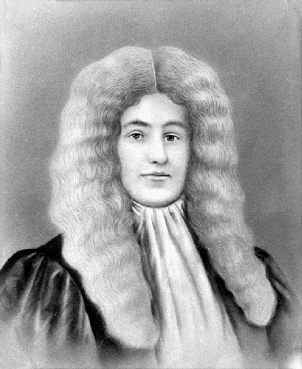
Colonel Augustine Warner Jr. (June 3, 1642 – June 19, 1681) was a Virginian planter, military officer and politician. He served in the House of Burgesses from 1666 to 1677 and was its Speaker in two separate sessions in 1676 and 1677, before and after Bacon's Rebellion. Warner then served on the Virginia Governor's Council from October 1677 until his death. Warner is the last common ancestor of George Washington and King Charles III.
Augustine Warner Jr. was born on June 3, 1642. He was the only son of Augustine Warner Sr., who in 1628 had settled in the Virginia Colony and by 1642 had established a plantation called "Austin's Desire" in Gloucester County, building Warner Hall on the property, and wife Mary Townley. The elder Warner served on the Council from 1659 until shortly before his death in 1674.
The younger Warner went to London in 1658 and attended the Merchant Taylors' School. He returned to Virginia after finishing his education and married Mildred Reade, daughter of George Reade, Secretary of the Virginia Colony.
Warner settled on a farm in Gloucester County, living there until he inherited Warner Hall in 1674. He soon assumed his father's position as Colonel of the Gloucester county militia. Meanwhile, Warner began his political career as a burgess representing Gloucester County in 1672, during what had been called the "Long Assembly" in which elections were only held to replace deceased members, probably in this instance Warner's neighbor, planter and lawyer Peter Jenings.
In March 1676 the General Assembly called by Governor Sir William Berkeley in 1661 held its last session. Warner was elected Speaker, replacing Robert Wynne, who died the previous year. On May 10, as the Nathaniel Bacon crisis was building, Berkeley dissolved the House of Burgesses and called new elections. It is not known if Warner served in the new House that met in June.
Fighting began in late July. Warner remained loyal to Berkeley, joining his forces. Bacon's forces captured Jamestown and burned it on September 19, then crossed the York River and seized Warner Hall. Bacon died in October, but the rebellion continued until early January 1677.
Warner served on a court-martial headed by Berkeley on January 11, 1677, at which rebels were executed. Berkeley called for elections, and Warner was not only elected to represent Gloucester County, but fellow burgesses elected him Speaker of the new House when it convened in February. The Assembly met until early April. It revoked all acts of the June 1676 Assembly, and then reenacted some.
In late September – early October 1677, after Berkeley had been recalled and sailed for England, Warner was appointed to the Governor's Council. Although he remained aligned with the "Green Spring faction" of Berkeley loyalists after Berkeley's removal as governor, he was not removed from the Council, unlike such diehards as Philip Ludwell and Thomas Ballard.
Hub AI
Augustine Warner Jr. AI simulator
(@Augustine Warner Jr._simulator)
Augustine Warner Jr.
Colonel Augustine Warner Jr. (June 3, 1642 – June 19, 1681) was a Virginian planter, military officer and politician. He served in the House of Burgesses from 1666 to 1677 and was its Speaker in two separate sessions in 1676 and 1677, before and after Bacon's Rebellion. Warner then served on the Virginia Governor's Council from October 1677 until his death. Warner is the last common ancestor of George Washington and King Charles III.
Augustine Warner Jr. was born on June 3, 1642. He was the only son of Augustine Warner Sr., who in 1628 had settled in the Virginia Colony and by 1642 had established a plantation called "Austin's Desire" in Gloucester County, building Warner Hall on the property, and wife Mary Townley. The elder Warner served on the Council from 1659 until shortly before his death in 1674.
The younger Warner went to London in 1658 and attended the Merchant Taylors' School. He returned to Virginia after finishing his education and married Mildred Reade, daughter of George Reade, Secretary of the Virginia Colony.
Warner settled on a farm in Gloucester County, living there until he inherited Warner Hall in 1674. He soon assumed his father's position as Colonel of the Gloucester county militia. Meanwhile, Warner began his political career as a burgess representing Gloucester County in 1672, during what had been called the "Long Assembly" in which elections were only held to replace deceased members, probably in this instance Warner's neighbor, planter and lawyer Peter Jenings.
In March 1676 the General Assembly called by Governor Sir William Berkeley in 1661 held its last session. Warner was elected Speaker, replacing Robert Wynne, who died the previous year. On May 10, as the Nathaniel Bacon crisis was building, Berkeley dissolved the House of Burgesses and called new elections. It is not known if Warner served in the new House that met in June.
Fighting began in late July. Warner remained loyal to Berkeley, joining his forces. Bacon's forces captured Jamestown and burned it on September 19, then crossed the York River and seized Warner Hall. Bacon died in October, but the rebellion continued until early January 1677.
Warner served on a court-martial headed by Berkeley on January 11, 1677, at which rebels were executed. Berkeley called for elections, and Warner was not only elected to represent Gloucester County, but fellow burgesses elected him Speaker of the new House when it convened in February. The Assembly met until early April. It revoked all acts of the June 1676 Assembly, and then reenacted some.
In late September – early October 1677, after Berkeley had been recalled and sailed for England, Warner was appointed to the Governor's Council. Although he remained aligned with the "Green Spring faction" of Berkeley loyalists after Berkeley's removal as governor, he was not removed from the Council, unlike such diehards as Philip Ludwell and Thomas Ballard.
Recent media