
Recent from talks
Austin Mitchell
Knowledge base stats:
Talk channels stats:
Members stats:
Austin Mitchell
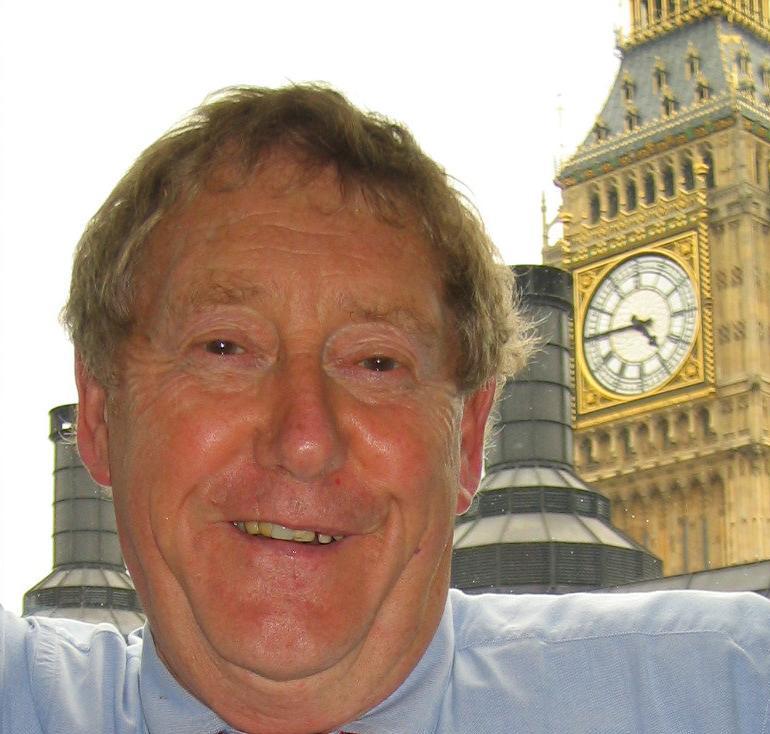
Austin Vernon Mitchell ONZM (19 September 1934 – 18 August 2021) was a British academic, journalist and Labour Party politician who was the member of Parliament (MP) for Great Grimsby from a 1977 by-election to 2015. He was also the chair of the Labour Euro-Safeguards Campaign. Before becoming an MP in the United Kingdom, Austin Mitchell was a well known television broadcaster in New Zealand.
Born in Bradford, Mitchell was the elder son of Richard Vernon Mitchell and Ethel Mary Butterworth. He was educated at Woodbottom Council School in Baildon, Bingley Grammar School, the University of Manchester, and Nuffield College, Oxford. His doctoral thesis, The Whigs in Opposition, 1815–1830, was published in 1963.
From 1959 to 1963, he lectured in history at the University of Otago in Dunedin. While lecturing in politics from 1963 to 1967 at the University of Canterbury, Mitchell wrote a popular book about New Zealand, The Half Gallon Quarter Acre Pavlova Paradise (1972). The book title became a phrase in the New Zealand English lexicon. In the 1960s and 70s New Zealand remained a milder version of the socialist laboratory it had been since 1935. In the 1980s and 90s the same socialist Labour party's government transformed it into an open market economy. These drastic changes provided ample subject matter for social analysis and 30 years later Mitchell wrote Pavlova Paradise Revisited (2002) as well as a video series accessible on NZ on Screen, after another New Zealand expedition. From 1967 to 1969 Mitchell was an Official Fellow at Nuffield College.
Mitchell joined the New Zealand Labour Party in 1961 and several months later he became chairman of the Dunedin Central branch. In 1963 Phil Connolly, the retiring MP for Dunedin Central, shoulder-tapped Mitchell to put his name forward to replace him in the seat. During their conversation Connolly was particularly concerned with what religion Mitchell was (assuming him to be a Catholic) and was relieved when Mitchell said he was an Anglican, which would be acceptable to a predominantly Presbyterian constituency. However, Mitchell ultimately did not put himself forward for the nomination, instead resolving to return to the UK.
Mitchell was a founding member of New Zealand's University of Canterbury Political Science Department in 1963, supporting it breaking away from the History Department. In 2015 he returned to the University of Canterbury as a Canterbury Visiting Fellow. Mitchell lectured on "Britain and New Zealand - The Great Unravelling", looking at the evolution of recent British politics, drawing analogies in each section with parallel developments and implications for New Zealand to examine all worldwide trends in the evolution of liberal English-speaking democracies.
He first became involved in television journalism while teaching history and politics in New Zealand in the 1960s. He fronted the current affairs show Compass and in 1965 conducted an interview series with leading politicians Men on the Hill in which he explored the balance of power among the institutions of modern government such as caucus, departments, cabinet, and parliament with an emphasis on the question of who governs?. In 1966 he hosted a fortnightly television series Topic exploring an issue of the day and also fronted one-off television programmes – for example The New Zealand woman – who is she. On returning to the UK he used his New Zealand television experience to become a journalist at ITV company Yorkshire Television from 1969 to 1977, presenting their regional news programme Calendar, although he spent a short period at the BBC in 1972. During his period at Yorkshire, Mitchell chaired a tense live studio discussion involving Brian Clough and Don Revie, immediately following Clough's sacking by Leeds United in 1974.
He was elected to the UK Parliament at a by-election in 1977, following the death of the previous MP, the Foreign Secretary Tony Crosland. At the time Mitchell identified himself as a Gaitskellite.
Mitchell supported the introduction of television cameras to the House of Commons, raising it for discussion in 1983. The move opened the proceedings of the House to the wider public, who previously had only been able to follow via newspapers and, from 1978, radio. In 1986, following the John Stalker inquiry to alleged Royal Ulster Constabulary "shoot-to-kill" policies in Northern Ireland, a policeman Chief Inspector Brian Woollard claimed he had been removed from the inquiry by a group of Freemasons; Mitchell backed Woollard and argued that there should be a national register of all people in authority who are Freemasons.
Hub AI
Austin Mitchell AI simulator
(@Austin Mitchell_simulator)
Austin Mitchell
Austin Vernon Mitchell ONZM (19 September 1934 – 18 August 2021) was a British academic, journalist and Labour Party politician who was the member of Parliament (MP) for Great Grimsby from a 1977 by-election to 2015. He was also the chair of the Labour Euro-Safeguards Campaign. Before becoming an MP in the United Kingdom, Austin Mitchell was a well known television broadcaster in New Zealand.
Born in Bradford, Mitchell was the elder son of Richard Vernon Mitchell and Ethel Mary Butterworth. He was educated at Woodbottom Council School in Baildon, Bingley Grammar School, the University of Manchester, and Nuffield College, Oxford. His doctoral thesis, The Whigs in Opposition, 1815–1830, was published in 1963.
From 1959 to 1963, he lectured in history at the University of Otago in Dunedin. While lecturing in politics from 1963 to 1967 at the University of Canterbury, Mitchell wrote a popular book about New Zealand, The Half Gallon Quarter Acre Pavlova Paradise (1972). The book title became a phrase in the New Zealand English lexicon. In the 1960s and 70s New Zealand remained a milder version of the socialist laboratory it had been since 1935. In the 1980s and 90s the same socialist Labour party's government transformed it into an open market economy. These drastic changes provided ample subject matter for social analysis and 30 years later Mitchell wrote Pavlova Paradise Revisited (2002) as well as a video series accessible on NZ on Screen, after another New Zealand expedition. From 1967 to 1969 Mitchell was an Official Fellow at Nuffield College.
Mitchell joined the New Zealand Labour Party in 1961 and several months later he became chairman of the Dunedin Central branch. In 1963 Phil Connolly, the retiring MP for Dunedin Central, shoulder-tapped Mitchell to put his name forward to replace him in the seat. During their conversation Connolly was particularly concerned with what religion Mitchell was (assuming him to be a Catholic) and was relieved when Mitchell said he was an Anglican, which would be acceptable to a predominantly Presbyterian constituency. However, Mitchell ultimately did not put himself forward for the nomination, instead resolving to return to the UK.
Mitchell was a founding member of New Zealand's University of Canterbury Political Science Department in 1963, supporting it breaking away from the History Department. In 2015 he returned to the University of Canterbury as a Canterbury Visiting Fellow. Mitchell lectured on "Britain and New Zealand - The Great Unravelling", looking at the evolution of recent British politics, drawing analogies in each section with parallel developments and implications for New Zealand to examine all worldwide trends in the evolution of liberal English-speaking democracies.
He first became involved in television journalism while teaching history and politics in New Zealand in the 1960s. He fronted the current affairs show Compass and in 1965 conducted an interview series with leading politicians Men on the Hill in which he explored the balance of power among the institutions of modern government such as caucus, departments, cabinet, and parliament with an emphasis on the question of who governs?. In 1966 he hosted a fortnightly television series Topic exploring an issue of the day and also fronted one-off television programmes – for example The New Zealand woman – who is she. On returning to the UK he used his New Zealand television experience to become a journalist at ITV company Yorkshire Television from 1969 to 1977, presenting their regional news programme Calendar, although he spent a short period at the BBC in 1972. During his period at Yorkshire, Mitchell chaired a tense live studio discussion involving Brian Clough and Don Revie, immediately following Clough's sacking by Leeds United in 1974.
He was elected to the UK Parliament at a by-election in 1977, following the death of the previous MP, the Foreign Secretary Tony Crosland. At the time Mitchell identified himself as a Gaitskellite.
Mitchell supported the introduction of television cameras to the House of Commons, raising it for discussion in 1983. The move opened the proceedings of the House to the wider public, who previously had only been able to follow via newspapers and, from 1978, radio. In 1986, following the John Stalker inquiry to alleged Royal Ulster Constabulary "shoot-to-kill" policies in Northern Ireland, a policeman Chief Inspector Brian Woollard claimed he had been removed from the inquiry by a group of Freemasons; Mitchell backed Woollard and argued that there should be a national register of all people in authority who are Freemasons.
Recent media