Hubbry Logo
GaitskellismGaitskellismMain
Open search
Gaitskellism
Community hub
Gaitskellism
logo
8 pages, 0 posts
0 subscribers
Be the first to start a discussion here.
Gaitskellism
Gaitskellism
from Wikipedia
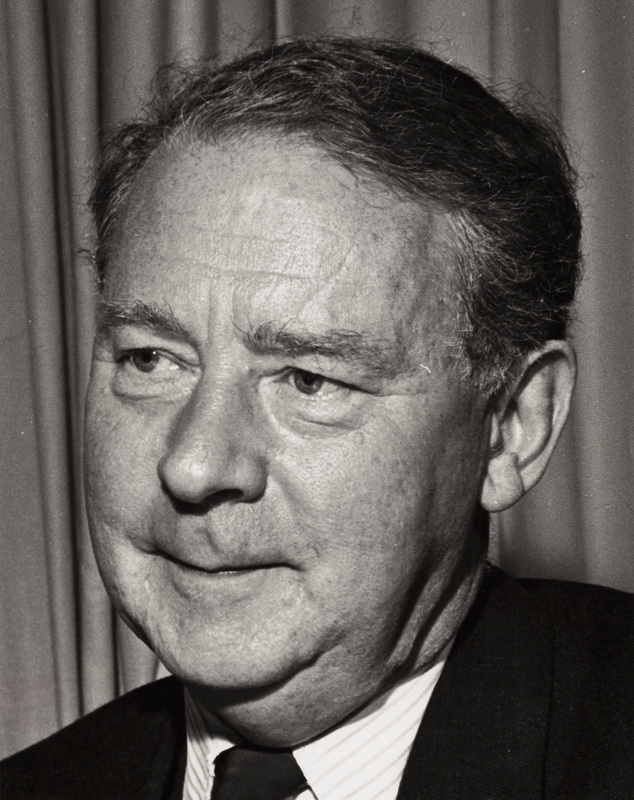
Hugh Gaitskell

Gaitskellism was the ideology of a faction in the British Labour Party in the 1950s and early 1960s which opposed many of the economic policies of the trade unions, especially nationalisation and control of the economy.[1]

Theoretically, it repudiated the long-standing orthodox position that identified socialism with public ownership of the means of production, and that such ownership was essential to achieve socialist objectives, and emphasized the goals of personal liberty, social welfare, and above all social equality. It downplayed loyalty to the labour movement as a central ethical goal, and argued that the new goals could be achieved if the government used appropriate fiscal and social policy measures within the context of a market-oriented mixed economy. Public ownership was not specifically rejected, but was seen as merely one of numerous useful devices.[2]

The movement was led by Hugh Gaitskell and included Anthony Crosland, Roy Jenkins, Douglas Jay, Patrick Gordon Walker and James Callaghan, influenced by the teachings of London school economist Evan Durbin.[3][4] Gaitskellites represented the political right of the Labour Party and were opposed by the Bevanites, the left-wing faction of the party led by Aneurin Bevan and Michael Foot. In the 1950s, there were many parallels between Gaitskellism and the economic policies of Rab Butler, the Conservative Chancellor of the Exchequer. This convergence of the two main parties was dubbed "Butskellism".[5]

History

[edit]

In the 1945 general election, the Labour Party won its first majority in Parliament, with Clement Attlee becoming prime minister. Both Gaitskell and Bevan took positions in the Cabinet, Gaitskell as Minister of Fuel and Power and Bevan as Minister of Health.[6]

In October 1950, Stafford Cripps was forced to resign as Chancellor of the Exchequer due to failing health, and Gaitskell was appointed to succeed him. His time as Chancellor was dominated by the struggle to finance Britain's part in the Korean War which put enormous strain on public finances. The cost of the war meant that savings had to be found from other budgets. Gaitskell's budget of 1951 introduced charges for certain prescriptions on the National Health Service.

He had a falling out with Bevan, who had defended the NHS and had left over the matter, and the budget split the government. Harold Wilson and John Freeman joined Bevan in resigning in protest of Gaitskell's policies. Later that year, Labour lost power to the Conservatives in the 1951 election. Gaitskell was replaced as Chancellor by Rab Butler, who largely continued Gaitskell's economic policies. This was termed Butskellism and laid the foundation for the post-war consensus.

During the period of opposition, the feud between the Gaitskellites and Bevanites continued. In 1954, Gaitskell and Bevan ran against each other for the position of Treasurer of the Labour Party, which was seen as a stepping-stone to the position of Party Leader. Gaitskell defeated Bevan. Following Labour's defeat in the 1955 election, Attlee announced his retirement as Party Leader (and subsequently, Leader of the Opposition). In the leadership election, the Labour left rallied around Bevan, while the Labour right was split between Gaitskell and Herbert Morrison. Gaitskell defeated both, gaining almost sixty per cent of the vote, and on 14 December 1955 became both Leader of the Labour Party and Leader of the Opposition.[7]

During the early period of Gaitskell's tenure as Party Leader, the opposition between the Gaitskellites and Bevanites simmered, centring mainly on the issues of nuclear disarmament (which the Bevanites supported and the Gaitskellites opposed) and Britain's participation in NATO, specifically the foreign policy of opposing the Soviet Union and supporting the United States (which the Bevanites opposed and Gaitskellites supported). However, during this initial period the factional infighting dimmed somewhat; Gaitskell appointed Bevan to the Shadow Cabinet as Shadow Colonial Secretary and then Shadow Foreign Minister, the position he held during the Suez Crisis which enabled him to formulate Labour's response to the actions of Prime Minister Anthony Eden. Also in 1956, Bevan was elected Party Treasurer, defeating the Gaitskellite candidate, George Brown. Ironically, in 1957 Bevan split from the Bevanites due to a speech he gave opposing nuclear disarmament at the annual Labour Party conference.

The hostilities between factions exploded again after the 1959 election. Labour was widely expected to win the election, with the Conservatives unpopular after the Suez Crisis. However, the Conservatives managed to increase their majority, largely due to the Conservatives' exploiting Labour's internal divisions over economics. The Labour election manifesto, drafted by the left, stated that it would raise taxes to pay for an increase in spending, especially pensions, while Gaitskell publicly promised that he would not raise taxes. After the election Gaitskell blamed the Bevanite economic position for the electoral defeat and, in an effort to modernize the party in the face of the Conservatives' electoral and economic successes, attempted to reverse the Labour charter's Clause IV calling for nationalisation. The Bevanites managed to defeat this attempt. The Clause IV struggle had the effect of creating the pro-Gaitskellite Campaign for Democratic Socialism as a pressure group within the party. In 1960 the Bevanites managed to commit to Labour backing nuclear disarmament, only for the Gaitskellites to reverse it in 1961.

In 1959, Bevan was elected Deputy Party Leader, only to die shortly before the 1960 party leadership election. The Bevanites instead backed Harold Wilson, who lost to Gaitskell by almost two-thirds of the vote. However, the factional infighting, largely over the nuclear issue, was so much that there was another party leadership election the next year. In that election, the Bevanites backed Anthony Greenwood, who lost to Gaitskell by almost three-fourths of the vote.

Near the end of his life, Gaitskell himself began to move away from the Gaitskellites on several issues. The Gaitskellites generally supported Britain entering the European Economic Community, which Gaitskell opposed, claiming it would cause the end of Britain as an independent nation. In early 1963, Gaitskell died. In the ensuing party leadership election Wilson again was the candidate of the former Bevanites, while the Gaitskellite vote was split between George Brown and James Callaghan. In the first round of voting, the two Gaitskellites split the right-wing vote, with Wilson getting 47% of the vote. In the second round between Wilson and Brown, Wilson won with 58% of the vote, the same margin that Gaitskell had on his election in 1955.

Legacy

[edit]

Wilson went on to become prime minister in the 1964 election, holding the position from 1964 to 1970 and from 1974 to 1976. Despite being a former Bevanite, Wilson largely followed Gaitskellite economic policies, and the former Gaitskellite Callaghan followed Wilson as prime minister from 1976 to 1979 and Party Leader from 1976 to 1980.

As late as 1977, Austin Mitchell still described himself as a Gaitskellite during his initial run for Parliament.

In 1981, largely in response to the election of the former Bevanite Michael Foot as party leader, the formerly-Gaitskellite Campaign for Democratic Socialism members eventually left the Labour Party to establish the more moderate Social Democratic Party.[8]

In 1983, Foot was replaced as party leader by Neil Kinnock, who moved the party towards the centre and away from its traditional base, accordingly with the breakdown of the post-war consensus. He was replaced as leader in 1992 by former Gaitskellite John Smith. When Tony Blair became Party Leader in 1994 and then prime minister in 1997, he continued to move the party towards the right, and he largely followed the Gaitskellite positions on economics and defence, ending the party's Clause IV commitment to nationalization in 1995, supporting the UK Trident programme, and retaining close relations with the United States.

See also

[edit]

References

[edit]

Further reading

[edit]
[edit]
Revisions and contributorsEdit on WikipediaRead on Wikipedia
from Grokipedia
Gaitskellism was the revisionist ideology of the moderate or right-wing faction within the British Labour Party during the late 1950s and early 1960s, led by , who served as party leader from December 1955 until his death in January 1963. It emphasized pragmatic over dogmatic , advocating a with markets where effective and state intervention where necessary to achieve equality, social welfare, and individual liberty. Central to Gaitskellism was the push to modernize the Labour Party by challenging outdated commitments, such as revising Clause IV of the party constitution, which enshrined public ownership of production means as a core goal, and rejecting unilateral nuclear disarmament in favor of retaining Britain's independent deterrent and NATO alignment. These positions stemmed from empirical assessments of electoral viability and national security realities, positioning the faction against more radical Bevanite elements who prioritized ideological purity and anti-militarism. Gaitskell's efforts culminated in key conference victories, including reversing a 1960 vote for disarmament, though his Clause IV reform failed, highlighting internal divisions that persisted beyond his lifetime. Gaitskellism influenced subsequent Labour thinking by promoting evidence-based policy over Marxist orthodoxy and fostering a pro-Atlanticist stance skeptical of early European integration, as evidenced by Gaitskell's opposition to British entry into the Common Market without safeguards for sovereignty and Commonwealth ties. While not achieving immediate dominance, its reformist legacy contributed to the party's electoral strategies under later leaders, underscoring a causal link between pragmatic adaptation and political relevance in a post-war context of affluence and Cold War tensions.

Definition and Core Principles

Ideological Foundations

Gaitskellism constituted a revisionist strand of that reframed socialism's core objectives around the pursuit of equality through redistributive fiscal policies, comprehensive welfare provision, and state intervention in a , rather than adherence to wholesale as an ideological imperative. This approach accepted the persistence of private enterprise in non-strategic sectors, provided it coexisted with robust public services and mechanisms to curb inequality, reflecting a pragmatic to economic realities where Keynesian had mitigated capitalism's instabilities. Central to these foundations was Anthony Crosland's The Future of Socialism (1956), which argued that capitalism's evolution—via managerial separation of from control, welfare expansions, and policies—had obviated the need for Marxist-style expropriation, shifting focus to sociological goals like reducing class divisions and enhancing . Crosland, a key Gaitskellite intellectual, advocated specific egalitarian measures such as capital gains taxation, comprehensive , and increased public expenditure on consumption and services, positing that economic growth under social democratic governance would fund these without rigid public dogma. His ideas underpinned Gaitskell's efforts to intellectually unify the Labour Party's centre-right, influencing documents like Industry and Society (1957) and fostering groups such as the Campaign for founded in October 1960. Gaitskellites rejected Marxist orthodoxy and communist influences, embracing an informed by empirical economics and figures like Durbin, who emphasized market-compatible reforms over revolutionary upheaval. This revisionism prioritized parliamentary leadership and electoral viability, critiquing the Labour left's doctrinal rigidity as electorally self-defeating, while maintaining commitments to and multilateral institutions as bulwarks against ideological extremism.

Key Policy Positions

Gaitskellism emphasized pragmatic economic revisionism within the Labour Party, advocating a that prioritized efficiency over extensive . Further public ownership was to be pursued only where it demonstrably enhanced productivity, rejecting dogmatic extensions of the 1945-1951 Attlee government's program due to their electoral unpopularity. As from October 1950 to March 1951, balanced the budget amid Korean War-related defense costs—totaling £4,700 million over three years—by introducing nominal charges for spectacles and dentures on April 10, 1951, a measure aligned with Keynesian fiscal discipline but sparking resignations from and others. This reflected a commitment to sustaining the through targeted reforms rather than unchecked expansion, favoring wealth redistribution via progressive taxation over rigid income equalization. Central to Gaitskell's domestic agenda was the attempted modernization of Labour's ideological framework. In November 1959, he proposed revising of the party constitution, which enshrined public ownership of the , distribution, and exchange as a core aim; the revision sought to affirm democratic socialism's compatibility with a dynamic capitalist sector, but it faced union resistance and was withdrawn by March 1960. This revisionist thrust drew from influences like Anthony Crosland's The Future of Socialism (1956), promoting gradualist reforms to erode class divisions through , , and , while critiquing left-wing Bevanite demands for sweeping nationalizations as outdated. In defense policy, Gaitskell championed multilateral nuclear deterrence over unilateral , supporting Britain's independent nuclear capability within frameworks such as submarines. He overturned the Labour Party conference's 1960 vote for renunciation at the 1961 conference, arguing that abandoning the deterrent would weaken alliances without reciprocal Soviet concessions. On , Gaitskell shifted to firm opposition by 1962, delivering a landmark speech at the Labour conference on October 3 rejecting entry into the . He contended that supranational commitments would sever Britain's global role, end "a thousand years of history," and prioritize continental federalism over preferences and sovereignty. This stance favored looser ties, reflecting Gaitskellism's realism about preserving national economic autonomy amid .

Historical Origins

Post-1945 Labour Divisions

Following the Labour Party's landslide victory in the 1945 general election, the Attlee government pursued an ambitious programme of —including coal, railways, and the —and established the (NHS) in 1948, fostering initial party unity around social democratic reforms. However, post-war economic constraints, including a severe balance-of-payments crisis and reliance on American loans under the 1946 Anglo-American Financial Agreement, compelled austerity measures such as continued and export prioritization, which strained internal cohesion by the late . These pressures exacerbated debates over resource allocation, pitting advocates of expanded welfare spending against those prioritizing fiscal prudence and rearmament in response to the emerging . A pivotal fracture occurred in April 1951, when Chancellor Hugh Gaitskell introduced charges for dental appliances and spectacles under the NHS to fund increased defence expenditures amid the , prompting resignations from Minister of Health Aneurin Bevan, President of the Harold Wilson, and Minister of Health junior John Freeman. Bevan, architect of the NHS, decried the charges as a betrayal of universal free healthcare and criticized the diversion of funds—£462 million for rearmament in 1951 alone—from social services, arguing it undermined Labour's core principles. This event crystallized divisions between the left-wing Bevanite faction, which demanded stricter adherence to public ownership, opposition to health charges, and reduced military commitments, and moderate revisionists who viewed such policies as outdated amid Britain's weakened empire and integration into in 1949. The Bevanites, drawing support from constituency activists and figures like and , organized as a Tribune Group-aligned bloc by 1952, advocating "" through further nationalizations and resistance to austerity's impact on living standards. In contrast, revisionists like Gaitskell, Douglas Jay, and emphasized pragmatic adaptation, questioning wholesale nationalization under of the party constitution and favoring a with private enterprise to boost productivity, as outlined in Crosland's 1956 The Future of Socialism. Foreign policy divergences intensified the rift: Bevanites leaned toward neutralism and critiqued , while revisionists upheld alliance and multilateral nuclear deterrence, reflecting broader tensions over Britain's global role post-Suez. These schisms contributed to Labour's narrow defeat in the 1951 election and persisted into the 1950s, with Bevan's failed deputy bids in 1956 and 1957 underscoring the left's minority status in despite conference influence. The divisions highlighted a fundamental contest between ideological purity—rooted in commitments—and electoral realism, setting the stage for revisionist ascendancy under Gaitskell's from 1955.

Emergence Under Gaitskell

assumed leadership of the Labour Party on 14 December 1955, following Clement Attlee's resignation after the party's defeat in the May 1955 , securing 157 votes from Labour MPs against Aneurin Bevan's 70 and Herbert Morrison's 40. His reflected support from right-wing trade unions and moderate MPs wary of Bevanite influence, positioning to steer the party toward pragmatic amid ongoing divisions between revisionists favoring adaptation to postwar affluence and traditionalists advocating stricter socialist orthodoxy. Under Gaitskell, revisionism gained prominence as the dominant intellectual current, emphasizing efficiency, , wealth redistribution via taxation, and acceptance of a over wholesale . This approach drew from earlier influences like Evan Durbin but aligned closely with Anthony Crosland's 1956 publication The Future of Socialism, which contended that socialism's ends—equality and social welfare—could be pursued through state intervention in demand management and public services rather than rigid public ownership of production means. Gaitskell's prior role as (1950–1951), where he prioritized defense spending amid pressures despite internal resignations, underscored his willingness to compromise on sacred cows like free prescriptions to fund broader priorities. Gaitskellism coalesced as a factional identity in the late , distinguishing itself from Bevanite advocacy for and expansive public control by promoting multilateral defense commitments and selective only where market failures persisted. This emergence was tested early in foreign policy debates, such as Gaitskell's firm opposition to appeasing Soviet influence during the 1956 Hungarian uprising and intervention, where he criticized Eden's actions as unconstitutional yet reaffirmed alliances. By 1957, when party conference endorsed , Gaitskell's resolve to contest such shifts internally solidified his leadership and the revisionist bloc's organizational strength through alliances with figures like Douglas and the .

Major Internal Conflicts

Clash with Bevanites

The ideological rift between Gaitskellites and Bevanites crystallized over policy divergences on economic austerity, welfare provision, and defense strategy, with Bevanites upholding rigid commitments to and universal free health services, while Gaitskellites prioritized electoral viability through pragmatic fiscal measures and alliance with NATO's nuclear posture. Tensions erupted in April 1951 when Chancellor introduced charges for NHS prescriptions, spectacles, and dentures to finance rearmament amid the crisis, prompting —then Minister of Labour—to resign from the government on 23 April alongside and John Freeman, decrying the move as a betrayal of the NHS's founding principle of comprehensive free care at the point of use. Bevan's exit galvanized the left-wing Bevanite faction, which controlled outlets like and drew support from constituency activists favoring expansive public ownership and opposition to perceived capitulations to Conservative fiscal orthodoxy. In contrast, Gaitskell's supporters in the (PLP) viewed such charges as necessary for budgetary realism, highlighting a broader Gaitskellite emphasis on mixed-economy adjustments over doctrinal purity. Factional strife intensified after Clement Attlee's retirement, culminating in the December 1955 leadership election where Gaitskell decisively defeated Bevan, securing victory through endorsements from major unions and a of constituency parties despite Bevanite strength at the grassroots level. This outcome entrenched Gaitskell's authority but exacerbated divisions, as Bevanites accused him of diluting socialist aims by resisting further nationalizations and endorsing West Germany's rearmament—positions Bevan publicly contested in parliamentary debates. A pivotal confrontation arose at the 1957 Labour conference in over nuclear policy, where Bevanites pushed for unilateral renunciation of Britain's independent deterrent amid debates on the hydrogen bomb; on 3 October, Bevan himself intervened against the motion, arguing that dispatching a British foreign secretary "naked into the conference chamber" would undermine multilateral negotiations and , swaying the conference to reject by a narrow margin. This reversal alienated hardline Bevanites like , fracturing their cohesion and aligning Bevan temporarily with Gaitskell's multilateralist stance, though it failed to fully reconcile the factions amid ongoing disputes over party modernization. The clashes underscored Gaitskell's success in leveraging PLP and union majorities to marginalize Bevanite influence, setting the stage for further revisionist reforms despite persistent left-wing resistance.

Clause IV Revision Attempt (1959–1960)

Following the Labour Party's defeat in the general election of 8 October 1959, party leader Hugh Gaitskell identified public apprehension over extensive nationalization—symbolized by Clause IV of the party constitution—as a contributing factor to the loss. At the annual conference in Blackpool, delayed until 2–6 November due to the election, Gaitskell declared his intent to revise Clause IV, arguing it embodied outdated 1918 commitments to "common ownership of the means of production" that alienated moderate voters in a post-war, affluent Britain. He emphasized the need for the party to present itself as "a modern 20th century party prepared to adapt to the 20th century, not waving the banners of a bygone age." The proposed revision, drafted by the National Executive Committee (NEC), sought to replace the rigid pledge with a flexible commitment to public ownership "by the methods consistent with democracy and freedom," allowing case-by-case application rather than blanket of industries. This initiative drew fierce opposition from the party's left wing, including Bevanite MPs and figures like , who viewed Clause IV as an essential emblem of socialist aspiration, and from major trade unions such as the , which prioritized its symbolic retention to maintain working-class loyalty. Critics argued that altering the clause would signal abandonment of core principles, potentially eroding the party's distinct identity amid tensions and Conservative dominance. Debate escalated through 1960, with Gaitskell framing the revision as essential for electoral viability, warning that adherence to archaic dogma hindered appeal to middle-class and suburban voters. At the Scarborough conference from 3–7 October 1960, the NEC motion faced a composite resolution from constituency parties and unions demanding retention of the original text. The vote resulted in defeat for the revision, with trade union block votes proving decisive in upholding Clause IV unchanged, though a subsequent leadership reaffirmation on policy aims passed narrowly, offering Gaitskell partial vindication. The failed attempt exposed deep fissures between revisionists favoring pragmatic modernization and traditionalists defending doctrinal purity, yet it compelled broader party reflection on adapting to contemporary economic realities without formal constitutional overhaul. Gaitskell's persistence underscored his strategy to reposition Labour as a credible government-in-waiting, influencing subsequent internal reforms despite the immediate setback.

Policy Stances and Debates

Domestic Economic Policies

Gaitskellism advocated a that balanced private enterprise with targeted public ownership, rejecting blanket as outdated and inefficient for achieving socialist objectives like and . argued that in the era should focus on expanding national wealth through government intervention while preserving a role for private initiative, rather than pursuing 100% state control of industry. This revisionist approach prioritized pragmatic economic management over doctrinal purity, emphasizing redistribution and opportunity as means to reduce inequality without dismantling market mechanisms. In policy terms, Gaitskell supported selective limited to strategic sectors requiring intervention for and equity. The Labour Party under his leadership proposed renationalizing the steel industry—previously denationalized by Conservatives—and long-distance road haulage, while extending ownership to water supplies and potentially failing industries after independent inquiries. He viewed such measures as tools for countering monopolistic private power and ensuring , but opposed expansive programs that risked alienating middle-class voters or stifling growth, as evidenced by his resistance to union-driven demands for widespread control. Fiscal policy under Gaitskellism stressed responsibility and anti-inflationary controls to sustain welfare commitments without unbalanced budgets. As in , Gaitskell implemented charges for NHS prescriptions and dental care to generate £13 million in savings amid rearmament costs and balance-of-payments strains, prioritizing over universal free provision. In opposition, he endorsed tax reforms including a , elimination of loopholes, and curbs on corporate expense deductions to fund redistribution while easing burdens on earned incomes. These measures aimed to foster equality of opportunity rather than absolute equality, accepting moderate income disparities tied to merit and role, with 1% of the population holding 50% of private wealth highlighted as a target for progressive adjustment. Gaitskell also championed incomes policies to manage wage growth and prevent inflationary spirals, viewing unchecked bargaining as a barrier to coordinated . He supported voluntary restraints evolving toward formal mechanisms to align pay with , arguing that required slight excess demand but disciplined income expansion to avoid currency or import reliance. This stance reflected a broader revisionist belief that socialist goals—such as comprehensive , reforms for half-pay , and modernization—could be advanced through state-guided markets rather than adversarial class conflict or rigid controls.

Foreign and Defense Policies

Gaitskell's foreign policy emphasized Britain's role within the Western alliance, prioritizing membership and multilateral approaches to security amid tensions. He advocated for maintaining the transatlantic partnership as essential to deterring Soviet aggression, rejecting isolationist or neutralist tendencies within Labour's left wing. This stance aligned with bipartisan consensus on containing , though Gaitskell critiqued Conservative mishandling of crises, such as in a December 1955 speech shortly after assuming party leadership, where he assailed the government's management for eroding Britain's global influence. On defense, Gaitskell firmly supported Britain's nuclear deterrent as an integral component of strategy, opposing unilateral proposed by figures like and the . In his October 1960 Labour conference speech, he argued that renouncing nuclear weapons independently would undermine alliance credibility and invite aggression, famously declaring the party's commitment to "fight, and fight, and fight again" against such policies. He favored negotiated, multilateral reductions through bodies like the , viewing the deterrent not as an aggressive tool but as a necessary counter to Soviet capabilities, including Khrushchev's threats. This position reflected Gaitskell's belief in credible deterrence over moralistic , prioritizing empirical assessments of power balances over ideological . During the 1956 Suez Crisis, Gaitskell initially condemned Egyptian President Nasser's of the canal as a violation of international agreements but swiftly opposed Eden's resort to military force, deeming it reckless and damaging to Britain's alliances. Labour under his leadership demanded adherence to resolutions and withdrawal of troops, with Gaitskell delivering a pivotal speech on November 1, 1956, highlighting the invasion's legal and strategic flaws, which contributed to domestic pressure forcing Eden's eventual retreat. This opposition underscored Gaitskell's preference for diplomacy and alliance cohesion over unilateral adventurism, even as he acknowledged the canal's economic importance to Britain. Regarding , Gaitskell evolved from early postwar support for economic cooperation—such as backing the 1950 European Payments Union—to skepticism toward supranational structures. In his October 1962 Labour conference address, he rejected Britain's entry into the without explicit safeguards for ties, food imports, and national sovereignty, warning against accepting majority voting that could override British interests. He framed EEC accession as potentially subordinating Britain to a federal Europe, prioritizing Atlantic over continental orientations and reflecting concerns over economic autonomy amid . This "thousand years of history" rhetoric highlighted his commitment to Britain's independent global posture within rather than deeper European entanglement.

Immediate Aftermath and Transition

Gaitskell's Death and Succession (1963)

Hugh Gaitskell contracted a viral infection in mid-December 1962, initially diagnosed as influenza, which rapidly progressed into a severe autoimmune disorder. He was hospitalized on January 4, 1963, and died on January 18, 1963, at University College Hospital in London, aged 56, from complications of systemic lupus erythematosus, a rare condition that had affected multiple organs including his heart and kidneys. The illness's sudden escalation prevented recovery, despite aggressive treatment, and Gaitskell's death prompted widespread tributes for his efforts to unify and modernize the Labour Party amid internal divisions. Following Gaitskell's passing, the Labour Party's National Executive Committee scheduled a among parliamentary members, as required by rules for vacancies. The contest pitted Shadow Chancellor against Deputy Leader George Brown, a close Gaitskell ally who embodied the revisionist wing's commitment to moderate policies, nuclear deterrence, and market-oriented reforms. , previously Shadow Foreign Secretary, positioned himself as a pragmatic unifier with appeal across factions, drawing support from wary of Brown's perceived abrasiveness and from some on the left due to his past criticisms of Gaitskell's . Wilson secured victory on February 14, 1963, assuming the leadership and becoming Leader of the Opposition. His win, while benefiting from Gaitskell's prior groundwork in repositioning Labour as electable, marked a subtle shift away from unyielding revisionism; Wilson reinstated figures like Richard Crossman to the front bench and later accommodated left-wing pressures on issues such as unilateral nuclear disarmament, which Gaitskell had firmly opposed. Brown's defeat underscored tensions within the Gaitskellite right, as Wilson's tactical maneuvering highlighted the fragility of factional dominance without Gaitskell's personal authority. This succession preserved core elements of Gaitskellism, such as economic modernization, but diluted its ideological purity under a leader more attuned to party unity than doctrinal rigor.

Impact on 1964 Election

Hugh Gaitskell's unexpected death from complications of and on 18 January 1963, at age 56, prompted a swift leadership contest within the Labour Party. , then Shadow Chancellor, emerged victorious on 15 February 1963, defeating Gaitskell's preferred successor George Brown by 179 votes to 145 in the parliamentary party ballot. Wilson's pragmatic style bridged lingering Gaitskellite revisionists and party left-wingers, averting a deeper factional split that might have undermined electability; he secured endorsements from both camps, including former Bevanites wary of Brown's union ties. Under Wilson, Labour's 1964 campaign built on Gaitskellism's emphasis on mixed-economy pragmatism over extensive nationalization, downplaying commitments that had alienated moderate voters in the 1959 defeat. The manifesto Signposts for the Sixties prioritized , scientific , and a "" via —echoing Gaitskell's post-1959 pivot toward affluent society appeal—while avoiding radical redistribution. Wilson's October 1963 "white heat of " speech at the reinforced this modernizing image, positioning Labour as competent for governance amid Conservative fatigue after 13 years in power, scandals like Profumo, and under . The strategy yielded a razor-thin win on 15 October 1964: Labour gained 12,205,808 votes (44.1% share), edging Conservatives' 12,002,064 (43.4%), translating to 317 seats against 304 for the Conservatives and 9 for Liberals, for a four-seat majority over opposition totals. Gaitskellism's prior containment of left-wing and had restored party credibility as a viable alternative, per contemporary assessments, enabling Wilson's unification and voter perception of competence despite internal scars from battles. Absent this foundation, analysts argue the divided Labour might have repeated 1959's loss, though Wilson's charisma exploited Conservative weaknesses more directly.

Legacy and Influence

On Labour Revisionism

Gaitskellism emerged as a key strand of Labour revisionism during the 1950s, emphasizing pragmatic adaptation of socialist goals to Britain's post-war mixed economy rather than rigid commitment to mass nationalization. Under Hugh Gaitskell's leadership from December 1955, revisionists prioritized efficient public services, redistributive fiscal policies, and acceptance of private enterprise where it proved effective, drawing on empirical evidence from the Attlee government's nationalizations that selective rather than wholesale ownership sufficed for economic planning. This approach critiqued the party's traditional reliance on Clause IV, viewing its pledge for public control of production as an outdated doctrinal anchor that hindered electoral appeal. Influenced by Anthony Crosland's The Future of Socialism (1956), which argued that equality could be advanced through state intervention in demand management and welfare expansion without further extending public ownership, Gaitskellites sought to redefine around ethical ends like over means like collectivization. Gaitskell's 1959 conference speech famously declared the need to "fight and fight and fight again" to revise , proposing its replacement with flexible commitments to public ownership only where necessary, though the motion narrowly failed due to and left-wing resistance. This defeat highlighted internal divisions but entrenched revisionist arguments that ideological purity risked perpetual opposition status, as evidenced by Labour's three consecutive electoral losses from 1951 to 1959. The enduring impact of Gaitskellism on Labour revisionism lay in normalizing moderate, evidence-based policy-making, fostering a consensus against and for Atlanticist defense postures that bolstered party unity post-1960. By sidelining Bevanite , it paved the way for Croslandite dominance in the 1960s and, ultimately, New Labour's 1995 abolition under , which echoed Gaitskell's push for constitutional modernization to align rhetoric with feasible governance. Critics from the left, such as those in assessments, contend this shift diluted working-class militancy for bourgeois consensus, yet empirical party polling and electoral data from the era supported revisionists' causal claim that dogmatic socialism alienated middle-ground voters.

Connections to Modern Centrism

Gaitskellism's revisionist emphasis on pragmatic adaptation to mixed economies and rejection of wholesale prefigured the Third Way's synthesis of market mechanisms with social welfare, as pursued by governments from 1997 to 2010. Hugh Gaitskell's 1959–1960 campaign to amend of the Labour Party constitution, aiming to excise mandatory public ownership of production means, directly anticipated Tony Blair's successful 1995 revision, which enabled Labour's electoral pivot toward investor-friendly policies while retaining commitments to redistribution. This shift marked centrism's core tenet: ideological flexibility to secure power and implement reforms, contrasting with left-wing orthodoxy that prioritized doctrinal purity over electability. In foreign policy, Gaitskell's advocacy for multilateral nuclear deterrence and fidelity—evident in his opposition to unilateral —influenced centrist realism in subsequent Labour administrations, which maintained transatlantic alliances amid post-Cold War uncertainties. This approach aligned with internationalism, favoring cooperative global institutions and interventionism when tied to liberal democratic ends, as seen in Blair's 1999 Kosovo and 2003 commitments, rather than or . Gaitskellite moderation continues to resonate in contemporary British , particularly in Labour's post-2019 recovery under , who has centralized party discipline and prioritized competence over factional debates, echoing Gaitskell's 1950s efforts to marginalize Bevanite leftism. Revisionist legacies like these underpin centrist critiques of radicalism, stressing empirical governance—such as fiscal responsibility and supply-side reforms—over expansive state intervention, though critics from the left argue this dilutes socialist aims.

Criticisms and Evaluations

Assessments from the Left

Left-wing critics within the Labour Party, particularly the Bevanites led by , viewed Gaitskell's 1951 budget as a fundamental betrayal of socialist principles by introducing charges for NHS prescriptions, dental treatments, and spectacles to finance rearmament amid the , thereby undermining the free-at-point-of-use healthcare Bevan had championed as Health Minister. Bevan resigned from the on , 1951, protesting that these measures established "a principle which is quite abhorrent to the people of this country" and prioritized defense spending over welfare universality, with and John Freeman following suit. This event crystallized the Bevanite accusation that Gaitskell favored fiscal prudence and Atlanticist commitments over expansive public services, marking the onset of sustained intra-party conflict. Bevanites and other socialists assessed Gaitskellism as a revisionist deviation that prioritized electoral viability over doctrinal , accusing Gaitskell of marginalizing left-wing voices through administrative control of party mechanisms and portraying Bevanite advocacy for further nationalizations as outdated dogma. They contended that Gaitskell's leadership entrenched a technocratic, pro-market orientation within Labour, evidenced by his resistance to expanding public ownership beyond the 1945-1951 Attlee government's achievements, which leftists argued was essential for curbing capitalist power. This critique framed Gaitskellism as subordinating class struggle to mixed-economy compromises, with figures like Bevan decrying it as insufficiently transformative to address inequality's structural roots. Gaitskell's post-1959 election push to revise of the Labour constitution—seeking to replace commitments to public ownership of production means with vague pledges to "" via diverse methods—drew sharp rebukes from the left as an explicit abandonment of Marxist-inspired goals for opportunistic . Left-wing delegates at the party conference defeated related motions, interpreting the effort as Gaitskell's attempt to excise socialism's aspirational core to appeal to middle-class voters, thereby diluting Labour's identity as a working-class movement. Critics like those in argued this revisionism echoed Liberal reforms rather than advancing proletarian , reinforcing perceptions of Gaitskell as ideologically adrift from Labour's founding ethos. On , socialists lambasted Gaitskell's staunch and allegiance, particularly his opposition to unilateral , which they saw as morally imperative amid escalation and colonial entanglements. At the 1960 Scarborough conference, after delegates endorsed , Gaitskell's vow to "fight, fight and fight again to save the party we love" was decried by the left as a defiant rejection of democratic conference sovereignty, prioritizing party unity and pro-Western over anti-militarism. Bevanites, though divided—Bevan himself had rejected in 1957 to avoid diplomatic weakness—nonetheless faulted Gaitskell for entrenching Labour's subservience to U.S. , viewing his 1961 reversal of the policy at as authoritarian consolidation against pacifist and anti-imperialist sentiments.

Assessments from the Right

Conservative figures frequently commended Hugh Gaitskell's personal integrity and his role as a principled adversary in parliamentary debates. In tributes following his death on 18 January 1963, opponents across the aisle acknowledged his forthrightness and dedication to democratic norms, with parliamentary records noting widespread praise from political adversaries for these traits. From a right-wing perspective, Gaitskellism represented a moderating influence within Labour, curbing the party's more doctrinaire socialist impulses through efforts like the 1959-1960 push to revise , which sought to de-emphasize wholesale in favor of a . Conservatives valued his staunch on defense, including his 1960 party conference victory against unilateral advocates, aligning with commitments to and the nuclear deterrent. However, some assessments critiqued Gaitskell for insufficient divergence from Labour's core statist tendencies, such as his reluctance to fully embrace market-oriented reforms or his opposition to British entry into the in 1961-1962, which clashed with Conservative pro-integrationist aims under . Despite these reservations, right-leaning observers often portrayed him as the most reliable and least ideologically extreme Labour leader, with post-mortem reflections expressing regret over his succession by , seen as more opportunistic and less predictable.

References

Add your contribution
Related Hubs
User Avatar
No comments yet.