



Community hub
Recent from talks
Knowledge base stats:
Talk channels stats:
Members stats:
Avro Anson
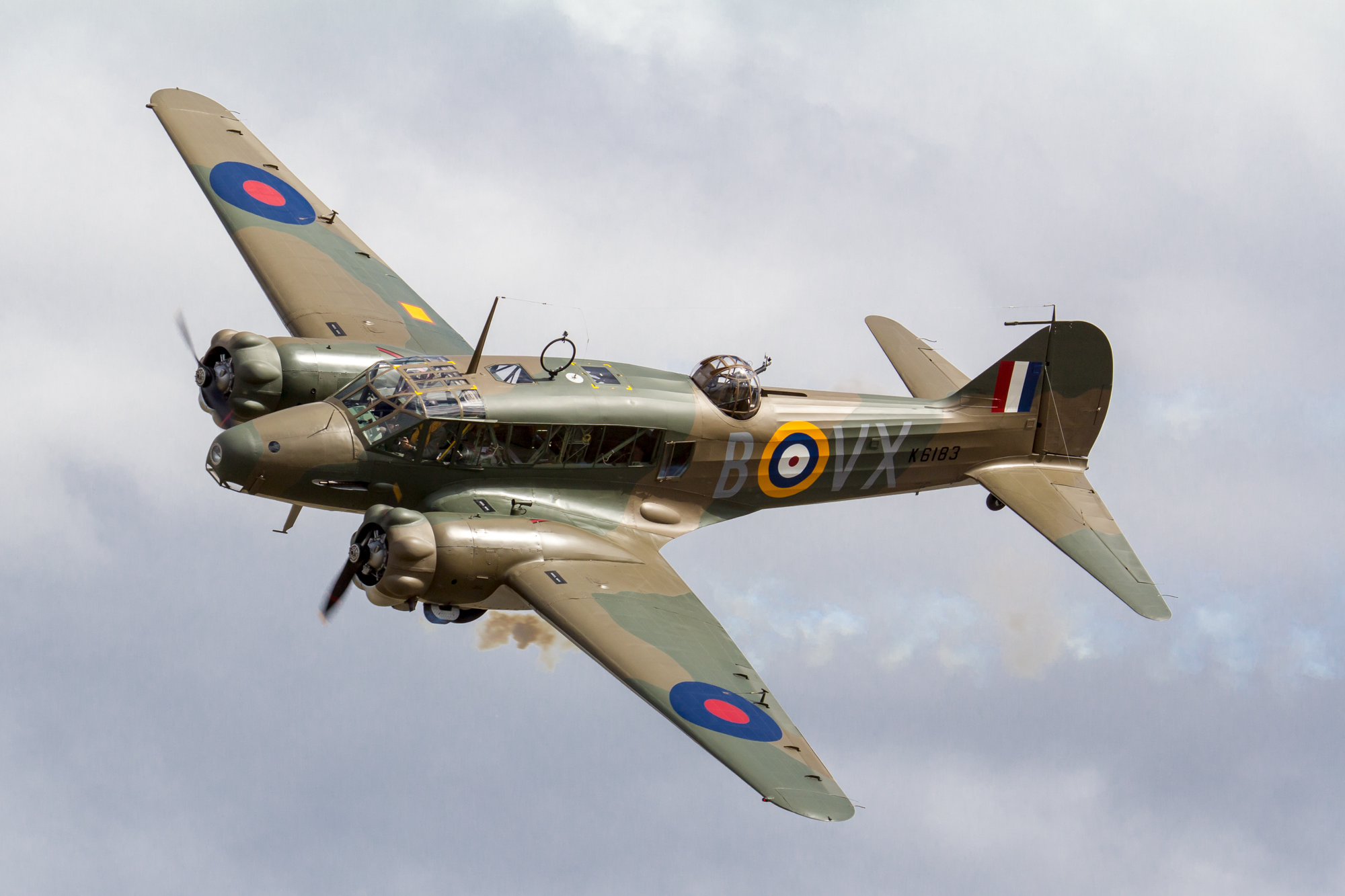
The Avro Anson is a British twin-engine, multi-role aircraft built by the aircraft manufacturer Avro. Large numbers of the type served in a variety of roles for the Royal Air Force (RAF), Fleet Air Arm (FAA), Royal Canadian Air Force (RCAF), Royal Australian Air Force (RAAF), and numerous other air forces before, during, and after the Second World War.
Initially known as the Avro 652A, the Anson was developed during the mid-1930s from the earlier Avro 652 airliner in response to a request for tenders issued by the British Air Ministry for a coastal maritime reconnaissance aircraft. Having suitably impressed the Ministry, a single prototype was ordered, which conducted its maiden flight on 24 March 1935. Following an evaluation in which the Type 652A bettered the competing de Havilland DH.89, it was selected as the winner, leading to Air Ministry Specification 18/35 being written around the type and an initial order for 174 aircraft being ordered in July 1935. The Type 652A was promptly named after British Admiral George Anson.
The type was placed into service with the Royal Air Force (RAF) and was initially used in the envisaged maritime reconnaissance operation alongside the larger flying boats. After the outbreak of the Second World War, the Anson was soon found to have become obsolete in front-line combat roles. Large numbers of the type were instead put to use as a multi-engine aircrew trainer, having been found to be suitable for the role, and became the mainstay of the British Commonwealth Air Training Plan. The type continued to be used in this role throughout and after the conflict, remaining in RAF service as a trainer and communications aircraft until 28 June 1968.
Post-war, a small number of Ansons (known as Avro 19s) were built new for the civilian market, along with a much larger number of civil conversions from surplus military stocks, being used as light transport and executive aircraft. By the end of production in 1952, a total of 8,138 Ansons had been constructed by Avro in nine variants. A further 2,882 aircraft were manufactured by Federal Aircraft Ltd in Canada from 1941. By the 21st century, the vast majority of Ansons had been retired, but three aircraft still appear at flying displays.
In 1933, the British Air Ministry proposed that the Royal Air Force (RAF) acquire a relatively cheap landplane for coastal maritime reconnaissance duties; the proposed aircraft would perform as a supplement to the more capable, but expensive, flying boats which the RAF had adopted for conducting maritime reconnaissance missions. The Air Ministry looked for designs from British manufacturers. Avro responded to the request with the Avro 652A, which was a modified version of their earlier Avro 652, a twin-engined, six-seat monoplane airliner. de Havilland offered a design based on their D.H.89A Dragon Rapide biplane. After evaluating the various submissions received, the Air Ministry decided to order from Avro and de Havilland respectively, single examples of the Type 652A and the de Havilland DH.89 for evaluation purposes late in 1934; an evaluation and the subsequent selection of a design for production to take place by May 1935.
On 24 March 1935, the Avro 652A conducted its maiden flight at Woodford Aerodrome, Greater Manchester. Between 11 and 17 May 1935, the prototype participated in a formal evaluation against the competing DH.89M by the RAF's Coastal Defence Development Unit at RAF Gosport, Hampshire. During these trials, the Avro aircraft proved to be superior and was accordingly selected as the winner of the competition on 25 May 1935. In response to its selection, Air Ministry Specification G.18/35 was written around the Type 652A; in July 1935, an initial order for 174 aircraft, which had been given the service name "Anson", was received.
On 31 December 1935, the first production Anson performed its maiden flight; changes from the prototype included an enlarged horizontal tailplane and reduced elevator span in order to improve stability. Additionally, while the prototype had not been fitted with flaps, production aircraft could accommodate their installation from the onset to increase the viable glide angle and reduce landing speed. On 6 March 1936, deliveries to the RAF commenced. By the end of production in 1952, a total of 11,020 Ansons had been completed, which made it the second most numerous (after approximately 11,500 Vickers Wellington medium bomber) British multi-engined aircraft of the Second World War.
The Avro Anson was a twin-engine, low-wing cantilever monoplane. Developed as a general reconnaissance aircraft, it possessed many features that lent itself to the role, including considerable load-carrying ability, and long range. The structure of the Anson was relatively straightforward and uncomplicated, relying on proven methods and robust construction to produce an airframe that minimized maintenance requirements. Much of the internal structure retained similarities to the earlier Avro 652 airliner from which it had been developed. The Anson Mk I was furnished with a low-mounted one-piece wooden wing, composed of a combination of plywood and spruce throughout the wingbox and ribs. The fuselage was composed of a welded steel tubing framework which was principally clad in fabric; the exterior of the nose was clad in magnesium alloy.
Hub AI
Avro Anson AI simulator
(@Avro Anson_simulator)
Avro Anson
The Avro Anson is a British twin-engine, multi-role aircraft built by the aircraft manufacturer Avro. Large numbers of the type served in a variety of roles for the Royal Air Force (RAF), Fleet Air Arm (FAA), Royal Canadian Air Force (RCAF), Royal Australian Air Force (RAAF), and numerous other air forces before, during, and after the Second World War.
Initially known as the Avro 652A, the Anson was developed during the mid-1930s from the earlier Avro 652 airliner in response to a request for tenders issued by the British Air Ministry for a coastal maritime reconnaissance aircraft. Having suitably impressed the Ministry, a single prototype was ordered, which conducted its maiden flight on 24 March 1935. Following an evaluation in which the Type 652A bettered the competing de Havilland DH.89, it was selected as the winner, leading to Air Ministry Specification 18/35 being written around the type and an initial order for 174 aircraft being ordered in July 1935. The Type 652A was promptly named after British Admiral George Anson.
The type was placed into service with the Royal Air Force (RAF) and was initially used in the envisaged maritime reconnaissance operation alongside the larger flying boats. After the outbreak of the Second World War, the Anson was soon found to have become obsolete in front-line combat roles. Large numbers of the type were instead put to use as a multi-engine aircrew trainer, having been found to be suitable for the role, and became the mainstay of the British Commonwealth Air Training Plan. The type continued to be used in this role throughout and after the conflict, remaining in RAF service as a trainer and communications aircraft until 28 June 1968.
Post-war, a small number of Ansons (known as Avro 19s) were built new for the civilian market, along with a much larger number of civil conversions from surplus military stocks, being used as light transport and executive aircraft. By the end of production in 1952, a total of 8,138 Ansons had been constructed by Avro in nine variants. A further 2,882 aircraft were manufactured by Federal Aircraft Ltd in Canada from 1941. By the 21st century, the vast majority of Ansons had been retired, but three aircraft still appear at flying displays.
In 1933, the British Air Ministry proposed that the Royal Air Force (RAF) acquire a relatively cheap landplane for coastal maritime reconnaissance duties; the proposed aircraft would perform as a supplement to the more capable, but expensive, flying boats which the RAF had adopted for conducting maritime reconnaissance missions. The Air Ministry looked for designs from British manufacturers. Avro responded to the request with the Avro 652A, which was a modified version of their earlier Avro 652, a twin-engined, six-seat monoplane airliner. de Havilland offered a design based on their D.H.89A Dragon Rapide biplane. After evaluating the various submissions received, the Air Ministry decided to order from Avro and de Havilland respectively, single examples of the Type 652A and the de Havilland DH.89 for evaluation purposes late in 1934; an evaluation and the subsequent selection of a design for production to take place by May 1935.
On 24 March 1935, the Avro 652A conducted its maiden flight at Woodford Aerodrome, Greater Manchester. Between 11 and 17 May 1935, the prototype participated in a formal evaluation against the competing DH.89M by the RAF's Coastal Defence Development Unit at RAF Gosport, Hampshire. During these trials, the Avro aircraft proved to be superior and was accordingly selected as the winner of the competition on 25 May 1935. In response to its selection, Air Ministry Specification G.18/35 was written around the Type 652A; in July 1935, an initial order for 174 aircraft, which had been given the service name "Anson", was received.
On 31 December 1935, the first production Anson performed its maiden flight; changes from the prototype included an enlarged horizontal tailplane and reduced elevator span in order to improve stability. Additionally, while the prototype had not been fitted with flaps, production aircraft could accommodate their installation from the onset to increase the viable glide angle and reduce landing speed. On 6 March 1936, deliveries to the RAF commenced. By the end of production in 1952, a total of 11,020 Ansons had been completed, which made it the second most numerous (after approximately 11,500 Vickers Wellington medium bomber) British multi-engined aircraft of the Second World War.
The Avro Anson was a twin-engine, low-wing cantilever monoplane. Developed as a general reconnaissance aircraft, it possessed many features that lent itself to the role, including considerable load-carrying ability, and long range. The structure of the Anson was relatively straightforward and uncomplicated, relying on proven methods and robust construction to produce an airframe that minimized maintenance requirements. Much of the internal structure retained similarities to the earlier Avro 652 airliner from which it had been developed. The Anson Mk I was furnished with a low-mounted one-piece wooden wing, composed of a combination of plywood and spruce throughout the wingbox and ribs. The fuselage was composed of a welded steel tubing framework which was principally clad in fabric; the exterior of the nose was clad in magnesium alloy.