



Community hub
Community hub
Recent from talks
Knowledge base stats:
Talk channels stats:
Members stats:
Axis of evil
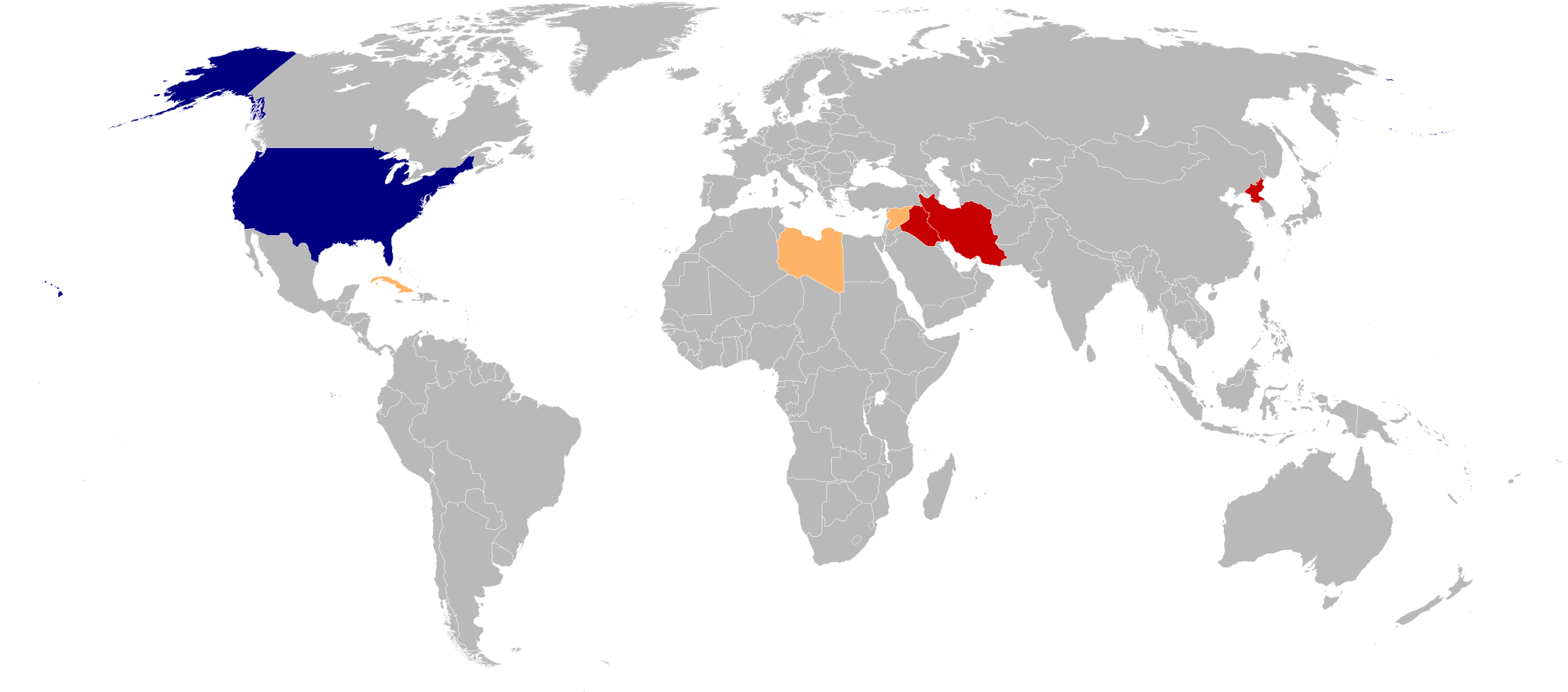
The phrase "axis of evil" was first used by U.S. president George W. Bush and originally referred to Iran, Ba'athist Iraq, and North Korea. It was used in Bush's State of the Union address on January 29, 2002, less than five months after the September 11 attacks and more than a year before the 2003 invasion of Iraq, and often repeated throughout his presidency. He used it to describe foreign governments that, during his administration, allegedly sponsored terrorism and sought weapons of mass destruction.
The countries originally covered by the term were Iran, Ba'athist Iraq, and North Korea. In response, Iran formed a political alliance that it called the "Axis of Resistance" comprising Iran, Ba'athist Syria and Hezbollah.
Later, China, Russia, Iran and North Korea were referred to as the "new axis of evil" by U.S. politicians and commentators. The term "axis of evil" is a reference to the Axis powers of World War II (Nazi Germany, Fascist Italy, and the Empire of Japan).
The phrase was attributed to former Bush pro-Israel speechwriter David Frum, originally as the axis of hatred and then evil. Information about his authorship first came out when emails of Frum's wife to friends were picked up by the media. Frum explained his rationale for creating the phrase axis of evil in his 2003 book The Right Man: The Surprise Presidency of George W. Bush. According to Frum, in late December 2001 head speechwriter Michael Gerson gave him the assignment of articulating the case for dislodging the regime of Saddam Hussein in Iraq in only a few sentences for the upcoming State of the Union address. Frum says he began by rereading President Franklin D. Roosevelt's "date which will live in infamy" speech given on December 8, 1941, after the Japanese surprise attack on Pearl Harbor. While Americans needed no convincing about going to war with Japan, Roosevelt saw the greater threat to the United States coming from Nazi Germany, and he had to make the case for fighting a two-ocean war.
Frum points in his book to a now often-overlooked sentence in Roosevelt's speech which reads in part, "...we will not only defend ourselves to the uttermost but will make very certain that this form of treachery shall never endanger us again." Frum interprets Roosevelt's oratory like this: "For FDR, Pearl Harbor was not only an attack—it was a warning of future and worse attacks from another, even more dangerous enemy." Japan, a country with one-tenth of America's industrial capacity, a dependence on imports for its food, and already engaged in a war with China, was extremely reckless to attack the United States, a recklessness "that made the Axis such a menace to world peace", Frum says. Saddam Hussein's two wars, against Iran and Kuwait, were just as reckless, Frum decided, and therefore presented the same threat to world peace.
In his book Frum relates that the more he compared the Axis powers of World War II to modern "terror states", the more similarities he saw. "The Axis powers disliked and distrusted one another", Frum writes. "Had the Axis somehow won the war, its members would quickly have turned on one another." Iran, Iraq, al-Qaeda, and Hezbollah, despite quarreling among themselves, "all resented power of the West and Israel, and they all despised the humane values of democracy." There, Frum saw the connection: "Together, the terror states and the terror organizations formed an axis of hatred against the United States."
Frum tells that he then sent off a memo with the above arguments and also cited some of the atrocities perpetrated by the Iraqi government. He expected his words to be chopped apart and altered beyond recognition, as is the fate of much presidential speechwriting, but his words were ultimately read by Bush nearly verbatim, though Bush changed the term axis of hatred to axis of evil. North Korea was added to the list, he says, because it was attempting to develop nuclear weapons, had a history of reckless aggression, and "needed to feel a stronger hand".
A decade before the 2002 State of the Union address, in August 1992, the Israeli-American political scientist Yossef Bodansky wrote a paper entitled "Tehran, Baghdad & Damascus: The New Axis Pact" while serving as the Director of the Congressional Task Force on Terrorism and Unconventional Warfare of the US House of Representatives. Although he did not explicitly apply the epithet evil to his New Axis, Bodansky's axis was otherwise very reminiscent of Frum's axis. Bodansky felt that this new Axis was a very dangerous development. The gist of Bodansky's argument was that Iran, Iraq and Syria had formed a "tripartite alliance" in the wake of the First Gulf War, and that this alliance posed an imminent threat that could only be dealt with by invading Iraq a second time and overthrowing Saddam Hussein.
Hub AI
Axis of evil AI simulator
(@Axis of evil_simulator)
Axis of evil
The phrase "axis of evil" was first used by U.S. president George W. Bush and originally referred to Iran, Ba'athist Iraq, and North Korea. It was used in Bush's State of the Union address on January 29, 2002, less than five months after the September 11 attacks and more than a year before the 2003 invasion of Iraq, and often repeated throughout his presidency. He used it to describe foreign governments that, during his administration, allegedly sponsored terrorism and sought weapons of mass destruction.
The countries originally covered by the term were Iran, Ba'athist Iraq, and North Korea. In response, Iran formed a political alliance that it called the "Axis of Resistance" comprising Iran, Ba'athist Syria and Hezbollah.
Later, China, Russia, Iran and North Korea were referred to as the "new axis of evil" by U.S. politicians and commentators. The term "axis of evil" is a reference to the Axis powers of World War II (Nazi Germany, Fascist Italy, and the Empire of Japan).
The phrase was attributed to former Bush pro-Israel speechwriter David Frum, originally as the axis of hatred and then evil. Information about his authorship first came out when emails of Frum's wife to friends were picked up by the media. Frum explained his rationale for creating the phrase axis of evil in his 2003 book The Right Man: The Surprise Presidency of George W. Bush. According to Frum, in late December 2001 head speechwriter Michael Gerson gave him the assignment of articulating the case for dislodging the regime of Saddam Hussein in Iraq in only a few sentences for the upcoming State of the Union address. Frum says he began by rereading President Franklin D. Roosevelt's "date which will live in infamy" speech given on December 8, 1941, after the Japanese surprise attack on Pearl Harbor. While Americans needed no convincing about going to war with Japan, Roosevelt saw the greater threat to the United States coming from Nazi Germany, and he had to make the case for fighting a two-ocean war.
Frum points in his book to a now often-overlooked sentence in Roosevelt's speech which reads in part, "...we will not only defend ourselves to the uttermost but will make very certain that this form of treachery shall never endanger us again." Frum interprets Roosevelt's oratory like this: "For FDR, Pearl Harbor was not only an attack—it was a warning of future and worse attacks from another, even more dangerous enemy." Japan, a country with one-tenth of America's industrial capacity, a dependence on imports for its food, and already engaged in a war with China, was extremely reckless to attack the United States, a recklessness "that made the Axis such a menace to world peace", Frum says. Saddam Hussein's two wars, against Iran and Kuwait, were just as reckless, Frum decided, and therefore presented the same threat to world peace.
In his book Frum relates that the more he compared the Axis powers of World War II to modern "terror states", the more similarities he saw. "The Axis powers disliked and distrusted one another", Frum writes. "Had the Axis somehow won the war, its members would quickly have turned on one another." Iran, Iraq, al-Qaeda, and Hezbollah, despite quarreling among themselves, "all resented power of the West and Israel, and they all despised the humane values of democracy." There, Frum saw the connection: "Together, the terror states and the terror organizations formed an axis of hatred against the United States."
Frum tells that he then sent off a memo with the above arguments and also cited some of the atrocities perpetrated by the Iraqi government. He expected his words to be chopped apart and altered beyond recognition, as is the fate of much presidential speechwriting, but his words were ultimately read by Bush nearly verbatim, though Bush changed the term axis of hatred to axis of evil. North Korea was added to the list, he says, because it was attempting to develop nuclear weapons, had a history of reckless aggression, and "needed to feel a stronger hand".
A decade before the 2002 State of the Union address, in August 1992, the Israeli-American political scientist Yossef Bodansky wrote a paper entitled "Tehran, Baghdad & Damascus: The New Axis Pact" while serving as the Director of the Congressional Task Force on Terrorism and Unconventional Warfare of the US House of Representatives. Although he did not explicitly apply the epithet evil to his New Axis, Bodansky's axis was otherwise very reminiscent of Frum's axis. Bodansky felt that this new Axis was a very dangerous development. The gist of Bodansky's argument was that Iran, Iraq and Syria had formed a "tripartite alliance" in the wake of the First Gulf War, and that this alliance posed an imminent threat that could only be dealt with by invading Iraq a second time and overthrowing Saddam Hussein.