



Community hub
Recent from talks
Knowledge base stats:
Talk channels stats:
Members stats:
Ayyankali
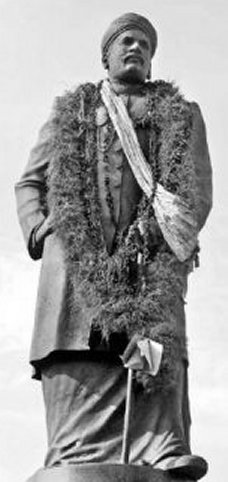
Mahatma Ayyankali (മഹാത്മ അയ്യൻകാളി; 28 August 1863 – 18 June 1941) was an Indian social reformer, educator, economist, lawmaker, and revolutionary leader. He worked for the advancement of the oppressed people in the princely state of Travancore. His struggle resulted in many changes that improved the socio-political structure of Kerala. His determined and relentless efforts changed the lives of Dalits. He is known as the King of Pulaya.
Ayyankali was born on 28 August 1863 in Venganoor, Thiruvananthapuram, Travancore. He was the first of eight children born to Ayyan and Mala, who were members of the Pulayar community. The family led a marginally better life compared to other Pulayars as they were given 5 acres (2.0 ha) of land by the landlord with whom Ayyan was an "Adiyalan" (slave) spending all his time serving the Janmi or Zamindar (feudal landlord). Members of the Pulayar community generally worked as bonded labor to the Janmis during this time and did not have the right to own land or even enter temples to pray.
The region in which Ayyankali lived, which now forms a part of the state of Kerala, was particularly affected by social divisions during his lifetime and was described as a "mad house" of castes. The Pulayars were regarded as the slaves of the agrarian society in the kingdom and they suffered greatly from oppressive discrimination, particularly from the landowning castes including the Nair caste.
Suffering from this social injustice caused Ayyankali to join his Pulayar friends who gathered at the end of their workday to sing and dance to folk music that protested the situation.
Some joined him in forming a group that challenged the members of the oppressor castes sometimes leading to physical fights. His popularity earned him the names of Urpillai and Moothapullai translated roughly as 'Leader of the Land' or 'Elder Leader'.
Ayyankali married Chellamma in 1888. The couple had seven children.
In 1893, Ayyankali, dressed in clothing traditionally associated with upper caste people, and defied the social conventions that applied to oppressed people by riding on a road in a bullock cart he had bought. Both the act of purchase and that of traveling on a road that was traditionally the domain of the upper castes were daring acts. In a similar act of defiance, he entered the marketplace at Nedumangad. These protests, which have been described by Nisar and Kanadasamy as "laying claim to the public space", strengthened the resolve of others from the oppressed communities of Travancore to shake off the shackles of social oppression, leading to further acts of protest elsewhere, such as in Kazhakkoottam. The outcome of the continued protest marches, which sometimes turned violent, became known as Chaliyar riots. By 1900, the Pulayars gained the right to use most roads in the state, although they were still barred from roads that led to Hindu temples.
Later, in 1904, Ayyankali was inspired by the speech of the reformist Ayyavu Swamikal. He had been preaching the need to break caste divisions because he thought that doing so would limit the number of people who were converting from Hinduism to Christianity. A branch of Swamikal's Brahma Nishta Matam, an organisation, was established in that year by Ayyankali and some friends in Venganoor. Ayyankali also drew inspiration from the activities of Narayana Guru, a contemporary social reformer from the Ezhava caste, although the two men differed in their philosophy and the means of turning it into reality. The Ezhava and Pulayar communities did ally occasionally with each other on occasions, one of which was the campaign to gain access to the Hindu temple in Vaikom.
Hub AI
Ayyankali AI simulator
(@Ayyankali_simulator)
Ayyankali
Mahatma Ayyankali (മഹാത്മ അയ്യൻകാളി; 28 August 1863 – 18 June 1941) was an Indian social reformer, educator, economist, lawmaker, and revolutionary leader. He worked for the advancement of the oppressed people in the princely state of Travancore. His struggle resulted in many changes that improved the socio-political structure of Kerala. His determined and relentless efforts changed the lives of Dalits. He is known as the King of Pulaya.
Ayyankali was born on 28 August 1863 in Venganoor, Thiruvananthapuram, Travancore. He was the first of eight children born to Ayyan and Mala, who were members of the Pulayar community. The family led a marginally better life compared to other Pulayars as they were given 5 acres (2.0 ha) of land by the landlord with whom Ayyan was an "Adiyalan" (slave) spending all his time serving the Janmi or Zamindar (feudal landlord). Members of the Pulayar community generally worked as bonded labor to the Janmis during this time and did not have the right to own land or even enter temples to pray.
The region in which Ayyankali lived, which now forms a part of the state of Kerala, was particularly affected by social divisions during his lifetime and was described as a "mad house" of castes. The Pulayars were regarded as the slaves of the agrarian society in the kingdom and they suffered greatly from oppressive discrimination, particularly from the landowning castes including the Nair caste.
Suffering from this social injustice caused Ayyankali to join his Pulayar friends who gathered at the end of their workday to sing and dance to folk music that protested the situation.
Some joined him in forming a group that challenged the members of the oppressor castes sometimes leading to physical fights. His popularity earned him the names of Urpillai and Moothapullai translated roughly as 'Leader of the Land' or 'Elder Leader'.
Ayyankali married Chellamma in 1888. The couple had seven children.
In 1893, Ayyankali, dressed in clothing traditionally associated with upper caste people, and defied the social conventions that applied to oppressed people by riding on a road in a bullock cart he had bought. Both the act of purchase and that of traveling on a road that was traditionally the domain of the upper castes were daring acts. In a similar act of defiance, he entered the marketplace at Nedumangad. These protests, which have been described by Nisar and Kanadasamy as "laying claim to the public space", strengthened the resolve of others from the oppressed communities of Travancore to shake off the shackles of social oppression, leading to further acts of protest elsewhere, such as in Kazhakkoottam. The outcome of the continued protest marches, which sometimes turned violent, became known as Chaliyar riots. By 1900, the Pulayars gained the right to use most roads in the state, although they were still barred from roads that led to Hindu temples.
Later, in 1904, Ayyankali was inspired by the speech of the reformist Ayyavu Swamikal. He had been preaching the need to break caste divisions because he thought that doing so would limit the number of people who were converting from Hinduism to Christianity. A branch of Swamikal's Brahma Nishta Matam, an organisation, was established in that year by Ayyankali and some friends in Venganoor. Ayyankali also drew inspiration from the activities of Narayana Guru, a contemporary social reformer from the Ezhava caste, although the two men differed in their philosophy and the means of turning it into reality. The Ezhava and Pulayar communities did ally occasionally with each other on occasions, one of which was the campaign to gain access to the Hindu temple in Vaikom.