Respect all members: no insults, harassment, or hate speech.
Be tolerant of different viewpoints, cultures, and beliefs. If you do not agree with others, just create separate note, article or collection.
Clearly distinguish between personal opinion and fact.
Verify facts before posting, especially when writing about history, science, or statistics.
Promotional content must be published on the “Related Services and Products” page—no more than one paragraph per service. You can also create subpages under the “Related Services and Products” page and publish longer promotional text there.
Do not post materials that infringe on copyright without permission.
Always credit sources when sharing information, quotes, or media.
Be respectful of the work of others when making changes.
Discuss major edits instead of removing others' contributions without reason.
If you notice rule-breaking, notify community about it in talks.
Do not share personal data of others without their consent.
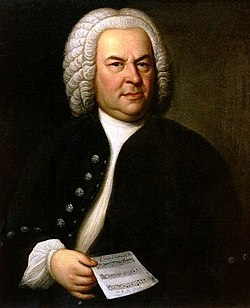
The Great Eighteen Chorale Preludes, BWV 651–668, are a set of chorale preludes for organ prepared by Johann Sebastian Bach in Leipzig in his final decade (1740–1750), from earlier works composed in Weimar, where he was court organist. The works form an encyclopedic collection of large-scale chorale preludes, in a variety of styles harking back to the previous century, that Bach gradually perfected during his career. Together with the Orgelbüchlein, the Schübler Chorales, the third book of the Clavier-Übung and the Canonic Variations, they represent the summit of Bach's sacred music for solo organ.[1]
The court chapel at the Schloss in Weimar where Bach was court organist. The organ loft is visible at the top of the picture.
Early versions of almost all the chorale preludes are thought to date back to 1710–1714, during the period 1708–1717 when Bach served as court organist and Konzertmeister (director of music) in Weimar, at the court of Wilhelm Ernst, Duke of Saxe-Weimar.[2]
As a result of encouragement from the Duke, a devout Lutheran and music lover, Bach developed secular and liturgical organ works in all forms, in what was to be his most productive period for organ composition. As his son Carl Philipp Emanuel Bach mentions in his obituary or nekrolog: "His grace's delight in his playing fired him to attempt everything possible in the art of how to treat the organ. Here he also wrote most of his organ works."[3] During Bach's time at Weimar, the chapel organ there was extensively improved and enlarged; occupying a loft at the east end of the chapel just below the roof, it had two manual keyboards, a pedalboard and about a dozen stops, including at Bach's request a row of tuned bells. It is probable that the longer chorale preludes composed then served some ceremonial function during the services in the court chapel, such as accompanying communion.[4]
When Bach moved to his later positions as Kapellmeister in Köthen in 1717 and cantor at the Thomaskirche in Leipzig in 1723, his obligations did not specifically include compositions for the organ. The autograph manuscript of the Great Eighteen, currently preserved as P 271 in the Berlin State Library, documents that Bach began to prepare the collection around 1740, after having completed Part III of the Clavier-Übung in 1739. The manuscript is made up of three parts: the six trio sonatas for organ BWV 525–530 (1727–1732); the Canonic Variations on "Vom Himmel hoch da komm' ich her" BWV 769 added at the same time as the chorale preludes (1739–1750); and an early version of Nun komm' der heiden Heiland (1714–1717), appended after Bach's death.[5]
The first thirteen chorale preludes BWV 651–663 were added by Bach himself between 1739 and 1742, supplemented by BWV 664 and 665 in 1746–7. In 1750 when Bach began to suffer from blindness before his death in July, BWV 666 and 667 were dictated to his student and son-in-law Johann Christoph Altnikol and copied posthumously into the manuscript. Only the first page of the last choral prelude BWV 668, the so-called "deathbed chorale", has survived, recorded by an unknown copyist.[6] The piece was posthumously published in 1751 as an appendix to the Art of the Fugue, with the title "Wenn wir in höchsten Nöthen sein" (BWV 668a), instead of the original title "Vor deinen Thron tret ich hiermit" ("Before your throne I now appear").
There have been various accounts of the circumstances surrounding the composition of this chorale. The biographical account from 1802 of Johann Nicolaus Forkel that Altnikol was copying the work at the composer's deathbed has since been discounted: in the second half of the eighteenth century, it had become an apocryphal legend, encouraged by Bach's heirs, Carl Philipp Emmanuel Bach and Wilhelm Friedmann Bach. The piece, however, is now accepted as a planned reworking of the shorter chorale prelude Wenn wir in höchsten Nöthen sein (BWV 641) from the Orgelbüchlein (c 1715).[7][8][9]
The single surviving page of the manuscript of "Vor deinen Thron tret ich", BWV 668, recorded by an unknown copyist in the last year of Bach's life.[10]
The breadth of styles and forms represented by the Great Eighteen is as diverse as that of Bach's Well Tempered Clavier for the keyboard. The pieces are on a large and often epic scale, compared with the miniature intimacy of the choral preludes of the Orgelbüchlein. Many of the chorale preludes pay homage to much older models in the German liturgical tradition (Georg Böhm, Buxtehude and Pachelbel), but the parallel influence of the Italian concerto tradition is equally visible. It is a mid-eighteenth century salute to the musical traditions of the previous century. Unlike Part III of the Clavier-Übung, where Bach pushed his compositional techniques for the organ to new limits, the chorale settings of Bach's Great Eighteen represent "the very quintessence of all he elaborated in Weimar in this field of art;"[11] they "transcend by their magnitude and depth all previous types of choral prelude";[12] and they display a "workmanship as nearly flawless as we have any right to expect of a human being."[13] The eighteen are characterized by their freely developed and independent accompaniment filling the long intervals between the successive lines of the cantus firmus, a feature of their large scale which has not pleased all commentators.[14]
The Renaissance motet, in madrigal style, forms the model for the chorale motet, used in BWV 665 and 666. Each line of the chorale is established as a point of imitation for the different parts, which keep to a common rhythm. This style, the earliest used by Bach, was that employed in his Mühlhausen cantatas, such as the funeral cantata Actus Tragicus, BWV 106. A common distinctive feature is the use of musical figures to illustrate particular lines or even words in the hymn text.[15]
The chorale partita is a set of variations on a chorale melody. Normally each variation repeats the chorale melody and is essentially a separate movement. This style goes back to the Dutch composer Sweelinck and was adopted by his German pupils Scheidt and Scheidemann; the tradition was continued at the turn of the 18th century by Georg Böhm and Pachelbel from Thuringia, who provided the model for Bach.[16] Bach, however, broke the norm in the two chorale preludes of this genre, BWV 656 and 667, which each have only a small number of variations (3 and 2). This might be a homage to Dieterich Buxtehude, who had written similar partitas and whose music and virtuosity at the organ is known to have exercised a considerable influence on Bach in his youth.[17]
In the ornamental chorale, a form invented and popularized in Northern Germany by Scheidemann, the chorale melody is taken by one voice in an elaborate and highly embellished form. Buxtehude was one of its most celebrated exponents, with his individual expressive "vocal" ornamentation.
Five chorale preludes of the Great Eighteen were written in this style: BWV 652, 653, 654, 659 and 662.[18]
The cantus firmus chorale: The melody of the chorale is sounded in long notes throughout the piece, was established and popularized in central Germany by Pachelbel. One of his students was Johann Christoph Bach III, Bach's older brother, who in turn taught Bach keyboard technique. There are six examples of the cantus firmus chorale: BWV 651, 657, 658, 661, 663
and 668.[19]
The chorale trio has the form of a trio sonata in which the upper parts are played on the two keyboards of the organ and the basso continuo part is played on the pedals. Bach elevated this form to the status of contemporary Italian trio sonatas or double concertos of Antonio Vivaldi and Giuseppe Torelli: it is probably his single most original innovation in the repertoire of organ chorales. The three virtuosic chorale preludes of this type are BWV 655, 660 and 664.[20]
Autograph manuscript of BWV 651 with Bach's motto "J.J.", Jesu juva
The brief descriptions of the chorale preludes are based on the detailed analysis in Williams (1980) and Stinson (2001).
To listen to a MIDI recording, please click on the link.
BWV 651 Fantasia super Komm, Heiliger Geist[Come, Holy Ghost], canto fermo in Pedale (cantus firmus chorale) playⓘ
Over the pedal chorale melody sweeps an exuberant toccata, conveying the "rushing mighty wind"[21] of the Holy Spirit; a second ornamented subject symbolises the Hallelujas at the culmination of the hymn.
BWV 652 Komm, Heiliger Geist[Come, Holy Ghost], alio modo a 2 Clav. e Pedale (ornamental chorale) playⓘ
The ornate chorale melody sings out above a lyrical and calm three-part sarabande, with flowing semiquavers marking the Hallelujas of the coda, in this, the longest of the chorale preludes.
BWV 653 An Wasserflüssen Babylon[By the waters of Babylon], a 2 Clav. e Pedale (ornamental chorale) playⓘ
The hymn "An Wasserflüssen Babylon" is a paraphrase of Psalm 137, a lament in exile in Babylon. The gentle ritornellos of the accompanying parts in the two upper parts and pedal of this sarabande anticipate the ornamented chorale in the tenor, evoking the mournful tone of the hymn, the "organs and harps, hung up on willow trees", based on Psalm 137. In a famous concert in 1720 on the great organ in St Catherine's Church in Hamburg, Bach had improvised for almost half an hour on the same hymn tune as a tribute to the church's organist Johann Adam Reinken and his celebrated fantasy on the same theme. A derivation of the theme is used in the fugue from Bach's Violin Sonata No. 3 in C Major, BWV 1005.
BWV 654 Schmücke dich, o liebe Seele[Adorn yourself, dear soul], a 2 Clav. e Pedale (ornamental chorale) playⓘ
The soberly ornamented, but melismatic, chorale, Schmücke dich, o liebe Seele, in the soprano alternates with the dance-like ritornellos of the two intertwining lower parts above a pedal bass; the unearthly counterpoint between the four parts creates an air of great serenity, a "rapturous meditation" on the rite of communion.[22] The adornment in the title is illustrated by the French-style ornamentation of the upper parts.
BWV 655 Trio super Herr Jesu Christ, dich zu uns wend[Lord Jesu Christ, turn to us], a 2 Clav. e Pedale (chorale trio) playⓘ
Similar in texture to movements from the organ trio sonatas, this jubilant and lively concerto-like chorale prelude echos the "eternal joy and blissful light" of the last verse. The chorale prelude's progression through the keys of G, D, E minor, B minor, D and finally G, is reminiscent of Vivaldi concertos. The two manual solo parts and pedal continuo are based on elements from the cantus firmus, which is heard in its entirety in the pedal part of the recapitulation.
BWV 656 O Lamm Gottes unschuldig[Oh innocent lamb of God], 3 Versus (chorale partita) playⓘ
The first verse of this Good Friday hymn, is a subdued prelude in four parts based on the cantus firmus, which appears explicitly in the soprano line over the flowing quaver accompaniment; in the second verse the cantus firmus moves to the alto line and the quaver figures become more lively; in the final verse, the pedal finally appears to take up the cantus firmus, beneath a four-part fugal counter-subject in triplets, first in a forthright angular figuration, then in hammered repeated notes leading to an anguished chromatic passage, indicative of the crucifixion, and finally in peaceful flowing quavers.
This chorale prelude closely follows the model of Pachelbel, with a diversity of imitative elements in the lower parts, beneath the unadorned cantus firmus of the soprano line.
BWV 658 Von Gott will ich nicht lassen[I will not forsake the Lord], Canto fermo in Pedale (cantus firmus chorale) playⓘ
The ornate three-part keyboard accompaniment is derived from the opening notes of the hymn and a separate "joy motif" that permeates the piece, exquisitely "winding above and around [the chorale melody] like a luxurious garland of amaranth."[23] Only four lines of the cantus firmus are heard in the tenor pedal, the chorale prelude closing with a seemingly timeless bell-like coda over a pedal point, perhaps illustrating the final lines of the hymn, "after death we will be buried deep in the earth; when we have slept, we will be awoken by God." In this "bell" coda, the note c1 sharp is heard 7 times consecutively, within a fourth voice, outside of the three accompaniment voices. This is indicative of the German funeral bell.
BWV 659 played by The Melodica Drone & Bach QuartetBWV 659 Nun komm' der Heiden Heiland[Come now, Saviour of the heathen], a 2 Clav. e Pedale (ornamental chorale) in G minor playⓘ
Over the quavers of the continuo-like "walking bass" in the pedal, the two inner parts move forward meditatively in canon, beneath the florid and melismatic cantus firmus of "Nun komm, der Heiden Heiland". The beautiful melody, endlessly prolonged and never fully perceptible amid the freely spiraling arabesques, evokes the mystery of the incarnation; it is matched by the perfection of the accompaniment.
BWV 660 Trio super Nun komm' der Heiden Heiland[Come now, Saviour of the heathen], a due Bassi e canto fermo (chorale trio) playⓘ
This chorale prelude is unusually scored as a two-part invention for pedal and bass, with the ornamented cantus firmus in the soprano line following the original hymn melody fairly closely. The opening ritornello, played imitatively in canon, contains the notes of the cantus firmus—g, g, f♯, b♭, a, g, a, g— distributed between the two bass parts.[24]
BWV 661 Nun komm' der Heiden Heiland[Come now, Saviour of the heathen], in Organo Pleno, Canto fermo in Pedale (cantus firmus chorale) playⓘ
Beneath a three-part keyboard fugue, typical of Bach's large scale free organ fugues, with an angular quaver theme derived from the melody, the cantus firmus is heard in the pedal; the fugal theme, its counter-subject and their inversions are combined in numerous ways in the course of the piece.
BWV 662 Allein Gott in der Höh' sei Ehr[Alone to God on high be honour], a 2. Clav. e Pedale, Canto fermo in Soprano (ornamental chorale) playⓘ
This chorale prelude, unusually marked adagio, is based on "Allein Gott in der Höh sei Ehr", a German version of the hymn Gloria in excelsis Deo. It has two ornate fugal inner parts over a continuo-like pedal, with a florid and melismatic cantus firmus in the soprano, its figurations reminiscent of those for obligato violin or oboe in the Weimar cantatas (e.g. the sinfonia of Ich hatte viel Bekümmernis, BWV 21).
BWV 663 Allein Gott in der Höh' sei Ehr[Alone to God on high be honour], a 2. Clav. e Pedale, Canto fermo in Tenore (cantus firmus chorale) playⓘ
The accompanying ritornello of this chorale prelude takes the form of a trio sonata, the two fantasia-like upper parts, with their lively constantly varying contrapuntal quaver figurations, matched by a solid pedal continuo; the aria-like ornamented cantus firmus is heard in the long tenor part, with its quaver melismas and sighs.
BWV 664 Trio super Allein Gott in der Höh' sei Ehr[Alone to God on high be honour], a 2. Clav. e Pedale (chorale trio) playⓘ
This is another chorale prelude similar to movements from the organ trio sonatas, inventive, scintillating, joyous and concerto-like; the two independent solo parts and the pedal continuo are based on elements from the cantus firmus, the first two phrases of which are only heard right at the end of the piece in the pedal before the final pedal point and coda. The chorale prelude is in three parts: six fugal statements of the ritornello; a series of brilliant violinistic episodes with suspensions, semiquavers and prolonged trills, punctuated twice by the ritornello in the minor mode; and a return of the ritornello over the cantus firmus ending in a long pedal point.
In this choral prelude, each of the four lines of the cantus firmus passes through the four different voices, accompanied by a counter-subject giving the musical colour appropriate to that line: the carrying of the Cross; God's anger; Christ's bitter suffering; and resurrection from the torment of Hell, for which Bach provides the longest and most elaborate pedal point of the whole collection.
BWV 666 Jesus Christus, unser Heiland[Jesus Christ, our Saviour], alio modo (chorale motet) playⓘ
This short chorale prelude for keyboard alone is a simple form of the chorale motet, with the cantus firmus again passed between parts and a different counter-subject for each of the four lines of the hymn.
BWV 667 Komm, Gott, Schöpfer, Heiliger Geist[Come, God, the Creator, Holy Ghost], in Organo pleno con Pedale obligato (chorale partita) playⓘ
This chorale prelude on Martin Luther's hymn for Pentecost "Komm, Gott Schöpfer, Heiliger Geist" consists of two variations linked by a bridging interlude: the first is a miniature chorale prelude almost identical to BWV 631 in the Orgelbüchlein, with an uninterrupted cantus firmus in the soprano line; in the second, the four lines of the cantus firmus are heard in the pedal, beneath a flowing imitative ritornello accompaniment on the keyboard.
BWV 668 Vor deinen Thron tret' ich hiermit[Before your throne I now appear] (fragment) (cantus firmus chorale) playⓘ
The three-part imitative accompaniment in the pedal and lower keyboard of this chorale prelude is based on figures derived from the 4 different lines of the melody and their inversions; each line of the cantus firmus itself is heard in the simple soprano line, stripped of any embellishment, after its pre-imitation in the ritornello parts.
The original chorale preludes composed in Weimar are numbered BWV 651a, 652a, etc. When there are two or three earlier versions, the numbering uses other letters of the alphabet, for example BWV 655a, 655b and 665c. The variant BWV 668a is the complete version of the chorale prelude that was published as an appendix to the Art of the Fugue, possibly to compensate for the unfinished final fugue, Contrapunctus XIV.[25]
The Great Eighteen were known throughout Germany by the turn of the nineteenth century, but only the last chorale prelude was available in print, in several editions, thanks to its reputation as the "deathbed chorale". Prior to the two Leipzig editions of Felix Mendelssohn in 1846 (which omitted BWV 664, 665, 666 and 668) and of Griepenkerl and Roitzsch in 1847 (which was complete), the only other published chorale prelude of the Great Eighteen was the brilliant trio Allein Gott BWV 664, which appeared in 1803 as one of the 38 chorale preludes in J. G. Schicht's four-volume anthology. The two chorale preludes Nun komm' der heiden Heiland, BWV 659, and Schmücke dich, o liebe Seele, BWV 654, had nevertheless become favourites. Mendelssohn and Schumann both venerated Schmücke dich: Schumann recalled Mendelssohn confessing after one performance that, "If life were to deprive me of hope and faith, this single chorale would replenish me with them both."[26] Following Mendelssohn's popularization of these works, the definitive Bach-Gesellschaft edition, edited by Wilhelm Rust, was published in Leipzig in 1875.[27]
Orgelchoralvorspiele von Johann Sebastian Bach: Auf das Pianoforte im Kammerstyl übertragen von Ferruccio Benvenuto Busoni, Leipzig, 1898 (dedicated to José Vianna da Motta)
Nun komm, der Heiden Heiland, BWV 659 playⓘ; Jesus Christus, unser Heiland, BWV 665; Komm, Gott Schöpfer, Heiliger Geist, BWV 667
Michel Chapuis, in Bach – The Complete Organ Works (1966–1970)
Bernard Foccroulle, Leipzig Chorales, Ricercar, RIC212 (2 discs). Recorded in 2002 on the large Silbermann organ in Freiberg Cathedral, Germany, dating from 1714. The recording also includes the Preludes and Fugues BWV 546 and 547, and the Canonic Variations on "Vom Himmel hoch", BWV 769a.
André Isoir, L'Oeuvre pour Orgue (15 discs), Calliope, CAL 3703–3717 (budget edition 2008). The chorale preludes, recorded in 1990 on the G. Westenfelder organ in Fère-en-Tardenois, are contained on the last 2 discs, which are available separately.
Simon Preston, in J.S. Bach: The Organ Works · Das Orgelwerk, Deutsche Grammophon. Recorded on the Metzler Organ of Trinity College, Cambridge in December 1999.
Bach, Johann Sebastian (1999), Die Achtzehn Grossen Orgelchoräle BWV 651–668 und Canonische Veränderungen über "Vom Himmel Hoch" BWV 769. Faksimile der Originalhandschrift mit einem Vorwort herausgegeben von Peter Wollny, Laaber-Verlag. Facsimile of original manuscript, P 271 in the Berlin State Library
Bach, Johann Sebastian (1970), Organ Music. The Bach-Gesellschaft edition, Dover, ISBN0-486-22359-0
Leahy, Anne (2011), J. S. Bach's "Leipzig" Chorale Preludes: Music, Text, Theology, Contextual Bach Studies, vol. 3, Scarecrow Press, ISBN978-0-8108-8181-5
Stinson, Russell (2001), J.S. Bach's Great Eighteen Organ Chorales, Oxford University Press, ISBN0-19-516556-X
Williams, Peter (1980), The Organ Music of J.S. Bach, Volume II: BWV 599–771, etc., Cambridge Studies in Music, Cambridge University Press, ISBN0-521-31700-2
The Great Eighteen Chorale Preludes, BWV 651–668, constitute a renowned collection of 18 organ works composed by Johann Sebastian Bach, primarily assembled and revised in Leipzig during the 1740s as part of his late-period efforts to refine and preserve his sacred keyboard legacy.[1] These chorale preludes, which elaborate on Lutheran hymn melodies through intricate counterpoint and varied structural forms, represent the culmination of Bach's mastery in the genre, blending theological depth with technical sophistication.[2] Originally drawn from earlier compositions dating back to the 1700s, Bach meticulously reworked them into a cohesive set, adding pieces up to shortly before his death in 1750, with the final prelude (BWV 668) possibly dictated while he was blind.[1]The collection's manuscript, preserved in the Berlin State Library, features 15 preludes in Bach's autograph handwriting, two copied by his son-in-law Johann Christoph Altnikol, and one by an unidentified scribe, underscoring its status as a carefully curated autograph volume.[1] Structurally diverse, it encompasses a variety of forms including chorale fantasias, ornamented chorales, trio settings, cantus firmus works, and variations, many based on hymns related to the Holy Spirit.[1] This variety exemplifies the evolution of the chorale prelude form from its 17th-century roots.[3]First termed the "Great Eighteen" in a 1921 scholarly publication, the set gained its epithet due to its scale and ambition compared to Bach's earlier, simpler chorale collections like the Orgelbüchlein.[4] Enduring as pinnacles of Baroque organ literature, these preludes continue to influence performers and scholars, with their complex interplay of melody, harmony, and registration demanding exceptional interpretive skill.[2]
Historical Background
Composition in Weimar
In 1708, Johann Sebastian Bach was appointed court organist and chamber musician to Duke Wilhelm Ernst of Saxe-Weimar, a position that provided him with significant opportunities to explore and develop his compositional skills on the organ.[5] This role involved performing during court chapel services and composing music tailored to the Lutheran liturgical calendar, which emphasized chorale-based works to support congregational singing.[6] Bach's duties encouraged experimentation with chorale preludes, allowing him to blend improvisatory elements with structured forms suited to the organ's capabilities.[7]The initial versions of several chorale preludes that would later form part of the Great Eighteen were composed during Bach's Weimar tenure (1708–1717), with many dating to around 1710–1714, though exact chronologies for some remain debated. These early drafts include the Weimar variants known as BWV 651a ("Komm, Heiliger Geist, Herre Gott"), BWV 652a ("Komm, Heiliger Geist, Herre Gott"), BWV 654a ("Schmücke dich, o liebe Seele"), BWV 656a ("O Lamm Gottes, unschuldig"), BWV 657 ("Nun danket alle Gott"), BWV 658a ("Von Gott will ich nicht lassen"), BWV 662a ("Allein Gott in der Höh' sei Ehr'"), BWV 663a ("Allein Gott in der Höh' sei Ehr'"), BWV 665a ("Jesus Christus, unser Heiland"), BWV 666a ("Jesus Christus, unser Heiland"), and BWV 667a ("Komm, Gott Schöpfer, Heiliger Geist").[8] These pieces emerged from Bach's routine of preparing organ music for services, where access to the court's well-maintained organs—such as the instrument in the Weimar Stadtkirche—facilitated the creation of more expansive, multi-sectional structures compared to his earlier, briefer efforts.[6] The liturgical demands of the Weimar court, including regular performances of chorales during vespers and other devotions, prompted Bach to develop preludes that could serve both introductory and meditative functions, often incorporating pedal techniques to highlight the chorale melody against intricate counterpoint.[7]Bach's prior exposure to the works of Dieterich Buxtehude, encountered during his 1705–1706 journey to Lübeck, profoundly shaped the foundational styles of these Weimar chorale preludes, particularly in their motet-like polyphony and trio textures.[9] Buxtehude's expansive organ chorales, with their free fantasies and strict imitative sections, inspired Bach to experiment with similar contrasts in scale and expression, adapting them to the more formal court setting while retaining a sense of improvisatory vitality. These early Weimar compositions laid the groundwork for the collection's diverse forms, though Bach would substantially revise them decades later in Leipzig.[10]
Finalization in Leipzig
After arriving in Leipzig in 1723 to assume the position of Thomaskantor, Johann Sebastian Bach largely set aside organ composition for over a decade, focusing instead on his duties with the city's choral ensembles and the creation of cantatas. However, around 1739–1742, he resumed and substantially revised earlier Weimar-era drafts, incorporating them into his autograph manuscript P 271 as the first thirteen preludes of the collection, BWV 651–663. These revisions elevated the works to a level of contrapuntal sophistication and structural complexity that reflected Bach's mature style, transforming initial sketches into monumental statements on Lutheran chorales such as Komm, Heiliger Geist, Herre Gott (BWV 651) and Nun komm, der Heiden Heiland (BWV 599, revised as BWV 659).Between 1746 and 1747, Bach added two further preludes to the manuscript, BWV 664 (trio on "Allein Gott in der Höh' sei Ehr'") and BWV 665 ("Jesus Christus, unser Heiland"), expanding the collection's thematic scope toward Eucharistic contemplation. These pieces demonstrate Bach's ongoing refinement, with intricate fugal entries and pedal lines that underscore theological depth. By 1750, as Bach's eyesight deteriorated severely due to cataracts and failed surgeries, he dictated the final two additions, BWV 666 (another setting of "Jesus Christus, unser Heiland") and BWV 667 ("Komm, Gott Schöpfer, Heiliger Geist"), to his son-in-law Johann Christoph Altnikol, ensuring the near-completion of the set despite his physical limitations.The culminating prelude, BWV 668 (Vor deinen Thron tret' ich hiermit), exists only as a fragmentary autograph page in Bach's hand, composed or revised on his deathbed in July 1750 and intended as a poignant summation of the collection's devotional arc, evoking a personal prayer for divine mercy. Although the Great Eighteen were not published during Bach's lifetime, their compilation aligns with his broader encyclopedic ambitions seen in the Clavier-Übung series, particularly Part III (BWV 802–805, 669–689, 802–805), where organ chorales served pedagogical and liturgical purposes; the preludes were likely envisioned as a companion volume to systematize advanced organ technique and chorale interpretation, though posthumous dissemination via manuscripts like P 271 preserved them for future generations.
Musical Forms and Influences
North German Traditions
The North German organ school, emerging in the late 16th and 17th centuries, profoundly shaped the development of chorale-based organ music through its emphasis on intricate polyphony and liturgical integration. Composers such as Jan Pieterszoon Sweelinck, Samuel Scheidt, and Dieterich Buxtehude established foundational techniques for elaborating Lutheran chorales on the organ, drawing from the region's advanced instrument-building traditions and the need for music that supported congregational worship.[11] Sweelinck's variations and fantasias influenced subsequent generations by blending Dutch and German styles, while Scheidt's Tabulatura Nova (1624) systematized chorale settings with imitative counterpoint, providing models for extended organ compositions.[12] Buxtehude, organist at Lübeck's Marienkirche, further advanced this lineage with his expressive, rhetorically adorned chorale preludes that incorporated dissonances and embellishments to heighten devotional impact.[11]Central to these traditions were forms like the chorale motet and chorale trio, which adapted vocal polyphonic techniques—such as imitation and fugal entries—for solo organ performance, transforming sacred hymns into elaborate instrumental meditations. The chorale motet treated the hymn melody as a cantus firmus woven into a polyphonic texture reminiscent of Renaissancemotets, allowing organists to evoke choral singing through manual and pedal divisions.[13] Similarly, the chorale trio extended trio sonata principles to chorale settings, featuring independent lines for two manuals and pedals to create a dialogue that mirrored ensemble vocal music while showcasing the organ's capabilities.[11] These forms emphasized structural rigor and expressive depth, prioritizing the chorale's theological content over mere accompaniment.Buxtehude's chorale partitas and fantasias served as direct precursors to later collections, offering variational structures and free-form elaborations that Bach encountered early in his career. Bach personally copied several of Buxtehude's works, including the extensive chorale fantasia Nun freut euch, lieben Christen g'mein (BuxWV 210), as part of his Weimar Organ Tablature around 1698–1699, demonstrating his deep engagement with these models.[14] These copies, preserved in autograph manuscripts, highlight how Buxtehude's innovative handling of chorale themes—through episodic development and rhythmic vitality—influenced Bach's approach to building extended organ preludes.[14]In the Lutheran liturgical context, organ preludes were essential for introducing congregational hymn singing, fostering a devotional atmosphere that prepared worshippers for the sermon's theological exposition. This practice, rooted in Luther's emphasis on music as a vehicle for doctrine, required organists to present chorales in ways that reinforced their scriptural associations, thereby shaping the preludes' purpose as both musical and spiritual aids. The North German emphasis on such preludes thus imbued Bach's works with a profound sense of liturgical utility, aligning instrumental virtuosity with the rhythms of worship.[15]
Italian and South German Elements
The Italian concerto style profoundly shaped the trio sonata forms within Bach's Great Eighteen Chorale Preludes, particularly evident in BWV 655 (Herr Jesu Christ, dich zu uns wend), BWV 660 (Nun komm, der Heiden Heiland), and BWV 664 (Allein Gott in der Höh sei Ehr). Bach's early transcriptions of Antonio Vivaldi's concertos, such as those from L'estro armonico (Op. 3), introduced him to the ritornello structure, solo-tutti contrasts, and rhythmic vitality, which he adapted to organ trio textures. These preludes elevate the chorale trio to a level comparable to Vivaldi's double concertos, featuring independent melodic lines for each manual and pedal, with dynamic interplay that infuses the Lutheran chorale with operatic expressivity.[16]South German ornamental styles, drawn from composers like Johann Jacob Froberger and Johann Pachelbel, manifest in the embellished chorale lines of several preludes, adding lyrical flourish to the cantus firmus. Froberger's intricate keyboard figurations and Pachelbel's elaborated chorale settings influenced Bach's treatment of the choralemelody, often presenting it in long notes with decorative accompaniments that enhance melodic contour without disrupting the hymn's integrity. In works like BWV 652 (Komm, Heiliger Geist, Herre Gott), these embellishments create a fluid, song-like quality, reflecting Bach's synthesis of South German elegance with the collection's overall structure.[17]Bach's engagement with Girolamo Frescobaldi's toccatas further contributed to the fantasia-like openings in BWV 651 (Komm, Heiliger Geist) and BWV 667 (Komm, Gott Schöpfer, Heiliger Geist), where free, improvisatory passages precede the chorale statement. Frescobaldi's Fiori musicali provided models for these introductory sections, with their sectional contrasts and rhetorical flourishes inspiring Bach's expansive, dramatic entries that build tension before resolving into the chorale framework. This influence underscores Bach's absorption of Italian keyboard traditions during his formative years.[18]By fusing these Southern European elements—Italian rhythmic drive and South German ornamentation—with the inherent rigidity of the chorale, Bach crafted hybrid forms that deepen the preludes' emotional resonance, allowing sacred texts to evoke profound introspection and joy. This integration not only bridges regional styles but also amplifies the devotional impact, as seen across the collection's diverse techniques.[17]
Forms of the Preludes
Chorale Motet
The chorale motet represents one of the principal forms within Johann Sebastian Bach's Great Eighteen Chorale Preludes, adapting the polyphonic structure of Renaissance vocal motets to the organ by distributing the chorale melody across multiple voices through successive imitative entries.[19] In this style, each phrase of the chorale is introduced fugally, with the pedal often providing a foundational line while the manual voices engage in contrapuntal interplay, evoking the texture of a vocal ensemble without text.[20] This form emphasizes rhythmic vitality and dense counterpoint, transforming the solemn hymn tune into a dialogic exchange that prepares the congregation for singing.[21]A quintessential example is BWV 665, "Jesus Christus, unser Heiland," which exemplifies the strict motet-style prelude through its methodical unfolding of the chorale in E minor.[22] Here, the work begins with imitative expositions for each of the four chorale phrases, where the melody enters sequentially in soprano, alto, tenor, and bass, building contrapuntal density before culminating in a harmonized statement of the full chorale.[23] The structure adheres to a pedaliter format, with the pedal sustaining long notes to anchor the polyphony, highlighting Bach's mastery in balancing imitation and harmonic resolution over the piece's 52 bars.[22]Bach's chorale motets draw directly from the motet settings of Samuel Scheidt, whose Tabulatura Nova (1624) pioneered organ transcriptions of vocal motets using chorale melodies in imitative polyphony.[24] This influence is particularly evident in the application to penitential chorales, where the form's layered voices simulate communal singing, fostering a sense of collective devotion during Lutheran services.[20] By evoking the a cappella motet tradition, these preludes not only introduce the hymn but also intensify its theological weight through instrumental means.[19]
Chorale Partita
The chorale partita is a genre of organ music characterized by a series of variations built upon a single chorale melody, adapting the variational principles of secular keyboard partitas—such as those on folk tunes or arias—to sacred Lutheran hymns, thereby emphasizing the theological depth of the text through musical elaboration.[25] This form typically begins with a plain presentation of the chorale and proceeds through contrasting variations that explore diverse textures, rhythms, and affective states, often matching the number of variations to the stanzas of the hymn for liturgical alignment.[26]Within the Great Eighteen Chorale Preludes, no extended partita with multiple discrete movements appears as a standalone work, but the grouped settings BWV 659–661 on the chorale "Nun komm' der Heiden Heiland" ("Now come, Savior of the Gentiles") form a cohesive partita-like sequence, offering three interconnected elaborations of this foundational Advent hymn.[25] These pieces progressively unfold the melody in varied guises: the first in a lyrical, cantus firmus style, the second as a trio sonata with imitative interplay, and the third in a more animated, fugal manner, collectively evoking the anticipation and joy of Christ's incarnation.[1]Structurally, each variation in such sets preserves the chorale's pitches and phrase lengths as a cantus firmus while transforming its rhythmic profile, figural accompaniment, or registrational color to heighten expressive contrast, enabling the organist to convey evolving narrative arcs within the hymn's stanzas.[25] Bach's approach here reflects the influence of Dieterich Buxtehude's chorale partitas, which he encountered during his formative travels and copied extensively, adapting their cyclic variation technique to intensify thematic exploration—in this case, the progressive revelation of Advent hope through mounting rhythmic vitality and contrapuntal intricacy.[27]
Ornamental Chorale
The ornamental chorale form in Johann Sebastian Bach's Great Eighteen Chorale Preludes features the hymnmelody richly elaborated in the soprano voice through florid passaggi and coloratura passages, transforming the plainchant-like tune into an expressive, aria-like line. This style presents the complete choralemelody in a single voice, typically the soprano, amid profuse embellishments that enhance its lyrical and devotional character, while the accompanying voices provide supportive harmonic foundations without drawing attention from the decorated melody.[28]Rooted in the 17th-century German ornamental tradition exemplified by composers such as Dieterich Buxtehude, this form draws on earlier organ practices that emphasized embellished renditions of Lutheran hymns to evoke spiritual depth and technical display. Bach's adoption of this style, refined during his Weimar and Leipzig periods, suits festive or contemplative hymns, allowing the organist to showcase virtuosity through intricate figurations that mimic vocal ornamentation, creating a vocalise-like effect over sustained pedal points or walking bass lines in the accompaniment.[28][29]A prime example is BWV 659, "Nun komm, der Heiden Heiland," where the soprano presents a highly ornamented version of the choralemelody, prefaced by imitative entries and separated by interludes, with the pedal delivering constant eighth-note motion and the inner voices offering harmonic support that culminates in a meditative coda over a held tonic pedal. Similarly, BWV 662, "Allein Gott in der Höh' sei Ehr'," marked adagio, unfolds the richly decorated sopranomelody in a calm, unified manner, with the two lower voices functioning solely as accompaniment to underscore themes of adoration, its luxurious embellishments evoking a sacred aria of supplication. These preludes, revised in Leipzig around 1740, highlight Bach's mastery in balancing ornamental exuberance with structural clarity.[1][30][29]
Cantus Firmus Chorale
The cantus firmus chorale form features the entire chorale melody presented in long notes, functioning like a cantus firmus from a Renaissancemass, while the accompanying voices engage in free contrapuntal development.[28] This structure emphasizes the hymn tune's stability, often placed in the tenor or bass to evoke a sense of divine steadfastness amid surrounding musical activity.[31] Bach employs this form in five of the Great Eighteen Chorale Preludes, drawing on earlier models to create contemplative pieces that highlight the chorale's textual and symbolic depth.[1]A prime example is BWV 654, "Schmücke dich, o liebe Seele," where the chorale tune appears in the upper voice with rich ornamentation, supported by flowing counterpoint in the lower parts that evokes the soul's adornment described in the hymn text.[32] The melody's long-held notes contrast with the accompaniment's rhythmic vitality, building a serene yet expressive texture suitable for meditative reflection.Similarly, BWV 663, "Allein Gott in der Höh' sei Ehr'," places the cantus firmus in the tenor voice—symbolizing Christ between heaven and earth—with episodes of chromatic free counterpoint that intensify tension before resolving in radiant harmony.[31] Here, the structure unfolds in 3/2 time over a substantial duration, with the fixed melody anchoring fugato passages and brief ascents above the upper voices to underscore theological themes of glory and mercy.This form echoes Johann Pachelbel's cantus firmus chorales, where the tune's prolonged phrases provide a foundational pillar against improvisatory elements, a technique Bach adapted to infuse Lutheran hymns with profound emotional and structural poise.[1] In these preludes, the interplay between the unyielding chorale and dynamic counterpoint not only builds architectural tension but also symbolizes eternal truths amid human striving.[28]
Chorale Trio
The chorale trio form in Johann Sebastian Bach's Great Eighteen Chorale Preludes (BWV 651–668) features a three-voice texture, typically with the upper two voices played on separate manuals and the lowest voice on the pedal, emulating the interplay of a trio sonata while integrating elements of the Lutheran chorale melody.[28] In this structure, the chorale melody appears in one voice—often the pedal or soprano—serving as a cantus firmus that punctuates episodes of lively contrapuntal dialogue between the other voices, creating a balanced yet dynamic conversation that highlights both technical virtuosity and devotional expression.[28]Bach employs this form in three preludes from the collection: BWV 655 on "Herr Jesu Christ, dich zu uns wend", BWV 660 on "Nun komm, der Heiden Heiland", and BWV 664 on "Allein Gott in der Höh' sei Ehr".[1] Each exemplifies a sonata-like organization, beginning with an exposition of thematic material in fugal or imitative style, followed by developmental sections where the voices exchange motifs, and culminating in a reintroduction of the chorale for resolution, thereby blending instructional rigor with profound emotional depth suitable for liturgical use.[28]This form draws inspiration from Italian trio sonatas by composers such as Arcangelo Corelli and Antonio Vivaldi, which Bach adapted to the organ's capabilities, fusing their concertante dialogues with the chorale's sacred framework to serve both pedagogical aims for advanced students and expressive worship in the Lutheran tradition.[28]
The Collection
Catalogue and Titles
The Great Eighteen Chorale Preludes, catalogued as BWV 651–668 in the Bach-Werke-Verzeichnis, represent a systematic compilation of organ works by Johann Sebastian Bach, assembled primarily during his Leipzig years from around 1740 to 1748. These pieces are based on Lutheran chorale melodies, with titles drawn directly from the opening lines (incipits) of their respective hymn texts, allowing for variant treatments of the same chorale in different contrapuntal or textural forms. The catalogue reflects Bach's encyclopedic approach to the genre, covering key points in the liturgical year through selected hymns associated with specific feasts, seasons, or general devotional themes.[8][33]The following table enumerates the eighteen preludes, including their BWV numbers, full chorale titles, assigned forms (such as chorale motet, ornamental chorale, cantus firmus, trio, or fantasia), and primary liturgical associations based on traditional Lutheran usage.
This catalogue highlights the collection's structure, with duplicates like those for Pentecost and Advent chorales enabling exploration of varied forms on a single hymn text.[8]
Stylistic Overview
The Great Eighteen Chorale Preludes showcase a profound stylistic diversity across their eighteen pieces, employing a variety of principal forms—such as the choralemotet, ornamental chorale, chorale trio, cantus firmuschorale, and fantasia—to create an encyclopedic survey of chorale prelude techniques developed in the North German organ tradition. This variety allows Bach to explore a spectrum of compositional approaches, from imitative polyphony in motet-style settings to intricate variations in ornamental elaborations, demonstrating his mastery in adapting the chorale melody to diverse structural and textural frameworks.[39]Thematic unity binds the collection despite its formal heterogeneity, as all preludes draw from prominent Lutheran hymns central to the liturgical year, such as Komm, Heiliger Geist, Herre Gott (BWV 651) and Komm, Gott Schöpfer, Heiliger Geist (BWV 667), which bookend the set and evoke themes of divine invocation and spiritual renewal. Bach employs the organ pedal extensively to lend grandeur and rhythmic drive to the bass lines, while strategic divisions between manuals promote textural clarity, enabling the chorale melody to emerge distinctly amid complex accompaniments. This cohesive focus on sacred texts underscores the preludes' role in enhancing congregational worship.[1][39]Innovations in counterpoint, such as canonic treatments and layered imitations, combined with sophisticated registration demands that exploit the organ's full timbral range, reflect Bach's intent to elevate the genre to new heights of expressive and technical complexity. Typically lasting 5 to 10 minutes each, the preludes were conceived for seamless liturgical integration, serving as introductory meditations before communal singing while functioning pedagogically as advanced models for aspiring organists.[39][40]
Manuscripts and Editions
Original Manuscripts
The primary surviving autograph manuscript of the Great Eighteen Chorale Preludes is preserved as Mus. ms. Bach P 271 in the Staatsbibliothek zu Berlin.[33] This Sammelband, or collected volume, contains the Leipzig versions of BWV 651–668 in Johann Sebastian Bach's hand for the majority of the pieces, along with additional works such as variations on BWV 769a.[8] The manuscript's paper, analyzed through watermarks cataloged in the critical reports of the Neue Bach-Ausgabe (NBA), dates its compilation to the 1740s, reflecting Bach's late Leipzig period.[8]The physical state of P 271 reveals Bach's compositional process, with numerous annotations and corrections made in ink across several preludes, evidencing an evolutionary approach to refinement.[33] For instance, alterations in voicing and counterpoint demonstrate ongoing adjustments even after initial drafting. However, the final prelude, BWV 668 ("Vor deinen Thron tret' ich hiermit"), remains incomplete as a fragment, likely due to Bach's increasing blindness in his final months.Certain sections were contributed by scribes under Bach's supervision, highlighting collaborative elements in the manuscript's completion. Specifically, BWV 666 ("Jesus Christus, unser Heiland") and BWV 667 ("Komm, Gott Schöpfer, Heiliger Geist") were dictated by the nearly blind Bach to his pupil and son-in-law, Johann Christoph Altnikol, in 1750 and copied posthumously into P 271 by Altnikol himself.[33] Another scribe, Christoph Transchel, assisted with entries, further underscoring the manuscript's role as a working document preserved in its unfinished yet authentic form.[33]
Publication History
The Great Eighteen Chorale Preludes were not published during Johann Sebastian Bach's lifetime, and early 19th-century collections of his organ works, such as those by Breitkopf & Härtel from 1803 to 1806, omitted the set entirely. The first major printed edition appeared in 1846, when Felix Mendelssohn edited and published fifteen of the eighteen preludes (excluding BWV 664, 665, 666, and 668) in London as John Sebastian Bach’s Organ Compositions on Corales Psalm Tunes, issued by Coventry & Hollier; this partial release marked a key step in reviving interest in Bach's late organ music.[41][42]The following year, 1847, saw the first complete printed edition, prepared by Friedrich Conrad Griepenkerl and Ferdinand August Roitzsch for C.F. Peters in Leipzig, which encompassed all eighteen preludes and facilitated wider access for performers.[43]In 1875, the Bach-Gesellschaft issued a scholarly edition edited by Wilhelm Rust in Leipzig as part of its complete works project, which standardized the collection under BWV numbers 651–668 and drew on available manuscript sources for greater fidelity. This edition solidified the preludes' place in the canon.Modern urtext editions, prioritizing original sources over 19th-century interventions, emerged with Bärenreiter's New Bach Edition (Neue Bach-Ausgabe); the volume for the Leipzig chorales (BA 5172), edited by Hans Klotz, was published in 1958 and revised in subsequent decades to address textual variants. Editors have grappled with reconciling discrepancies among primary manuscripts, such as the autograph (P 271) and contemporary copies (P 1109 and P 1160), which exhibit differences in notation, ornamentation, and completeness (e.g., BWV 668's fragmentary state).[42]
Variants and Revisions
Autograph Revisions
Bach's autograph manuscript for the Great Eighteen Chorale Preludes reveals a series of personal revisions he made to the works over time, reflecting his evolving compositional priorities during his periods in Weimar and Leipzig. Many of the preludes originated as drafts from his Weimar years (1708–1717), where Bach initially explored complex contrapuntal structures. In these early versions, such as BWV 652 (Komm, heiliger Geist, Herre Gott) and BWV 657 (Nun danket alle Gott), the counterpoint was more intricate, featuring denser imitative entries and overlapping voices. However, Bach later simplified these elements in the autograph, streamlining the polyphonic textures to improve structural balance and performability while preserving the chorale's melodic integrity. These changes, visible through erased and overwritten notations, demonstrate his intent to prioritize elegance over elaboration in the manual parts.[44]During his Leipzig tenure (1723–1750), Bach further refined several preludes to exploit the organ's full sonic potential, particularly its pedal capabilities. For BWV 654 (Schmücke dich, o liebe Seele), he introduced additional pedal lines that were absent or minimal in the Weimar draft, creating a richer harmonic foundation and allowing the chorale melody in the soprano to resonate more profoundly against the accompanying figures. Similarly, in BWV 663 (Allein Gott in der Höh' sei Ehr'), Bach augmented the pedal with sustained tones and subtle bass movements, enhancing the work's depth and evoking a sense of divine grandeur through increased resonance. These alterations, documented in layered ink in the autograph, underscore Bach's adaptation of the pieces for larger church organs available in Leipzig. In the 1740s, as he compiled the collection, Bach expanded BWV 651 (Komm, heiliger Geist, Herre Gott), extending the fantasia's fugal sections with more elaborate episodes and thematic developments to heighten its dramatic Pentecost imagery.[44]The most poignant revisions appear in BWV 668 (Vor deinen Thron tret' ich hiermit), the collection's concluding prelude. Originally a more ornate setting akin to BWV 668a from the main autograph, Bach revised it multiple times in his final months, shortening the structure and stripping away florid ornamentation to yield a stark, harmonically focused version. Tradition holds that these changes occurred on his deathbed in 1750, dictated amid failing eyesight, transforming the piece into a meditative summation of his life's work. Erased passages and iterative corrections in related sources confirm this process of distillation for ultimate clarity and expressivity. Overall, these autograph revisions—evident in the manuscript's palimpsest-like layers—reveal Bach's commitment to refining the preludes for pedagogical depth, liturgical impact, and emotional resonance.[44]
Posthumous Alterations
After Johann Sebastian Bach's death in 1750, his pupils and copyists began producing manuscript versions of the Great Eighteen Chorale Preludes that introduced alterations beyond the autograph sources. Johann Christoph Altnikol, Bach's son-in-law and a key copyist, transcribed several preludes, including BWV 666 ("Jesus Christus, unser Heiland, alio modo").[1] These copies reflected early interpretive practices but deviated from Bach's sparse indications.In the early 19th century, Johann Nikolaus Forkel's 1802 biography of Bach discussed the composer's organ works.[17] These discussions, drawn from manuscript traditions, influenced subsequent publications but sometimes imposed subjective readings on the texts.Felix Mendelssohn's 1846 edition of fifteen preludes from the collection, published as John Sebastian Bach’s Organ Compositions on Corales Psalm Tunes, marked the first printed appearance of most of these works.[42] This approach, while popularizing the music, introduced alterations that emphasized emotional contour over Baroque restraint.The final prelude, BWV 668 ("Vor deinen Thron tret' ich hiermit"), survived only as a 26-bar fragment in the primary source; Carl Philipp Emanuel Bach completed it posthumously using an earlier version (BWV 668a) as a model, a reconstruction first published in the 19th century with variations in early editions due to editorial choices.Modern Urtext editions, such as those in the Neue Bach-Ausgabe (Series IV, Volume 7), restore the preludes by removing 19th-century additions like added dynamics, phrasing slurs, and completions, prioritizing the autograph P 271 and early copies to present Bach's original intentions without interpretive overlays.
Arrangements and Transcriptions
Orchestral and Chamber Versions
One notable set of orchestral adaptations from the Great Eighteen Chorale Preludes comes from Arnold Schoenberg, who in 1922 arranged two pieces for chamber orchestra: Schmücke dich, o liebe Seele (BWV 654) and Komm, Gott Schöpfer, heiliger Geist (BWV 667).[45] These transcriptions preserve Bach's intricate contrapuntal textures while expanding the timbral palette through Schoenberg's use of woodwinds, brass, and strings, with the premiere occurring on December 7, 1922, at Carnegie Hall in New York. Schoenberg's approach emphasizes the preludes' motivic development and harmonic depth, adapting the organ's manual and pedal lines to orchestral sections for greater dynamic contrast and spatial depth.In the realm of chamber music, adaptations highlight the preludes' trio-sonata-like structures, redistributing voices among smaller ensembles to underscore polyphonic independence. For instance, Max Reger's transcriptions of chorale preludes, including BWV 654 (Schmücke dich, o liebe Seele), adapt contrapuntal lines for intimate settings, though primarily realized in piano form with implications for string groupings that emphasize melodic interplay. These versions bring out the preludes' dialogic quality, where individual lines converse as in a trio, enhancing accessibility for non-organists while maintaining Bach's rhythmic vitality and expressive nuance.[46]Earlier orchestral efforts include those by modern ensembles, which further explore vocal-orchestral fusions; for example, adaptations of O Lamm Gottes, unschuldig (BWV 656) integrate choral elements with orchestral accompaniment to evoke liturgical drama.Such orchestral and chamber versions serve to broaden the preludes' reach beyond ecclesiastical spaces, allowing larger audiences to experience Bach's polyphonic mastery in concert halls and revealing the music's adaptability to varied instrumental colors.[45] By reimagining the organ's monophonic timbre as ensemble interplay, these arrangements illuminate the inherent orchestral potential in Bach's writing, fostering renewed appreciation for the collection's theological and musical depth.
Piano and Modern Adaptations
One of the earliest notable piano adaptations of the Great Eighteen Chorale Preludes emerged in the late 19th century through the work of Ferruccio Busoni, who produced expansive piano transcriptions of several preludes, including BWV 659 (Nun komm, der Heiden Heiland), BWV 665 (Jesus Christus, unser Heiland), and BWV 667 (Komm, Gott Schöpfer, heiliger Geist), reimagining them as Romantic-era showpieces with added dynamic nuances and textural enrichments to suit the piano's expressive capabilities. Busoni's versions, part of his broader Bach editions from 1898, employ octave doublings and pedal indications to mimic the organ's resonance, allowing performers to convey the preludes' devotional depth through varied touch and rubato, though they introduce interpretive liberties beyond Bach's original austerity.Max Reger, during the 1890s, created piano transcriptions of several preludes, such as BWV 651 (Komm, Heiliger Geist, Herre Gott) and BWV 657 (Nun danket alle Gott), simplifying the organ's pedal parts by redistributing them to the left hand and eliminating low-register extensions that are impractical on piano. These adaptations, published in collections like Ausgewählte Choralvorspiele, prioritize clarity in the texture, using selective voicing to balance the chorale melody against accompanying lines, and reflect Reger's post-Romantic style by incorporating subtle harmonic reinforcements without altering the core counterpoint.Adapting these organ works to piano presents significant challenges, particularly in translating the organ's registration—achieved through stops like 8' flues, 4' principals, and reed combinations—to the piano's fixed timbre and touch-sensitive dynamics.[47] Organists rely on manual changes for timbral variety and swell boxes for subtle volume shifts, but pianists must compensate using the sustain pedal, fingering variations, and dynamic hairpins to approximate these effects, often resulting in thicker textures or loss of the organ's inherent detachment; for instance, Busoni and Reger recommend careful chord voicing to simulate "organo pleno" fullness, while avoiding excessive pedaling that blurs Bach's precise articulation. Pedal lines, designed for the organ's foot-operated board, require rearrangement—such as octave doublings or simplification—to avoid unplayable stretches, as seen in trio preludes where the bass chorale demands redistribution to hands without sacrificing contrapuntal independence.In modern contexts, jazz interpretations have revitalized the preludes, exemplified by Jacques Loussier's 1960s Play Bach series, where BWV 645 (Wachet auf, ruft uns die Stimme) is reharmonized with improvisational bass lines and swing rhythms, blending the chorale's serene melody with cool jazz grooves performed by his trio.[48] This approach introduces syncopation and modal substitutions to the original's modal framework, making the prelude accessible to non-classical audiences while retaining its liturgical essence through the piano's lead role.Electronic adaptations have further extended the preludes into multimedia, with synthesized forms appearing in documentary film scores to evoke the organ's spatial acoustics in cinematic narratives. These versions manipulate tempo and timbre via software, allowing the counterpoint to underscore historical reenactments or reflective segments, though they prioritize emotional immersion over fidelity to Bach's manuscript indications.
Reception and Legacy
Historical Reception
In the eighteenth century, the Great Eighteen Chorale Preludes circulated primarily through handwritten manuscripts, with eighty-four known sources dating from 1750 to 1850, reflecting limited but dedicated dissemination among organists and scholars.[42] Breitkopf's 1764 catalogue listed 114 of Bach's organ chorales for sale in copy form, including thirteen from the Great Eighteen, indicating growing interest in private and professional circles.[42]Carl Philipp Emanuel Bach significantly promoted his father's organ works in Berlin, serving as a custodian of the manuscripts and facilitating their copying and performance within the Berlin Bach circle, where figures like Johann Philipp Kirnberger and copyists preserved and shared them.[49]The nineteenth century marked a revival of the preludes, driven by the Romantic-era appreciation of Bach as a profound emotional and national figure. Felix Mendelssohn played a pivotal role, performing selections from the collection in the 1840s and editing fifteen of the seventeen chorales for publication in 1846 as Johann Sebastian Bach’s Organ Compositions on Chorales Psalm Tunes, which introduced them to a wider audience.[42] His landmark all-Bach organ recital on August 6, 1840, at St. Thomas Church in Leipzig—the first public concert dedicated to Bach's organ works there—included chorale preludes like BWV 654 ("Schmücke dich, o liebe Seele"), sparking interest and establishing the pieces as precursors to Romantic expressivity in organ music.[41]Critical essays further elevated their status; Philipp Spitta, in his comprehensive biography Johann Sebastian Bach (1873–1880), praised the collection for its encyclopedic scope, depth of theological insight, and mastery of form, viewing it as a summation of Bach's late style.[50] Early performances often incorporated improvisatory elements, as organists adapted the written preludes to liturgical contexts or concert settings; for instance, Mendelssohn concluded his 1840 Leipzig recital with an improvisation on the Passion Chorale ("O Haupt voll Blut und Wunden"), blending Bach's structured preludes with spontaneous elaboration.[41] This pre-1900 reception laid essential groundwork for later interpretive developments.
Modern Performances and Recordings
In the 20th and 21st centuries, the Great Eighteen Chorale Preludes have received numerous acclaimed recordings, often highlighting the works' intricate counterpoint and expressive depth on period or reconstructed organs. A landmark complete set is Michel Chapuis's recording from 1966 to 1970, part of his comprehensive survey of Bach's organ music, performed on historical instruments in France and Germany to evoke the timbres available to Bach. Similarly, Pierre Cochereau recorded selections from the collection in the 1970s at Notre-Dame de Paris on the Cavaillé-Coll organ, bringing a French Romantic inflection while preserving the preludes' structural rigor.[51] Hans Fagius's 1980s traversal, recorded on Scandinavian organs, emphasizes clarity and registration variety, making it a staple for study and performance.[52] Ton Koopman's 1999 recording on the Christian Müller organ in Leeuwarden, Netherlands, intersperses the preludes with choral renditions by the Amsterdam Baroque Choir, underscoring their liturgical roots.Modern performance practices for these preludes prioritize historical authenticity, frequently employing period instruments tuned in meantone temperament to replicate the unequal intervals Bach would have encountered, which enhances the music's harmonic tension and resolution. Organists also stress rhetorical delivery, treating the works as extended sermons where motivic development mirrors textual exegesis, with careful attention to articulation, ornamentation, and tempo to convey affective contrasts.Scholarly analyses in the 21st century, such as those in Peter Williams's 2003 revised edition of The Organ Music of J. S. Bach, illuminate theological symbolism in pieces like BWV 668 ("Vor deinen Thron tret' ich hiermit"), interpreting its canonic structure and modal shifts as representations of the soul's ascent to divine judgment and grace. These preludes exert profound influence on the organ repertoire, serving as exemplars for compositional technique and improvisation; they feature prominently in annual events like the Bachfest Leipzig, where complete cycles are performed at Thomaskirche, Bach's former workplace, fostering ongoing engagement with his legacy. Recent recordings include Jörg Halubek's complete set from 2024 on historical organs, emphasizing structural clarity.[53]