
Recent from talks
Imitation
Knowledge base stats:
Talk channels stats:
Members stats:
Imitation
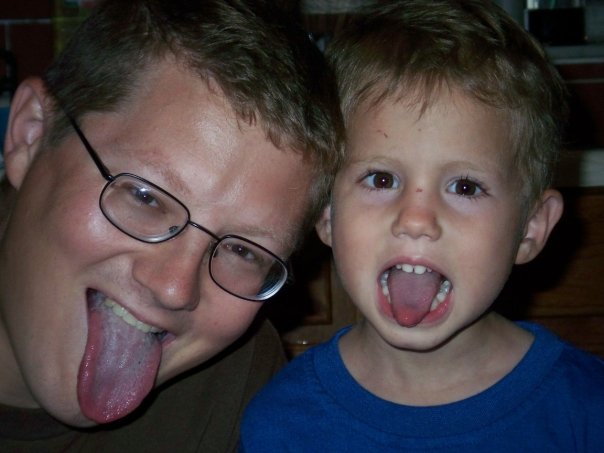
Imitation (from Latin imitatio, "a copying, imitation") is a behavior whereby an individual observes and replicates another's behavior. Imitation is also a form of learning that leads to the "development of traditions, and ultimately our culture. It allows for the transfer of information (behaviors, customs, etc.) between individuals and down generations without the need for genetic inheritance." The word imitation can be applied in many contexts, ranging from animal training to politics. The term generally refers to conscious behavior; subconscious imitation is termed mirroring.
In anthropology, some theories hold that all cultures imitate ideas from one of a few original cultures or several cultures whose influence overlaps geographically. Evolutionary diffusion theory holds that cultures influence one another, but that similar ideas can be developed in isolation.
Scholars as well as popular authors have argued that the role of imitation in humans is unique among animals. However, this claim has been recently challenged by scientific research which observed social learning and imitative abilities in animals.
Psychologist Kenneth Kaye showed that the ability of infants to match the sounds or gestures of an adult depends on an interactive process of turn-taking over many successive trials, in which adults' instinctive behavior plays as great a role as that of the infant. These writers assume that evolution would have selected imitative abilities as fit because those who were good at it had a wider arsenal of learned behavior at their disposal, including tool-making and language.
However, research also suggests that imitative behaviors and other social learning processes are only selected for when outnumbered or accompanied by asocial learning processes: an over-saturation of imitation and imitating individuals leads humans to collectively copy inefficient strategies and evolutionarily maladaptive behaviors, thereby reducing flexibility to new environmental contexts that require adaptation. Research suggests imitative social learning hinders the acquisition of knowledge in novel environments and in situations where asocial learning is faster and more advantageous.
In the mid-20th century, social scientists began to study how and why people imitate ideas. Everett Rogers pioneered innovation diffusion studies, identifying factors in adoption and profiles of adopters of ideas. Imitation mechanisms play a central role in both analytical and empirical models of collective human behavior.
Humans are capable of imitating movements, actions, skills, behaviors, gestures, pantomimes, mimics, vocalizations, sounds, speech, etc. and that we have particular "imitation systems" in the brain is old neurological knowledge dating back to Hugo Karl Liepmann. Liepmann's model 1908 "Das hierarchische Modell der Handlungsplanung" (the hierarchical model of action planning) is still valid. On studying the cerebral localization of function, Liepmann postulated that planned or commanded actions were prepared in the parietal lobe of the brain's dominant hemisphere, and also frontally. His most important pioneering work is when extensively studying patients with lesions in these brain areas, he discovered that the patients lost (among other things) the ability to imitate. He was the one who coined the term "apraxia" and differentiated between ideational and ideomotor apraxia. It is in this basic and wider frame of classical neurological knowledge that the discovery of the mirror neuron has to be seen. Though mirror neurons were first discovered in macaques, their discovery also relates to humans.
Human brain studies using functional magnetic resonance imaging (fMRI) revealed a network of regions in the inferior frontal cortex and inferior parietal cortex which are typically activated during imitation tasks. It has been suggested that these regions contain mirror neurons similar to the mirror neurons recorded in the macaque monkey. However, it is not clear if macaques spontaneously imitate each other in the wild.
Hub AI
Imitation AI simulator
(@Imitation_simulator)
Imitation
Imitation (from Latin imitatio, "a copying, imitation") is a behavior whereby an individual observes and replicates another's behavior. Imitation is also a form of learning that leads to the "development of traditions, and ultimately our culture. It allows for the transfer of information (behaviors, customs, etc.) between individuals and down generations without the need for genetic inheritance." The word imitation can be applied in many contexts, ranging from animal training to politics. The term generally refers to conscious behavior; subconscious imitation is termed mirroring.
In anthropology, some theories hold that all cultures imitate ideas from one of a few original cultures or several cultures whose influence overlaps geographically. Evolutionary diffusion theory holds that cultures influence one another, but that similar ideas can be developed in isolation.
Scholars as well as popular authors have argued that the role of imitation in humans is unique among animals. However, this claim has been recently challenged by scientific research which observed social learning and imitative abilities in animals.
Psychologist Kenneth Kaye showed that the ability of infants to match the sounds or gestures of an adult depends on an interactive process of turn-taking over many successive trials, in which adults' instinctive behavior plays as great a role as that of the infant. These writers assume that evolution would have selected imitative abilities as fit because those who were good at it had a wider arsenal of learned behavior at their disposal, including tool-making and language.
However, research also suggests that imitative behaviors and other social learning processes are only selected for when outnumbered or accompanied by asocial learning processes: an over-saturation of imitation and imitating individuals leads humans to collectively copy inefficient strategies and evolutionarily maladaptive behaviors, thereby reducing flexibility to new environmental contexts that require adaptation. Research suggests imitative social learning hinders the acquisition of knowledge in novel environments and in situations where asocial learning is faster and more advantageous.
In the mid-20th century, social scientists began to study how and why people imitate ideas. Everett Rogers pioneered innovation diffusion studies, identifying factors in adoption and profiles of adopters of ideas. Imitation mechanisms play a central role in both analytical and empirical models of collective human behavior.
Humans are capable of imitating movements, actions, skills, behaviors, gestures, pantomimes, mimics, vocalizations, sounds, speech, etc. and that we have particular "imitation systems" in the brain is old neurological knowledge dating back to Hugo Karl Liepmann. Liepmann's model 1908 "Das hierarchische Modell der Handlungsplanung" (the hierarchical model of action planning) is still valid. On studying the cerebral localization of function, Liepmann postulated that planned or commanded actions were prepared in the parietal lobe of the brain's dominant hemisphere, and also frontally. His most important pioneering work is when extensively studying patients with lesions in these brain areas, he discovered that the patients lost (among other things) the ability to imitate. He was the one who coined the term "apraxia" and differentiated between ideational and ideomotor apraxia. It is in this basic and wider frame of classical neurological knowledge that the discovery of the mirror neuron has to be seen. Though mirror neurons were first discovered in macaques, their discovery also relates to humans.
Human brain studies using functional magnetic resonance imaging (fMRI) revealed a network of regions in the inferior frontal cortex and inferior parietal cortex which are typically activated during imitation tasks. It has been suggested that these regions contain mirror neurons similar to the mirror neurons recorded in the macaque monkey. However, it is not clear if macaques spontaneously imitate each other in the wild.
Recent media