



Community hub
Recent from talks
Knowledge base stats:
Talk channels stats:
Members stats:
Bahri Mamluks
The Bahri Mamluks (Arabic: المماليك البحرية, romanized: al-Mamalik al-Baḥariyya), sometimes referred to as the Bahri dynasty, were the rulers of the Mamluk Sultanate of Egypt from 1250 to 1382, following the Ayyubid dynasty. The members of the Mamluk ruling class were purchased as slaves (mamluks) and manumitted, with the most powerful among them taking the role of sultan in Cairo. While several Bahri Mamluk sultans tried to establish hereditary dynasties through their sons, these attempts were ultimately unsuccessful, with the role of sultan often passing on to another powerful Mamluk.
The Bahri Mamluks were of mostly Kipchak Turkic origin. Fourteen of eighteen sultans between 1279 and 1390 belonged to the Qalawunid lineage. After 1382/1390, they were succeeded by a second Mamluk regime, the Burji Mamluks, who were largely of Circassian origin. The name Bahri or Bahriyya means 'of the river', referring to the location of their original barracks on Roda Island in the Nile (Nahr al-Nil) in Cairo, at the citadel of Al-Rodah which was built by the Ayyubid sultan as-Salih Ayyub.
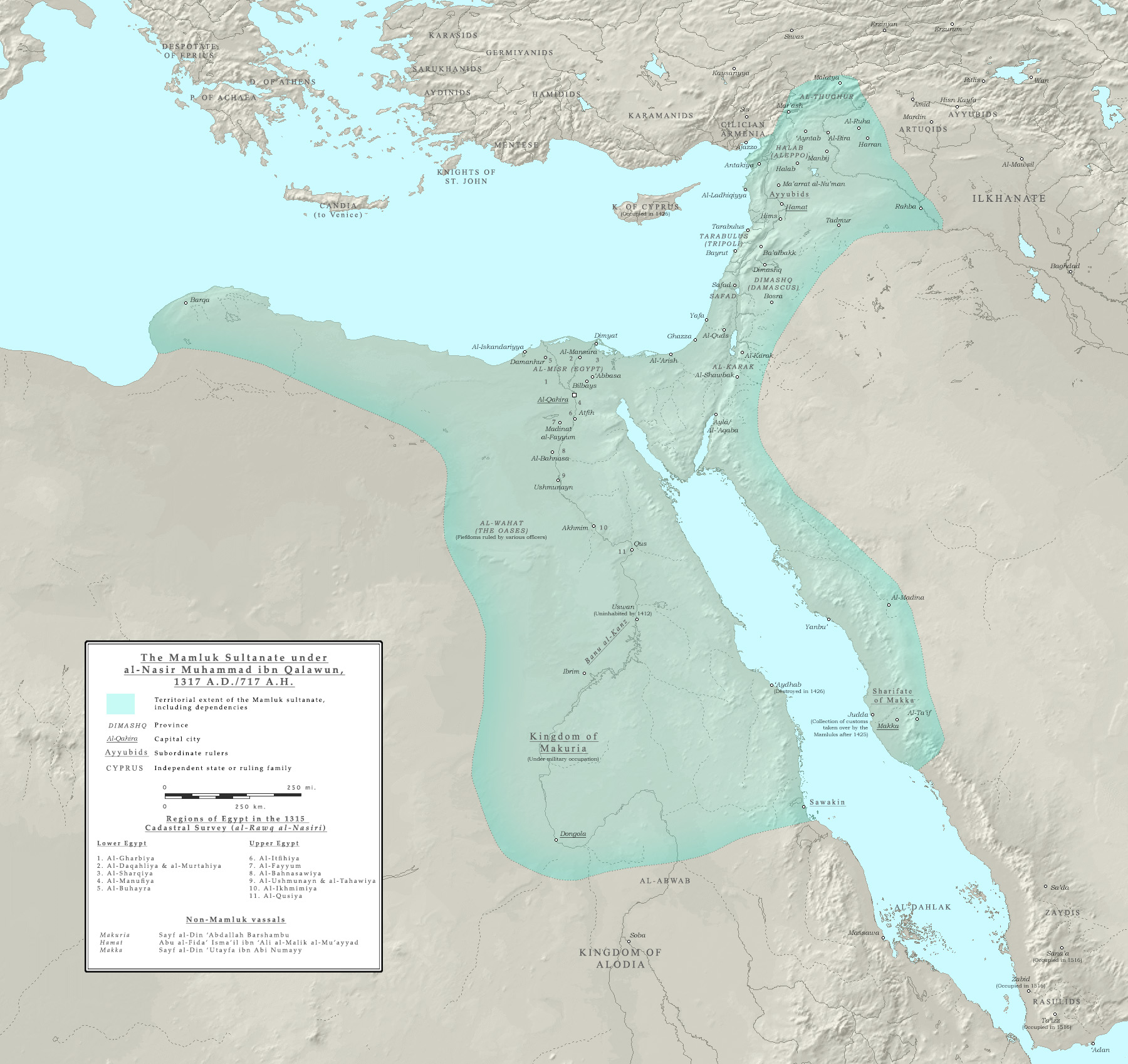
The Mamluks formed one of the most powerful and wealthiest empires of the time, lasting from 1250 to 1517 in Egypt, North Africa, and the Levant—Near East.
In 1250, when the Ayyubid sultan as-Salih Ayyub died, the Mamluks he had owned as slaves murdered his son and heir al-Muazzam Turanshah, and Shajar al-Durr the widow of as-Salih became the Sultana of Egypt. She married the Atabeg (commander in chief) Emir Aybak and abdicated, Aybak becoming Sultan. He ruled from 1250 to 1257.
The Mamluks consolidated their power in ten years and eventually established the Bahri dynasty. They were indirectly helped by the Mongols' sack of Baghdad in 1258, which effectively destroyed the Abbasid caliphate. Cairo became more prominent as a result and remained a Mamluk capital thereafter.[citation needed]
The Mamluks were powerful cavalry warriors mixing the practices of the Turkic steppe peoples from which they were drawn and the organizational and technological sophistication and horsemanship of the Arabs. In 1260 the Mamluks defeated a Mongol army at the Battle of Ain Jalut in Palestine and eventually forced the invaders to retreat to the area of modern-day Iraq. The defeat of the Mongols at the hands of the Mamluks enhanced the position of the Mamluks in the southern Mediterranean basin. Baibars, one of the leaders at the battle, became the new Sultan after the assassination of Sultan Qutuz on the way home.
In 1250 Baibars was one of the Mamluk commanders who defended Mansurah against the Crusade knights of Louis IX of France, who was later definitely defeated, captured in the Battle of Fariskur and ransomed. Baibars had also taken part in the Mamluk takeover of Egypt. In 1261, after he became a Sultan, he established a puppet Abbasid caliphate in Cairo, and the Mamluks fought the remnants of the Crusader states in Palestine until they finally captured Acre in 1291.
Many Tatars settled in Egypt and were employed by Baibars. He defeated the Mongols at the battle of Elbistan and sent the Abbasid Caliph with only 250 men to attempt to retake Baghdad, but was unsuccessful. In 1266 he devastated Cilician Armenia and in 1268 he recaptured Antioch from the Crusaders. In addition, he fought the Seljuks, and Hashshashin; he also extended Muslim power into Nubia for the first time, before his death in 1277.
Hub AI
Bahri Mamluks AI simulator
(@Bahri Mamluks_simulator)
Bahri Mamluks
The Bahri Mamluks (Arabic: المماليك البحرية, romanized: al-Mamalik al-Baḥariyya), sometimes referred to as the Bahri dynasty, were the rulers of the Mamluk Sultanate of Egypt from 1250 to 1382, following the Ayyubid dynasty. The members of the Mamluk ruling class were purchased as slaves (mamluks) and manumitted, with the most powerful among them taking the role of sultan in Cairo. While several Bahri Mamluk sultans tried to establish hereditary dynasties through their sons, these attempts were ultimately unsuccessful, with the role of sultan often passing on to another powerful Mamluk.
The Bahri Mamluks were of mostly Kipchak Turkic origin. Fourteen of eighteen sultans between 1279 and 1390 belonged to the Qalawunid lineage. After 1382/1390, they were succeeded by a second Mamluk regime, the Burji Mamluks, who were largely of Circassian origin. The name Bahri or Bahriyya means 'of the river', referring to the location of their original barracks on Roda Island in the Nile (Nahr al-Nil) in Cairo, at the citadel of Al-Rodah which was built by the Ayyubid sultan as-Salih Ayyub.
The Mamluks formed one of the most powerful and wealthiest empires of the time, lasting from 1250 to 1517 in Egypt, North Africa, and the Levant—Near East.
In 1250, when the Ayyubid sultan as-Salih Ayyub died, the Mamluks he had owned as slaves murdered his son and heir al-Muazzam Turanshah, and Shajar al-Durr the widow of as-Salih became the Sultana of Egypt. She married the Atabeg (commander in chief) Emir Aybak and abdicated, Aybak becoming Sultan. He ruled from 1250 to 1257.
The Mamluks consolidated their power in ten years and eventually established the Bahri dynasty. They were indirectly helped by the Mongols' sack of Baghdad in 1258, which effectively destroyed the Abbasid caliphate. Cairo became more prominent as a result and remained a Mamluk capital thereafter.[citation needed]
The Mamluks were powerful cavalry warriors mixing the practices of the Turkic steppe peoples from which they were drawn and the organizational and technological sophistication and horsemanship of the Arabs. In 1260 the Mamluks defeated a Mongol army at the Battle of Ain Jalut in Palestine and eventually forced the invaders to retreat to the area of modern-day Iraq. The defeat of the Mongols at the hands of the Mamluks enhanced the position of the Mamluks in the southern Mediterranean basin. Baibars, one of the leaders at the battle, became the new Sultan after the assassination of Sultan Qutuz on the way home.
In 1250 Baibars was one of the Mamluk commanders who defended Mansurah against the Crusade knights of Louis IX of France, who was later definitely defeated, captured in the Battle of Fariskur and ransomed. Baibars had also taken part in the Mamluk takeover of Egypt. In 1261, after he became a Sultan, he established a puppet Abbasid caliphate in Cairo, and the Mamluks fought the remnants of the Crusader states in Palestine until they finally captured Acre in 1291.
Many Tatars settled in Egypt and were employed by Baibars. He defeated the Mongols at the battle of Elbistan and sent the Abbasid Caliph with only 250 men to attempt to retake Baghdad, but was unsuccessful. In 1266 he devastated Cilician Armenia and in 1268 he recaptured Antioch from the Crusaders. In addition, he fought the Seljuks, and Hashshashin; he also extended Muslim power into Nubia for the first time, before his death in 1277.