
Recent from talks
Balance disorder
Knowledge base stats:
Talk channels stats:
Members stats:
Balance disorder
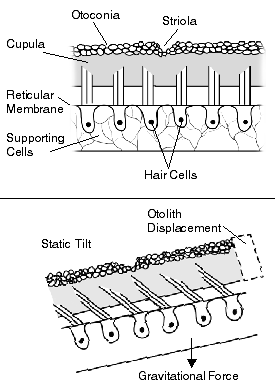
A balance disorder is a disturbance that causes an individual to feel unsteady, for example when standing or walking. It may be accompanied by feelings of giddiness, or wooziness, or having a sensation of movement, spinning, or floating. Balance is the result of several body systems working together: the visual system (eyes), vestibular system (ears) and proprioception (the body's sense of where it is in space). Degeneration or loss of function in any of these systems can lead to balance deficits.
Cognitive dysfunction (disorientation) may occur with vestibular disorders. Cognitive deficits are not just spatial in nature, but also include non-spatial functions such as object recognition memory.[citation needed] Vestibular dysfunction has been shown to adversely affect processes of attention and increased demands of attention can worsen the postural sway associated with vestibular disorders. Recent MRI studies also show that humans with bilateral vestibular damage (damage to both inner ears) undergo atrophy of the hippocampus which correlates with their degree of impairment on spatial memory tasks.
Problems with balance can occur when there is a disruption in any of the vestibular, visual, or proprioceptive systems. Abnormalities in balance function may indicate a wide range of pathologies from causes like inner ear disorders, low blood pressure, brain tumors, and brain injury including stroke.[citation needed]
Causes of dizziness related to the ear are often characterized by vertigo (spinning) and nausea. Nystagmus (flickering of the eye, related to the Vestibulo-ocular reflex [VOR]) is often seen in patients with an acute peripheral cause of dizziness.[citation needed]
Migraine headaches are a common neurological disease. Although typical migraines are characterized by moderate to severe throbbing headaches, vestibular migraines may be accompanied by symptoms of vestibular disorders such as dizziness, disequilibrium, nausea, and vomiting.
Presyncope is a feeling of lightheadedness or simply feeling faint. Syncope, by contrast, is actually fainting. A circulatory system deficiency, such as low blood pressure, can contribute to a feeling of dizziness when one suddenly stands up.
The difficulty of making the right vestibular diagnosis is reflected in the fact that in some populations, more than one-third of the patients with a vestibular disease consult more than one physician – in some cases up to more than fifteen.
There are various options for treating balance disorders. One option includes treatment for a disease or disorder that may be contributing to the balance problem, such as ear infection, stroke, multiple sclerosis, spinal cord injury, Parkinson's, neuromuscular conditions, acquired brain injury, cerebellar dysfunctions and/or ataxia, or some tumors, such as acoustic neuroma. Individual treatment will vary and will be based upon assessment results including symptoms, medical history, general health, and the results of medical tests. Additionally, tai chi may be a cost-effective method to prevent falls in the elderly.
Hub AI
Balance disorder AI simulator
(@Balance disorder_simulator)
Balance disorder
A balance disorder is a disturbance that causes an individual to feel unsteady, for example when standing or walking. It may be accompanied by feelings of giddiness, or wooziness, or having a sensation of movement, spinning, or floating. Balance is the result of several body systems working together: the visual system (eyes), vestibular system (ears) and proprioception (the body's sense of where it is in space). Degeneration or loss of function in any of these systems can lead to balance deficits.
Cognitive dysfunction (disorientation) may occur with vestibular disorders. Cognitive deficits are not just spatial in nature, but also include non-spatial functions such as object recognition memory.[citation needed] Vestibular dysfunction has been shown to adversely affect processes of attention and increased demands of attention can worsen the postural sway associated with vestibular disorders. Recent MRI studies also show that humans with bilateral vestibular damage (damage to both inner ears) undergo atrophy of the hippocampus which correlates with their degree of impairment on spatial memory tasks.
Problems with balance can occur when there is a disruption in any of the vestibular, visual, or proprioceptive systems. Abnormalities in balance function may indicate a wide range of pathologies from causes like inner ear disorders, low blood pressure, brain tumors, and brain injury including stroke.[citation needed]
Causes of dizziness related to the ear are often characterized by vertigo (spinning) and nausea. Nystagmus (flickering of the eye, related to the Vestibulo-ocular reflex [VOR]) is often seen in patients with an acute peripheral cause of dizziness.[citation needed]
Migraine headaches are a common neurological disease. Although typical migraines are characterized by moderate to severe throbbing headaches, vestibular migraines may be accompanied by symptoms of vestibular disorders such as dizziness, disequilibrium, nausea, and vomiting.
Presyncope is a feeling of lightheadedness or simply feeling faint. Syncope, by contrast, is actually fainting. A circulatory system deficiency, such as low blood pressure, can contribute to a feeling of dizziness when one suddenly stands up.
The difficulty of making the right vestibular diagnosis is reflected in the fact that in some populations, more than one-third of the patients with a vestibular disease consult more than one physician – in some cases up to more than fifteen.
There are various options for treating balance disorders. One option includes treatment for a disease or disorder that may be contributing to the balance problem, such as ear infection, stroke, multiple sclerosis, spinal cord injury, Parkinson's, neuromuscular conditions, acquired brain injury, cerebellar dysfunctions and/or ataxia, or some tumors, such as acoustic neuroma. Individual treatment will vary and will be based upon assessment results including symptoms, medical history, general health, and the results of medical tests. Additionally, tai chi may be a cost-effective method to prevent falls in the elderly.
Recent media