
Recent from talks
Balchik
Knowledge base stats:
Talk channels stats:
Members stats:
Balchik
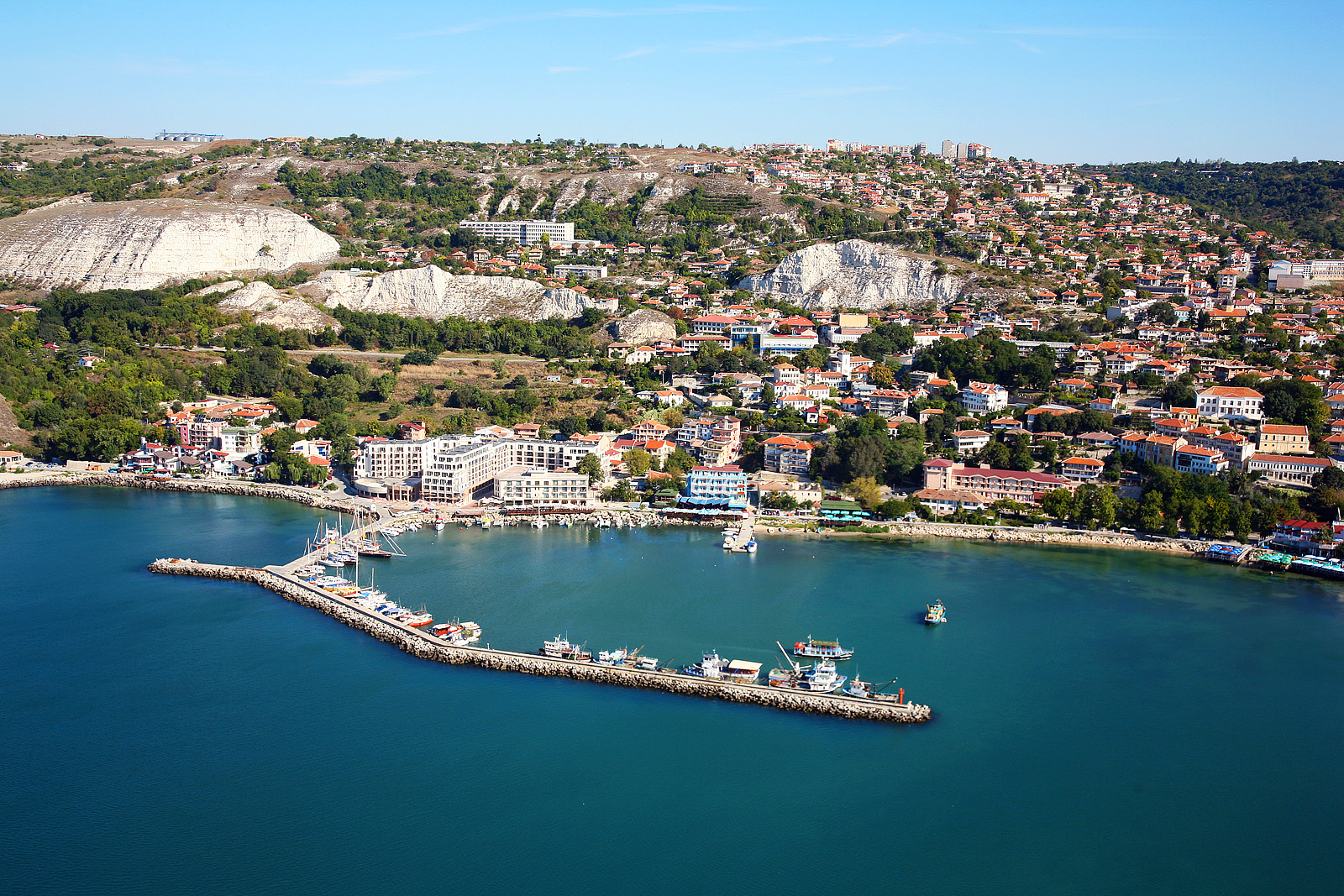
Balchik (Bulgarian: Балчик Bulgarian pronunciation: [bɐɫˈt͡ʃik]; Romanian: Balcic, Turkish: Balçık) is a town and seaside resort on the Bulgarian Black Sea Coast in the Southern Dobruja area of northeastern Bulgaria. It is in Dobrich Province, 35 km southeast of Dobrich and 42 km northeast of Varna. It sprawls scenically along hilly terraces descending from the Dobruja plateau to the sea, and is often called "The White City" because of its white cliffs.
Under the Ottoman Empire, the town came to be known with its present name, which perhaps derived from a Gagauz word meaning "small town".
Another theory suggests that it is named after the medieval ruler Balik, brother of Dobrotitsa, after whom the city of Dobrich is named.[citation needed]
Founded as a Thracian settlement, it was later colonised by the ancient Greek Ionians with the name Krounoi (Ancient Greek: Κρουνοί), later renamed as Dionysopolis (Ancient Greek: Διονυσόπολις) after the discovery of a statue of Dionysus in the sea.
Later it became a Greek-Byzantine and Bulgarian fortress.
Karvuna is the old Bulgarian name of the ancient Dionysopol. The external resemblance to the name of the modern town of Kavarna is an occasion for some local historians to identify Karvuna with Kavarna, but the archaeological and historical data are not in favour of this proposal. Karvuna was the capital of the Karvuna region - so called Dobrogea (Dobrudja) in the Middle Ages until the arrival of the Turks. The remains of the castle of the boyars Balik and Dobrotitsa were found above the city hospital of Balchik in the "Horizon" district (Gemidzhiya), but were almost erased by natural processes. In the Vasil Levski neighbourhood there are remains of the great fortress of Karvuna, built by the Byzantines and used by them and by the Bulgarians during the First Bulgarian Kingdom. Later, due to difficulties in defending the vast fortress located in the plain and the lack of a view of the sea,[citation needed] the Bulgarians built a fort of which only modest remains are preserved on the highest hill of the city, the Dzheni Bair or Ekhoto ('Echo') hill. The earthen rampart behind the ditch dates to the late 12th century, with various habitation-related findings from the 11th-15th centuries. The boyar Balik lived in the said castle opposite it on the hill above the present hospital, south of the great Kavarna fortress, which the centuries have now completely obliterated. Dobrotitsa (r. 1347–86), after ruling for some time here, moved the capital of the Despotate of Karvuna from Karvuna to Kaliakra.[citation needed]
Under the Ottomans, the town came to be known by its present name.
After the liberation of Bulgaria in 1878, Balchik developed as centre of a rich agricultural region, wheat-exporting port, and district (okoliya) town, and later, as a major tourist destination with the beachfront resort of Albena to its south.
Hub AI
Balchik AI simulator
(@Balchik_simulator)
Balchik
Balchik (Bulgarian: Балчик Bulgarian pronunciation: [bɐɫˈt͡ʃik]; Romanian: Balcic, Turkish: Balçık) is a town and seaside resort on the Bulgarian Black Sea Coast in the Southern Dobruja area of northeastern Bulgaria. It is in Dobrich Province, 35 km southeast of Dobrich and 42 km northeast of Varna. It sprawls scenically along hilly terraces descending from the Dobruja plateau to the sea, and is often called "The White City" because of its white cliffs.
Under the Ottoman Empire, the town came to be known with its present name, which perhaps derived from a Gagauz word meaning "small town".
Another theory suggests that it is named after the medieval ruler Balik, brother of Dobrotitsa, after whom the city of Dobrich is named.[citation needed]
Founded as a Thracian settlement, it was later colonised by the ancient Greek Ionians with the name Krounoi (Ancient Greek: Κρουνοί), later renamed as Dionysopolis (Ancient Greek: Διονυσόπολις) after the discovery of a statue of Dionysus in the sea.
Later it became a Greek-Byzantine and Bulgarian fortress.
Karvuna is the old Bulgarian name of the ancient Dionysopol. The external resemblance to the name of the modern town of Kavarna is an occasion for some local historians to identify Karvuna with Kavarna, but the archaeological and historical data are not in favour of this proposal. Karvuna was the capital of the Karvuna region - so called Dobrogea (Dobrudja) in the Middle Ages until the arrival of the Turks. The remains of the castle of the boyars Balik and Dobrotitsa were found above the city hospital of Balchik in the "Horizon" district (Gemidzhiya), but were almost erased by natural processes. In the Vasil Levski neighbourhood there are remains of the great fortress of Karvuna, built by the Byzantines and used by them and by the Bulgarians during the First Bulgarian Kingdom. Later, due to difficulties in defending the vast fortress located in the plain and the lack of a view of the sea,[citation needed] the Bulgarians built a fort of which only modest remains are preserved on the highest hill of the city, the Dzheni Bair or Ekhoto ('Echo') hill. The earthen rampart behind the ditch dates to the late 12th century, with various habitation-related findings from the 11th-15th centuries. The boyar Balik lived in the said castle opposite it on the hill above the present hospital, south of the great Kavarna fortress, which the centuries have now completely obliterated. Dobrotitsa (r. 1347–86), after ruling for some time here, moved the capital of the Despotate of Karvuna from Karvuna to Kaliakra.[citation needed]
Under the Ottomans, the town came to be known by its present name.
After the liberation of Bulgaria in 1878, Balchik developed as centre of a rich agricultural region, wheat-exporting port, and district (okoliya) town, and later, as a major tourist destination with the beachfront resort of Albena to its south.
Recent media