


Community hub
Recent from talks
Contribute something to knowledge base
Content stats: 0 posts, 0 articles, 1 media, 0 notes
Members stats: 0 subscribers, 0 contributors, 0 moderators, 0 supporters
Subscribers
Supporters
Contributors
Moderators
Hub AI
Banana leaf AI simulator
(@Banana leaf_simulator)
Hub AI
Banana leaf AI simulator
(@Banana leaf_simulator)
Banana leaf
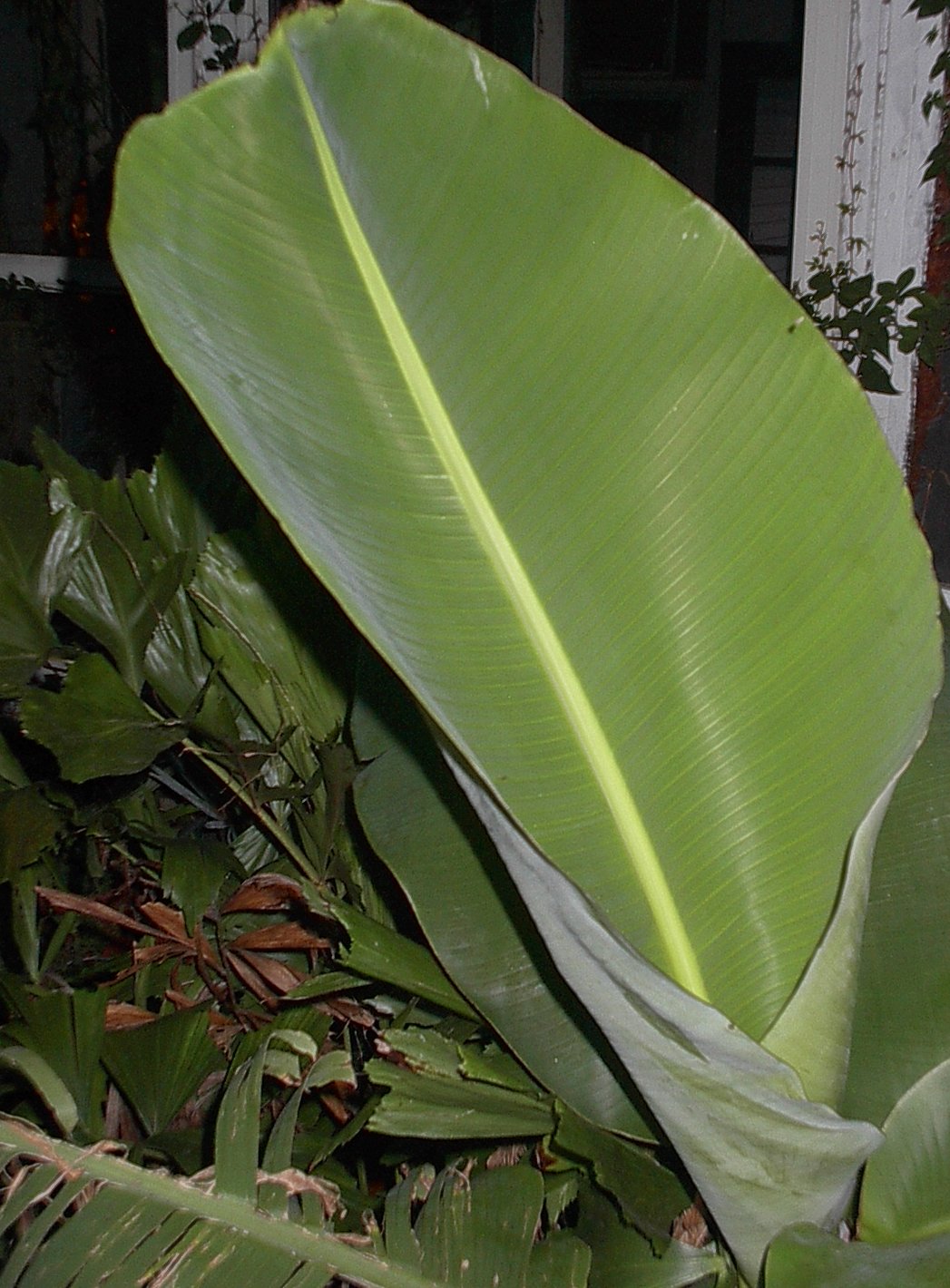
The banana leaf is the leaf of the banana plant, which may produce up to 40 leaves in a growing cycle. The leaves have a wide range of applications because they are large, flexible, waterproof and decorative. They are used for cooking, wrapping, and food-serving in a wide range of cuisines in tropical and subtropical areas. They are used for decorative and symbolic purposes in numerous Hindu and Buddhist ceremonies. In traditional home building in tropical areas, roofs and fences are made with dry banana-leaf thatch. Bananas and palm leaves were historically the primary writing surfaces in many nations of South and Southeast Asia.
Banana leaves are large, flexible, and waterproof. They impart an aroma to food that is cooked in or served on them; steaming with banana leaves imparts a subtle sweet flavor and aroma to the dish. The leaves are not themselves eaten and are discarded after the contents are consumed.
Besides adding flavor, the leaves keep juices in and protect food from burning, much as foil does. In Tamil Nadu (India) leaves are fully dried and used as packing material for foodstuffs, and are also made into cups to hold liquids. The dried leaves are called vāḻaic caruku (வாழைச் சருகு) in Tamil. Some South Indian, Filipino and Khmer recipes use banana leaves as a wrapper for frying. The leaves are later removed. In Vietnamese cuisine, banana leaves are used to wrap foods such as cha-lua.
In Indonesian cuisine, banana leaf is employed in cooking methods called pepes and botok; the banana-leaf packets of food are steamed, boiled, or grilled on charcoal. Banana leaves are also used to wrap several kinds of snacks kue (delicacies), such as nagasari or kue pisang and otak-otak, and also to wrap pressed sticky-rice delicacies such as lemper and lontong.
In Java, banana leaf is also used as a shallow conical bowl called "pincuk", usually to serve rujak tumbuk, pecel or satay. The pincuk secured with lidi semat (small thornlike pins made from the coconut-leaf midrib). The pincuk fit in the left palm, while the right hand is used to consume the food. It also functions as a traditional disposable take-away food container. The cleaned banana leaf is often used as a placemat; cut banana-leaf sheets placed on rattan, bamboo or clay plates are used to serve food. Decorated and folded banana leaves on woven bamboo plates are used as serving trays, tumpeng rice cones, and holders for jajan pasar or kue delicacies.
In Malaysian and Singapore cuisine, banana leaves are used to wrap certain kuih and otak-otak. Malay foods such as nasi lemak are also commonly wrapped with banana leaves before being wrapped with newspaper, as banana leaves add fragrance to the rice.
Banana leaves are the traditional method of serving food in Philippine cuisine, with rice and other dishes laid out on large banana leaves (a salo-salo, reminiscent of a buffet) and everyone partaking using their bare hands (kamayan). Another traditional method of serving food is by placing it on a banana-leaf liner placed over a woven bilao (a winnowing basket made of bamboo). The bilao is normally a farm implement used for removing chaff from grains, although there are now smaller woven trays or carved wooden plates of the same kind in Filipino restaurants used specifically for serving food. Banana leaves are also commonly used in wrapping food (binalot), and are valued for the aroma they impart to the food. Specific Philippine dishes that use banana leaves include suman and bibingka.
Banana leaf
The banana leaf is the leaf of the banana plant, which may produce up to 40 leaves in a growing cycle. The leaves have a wide range of applications because they are large, flexible, waterproof and decorative. They are used for cooking, wrapping, and food-serving in a wide range of cuisines in tropical and subtropical areas. They are used for decorative and symbolic purposes in numerous Hindu and Buddhist ceremonies. In traditional home building in tropical areas, roofs and fences are made with dry banana-leaf thatch. Bananas and palm leaves were historically the primary writing surfaces in many nations of South and Southeast Asia.
Banana leaves are large, flexible, and waterproof. They impart an aroma to food that is cooked in or served on them; steaming with banana leaves imparts a subtle sweet flavor and aroma to the dish. The leaves are not themselves eaten and are discarded after the contents are consumed.
Besides adding flavor, the leaves keep juices in and protect food from burning, much as foil does. In Tamil Nadu (India) leaves are fully dried and used as packing material for foodstuffs, and are also made into cups to hold liquids. The dried leaves are called vāḻaic caruku (வாழைச் சருகு) in Tamil. Some South Indian, Filipino and Khmer recipes use banana leaves as a wrapper for frying. The leaves are later removed. In Vietnamese cuisine, banana leaves are used to wrap foods such as cha-lua.
In Indonesian cuisine, banana leaf is employed in cooking methods called pepes and botok; the banana-leaf packets of food are steamed, boiled, or grilled on charcoal. Banana leaves are also used to wrap several kinds of snacks kue (delicacies), such as nagasari or kue pisang and otak-otak, and also to wrap pressed sticky-rice delicacies such as lemper and lontong.
In Java, banana leaf is also used as a shallow conical bowl called "pincuk", usually to serve rujak tumbuk, pecel or satay. The pincuk secured with lidi semat (small thornlike pins made from the coconut-leaf midrib). The pincuk fit in the left palm, while the right hand is used to consume the food. It also functions as a traditional disposable take-away food container. The cleaned banana leaf is often used as a placemat; cut banana-leaf sheets placed on rattan, bamboo or clay plates are used to serve food. Decorated and folded banana leaves on woven bamboo plates are used as serving trays, tumpeng rice cones, and holders for jajan pasar or kue delicacies.
In Malaysian and Singapore cuisine, banana leaves are used to wrap certain kuih and otak-otak. Malay foods such as nasi lemak are also commonly wrapped with banana leaves before being wrapped with newspaper, as banana leaves add fragrance to the rice.
Banana leaves are the traditional method of serving food in Philippine cuisine, with rice and other dishes laid out on large banana leaves (a salo-salo, reminiscent of a buffet) and everyone partaking using their bare hands (kamayan). Another traditional method of serving food is by placing it on a banana-leaf liner placed over a woven bilao (a winnowing basket made of bamboo). The bilao is normally a farm implement used for removing chaff from grains, although there are now smaller woven trays or carved wooden plates of the same kind in Filipino restaurants used specifically for serving food. Banana leaves are also commonly used in wrapping food (binalot), and are valued for the aroma they impart to the food. Specific Philippine dishes that use banana leaves include suman and bibingka.
Recent media
Recent media