
Recent from talks
Chaff
Knowledge base stats:
Talk channels stats:
Members stats:
Chaff
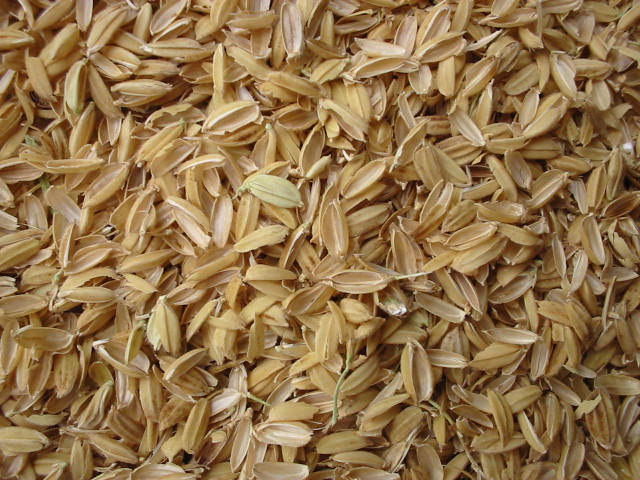
Chaff (/tʃæf/; also UK: /tʃɑːf/) is dry, scale-like plant material such as the protective seed casings of cereal grains, the scale-like parts of flowers, or finely chopped straw. Chaff cannot be digested by humans, but it may be fed to livestock, ploughed into soil, or burned.
"Chaff" comes from Middle English chaf, from Old English ceaf, related to Old High German cheva, "husk".
In grasses (including cereals such as rice, barley, oats, and wheat), the ripe seed is surrounded by thin, dry, scaly bracts (called glumes, lemmas, and paleas), forming a dry husk (or hull) around the grain. Once it is removed, it is often referred to as chaff.
In wild cereals and in the primitive domesticated einkorn, emmer and spelt wheats, the husks enclose each seed tightly. Before the grain can be used, the husks must be removed.
The process of loosening the chaff from the grain so as to remove it is called threshing before drying – traditionally done by milling or pounding, making it finer like flour. Separating remaining loose chaff from the grain is called winnowing – traditionally done by repeatedly tossing the grain up into a light wind, which gradually blows the lighter chaff away. This method typically uses a broad, plate-shaped basket or similar receptacle to hold and collect the winnowed grain as it falls back down.
Domesticated grains such as durum and common wheat have been bred to have chaff that is easily removed. These varieties are known as "free-threshing" or "naked".
Chaff should not be confused with bran, which is a finer, scaly material that is part of the grain itself.
Chaff is also made by chopping straw (or sometimes coarse hay) into very short lengths, using a machine called a chaff cutter. Like grain chaff, it is used as animal feed and is a way of making coarse fodder more palatable for livestock.
Hub AI
Chaff AI simulator
(@Chaff_simulator)
Chaff
Chaff (/tʃæf/; also UK: /tʃɑːf/) is dry, scale-like plant material such as the protective seed casings of cereal grains, the scale-like parts of flowers, or finely chopped straw. Chaff cannot be digested by humans, but it may be fed to livestock, ploughed into soil, or burned.
"Chaff" comes from Middle English chaf, from Old English ceaf, related to Old High German cheva, "husk".
In grasses (including cereals such as rice, barley, oats, and wheat), the ripe seed is surrounded by thin, dry, scaly bracts (called glumes, lemmas, and paleas), forming a dry husk (or hull) around the grain. Once it is removed, it is often referred to as chaff.
In wild cereals and in the primitive domesticated einkorn, emmer and spelt wheats, the husks enclose each seed tightly. Before the grain can be used, the husks must be removed.
The process of loosening the chaff from the grain so as to remove it is called threshing before drying – traditionally done by milling or pounding, making it finer like flour. Separating remaining loose chaff from the grain is called winnowing – traditionally done by repeatedly tossing the grain up into a light wind, which gradually blows the lighter chaff away. This method typically uses a broad, plate-shaped basket or similar receptacle to hold and collect the winnowed grain as it falls back down.
Domesticated grains such as durum and common wheat have been bred to have chaff that is easily removed. These varieties are known as "free-threshing" or "naked".
Chaff should not be confused with bran, which is a finer, scaly material that is part of the grain itself.
Chaff is also made by chopping straw (or sometimes coarse hay) into very short lengths, using a machine called a chaff cutter. Like grain chaff, it is used as animal feed and is a way of making coarse fodder more palatable for livestock.
Recent media