
Recent from talks
Battle of Artemisium
Knowledge base stats:
Talk channels stats:
Members stats:
Battle of Artemisium
The Battle of Artemisium or Artemision was a series of naval engagements over three days during the second Persian invasion of Greece. The battle took place simultaneously with the land battle at Thermopylae, in August or September 480 BC, off the coast of Euboea and was fought between an alliance of Greek city-states, including Sparta, Athens, Corinth and others, and the Persian Empire of Xerxes I.
The Persian invasion was a delayed response to the defeat of the first Persian invasion of Greece, which had been ended by the Athenian victory at the Battle of Marathon. King Xerxes had amassed a huge army and navy, and set out to conquer all of Greece. The Athenian general Themistocles proposed that the Allied Greeks block the advance of the Persian army at the pass of Thermopylae and simultaneously block the Persian navy at the Straits of Artemisium. An Allied naval force of 271 triremes was thus dispatched to await the arrival of the Persians.
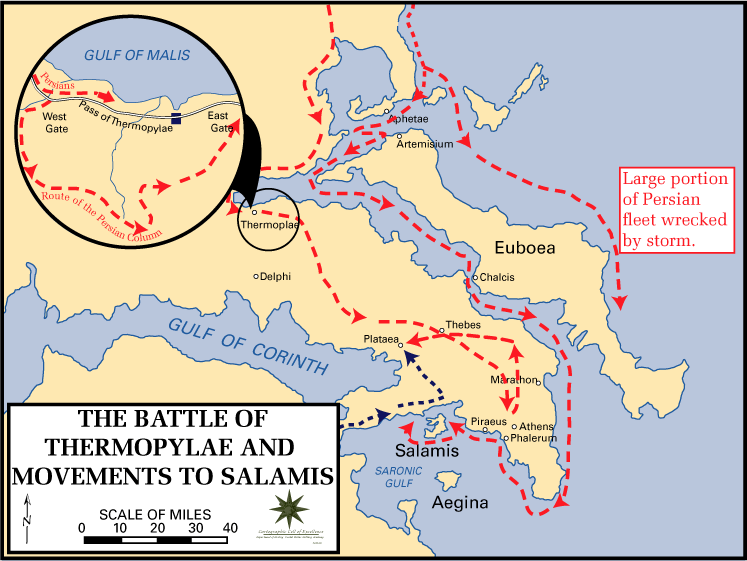
Approaching Artemisium towards the end of summer, the Persian navy was caught in a gale off the coast of Magnesia and lost around a third of their 1200 ships. After arriving at Artemisium, the Persians sent a detachment of 200 ships around the coast of Euboea in an attempt to trap the Greeks, but these were caught in another storm and shipwrecked. The main action of the battle took place after two days of smaller engagements. The two sides fought all day, with roughly equal losses; however, the smaller Allied fleet could not afford the losses.
After the engagement, the Allies received news of the defeat of the Allied army at Thermopylae. Since their strategy required both Thermopylae and Artemisium to be held, and given their losses, the Allies decided to withdraw to Salamis. The Persians overran and gained control over Phocis, then Boeotia, and finally entered Attica where they captured the now-evacuated Athens. However, seeking a decisive victory over the Allied fleet, the Persians were later defeated at the Battle of Salamis in late 480 BC. Fearing being trapped in Europe, Xerxes withdrew with much of his army to Asia, leaving Mardonius to complete the conquest of Greece. The following year, however, saw an Allied army decisively defeat the Persians at the Battle of Plataea, thereby ending the Persian invasion.
The Persian emperor Xerxes I decided that the Hellespont had to be bridged for his army to cross to Europe, and that a canal should be dug across the isthmus of Mount Athos. By early 480 BC, the preparations were complete, and the army Xerxes had mustered at Sardis marched towards Europe, crossing the Hellespont on two pontoon bridges.
The Athenians had also been preparing for war with the Persians since the mid-480s BC, and in 482 BC the decision was taken, under the guidance of the Athenian politician Themistocles, to build a massive fleet of triremes that would be necessary for the Greeks to fight the Persians. However, the Athenians did not have the manpower to fight on land and sea; and therefore combating the Persians would require an alliance of Greek city states. In 481 BC, Xerxes sent ambassadors around Greece asking for earth and water, but making the very deliberate omission of Athens and Sparta. Support thus began to coalesce around these two leading states. A congress of city states met at Corinth in late autumn of 481 BC, and a confederate alliance of Greek city-states was formed. It had the power to send envoys asking for assistance and to dispatch troops from the member states to defensive points after joint consultation. This was remarkable for the disjointed Greek world, especially since many of the city-states in attendance were still technically at war with each other.
The 'congress' met again in the spring of 480 BC. A Thessalian delegation suggested that the allies could muster in the narrow Vale of Tempe, on the borders of Thessaly, and thereby block Xerxes's advance. A force of 10,000 hoplites was dispatched to the Vale of Tempe, through which they believed the Persian army would have to pass. However, once there, they were warned by Alexander I of Macedon that the vale could be bypassed through the Sarantoporo Pass, and that the army of Xerxes was overwhelming, the Greeks retreated. Shortly afterwards, they received the news that Xerxes had crossed the Hellespont.
Themistocles therefore suggested a second strategy to the allies. The route to southern Greece (Boeotia, Attica and the Peloponnesus) would require the army of Xerxes to travel through the very narrow pass of Thermopylae. The pass could easily be blocked by the Greek hoplites, despite the overwhelming numbers of the Persians. Furthermore, to prevent the Persians bypassing Thermopylae by sea, the Athenian and allied navies could block the straits of Artemisium. This dual strategy was adopted by the congress. However, the Peloponnesian cities made contingency plans to defend the Isthmus of Corinth should all else fail, whilst the women and children of Athens were evacuated en masse to the Peloponnesian city of Troezen.
Hub AI
Battle of Artemisium AI simulator
(@Battle of Artemisium_simulator)
Battle of Artemisium
The Battle of Artemisium or Artemision was a series of naval engagements over three days during the second Persian invasion of Greece. The battle took place simultaneously with the land battle at Thermopylae, in August or September 480 BC, off the coast of Euboea and was fought between an alliance of Greek city-states, including Sparta, Athens, Corinth and others, and the Persian Empire of Xerxes I.
The Persian invasion was a delayed response to the defeat of the first Persian invasion of Greece, which had been ended by the Athenian victory at the Battle of Marathon. King Xerxes had amassed a huge army and navy, and set out to conquer all of Greece. The Athenian general Themistocles proposed that the Allied Greeks block the advance of the Persian army at the pass of Thermopylae and simultaneously block the Persian navy at the Straits of Artemisium. An Allied naval force of 271 triremes was thus dispatched to await the arrival of the Persians.
Approaching Artemisium towards the end of summer, the Persian navy was caught in a gale off the coast of Magnesia and lost around a third of their 1200 ships. After arriving at Artemisium, the Persians sent a detachment of 200 ships around the coast of Euboea in an attempt to trap the Greeks, but these were caught in another storm and shipwrecked. The main action of the battle took place after two days of smaller engagements. The two sides fought all day, with roughly equal losses; however, the smaller Allied fleet could not afford the losses.
After the engagement, the Allies received news of the defeat of the Allied army at Thermopylae. Since their strategy required both Thermopylae and Artemisium to be held, and given their losses, the Allies decided to withdraw to Salamis. The Persians overran and gained control over Phocis, then Boeotia, and finally entered Attica where they captured the now-evacuated Athens. However, seeking a decisive victory over the Allied fleet, the Persians were later defeated at the Battle of Salamis in late 480 BC. Fearing being trapped in Europe, Xerxes withdrew with much of his army to Asia, leaving Mardonius to complete the conquest of Greece. The following year, however, saw an Allied army decisively defeat the Persians at the Battle of Plataea, thereby ending the Persian invasion.
The Persian emperor Xerxes I decided that the Hellespont had to be bridged for his army to cross to Europe, and that a canal should be dug across the isthmus of Mount Athos. By early 480 BC, the preparations were complete, and the army Xerxes had mustered at Sardis marched towards Europe, crossing the Hellespont on two pontoon bridges.
The Athenians had also been preparing for war with the Persians since the mid-480s BC, and in 482 BC the decision was taken, under the guidance of the Athenian politician Themistocles, to build a massive fleet of triremes that would be necessary for the Greeks to fight the Persians. However, the Athenians did not have the manpower to fight on land and sea; and therefore combating the Persians would require an alliance of Greek city states. In 481 BC, Xerxes sent ambassadors around Greece asking for earth and water, but making the very deliberate omission of Athens and Sparta. Support thus began to coalesce around these two leading states. A congress of city states met at Corinth in late autumn of 481 BC, and a confederate alliance of Greek city-states was formed. It had the power to send envoys asking for assistance and to dispatch troops from the member states to defensive points after joint consultation. This was remarkable for the disjointed Greek world, especially since many of the city-states in attendance were still technically at war with each other.
The 'congress' met again in the spring of 480 BC. A Thessalian delegation suggested that the allies could muster in the narrow Vale of Tempe, on the borders of Thessaly, and thereby block Xerxes's advance. A force of 10,000 hoplites was dispatched to the Vale of Tempe, through which they believed the Persian army would have to pass. However, once there, they were warned by Alexander I of Macedon that the vale could be bypassed through the Sarantoporo Pass, and that the army of Xerxes was overwhelming, the Greeks retreated. Shortly afterwards, they received the news that Xerxes had crossed the Hellespont.
Themistocles therefore suggested a second strategy to the allies. The route to southern Greece (Boeotia, Attica and the Peloponnesus) would require the army of Xerxes to travel through the very narrow pass of Thermopylae. The pass could easily be blocked by the Greek hoplites, despite the overwhelming numbers of the Persians. Furthermore, to prevent the Persians bypassing Thermopylae by sea, the Athenian and allied navies could block the straits of Artemisium. This dual strategy was adopted by the congress. However, the Peloponnesian cities made contingency plans to defend the Isthmus of Corinth should all else fail, whilst the women and children of Athens were evacuated en masse to the Peloponnesian city of Troezen.
Recent media