
Recent from talks
Battle of Chaeronea (338 BC)
Knowledge base stats:
Talk channels stats:
Members stats:
Battle of Chaeronea (338 BC)
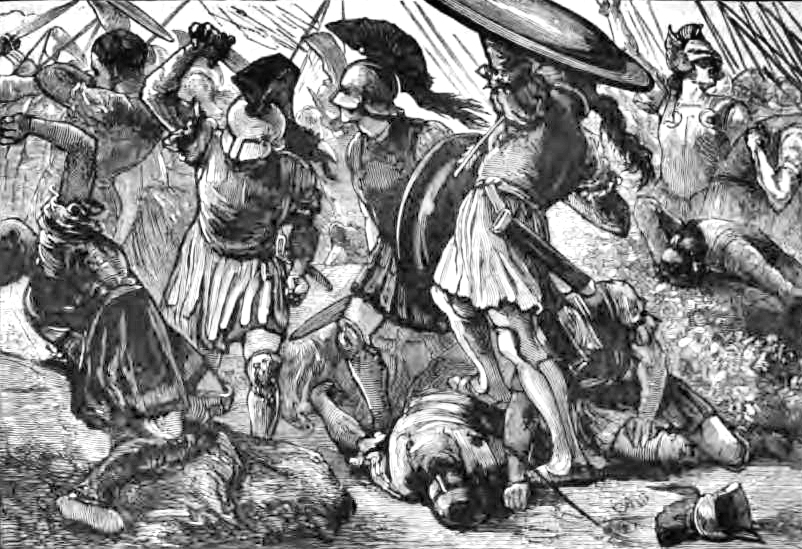
The Battle of Chaeronea was fought in 338 BC, near the city of Chaeronea in Boeotia, between Macedonia under Philip II and an alliance of Greek city-states led by Athens and Thebes. The battle was the culmination of Philip's final campaigns in 339–338 BC and resulted in a decisive victory for the Macedonians and their allies.
Philip had brought peace to a war-torn Greece in 346 BC by ending the Third Sacred War and separately concluding his ten-year conflict with Athens for supremacy in the north Aegean with the Peace of Philocrates. Philip's much-expanded kingdom, powerful army and plentiful resources then made him the de facto leader of Greece. To many of the fiercely independent city-states, Philip's power after 346 BC was perceived as a threat, especially in Athens, where the politician Demosthenes led efforts to break away from Philip's influence. In 340 BC Demosthenes convinced the Athenian assembly to sanction action against Philip's territories and to ally with the Achaemenids in Byzantium, which Philip was besieging. These actions were against the terms of their treaty oaths and amounted to a declaration of war. In summer 339 BC, Philip therefore led his army towards South Greece, prompting the formation of an alliance of a few southern Greek states opposed to him, led by Athens and Thebes.
After several months of stalemate, Philip finally advanced into Boeotia in an attempt to march on Thebes and Athens. Opposing him, and blocking the road near Chaeronea, was the allied army, similar in size and occupying a strong position. Details of the ensuing battle are scarce, but after a long fight the Macedonians crushed both flanks of the allied line, which then dissolved into a rout.
The battle has been described as one of the most decisive of the ancient world. The forces of Athens and Thebes were destroyed, and continued resistance was impossible; the war therefore came to an abrupt end. Philip was able to impose a settlement upon southern Greece, which all states accepted, with the exception of Sparta. The League of Corinth, formed as a result, made all participants allies of Macedon and each other, with Philip as the guarantor of the peace. In turn, Philip was voted as strategos (general) for a pan-Hellenic war against the Achaemenid Empire, which he had long planned. However, before he was able to take charge of the campaign, Philip was assassinated, and the Kingdom of Macedon and responsibility for the war with Persia passed instead to his son Alexander.
In the decade following his accession in 359 BC, the Macedonian king, Philip II, had rapidly strengthened and expanded his kingdom into Thrace and Chalkidiki on the northern coast of the Aegean Sea. He was aided in this process by the distraction of Athens and Thebes, the two most powerful city-states in Greece at that point, by events elsewhere. In particular, these events included the Social War between Athens and her erstwhile allies (357–355 BC), and the Third Sacred War which erupted in central Greece in 356 BC between the Phocians and the other members of the Delphic Amphictyonic League. Much of Philip's expansion during this period was at the nominal expense of the Athenians, who considered the north Aegean coast as their sphere of influence, and Philip was at war with Athens from 356–346 BC.
Philip was not originally a belligerent in the Sacred War, but became involved at the request of the Thessalians. Seeing an opportunity to expand his influence, Philip obliged, and in 353 or 352 BC won a decisive victory over the Phocians at the Battle of Crocus Field in Thessaly. In the aftermath, Philip was made archon of Thessaly, which gave him control of the levies and revenues of the Thessalian Confederation, thereby greatly increasing his power. However, Philip did not intervene further in the Sacred War until 346 BC.
Early in 346 BC, the Thebans, who had borne the brunt of the Sacred War, together with the Thessalians, asked Philip to assume the "leadership of Greece" and join them in fighting the Phocians. Philip's power was by now so great that ultimately the Phocians did not even attempt to resist, and instead surrendered to him. Philip was thus able to end a particularly bloody war without any further fighting. Philip allowed the Amphictyonic council the formal responsibility of punishing the Phocians, but ensured that the terms were not overly harsh; nevertheless, the Phocians were expelled from the Amphictyonic League, all their cities were destroyed, and they were resettled in villages of no more than fifty houses.
By 346 BC, the Athenians were war-weary, unable to match Philip's strength, and had begun to contemplate the necessity of making peace. Nevertheless, when it became apparent that Philip would march south that year, the Athenians originally planned to help the Phocians (whom they were allied to) keep Philip out of central Greece by occupying the pass of Thermopylae, where Philip's superior numbers would be of little benefit. The Athenians had successfully used this tactic to prevent Philip from attacking Phocis itself after his victory at Crocus Field.
Hub AI
Battle of Chaeronea (338 BC) AI simulator
(@Battle of Chaeronea (338 BC)_simulator)
Battle of Chaeronea (338 BC)
The Battle of Chaeronea was fought in 338 BC, near the city of Chaeronea in Boeotia, between Macedonia under Philip II and an alliance of Greek city-states led by Athens and Thebes. The battle was the culmination of Philip's final campaigns in 339–338 BC and resulted in a decisive victory for the Macedonians and their allies.
Philip had brought peace to a war-torn Greece in 346 BC by ending the Third Sacred War and separately concluding his ten-year conflict with Athens for supremacy in the north Aegean with the Peace of Philocrates. Philip's much-expanded kingdom, powerful army and plentiful resources then made him the de facto leader of Greece. To many of the fiercely independent city-states, Philip's power after 346 BC was perceived as a threat, especially in Athens, where the politician Demosthenes led efforts to break away from Philip's influence. In 340 BC Demosthenes convinced the Athenian assembly to sanction action against Philip's territories and to ally with the Achaemenids in Byzantium, which Philip was besieging. These actions were against the terms of their treaty oaths and amounted to a declaration of war. In summer 339 BC, Philip therefore led his army towards South Greece, prompting the formation of an alliance of a few southern Greek states opposed to him, led by Athens and Thebes.
After several months of stalemate, Philip finally advanced into Boeotia in an attempt to march on Thebes and Athens. Opposing him, and blocking the road near Chaeronea, was the allied army, similar in size and occupying a strong position. Details of the ensuing battle are scarce, but after a long fight the Macedonians crushed both flanks of the allied line, which then dissolved into a rout.
The battle has been described as one of the most decisive of the ancient world. The forces of Athens and Thebes were destroyed, and continued resistance was impossible; the war therefore came to an abrupt end. Philip was able to impose a settlement upon southern Greece, which all states accepted, with the exception of Sparta. The League of Corinth, formed as a result, made all participants allies of Macedon and each other, with Philip as the guarantor of the peace. In turn, Philip was voted as strategos (general) for a pan-Hellenic war against the Achaemenid Empire, which he had long planned. However, before he was able to take charge of the campaign, Philip was assassinated, and the Kingdom of Macedon and responsibility for the war with Persia passed instead to his son Alexander.
In the decade following his accession in 359 BC, the Macedonian king, Philip II, had rapidly strengthened and expanded his kingdom into Thrace and Chalkidiki on the northern coast of the Aegean Sea. He was aided in this process by the distraction of Athens and Thebes, the two most powerful city-states in Greece at that point, by events elsewhere. In particular, these events included the Social War between Athens and her erstwhile allies (357–355 BC), and the Third Sacred War which erupted in central Greece in 356 BC between the Phocians and the other members of the Delphic Amphictyonic League. Much of Philip's expansion during this period was at the nominal expense of the Athenians, who considered the north Aegean coast as their sphere of influence, and Philip was at war with Athens from 356–346 BC.
Philip was not originally a belligerent in the Sacred War, but became involved at the request of the Thessalians. Seeing an opportunity to expand his influence, Philip obliged, and in 353 or 352 BC won a decisive victory over the Phocians at the Battle of Crocus Field in Thessaly. In the aftermath, Philip was made archon of Thessaly, which gave him control of the levies and revenues of the Thessalian Confederation, thereby greatly increasing his power. However, Philip did not intervene further in the Sacred War until 346 BC.
Early in 346 BC, the Thebans, who had borne the brunt of the Sacred War, together with the Thessalians, asked Philip to assume the "leadership of Greece" and join them in fighting the Phocians. Philip's power was by now so great that ultimately the Phocians did not even attempt to resist, and instead surrendered to him. Philip was thus able to end a particularly bloody war without any further fighting. Philip allowed the Amphictyonic council the formal responsibility of punishing the Phocians, but ensured that the terms were not overly harsh; nevertheless, the Phocians were expelled from the Amphictyonic League, all their cities were destroyed, and they were resettled in villages of no more than fifty houses.
By 346 BC, the Athenians were war-weary, unable to match Philip's strength, and had begun to contemplate the necessity of making peace. Nevertheless, when it became apparent that Philip would march south that year, the Athenians originally planned to help the Phocians (whom they were allied to) keep Philip out of central Greece by occupying the pass of Thermopylae, where Philip's superior numbers would be of little benefit. The Athenians had successfully used this tactic to prevent Philip from attacking Phocis itself after his victory at Crocus Field.
Recent media