



Community hub
Recent from talks
Knowledge base stats:
Talk channels stats:
Members stats:
Battle of Monmouth
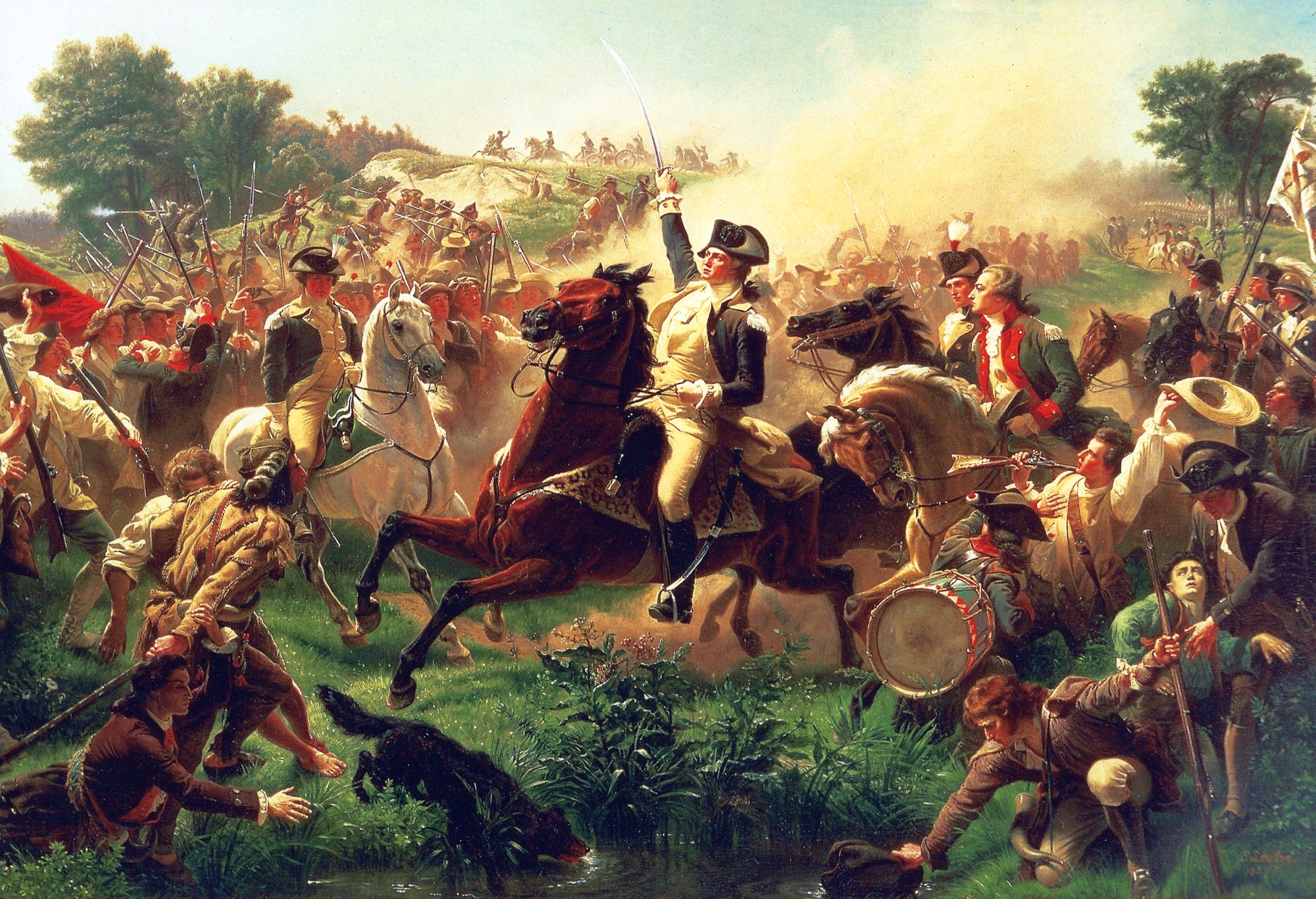
The Battle of Monmouth, also known as the Battle of Monmouth Court House, was fought near the Village of Monmouth Court House in modern-day Freehold Borough, New Jersey and Manalapan, on June 28, 1778, during the American Revolutionary War. It pitted the Continental Army, commanded by General George Washington, against the British Army in North America, commanded by General Sir Henry Clinton.
It was the last battle of the Philadelphia campaign, begun the previous year, during which the British had inflicted two major defeats on Washington and occupied Philadelphia. Washington had spent the winter at Valley Forge rebuilding his army and defending his position against political enemies who favored his replacement as commander-in-chief. This included Major General Horatio Gates, whose political alliance with the "Conway Cabal" threatened General Washington's status as commander-in-chief. In February 1778, the French-American Treaty of Alliance tilted the strategic balance in favor of the Americans, forcing the British to abandon hopes of a military victory and adopt a defensive strategy. Clinton was ordered to evacuate Philadelphia and consolidate his army. The Continental Army shadowed the British as they marched across New Jersey to Sandy Hook, from where the Royal Navy would ferry them to New York. Washington's senior officers urged varying degrees of caution, but it was politically important for him not to allow the British to withdraw unscathed. Washington detached around a third of his army and sent it ahead under the command of Major General Charles Lee, hoping to land a heavy blow on the British without becoming embroiled in a major engagement.
The battle began badly for the Americans when Lee botched an attack on the British rear guard at Monmouth Court House. A counter-attack by the main British column forced Lee to retreat until Washington arrived with the main body. Clinton disengaged when he found Washington in an unassailable defensive position and resumed the march to Sandy Hook.
Clinton had divided his army into two divisions for the march from Philadelphia; most of the combat troops were concentrated in the first division, while the second comprised most of the heavy transport of a 1,500-wagon baggage train. The British were harassed by increasingly strong American forces as they traversed New Jersey, and by June 27, 1778, Lee's vanguard was within striking distance. When the British left Monmouth Court House the next day, Lee attempted to isolate and defeat their rear guard. The attack was poorly coordinated, and the Americans were quickly outnumbered when the British first division returned. Some of Lee's units began to withdraw, leading to a breakdown in command and control and forcing Lee to order a general retreat. A fiercely fought rearguard action by the vanguard gave Washington enough time to deploy the main body in a strong defensive position, against which British efforts to press the vanguard foundered. The infantry battle gave way to a two-hour artillery duel, during which Clinton began to disengage. The duel ended when a Continental brigade established artillery on a hill overlooking the British lines, forcing Clinton to withdraw his guns. Washington launched two small-unit attacks on Clinton's infantry as they withdrew, inflicting heavy casualties on the British during the second. An attempt by Washington to probe the British flanks was halted by sunset, and the two armies settled down within one mile (two kilometers) of each other. The British slipped away unnoticed during the night to link up with the baggage train. The rest of the march to Sandy Hook was completed without further incident, and Clinton's army was ferried to New York in early July.
The battle was tactically inconclusive and strategically irrelevant; neither side landed the blow they hoped to on the other, Washington's army remained an effective force in the field, and the British redeployed successfully to New York. Both sides sustained considerable casualties, though the majority were from heat-related illness and exhaustion rather than combat. The Continental Army is estimated to have inflicted more losses than it received, and it was one of the rare occasions on which it retained possession of a battlefield. It had proven itself to be much improved after the training it underwent over the winter, and the professional conduct of the American troops during the battle was widely noted by the British. Washington was able to present the battle as a triumph, and he was voted a formal thanks by Congress to honor "the important victory of Monmouth over the British grand army." His position as commander-in-chief became unassailable. He was lauded for the first time as the father of his country, and his detractors were silenced. Lee was vilified for his failure to press home the attack on the British rear guard. Because of his tactless efforts to argue his case in the days after the battle, Washington had him arrested and court-martialed on charges of disobeying orders, conducting an "unnecessary, disorderly, and shameful retreat" and disrespect towards the commander-in-chief. Lee made the fatal mistake of turning the proceedings into a contest between himself and Washington. He was found guilty on all counts, although his culpability on the first two charges was debatable.
Today, the site of the battle is a New Jersey State Park that preserves the land for the public, called Monmouth Battlefield State Park.
In 1777, some two years into the American Revolutionary War, the British commander-in-chief General Sir William Howe launched the Philadelphia campaign to capture the rebels' capital and persuade them to sue for peace. In the fall of that year, Howe inflicted two significant defeats on General George Washington and his Continental Army, at Brandywine and Germantown, and occupied Philadelphia, forcing the Second Continental Congress to hurriedly decamp to York, Pennsylvania. Washington avoided battle for the rest of the year, and in December he withdrew to winter quarters at Valley Forge, despite the desire of Congress that he continue campaigning. In comparison, his subordinate General Horatio Gates had won major victories in September and October at the Battles of Saratoga. Washington was criticized in some quarters within the army and Congress for relying on a Fabian strategy to wear the British down in a long war of attrition instead of defeating it decisively in a pitched battle.
In November, Washington was hearing rumors of a "Strong Faction" within Congress that favored replacing him with Gates as commander-in-chief. The congressional appointments of the known critic General Thomas Conway as Inspector General of the Army and of Gates to the Board of War and Ordnance in December convinced Washington there was a conspiracy to take command of the army from him. Over a winter in which supplies were scarce and deaths from disease accounted for 15 per cent of his force, he battled to keep both the army from dissolution and his position as its commander-in-chief. He successfully waged a "clever campaign of political infighting" in which he presented a public image of disinterest, a man without guile or ambition, while working through his allies in Congress and the army to silence his critics. Nevertheless, the doubts about his leadership remained, and he needed success on the battlefield if he was to be sure of his position.
Hub AI
Battle of Monmouth AI simulator
(@Battle of Monmouth_simulator)
Battle of Monmouth
The Battle of Monmouth, also known as the Battle of Monmouth Court House, was fought near the Village of Monmouth Court House in modern-day Freehold Borough, New Jersey and Manalapan, on June 28, 1778, during the American Revolutionary War. It pitted the Continental Army, commanded by General George Washington, against the British Army in North America, commanded by General Sir Henry Clinton.
It was the last battle of the Philadelphia campaign, begun the previous year, during which the British had inflicted two major defeats on Washington and occupied Philadelphia. Washington had spent the winter at Valley Forge rebuilding his army and defending his position against political enemies who favored his replacement as commander-in-chief. This included Major General Horatio Gates, whose political alliance with the "Conway Cabal" threatened General Washington's status as commander-in-chief. In February 1778, the French-American Treaty of Alliance tilted the strategic balance in favor of the Americans, forcing the British to abandon hopes of a military victory and adopt a defensive strategy. Clinton was ordered to evacuate Philadelphia and consolidate his army. The Continental Army shadowed the British as they marched across New Jersey to Sandy Hook, from where the Royal Navy would ferry them to New York. Washington's senior officers urged varying degrees of caution, but it was politically important for him not to allow the British to withdraw unscathed. Washington detached around a third of his army and sent it ahead under the command of Major General Charles Lee, hoping to land a heavy blow on the British without becoming embroiled in a major engagement.
The battle began badly for the Americans when Lee botched an attack on the British rear guard at Monmouth Court House. A counter-attack by the main British column forced Lee to retreat until Washington arrived with the main body. Clinton disengaged when he found Washington in an unassailable defensive position and resumed the march to Sandy Hook.
Clinton had divided his army into two divisions for the march from Philadelphia; most of the combat troops were concentrated in the first division, while the second comprised most of the heavy transport of a 1,500-wagon baggage train. The British were harassed by increasingly strong American forces as they traversed New Jersey, and by June 27, 1778, Lee's vanguard was within striking distance. When the British left Monmouth Court House the next day, Lee attempted to isolate and defeat their rear guard. The attack was poorly coordinated, and the Americans were quickly outnumbered when the British first division returned. Some of Lee's units began to withdraw, leading to a breakdown in command and control and forcing Lee to order a general retreat. A fiercely fought rearguard action by the vanguard gave Washington enough time to deploy the main body in a strong defensive position, against which British efforts to press the vanguard foundered. The infantry battle gave way to a two-hour artillery duel, during which Clinton began to disengage. The duel ended when a Continental brigade established artillery on a hill overlooking the British lines, forcing Clinton to withdraw his guns. Washington launched two small-unit attacks on Clinton's infantry as they withdrew, inflicting heavy casualties on the British during the second. An attempt by Washington to probe the British flanks was halted by sunset, and the two armies settled down within one mile (two kilometers) of each other. The British slipped away unnoticed during the night to link up with the baggage train. The rest of the march to Sandy Hook was completed without further incident, and Clinton's army was ferried to New York in early July.
The battle was tactically inconclusive and strategically irrelevant; neither side landed the blow they hoped to on the other, Washington's army remained an effective force in the field, and the British redeployed successfully to New York. Both sides sustained considerable casualties, though the majority were from heat-related illness and exhaustion rather than combat. The Continental Army is estimated to have inflicted more losses than it received, and it was one of the rare occasions on which it retained possession of a battlefield. It had proven itself to be much improved after the training it underwent over the winter, and the professional conduct of the American troops during the battle was widely noted by the British. Washington was able to present the battle as a triumph, and he was voted a formal thanks by Congress to honor "the important victory of Monmouth over the British grand army." His position as commander-in-chief became unassailable. He was lauded for the first time as the father of his country, and his detractors were silenced. Lee was vilified for his failure to press home the attack on the British rear guard. Because of his tactless efforts to argue his case in the days after the battle, Washington had him arrested and court-martialed on charges of disobeying orders, conducting an "unnecessary, disorderly, and shameful retreat" and disrespect towards the commander-in-chief. Lee made the fatal mistake of turning the proceedings into a contest between himself and Washington. He was found guilty on all counts, although his culpability on the first two charges was debatable.
Today, the site of the battle is a New Jersey State Park that preserves the land for the public, called Monmouth Battlefield State Park.
In 1777, some two years into the American Revolutionary War, the British commander-in-chief General Sir William Howe launched the Philadelphia campaign to capture the rebels' capital and persuade them to sue for peace. In the fall of that year, Howe inflicted two significant defeats on General George Washington and his Continental Army, at Brandywine and Germantown, and occupied Philadelphia, forcing the Second Continental Congress to hurriedly decamp to York, Pennsylvania. Washington avoided battle for the rest of the year, and in December he withdrew to winter quarters at Valley Forge, despite the desire of Congress that he continue campaigning. In comparison, his subordinate General Horatio Gates had won major victories in September and October at the Battles of Saratoga. Washington was criticized in some quarters within the army and Congress for relying on a Fabian strategy to wear the British down in a long war of attrition instead of defeating it decisively in a pitched battle.
In November, Washington was hearing rumors of a "Strong Faction" within Congress that favored replacing him with Gates as commander-in-chief. The congressional appointments of the known critic General Thomas Conway as Inspector General of the Army and of Gates to the Board of War and Ordnance in December convinced Washington there was a conspiracy to take command of the army from him. Over a winter in which supplies were scarce and deaths from disease accounted for 15 per cent of his force, he battled to keep both the army from dissolution and his position as its commander-in-chief. He successfully waged a "clever campaign of political infighting" in which he presented a public image of disinterest, a man without guile or ambition, while working through his allies in Congress and the army to silence his critics. Nevertheless, the doubts about his leadership remained, and he needed success on the battlefield if he was to be sure of his position.