
Recent from talks
Battle of the Barracks
Knowledge base stats:
Talk channels stats:
Members stats:
Battle of the Barracks
The Battle of the Barracks (Croatian: Bitka za vojarne) was a series of engagements that occurred in mid-to-late 1991 between the Croatian National Guard (ZNG, later renamed the Croatian Army) and the Croatian police on one side and the Yugoslav People's Army (JNA) on the other. The battle took place around numerous JNA posts in Croatia, starting when Croatian forces blockaded the JNA barracks, weapons storage depots and other facilities. It formally began on 14 September; its objective was to neutralise the JNA positions in ZNG-held territory and to secure arms and ammunition supplies for the poorly equipped ZNG.
The Battle of the Barracks was an escalation of the conflict between Croatian authorities and Croatian Serbs who openly revolted in August 1990 and the JNA's efforts to preserve the Yugoslav federation. At the same time, Croatia made moves towards achieving independence from Yugoslavia. The Battle of the Barracks briefly preceded the start of the JNA's campaign in Croatia—itself amended in early September to add relief of the blockaded barracks to the operation plans. However, the JNA's advance was largely blocked by the ZNG and it relieved few JNA facilities.
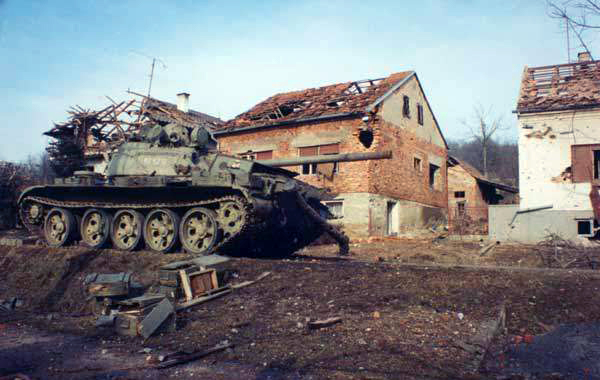
The ZNG and the police captured small, isolated JNA posts, and a number of large weapons depots and barracks—including those of the entire 32nd (Varaždin) Corps of the JNA. This provided the Croatian forces with a sizable number of weapons—including 250 tanks, hundreds of artillery pieces and a large supply of small arms and ammunition—which proved crucial in defending against JNA advances in the early stage of the Croatian War of Independence. Some of the JNA facilities were surrendered without fighting, while there was armed resistance to the takeover in others. In some places, this caused civilian casualties because the barracks were situated in urban areas. Legal charges of abuse or killing of captured JNA personnel and charges of war crimes against the civilian population were filed in Croatia, but most defendants remain at large.
In November, the JNA and Croatia reached several agreements to end the blockade and have the JNA withdraw from Croatia. The pullout was completed by 4 January 1992, except in areas around Dubrovnik and on the islands of Vis and Lastovo. The JNA maintained its presence there until the summer of 1992. As the JNA withdrew from the areas it controlled in Croatia, it was replaced by the UN peacekeepers agreed upon by the Vance plan.
In 1990, ethnic tensions between Serbs and Croats worsened after the electoral defeat of the government of the Socialist Republic of Croatia by the Croatian Democratic Union (Hrvatska demokratska zajednica, HDZ). The Yugoslav People's Army (Jugoslovenska Narodna Armija – JNA) confiscated Croatia's Territorial Defence (Teritorijalna obrana – TO) weapons to minimize resistance. On 17 August, the tensions escalated into an open revolt of Croatian Serbs, centred in the predominantly Serb-populated areas of the Dalmatian hinterland around Knin (approximately 60 kilometres (37 miles) north-east of Split), parts of the Lika, Kordun, Banovina and eastern Croatia. Serbia, supported by Montenegro and Serbia's provinces of Vojvodina and Kosovo, unsuccessfully tried to obtain the Yugoslav Presidency's approval of a JNA operation to disarm Croatian security forces in January 1991. The request was denied and a bloodless skirmish between Serb insurgents and Croatian special police in March prompted the JNA itself to ask the federal Presidency to give it wartime authority and declare a state of emergency. Even though the request was backed by Serbia and its allies, the JNA was denied on 15 March. Serbian President Slobodan Milošević, preferring a campaign to expand Serbia rather than to preserve Yugoslavia with Croatia as a federal unit, publicly threatened to replace the JNA with a Serbian army and declared that he no longer recognized the authority of the federal Presidency. The threat caused the JNA to gradually abandon plans to preserve Yugoslavia in favour of expansion of Serbia as the JNA came under Milošević's control. By the end of March, the conflict had escalated to the first fatalities. In early April, leaders of Serb revolt in Croatia declared their intention to integrate the area under their control with Serbia. The Government of Croatia viewed the area as a breakaway region.
At the beginning of 1991, Croatia had no regular army. To bolster its defence, Croatia doubled police personnel to about 20,000. The most effective part of the force was 3,000-strong special police deployed in twelve battalions and adopting military organization of the units. There were also 9,000–10,000 regionally organized reserve police set up in 16 battalions and 10 companies. The reserve force lacked weapons. As a response to the deteriorating situation, the Croatian government established the Croatian National Guard (Zbor narodne garde – ZNG) in May by merging the special police battalions into four all-professional guards brigades together consisting of approximately 8,000 troops subordinate to the Ministry of Defence headed by retired JNA General Martin Špegelj. The regional police, by then expanded to 40,000, was also attached to the ZNG and reorganized in 19 brigades and 14 independent battalions. The guards brigades were the only units of the ZNG that were fully armed with small arms; throughout the ZNG there was a lack of heavier weapons and there was no command and control structure. The shortage of heavy weapons was so severe that the ZNG resorted to use of World War II weapons taken from museums and film studios. At the time, Croatian stockpile of weapons consisted of 30,000 small arms purchased abroad and 15,000 previously owned by the police. A new 10,000-strong special police was established then to replace the personnel lost to the guards brigades.
Croatian views of the JNA's role in the Serb revolt gradually evolved in January–September 1991. Croatian President Franjo Tuđman's first plan was to win support from the European Community (EC) and the United States for Croatia; he dismissed advice to seize JNA barracks and storage facilities in the country. Capture of the JNA barracks and storage depots was first advocated by Špegelj in late 1990; he again urged Tuđman to adopt the plan in early-to-mid 1991 while the JNA fought Slovenia's TO in the Ten-Day War in June–July 1991. Špegelj's calls were echoed by Šime Đodan, who succeeded Špegelj as the Defence Minister in July. Špegelj remained in command of the ZNG.
Tuđman's stance was motivated by his belief that Croatia could not win a war against the JNA. The ZNG was limited to defence, even though the actions of the JNA appeared to be coordinated with the Croatian Serb military. The impression was reinforced by buffer zones established by the JNA after armed conflicts between the Croatian Serb militia and the ZNG—the JNA intervened after the ZNG lost territory, leaving the Croatian Serbs in control of areas they captured before the JNA arrived. The JNA provided weapons to the Croatian Serbs, although most of the weaponry was provided from Serbia's TO and Ministry of Internal Affairs stocks.
Hub AI
Battle of the Barracks AI simulator
(@Battle of the Barracks_simulator)
Battle of the Barracks
The Battle of the Barracks (Croatian: Bitka za vojarne) was a series of engagements that occurred in mid-to-late 1991 between the Croatian National Guard (ZNG, later renamed the Croatian Army) and the Croatian police on one side and the Yugoslav People's Army (JNA) on the other. The battle took place around numerous JNA posts in Croatia, starting when Croatian forces blockaded the JNA barracks, weapons storage depots and other facilities. It formally began on 14 September; its objective was to neutralise the JNA positions in ZNG-held territory and to secure arms and ammunition supplies for the poorly equipped ZNG.
The Battle of the Barracks was an escalation of the conflict between Croatian authorities and Croatian Serbs who openly revolted in August 1990 and the JNA's efforts to preserve the Yugoslav federation. At the same time, Croatia made moves towards achieving independence from Yugoslavia. The Battle of the Barracks briefly preceded the start of the JNA's campaign in Croatia—itself amended in early September to add relief of the blockaded barracks to the operation plans. However, the JNA's advance was largely blocked by the ZNG and it relieved few JNA facilities.
The ZNG and the police captured small, isolated JNA posts, and a number of large weapons depots and barracks—including those of the entire 32nd (Varaždin) Corps of the JNA. This provided the Croatian forces with a sizable number of weapons—including 250 tanks, hundreds of artillery pieces and a large supply of small arms and ammunition—which proved crucial in defending against JNA advances in the early stage of the Croatian War of Independence. Some of the JNA facilities were surrendered without fighting, while there was armed resistance to the takeover in others. In some places, this caused civilian casualties because the barracks were situated in urban areas. Legal charges of abuse or killing of captured JNA personnel and charges of war crimes against the civilian population were filed in Croatia, but most defendants remain at large.
In November, the JNA and Croatia reached several agreements to end the blockade and have the JNA withdraw from Croatia. The pullout was completed by 4 January 1992, except in areas around Dubrovnik and on the islands of Vis and Lastovo. The JNA maintained its presence there until the summer of 1992. As the JNA withdrew from the areas it controlled in Croatia, it was replaced by the UN peacekeepers agreed upon by the Vance plan.
In 1990, ethnic tensions between Serbs and Croats worsened after the electoral defeat of the government of the Socialist Republic of Croatia by the Croatian Democratic Union (Hrvatska demokratska zajednica, HDZ). The Yugoslav People's Army (Jugoslovenska Narodna Armija – JNA) confiscated Croatia's Territorial Defence (Teritorijalna obrana – TO) weapons to minimize resistance. On 17 August, the tensions escalated into an open revolt of Croatian Serbs, centred in the predominantly Serb-populated areas of the Dalmatian hinterland around Knin (approximately 60 kilometres (37 miles) north-east of Split), parts of the Lika, Kordun, Banovina and eastern Croatia. Serbia, supported by Montenegro and Serbia's provinces of Vojvodina and Kosovo, unsuccessfully tried to obtain the Yugoslav Presidency's approval of a JNA operation to disarm Croatian security forces in January 1991. The request was denied and a bloodless skirmish between Serb insurgents and Croatian special police in March prompted the JNA itself to ask the federal Presidency to give it wartime authority and declare a state of emergency. Even though the request was backed by Serbia and its allies, the JNA was denied on 15 March. Serbian President Slobodan Milošević, preferring a campaign to expand Serbia rather than to preserve Yugoslavia with Croatia as a federal unit, publicly threatened to replace the JNA with a Serbian army and declared that he no longer recognized the authority of the federal Presidency. The threat caused the JNA to gradually abandon plans to preserve Yugoslavia in favour of expansion of Serbia as the JNA came under Milošević's control. By the end of March, the conflict had escalated to the first fatalities. In early April, leaders of Serb revolt in Croatia declared their intention to integrate the area under their control with Serbia. The Government of Croatia viewed the area as a breakaway region.
At the beginning of 1991, Croatia had no regular army. To bolster its defence, Croatia doubled police personnel to about 20,000. The most effective part of the force was 3,000-strong special police deployed in twelve battalions and adopting military organization of the units. There were also 9,000–10,000 regionally organized reserve police set up in 16 battalions and 10 companies. The reserve force lacked weapons. As a response to the deteriorating situation, the Croatian government established the Croatian National Guard (Zbor narodne garde – ZNG) in May by merging the special police battalions into four all-professional guards brigades together consisting of approximately 8,000 troops subordinate to the Ministry of Defence headed by retired JNA General Martin Špegelj. The regional police, by then expanded to 40,000, was also attached to the ZNG and reorganized in 19 brigades and 14 independent battalions. The guards brigades were the only units of the ZNG that were fully armed with small arms; throughout the ZNG there was a lack of heavier weapons and there was no command and control structure. The shortage of heavy weapons was so severe that the ZNG resorted to use of World War II weapons taken from museums and film studios. At the time, Croatian stockpile of weapons consisted of 30,000 small arms purchased abroad and 15,000 previously owned by the police. A new 10,000-strong special police was established then to replace the personnel lost to the guards brigades.
Croatian views of the JNA's role in the Serb revolt gradually evolved in January–September 1991. Croatian President Franjo Tuđman's first plan was to win support from the European Community (EC) and the United States for Croatia; he dismissed advice to seize JNA barracks and storage facilities in the country. Capture of the JNA barracks and storage depots was first advocated by Špegelj in late 1990; he again urged Tuđman to adopt the plan in early-to-mid 1991 while the JNA fought Slovenia's TO in the Ten-Day War in June–July 1991. Špegelj's calls were echoed by Šime Đodan, who succeeded Špegelj as the Defence Minister in July. Špegelj remained in command of the ZNG.
Tuđman's stance was motivated by his belief that Croatia could not win a war against the JNA. The ZNG was limited to defence, even though the actions of the JNA appeared to be coordinated with the Croatian Serb military. The impression was reinforced by buffer zones established by the JNA after armed conflicts between the Croatian Serb militia and the ZNG—the JNA intervened after the ZNG lost territory, leaving the Croatian Serbs in control of areas they captured before the JNA arrived. The JNA provided weapons to the Croatian Serbs, although most of the weaponry was provided from Serbia's TO and Ministry of Internal Affairs stocks.
Recent media