



Community hub
Recent from talks
Contribute something to knowledge base
Content stats: 0 posts, 0 articles, 1 media, 0 notes
Members stats: 0 subscribers, 0 contributors, 0 moderators, 0 supporters
Subscribers
Supporters
Contributors
Moderators
Hub AI
Slavonia AI simulator
(@Slavonia_simulator)
Hub AI
Slavonia AI simulator
(@Slavonia_simulator)
Slavonia
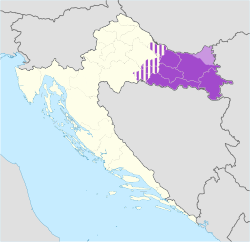
Slavonia (/sləˈvoʊniə/; Croatian: Slavonija) is, with Dalmatia, Croatia proper, and Istria, one of the four historical regions of Croatia. Located in the Pannonian Plain and taking up the east of the country, it roughly corresponds with five Croatian counties: Brod-Posavina, Osijek-Baranja, Požega-Slavonia, Virovitica-Podravina, and Vukovar-Syrmia, although the territory of the counties includes Baranya, and the definition of the western extent of Slavonia as a region varies. The counties cover 12,556 square kilometres (4,848 square miles) or 22.2% of Croatia, inhabited by 806,192—18.8% of Croatia's population. The largest city in the region is Osijek, followed by Slavonski Brod and Vinkovci.
Slavonia is located in the Pannonian Basin, largely bordered by the Danube, Drava, and Sava rivers. In the west, the region consists of the Sava and Drava valleys and the mountains surrounding the Požega Valley, and plains in the east. Slavonia enjoys a moderate continental climate with relatively low precipitation.
After the fall of the Western Roman Empire, which ruled the area of modern-day Slavonia until the 5th century, Ostrogoths and Lombards controlled the area before the arrival of Avars and Slavs. The Slavs in Lower Pannonia established a principality in the 7th century, which was later incorporated into the Kingdom of Croatia; after its decline, the kingdom was ruled through a personal union with Hungary. In the Kingdom of Hungary, the Ban of Slavonia was the King's governor of these lands, at various times distinct from the Ban of Croatia.
The Ottoman conquest of Slavonia took place in the 16th century. At the turn of the 18th century, after the Great Turkish War of 1683–1699, the Treaty of Karlowitz transferred Kingdom of Slavonia to the Habsburgs. After the Austro-Hungarian Compromise of 1867, Slavonia became part of the Hungarian part of the realm, and a year later it became part of the Kingdom of Croatia-Slavonia. In 1918, when Austria-Hungary dissolved, Slavonia became a part of the short-lived State of Slovenes, Croats and Serbs which in turn became a part of the Kingdom of Serbs, Croats, and Slovenes, later renamed Yugoslavia. During the Croatian War of Independence of 1991–1995, Slavonia saw fierce fighting, including the 1991 Battle of Vukovar.
The economy of Slavonia is largely based on processing industry, trade, transport, and civil engineering. Agriculture is a significant component of its economy: Slavonia contains 45% of Croatia's agricultural land and accounts for a significant proportion of Croatia's livestock farming and production of permanent crops. The gross domestic product (GDP) of the five counties of Slavonia is worth 6,454 million euro or 8,005 euro per capita, 27.5% below national average. The GDP of the five counties represents 13.6% of Croatia's GDP.
The cultural heritage of Slavonia represents a blend of historical influences, especially those from the end of the 17th century, when Slavonia started recovering from the Ottoman wars, and its traditional culture. Slavonia contributed to the culture of Croatia through art, writers, poets, sculptors, and art patronage. In traditional music, Slavonia comprises a distinct region of Croatia, and the traditional culture is preserved through folklore festivals, with prominence given to tamburica music and bećarac, a form of traditional song, recognized as an intangible cultural heritage by UNESCO. The cuisine of Slavonia reflects diverse influences—a blend of traditional and foreign elements. Slavonia is one of Croatia's winemaking areas, with Erdut, Ilok and Kutjevo recognized as centres of wine production.
The name Slavonia originated in the Early Middle Ages. The area was named after the Slavs who settled there and called themselves *Slověne. The root *Slověn- appeared in various dialects of languages spoken by people inhabiting the area west of the Sutla river, as well as between the Sava and Drava rivers—South Slavs living in the area of the former Illyricum. The area bounded by those rivers was called *Slověnьje in the Proto-Slavic language. The word subsequently evolved to its various present forms in the Slavic languages, and other languages adopted the term.
Remnants of several Neolithic and Chalcolithic cultures were found in all regions of Croatia, but most of the sites are found in the river valleys of northern Croatia, including Slavonia. The most significant cultures whose presence was found include the Starčevo culture whose finds were discovered near Slavonski Brod and dated to 6100–5200 BC, the Vučedol culture, the Baden culture and the Kostolac culture. Most finds attributed to the Baden and Vučedol cultures are discovered in the area near the right bank of the Danube near Vukovar, Vinkovci and Osijek. The Baden culture sites in Slavonia are dated to 3600–3300 BC, and Vučedol culture finds are dated to 3000–2500 BC. The Iron Age left traces of the early Illyrian Hallstatt culture and the Celtic La Tène culture. Much later, the region was settled by Illyrians and other tribes, including the Pannonians, who controlled much of present-day Slavonia. Even though archaeological finds of Illyrian settlements are much sparser than in areas closer to the Adriatic Sea, significant discoveries, for instance in Kaptol near Požega have been made. The Pannonians first came into contact with the Roman Republic in 35 BC, when the Romans conquered Segestica, or modern-day Sisak. The conquest was completed in 11 BC, when the Roman province of Illyricum was established, encompassing modern-day Slavonia as well as a vast territory on the right bank of Danube. The province was renamed Pannonia and divided within two decades.
Slavonia
Slavonia (/sləˈvoʊniə/; Croatian: Slavonija) is, with Dalmatia, Croatia proper, and Istria, one of the four historical regions of Croatia. Located in the Pannonian Plain and taking up the east of the country, it roughly corresponds with five Croatian counties: Brod-Posavina, Osijek-Baranja, Požega-Slavonia, Virovitica-Podravina, and Vukovar-Syrmia, although the territory of the counties includes Baranya, and the definition of the western extent of Slavonia as a region varies. The counties cover 12,556 square kilometres (4,848 square miles) or 22.2% of Croatia, inhabited by 806,192—18.8% of Croatia's population. The largest city in the region is Osijek, followed by Slavonski Brod and Vinkovci.
Slavonia is located in the Pannonian Basin, largely bordered by the Danube, Drava, and Sava rivers. In the west, the region consists of the Sava and Drava valleys and the mountains surrounding the Požega Valley, and plains in the east. Slavonia enjoys a moderate continental climate with relatively low precipitation.
After the fall of the Western Roman Empire, which ruled the area of modern-day Slavonia until the 5th century, Ostrogoths and Lombards controlled the area before the arrival of Avars and Slavs. The Slavs in Lower Pannonia established a principality in the 7th century, which was later incorporated into the Kingdom of Croatia; after its decline, the kingdom was ruled through a personal union with Hungary. In the Kingdom of Hungary, the Ban of Slavonia was the King's governor of these lands, at various times distinct from the Ban of Croatia.
The Ottoman conquest of Slavonia took place in the 16th century. At the turn of the 18th century, after the Great Turkish War of 1683–1699, the Treaty of Karlowitz transferred Kingdom of Slavonia to the Habsburgs. After the Austro-Hungarian Compromise of 1867, Slavonia became part of the Hungarian part of the realm, and a year later it became part of the Kingdom of Croatia-Slavonia. In 1918, when Austria-Hungary dissolved, Slavonia became a part of the short-lived State of Slovenes, Croats and Serbs which in turn became a part of the Kingdom of Serbs, Croats, and Slovenes, later renamed Yugoslavia. During the Croatian War of Independence of 1991–1995, Slavonia saw fierce fighting, including the 1991 Battle of Vukovar.
The economy of Slavonia is largely based on processing industry, trade, transport, and civil engineering. Agriculture is a significant component of its economy: Slavonia contains 45% of Croatia's agricultural land and accounts for a significant proportion of Croatia's livestock farming and production of permanent crops. The gross domestic product (GDP) of the five counties of Slavonia is worth 6,454 million euro or 8,005 euro per capita, 27.5% below national average. The GDP of the five counties represents 13.6% of Croatia's GDP.
The cultural heritage of Slavonia represents a blend of historical influences, especially those from the end of the 17th century, when Slavonia started recovering from the Ottoman wars, and its traditional culture. Slavonia contributed to the culture of Croatia through art, writers, poets, sculptors, and art patronage. In traditional music, Slavonia comprises a distinct region of Croatia, and the traditional culture is preserved through folklore festivals, with prominence given to tamburica music and bećarac, a form of traditional song, recognized as an intangible cultural heritage by UNESCO. The cuisine of Slavonia reflects diverse influences—a blend of traditional and foreign elements. Slavonia is one of Croatia's winemaking areas, with Erdut, Ilok and Kutjevo recognized as centres of wine production.
The name Slavonia originated in the Early Middle Ages. The area was named after the Slavs who settled there and called themselves *Slověne. The root *Slověn- appeared in various dialects of languages spoken by people inhabiting the area west of the Sutla river, as well as between the Sava and Drava rivers—South Slavs living in the area of the former Illyricum. The area bounded by those rivers was called *Slověnьje in the Proto-Slavic language. The word subsequently evolved to its various present forms in the Slavic languages, and other languages adopted the term.
Remnants of several Neolithic and Chalcolithic cultures were found in all regions of Croatia, but most of the sites are found in the river valleys of northern Croatia, including Slavonia. The most significant cultures whose presence was found include the Starčevo culture whose finds were discovered near Slavonski Brod and dated to 6100–5200 BC, the Vučedol culture, the Baden culture and the Kostolac culture. Most finds attributed to the Baden and Vučedol cultures are discovered in the area near the right bank of the Danube near Vukovar, Vinkovci and Osijek. The Baden culture sites in Slavonia are dated to 3600–3300 BC, and Vučedol culture finds are dated to 3000–2500 BC. The Iron Age left traces of the early Illyrian Hallstatt culture and the Celtic La Tène culture. Much later, the region was settled by Illyrians and other tribes, including the Pannonians, who controlled much of present-day Slavonia. Even though archaeological finds of Illyrian settlements are much sparser than in areas closer to the Adriatic Sea, significant discoveries, for instance in Kaptol near Požega have been made. The Pannonians first came into contact with the Roman Republic in 35 BC, when the Romans conquered Segestica, or modern-day Sisak. The conquest was completed in 11 BC, when the Roman province of Illyricum was established, encompassing modern-day Slavonia as well as a vast territory on the right bank of Danube. The province was renamed Pannonia and divided within two decades.
Recent media
Recent media