Hubbry Logo
search
logo
1800164

Becky Cloonan

logo
Community Hub0 Subscribers
Read side by side
from Wikipedia

Becky Cloonan (born 23 June) is an American comic book creator, known for work published by Tokyopop and Vertigo. In 2012 she became the first female artist to draw the main Batman title for DC Comics.[2]

Key Information

Early life

[edit]

Becky Cloonan was born in Pisa, Italy.[3] She attended New York's School of Visual Arts.[4]

Career

[edit]

Cloonan and her friends produced a comics anthology that they called Meathaus.[5]

Cloonan created minicomics as a member of the Meathaus collective before collaborating with Brian Wood on Channel Zero: Jennie One[6] in 2003. Since then, her profile (and workload) has steadily risen; her best-known work to date has been the twelve-issue comics series Demo (2004), also with Wood. Wizard named Demo its 2004 Indie of the Year.[7] The series was also nominated for two Eisner Awards in 2005, for Best Limited Series and Best Single Issue or One-Shot (the latter of which was for Demo #7, "One Shot, Don't Miss").[8]

Cloonan's first solo graphic novel, East Coast Rising Volume 1, was released by Tokyopop in 2006. East Coast Rising: Volume 1 marked Cloonan's third Eisner Award nomination in 2007, this time for Best New Series.[9] She also collaborated with writer Steven T. Seagle on the Vertigo Comics series American Virgin, which was cancelled with the 23rd issue.[10] In 2012 she became the first woman to draw the main Batman title.[2]

In 2013, she did the art for the series The True Lives of the Fabulous Killjoys, which is written by Gerard Way[11] and Shaun Simon. In 2014/2015, she also co-created and did cover art and stories for Gotham Academy from DC Comics.[12]

In 2015, she was voted #3 of the top 50 female comics artists of all time.[13] She was also one of only two creators to make the list as both writer and artist, voted #14 among all-time top writers.[14]

In 2017, Cloonan was one of several artists participating in the Pow! Wow! Worcester festival, the purpose of which was to bring large public murals to buildings throughout Worcester, Massachusetts. Cloonan painted her mural, which she completed on Labor Day, on the building housing the comic shop That's Entertainment.[15]

In July 2021, DC Comics announced that Cloonan and Michael W. Conrad would co-write Batgirls, a new series which would focus on Barbara Gordon's mentorship of Cassandra Cain and Stephanie Brown.[16][17] The debut issue was released on December 14, 2021, and garnered a positive review from Dustin Holland of CBR.com.[18]

In 2024, Cloonan won the Eisner Award for Best New Series [19] for her work with Tula Lotay on Somna: A Bed Time Story published by DSTLRY

Bibliography

[edit]

References

[edit]
[edit]
Revisions and contributorsEdit on WikipediaRead on Wikipedia
from Grokipedia
Becky Cloonan is an American comic book writer and artist known for her manga-influenced illustrations and storytelling in both independent and mainstream publications, including her historic role as the first woman to draw the main Batman series for DC Comics in 2012.[1][2] Her work spans self-published titles, collaborations with major publishers like Vertigo, Dark Horse, and Image Comics, and acclaimed solo projects that blend fantasy, horror, and adventure elements.[3][2] Cloonan began her career in the late 1990s as a self-publisher of minicomics while attending the School of Visual Arts in New York, where she co-founded the influential Meathaus anthology collective.[3] Her breakthrough came with the 2003 graphic novel Channel Zero: Jennie One, co-created with writer Brian Wood and published by AiT/Planet Lar, marking her entry into professional comics.[2] This led to further collaborations, such as the Eisner-nominated Demo series (2004, republished by Dark Horse in 2015), which earned "Indie of the Year" from Wizard magazine, and American Virgin and Northlanders for Vertigo.[2][3] Among her notable solo works are the Eisner-nominated East Coast Rising Volume 1 (2007) and the self-published Wolves (2011), which sold over 7,000 copies through grassroots efforts.[2][3] Cloonan has received multiple Eisner Award nominations, including for Best New Series and Best Limited Series, and won the 2013 Eisner for Best Short Story with The Mire, a paranormal tale she wrote and illustrated, as well as the 2024 Eisners for Best New Series (Somna, co-created with Tula Lotay) and Best Short Story ("The Kelpie" in Four Gathered on Christmas Eve).[2][3][4] Her DC contributions extend to Swamp Thing, Gotham Academy, and Conan the Barbarian at Dark Horse, showcasing her versatility in genres from supernatural horror to medieval fantasy.[1][2] Influenced by early Marvel comics like Silver Surfer and German Expressionist films, she prefers traditional inking techniques and aims to produce at least one fully authorial comic annually.[1][3]

Biography

Early life

Becky Cloonan was born on June 23, 1980, in Pisa, Italy, to American parents.[5][6] Her family relocated to the United States during her early childhood, where she grew up in New Hampshire surrounded by dense forests and natural landscapes.[7] This rural environment fostered a deep appreciation for history and nature, shaping her imaginative worldview from a young age.[8] Cloonan's early exposure to art stemmed from family influences, particularly her father's introduction to American comics like the Silver Surfer Annual #1 in 1988, which ignited her fascination with visual storytelling and sequential art.[3] By age 13, she had committed to pursuing a career in creating comics, driven by a desire to craft her own narratives.[3] Throughout her childhood, Cloonan engaged in hobbies centered on drawing and creativity, frequently sketching her own comics and delving into fantasy worlds inspired by novels such as The Last Unicorn and films like Ladyhawke.[8] These activities honed her skills in illustration and storytelling, laying the foundation for her future work in the medium.[3]

Education

Becky Cloonan attended the School of Visual Arts (SVA) in New York City as an undergraduate, majoring in animation.[9] She enrolled in the late 1990s and spent approximately three years there, during which she transitioned from animation toward comics creation. Cloonan attended SVA from the late 1990s, leaving after approximately three years in 2001 to pursue comics, which provided her with foundational training in visual storytelling, drawing, and design.[1][9] Her coursework at SVA included studies in animation principles, which overlapped with illustration and sequential art techniques essential for comics.[10] Influenced by manga aesthetics, Cloonan incorporated dynamic line work and expressive panel layouts into her student exercises, blending Eastern and Western artistic traditions.[3] These classes provided hands-on training in visual narrative, helping her refine approaches to pacing and composition in graphic storytelling. Through SVA, Cloonan built early professional networks, most notably as a founding and active member of the Meathaus collective, established in 1999 by SVA students including Farel Dalrymple and Tomer Hanuka.[11] Meathaus served as a collaborative hub for independent comics production, where Cloonan contributed to anthology projects that fostered connections with emerging artists.[12] This environment was instrumental in her professional development. During her student projects, particularly within Meathaus initiatives, Cloonan honed core artistic skills such as inking for bold, high-contrast illustrations and panel composition to enhance dramatic tension in sequences.[12] These experiences laid the groundwork for her distinctive style, emphasizing fluid motion and emotional depth in black-and-white work, before she fully pursued freelance comics illustration post-SVA.[9]

Professional career

Indie beginnings

Becky Cloonan co-founded the Meathaus anthology collective in 1999 alongside classmates at the School of Visual Arts in New York City, including artists such as Tomer and Asaf Hanuka, James Jean, Nate Powell, and Brandon Graham.[3][11] The group focused on self-publishing mini-comics that emphasized experimental formats and personal narratives, allowing contributors to explore eclectic, art-driven stories outside mainstream constraints.[3][6] Through Meathaus, Cloonan produced her early self-published works, honing her skills in creator-owned projects that prioritized intimate, character-focused tales.[6] Her first major collaboration came with writer Brian Wood on Channel Zero: Jennie One, a graphic novel published in 2003 by AiT/Planet Lar.[13] The story follows a young woman's radicalization during turbulent times in New York City, marking Cloonan's entry into small-press work beyond pure self-publishing.[3] Building on this partnership, Cloonan and Wood launched the Demo series in 2004, a 12-issue limited run from AiT/Planet Lar featuring standalone tales of young protagonists grappling with superhuman abilities amid everyday emotional struggles.[6][14] Indie publishing presented significant challenges for Cloonan in the early 2000s, including the need to personally finance printing costs without advances or page rates, often resulting in initial small print runs that lost money.[15] She described the process as stressful, confusing, and solitary, requiring her to handle production logistics, shipping, and sales at numerous conventions to recoup expenses and build an audience.[15] Despite these hurdles, such grassroots efforts through Meathaus and small presses laid the foundation for her professional growth in comics.[3]

Major publisher transitions

Cloonan's entry into major publishing began with East Coast Rising Volume 1, a manga-style graphic novel she wrote and illustrated, released by Tokyopop in 2006. The story of punk rock pirates navigating a flooded, post-apocalyptic world marked her first substantial work with a mainstream publisher and earned an Eisner Award nomination for Best New Series in 2007.[16][17] Shortly thereafter, she transitioned to DC Comics' Vertigo imprint, providing artwork for all 23 issues of American Virgin from 2006 to 2007, written by Steven T. Seagle. The series explored themes of faith, sexuality, and loss through the lens of a young Christian author, showcasing Cloonan's ability to adapt her dynamic, expressive style to more mature, narrative-driven storytelling within a corporate structure.[18][19] Her work at Dark Horse Comics further expanded her range into horror and adventure genres. In 2009, she collaborated on Pixu: The Mark of Evil, a shared-universe anthology with Gabriel Bá, Fabio Moon, and Vasilis Lolos, blending supernatural elements with urban dread. Building on her indie foundations like Demo, Cloonan then took on art duties for the 2012 relaunch of Conan the Barbarian, illustrating the first four issues alongside writer Brian Wood in an adaptation of Robert E. Howard's "Queen of the Black Coast." Her portrayal emphasized Conan's raw athleticism and the seafaring exploits of his companion Bêlit, earning praise for infusing the sword-and-sorcery classic with fresh energy.[20][21][22] A pivotal moment in Cloonan's mainstream career occurred in 2012, when she became the first woman to illustrate the primary Batman ongoing series, providing art for Batman #12 written by Scott Snyder. This guest spot on the iconic superhero title highlighted her versatility in high-stakes action and noir atmospheres, contributing to greater industry recognition for female artists in traditionally male-dominated genres like superhero comics.[23][3]

Recent collaborations

In the mid-2010s, Becky Cloonan expanded her collaborative efforts beyond illustration, increasingly serving as a writer-artist in high-profile team-ups that blended her horror-infused style with ensemble storytelling. Her work on The True Lives of the Fabulous Killjoys (Dark Horse, 2013) bridged this transition, where she provided the artwork for a post-apocalyptic narrative written by Gerard Way and Shaun Simon, depicting a young girl's survival against a corporate dystopia. This project highlighted her ability to visualize intense, character-driven action in partnership with musicians and writers from adjacent creative fields. Cloonan's co-creation of Gotham Academy (DC Comics, 2014–2015) further emphasized her evolving role, as she co-wrote the teen drama series set in Batman's shadowy world alongside Brenden Fletcher, while contributing variant covers that captured the school's eerie, preparatory atmosphere.[24] In 2016, she stepped into lead writing duties for Marvel's The Punisher series (2016–2018), her first time helming the vigilante character, collaborating with artist Steve Dillon on early issues that propelled Frank Castle into off-grid pursuits against a super-powered drug ring. This run showcased her narrative command of gritty, introspective violence, with subsequent artists like Matt Horak maintaining the momentum through issues #16–17.[25] Beyond comics, Cloonan's 2017 participation in the Pow! Wow! Worcester festival demonstrated her versatility in public art collaborations, where she painted a 24-by-16-foot mural on the exterior of That's Entertainment in Massachusetts, featuring bold, illustrative motifs that drew from her comic aesthetic.[26] By 2021, she returned to DC as co-writer on Batgirls, partnering with Michael W. Conrad to chronicle the adventures of Cassandra Cain, Stephanie Brown, and Barbara Gordon in a fast-paced, ensemble-driven series that emphasized their makeshift family dynamics amid Gotham's threats.[27] Cloonan's most recent major collaboration, Somna: A Bedtime Story (DSTLRY, 2024), paired her as co-creator and writer-artist with Tula Lotay, exploring erotic horror during 17th-century English witch hunts through intertwined tales of desire and persecution; the series earned the 2024 Eisner Award for Best New Series.[28] This project underscores her ongoing involvement with DSTLRY's media initiatives, including curating and contributing to the 2024 folk-horror anthology one-shot Come Find Me: An Autumnal Offering, which features stories by artists like E.M. Carroll and Vanesa R. Del Rey to evoke seasonal dread and supernatural folklore.[29] In 2025, Cloonan continued her collaborative output with several high-profile projects. She teamed with writer Garth Ennis for The War, a political thriller series published by BOOM! Studios exploring nuclear war fears and societal collapse among a group of friends, with the first issue released in July 2025 and subsequent issues following through the year.[30] She also reunited with Brenden Fletcher and Karl Kerschl for the six-issue prequel series Gotham Academy: First Year at DC Comics, launching on October 1, 2025, which delves into the origins and early secrets of the academy's super-powered student life.[31] Additionally, Cloonan provided artwork for a Batman one-shot written by Matt Fraction, reviving the classic villain Doctor Death in a retelling of Batman's early history, announced in September 2025.[32]

Artistic approach

Visual style

Becky Cloonan's visual style is characterized by fluid, bold, and expressive linework that draws heavily from manga influences, creating dynamic energy in her compositions.[2][33] Her inking employs brushes like the Winsor & Newton Series 7 to achieve varied line weights, from delicate curves to sharp accents, enhancing movement and emotional depth in figures and environments.[9] This approach results in panel layouts that feel kinetic and immersive, prioritizing rhythmic flow over rigid grids.[33] Recurring thematic motifs in her artwork blend horror and fantasy elements through atmospheric shading and strong female protagonists who embody resilience and complexity.[33] She uses layered shading techniques to build tension and mood, often employing lighting contrasts to evoke shadowy, otherworldly atmospheres that underscore narrative unease.[33] Color palettes, when applied, favor muted earth tones punctuated by bold accents to heighten dramatic focal points, maintaining a sense of grounded fantasy.[8] Cloonan's style has evolved from the looser, more sketchy renderings in her early indie miniseries to a polished, detailed approach in mainstream titles like Batman and The Punisher, where tighter lines and refined textures amplify heroic scale and intensity.[8] Techniques such as brushwork for texture add tactile depth without overwhelming the form, reflecting her self-taught refinement over time.[9] Post-2010, Cloonan adapted to digital tools like Photoshop and Cintiq for refining sketches and inking, yet preserved hand-drawn authenticity by often printing layers for traditional brush application.[34] This hybrid method allows for precise control while retaining the organic expressiveness of her analog roots.[34]

Influences

Becky Cloonan's artistic influences draw heavily from a blend of comics, film, and literature, shaping her narrative depth and visual storytelling. Early exposure to American superhero comics, such as X-Men and particularly Silver Surfer Annual #1 (1988), sparked her interest in the medium, as she read the issue repeatedly until it fell apart, inspiring her to explore storytelling gaps between panels. Manga also profoundly impacted her perspective, revealing a landscape where women comprised a significant portion of creators, which contrasted with her initial experiences in Western comics and encouraged her diverse approach to character and narrative design. Her affinity for European cinematic traditions, especially German Expressionist films like those directed by Fritz Lang, informs much of her inking and visual composition techniques. Cloonan has stated that "almost everything I learned about my visual storytelling comes from German Expressionist films," crediting them for her dynamic use of shadows and perspective in comics. This influence extends to broader European bande dessinée aesthetics, evident in her emphasis on atmospheric depth and experimental layouts. Music plays a central role in Cloonan's creative process, with heavy metal and punk serving as both inspiration and thematic fuel for her work. Growing up in the New York punk and hardcore scene around 1998, she created album and T-shirt art for bands, which honed her illustrative style and integrated musical energy into her comics. She frequently listens to heavy metal while drawing, citing favorites like black metal acts such as Wodensthrone, Winterfylleth, Wardruna, and Ulver, as well as Deafheaven's Sunbather, The Sword, Clutch, and Iron Maiden—declaring "Mandatory [Iron] Maiden Monday" as a ritual. Cloonan describes music as "such a big part of my life, and what inspires so much of my art," leading to commissions like posters for Black Sabbath's The End tour, Clutch's album art, and the Roadburn festival, where her designs capture the genre's intensity and mysticism. Literary sources, particularly fantasy and horror genres, further enrich Cloonan's thematic elements. Childhood readings of Terry Brooks' fantasy novels and Piers Anthony's Incarnations of Immortality series ignited her love for epic narratives, which she revisited in works exploring folklore. She draws from Icelandic, Scottish, and Faroese folklore for supernatural motifs, alongside historical texts like Rubicon and classic horror tales by F. Marion Crawford and Arthur Conan Doyle, blending these into tales of myth and dread. Influences from horror cinema and literature, such as the adventurous mysteries in Buffy the Vampire Slayer and Scooby-Doo, also inform her ensemble-driven stories with supernatural undertones. Collaborations with writers like Brian Wood and Gerard Way have deepened Cloonan's thematic maturity, allowing her to refine her voice through shared creative dynamics. Her partnership with Wood on Demo and Channel Zero: Jennie One marked early breakthroughs, where his scripts provided a platform for her evolving style. Working with Way and Shaun Simon on The True Lives of the Fabulous Killjoys, Cloonan appreciated their openness: "Shaun and Gerard were always very open to my end of the collaboration," fostering a balanced exchange that enhanced her handling of emotional and fantastical themes. Similar synergy with Andy Belanger on Southern Cross and Brenden Fletcher on Gotham Academy—noting Fletcher's musical background—has pushed her to integrate diverse influences into cohesive narratives. Cloonan's Italian-American heritage, stemming from her birth in Pisa, Italy, and upbringing in the wooded landscapes of New Hampshire, subtly permeates her character designs and settings. The granite and forests of New Hampshire evoke a sense of isolation and natural mysticism in her wilderness-themed stories, while her multicultural roots contribute to the resilient, introspective figures she crafts.

Works

Self-published and indie

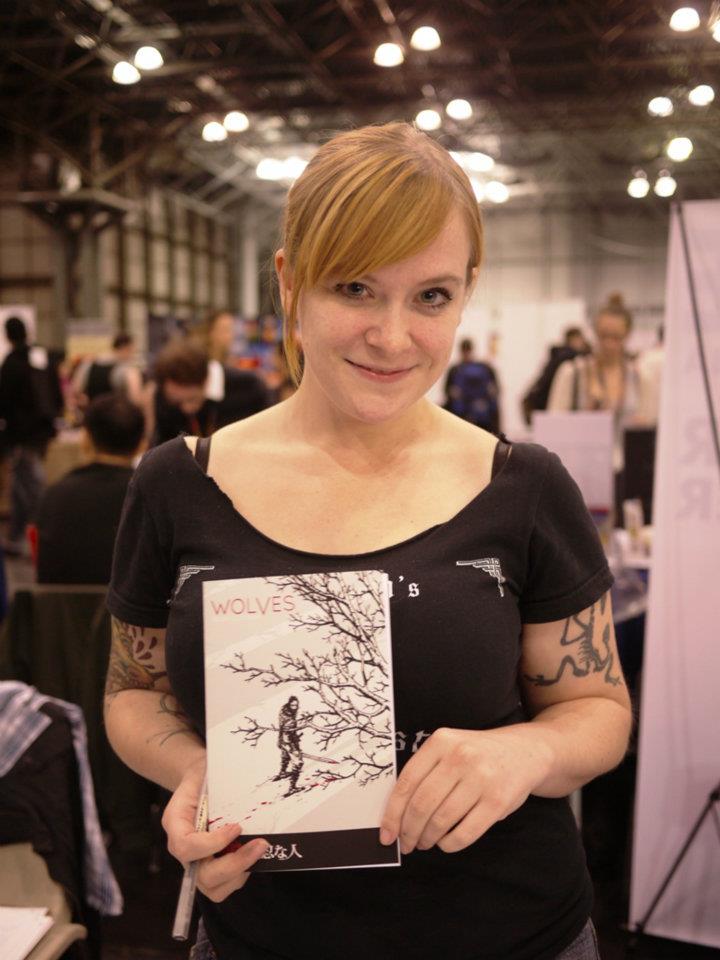
Becky Cloonan's early independent work began with contributions to the Meathaus anthology series, a collaborative effort she co-founded with fellow artists including Farel Dalrymple, Tomer Hanuka, Asaf Hanuka, and Brandon Graham while attending the School of Visual Arts in the late 1990s.[3] The miniseries, published irregularly from 1999 through the 2000s by Alternative Comics and other small presses, featured Cloonan's short stories alongside experimental pieces from the collective, blending horror, fantasy, and personal narratives in a raw, eclectic style.[3] Notable examples include her story "$7.50 an Hour" in Meathaus #7: Love Songs (2005), which explores themes of urban struggle and fleeting connections, and contributions to later issues like Meathaus #8: Head Games (2006), where her illustrations complemented the anthology's focus on psychological tension and visual innovation.[35][36] In 2011, Cloonan self-published the 24-page minicomic Wolves, a haunting horror tale set in a medieval forest where a lone hunter pursues a beast while grappling with memories of lost love and regret.[37] Originally adapted from a 2009 story in the Japanese anthology Journeys, the standalone version features sparse dialogue and intricate black-and-white artwork emphasizing isolation and inevitable doom, with an initial print run of 1,000 copies that sold out quickly.[38] The work exemplifies Cloonan's ability to convey emotional depth through atmospheric pacing and dynamic panel layouts in a compact format.[37] Cloonan's first full graphic novel, East Coast Rising Volume 1 (2006), was published by Tokyopop as a creator-owned project she wrote and illustrated, blending post-apocalyptic adventure with character-driven drama about a group of young survivors navigating a flooded world.[39] Its indie sensibilities stemmed from Cloonan's complete creative control, earning an Eisner nomination for Best New Series in 2007.[2] Volumes 2 (2008), with Volume 3 planned but ultimately unpublished due to the publisher's financial instability, also under Tokyopop, continued the saga with self-scripted elements, leading to limited distribution and later digital reprints that highlighted Cloonan's independent vision for the unfinished series.[40][41] From 2003 to 2004, Cloonan illustrated the 12-issue limited series Demo, written by Brian Wood and published by AiT/Planet Lar, presenting standalone vignettes of teenagers discovering and coping with sudden superpowers amid everyday turmoil.[42] Each issue functions as a self-contained story exploring themes of isolation, identity, and consequence, with Cloonan's expressive linework capturing youthful vulnerability and raw emotion; the series was collected in 2005, collected by Vertigo in 2008 and expanded with a second 6-issue miniseries in 2010 (totaling 18 issues), and reprinted by Dark Horse in 2015.[43][44][45] Cloonan's 2011 self-published collection By Chance or Providence compiles her award-winning trilogy of short horror-fantasy stories—Wolves (2011), The Mire (2012), and Demeter (2013)—each originally released as limited-edition minicomics with medieval settings and motifs of love, loss, and supernatural reckoning.[37] The Mire, depicting a squire's fateful encounter with a cursed woman on the eve of battle, won the 2013 Eisner Award for Best Short Story, while Demeter concludes the arc with a tale of grief and rebirth inspired by mythological undertones.[46] The volume, initially produced in a small hardcover run, underscores Cloonan's mastery of concise, evocative storytelling, later reprinted in color by Image Comics in 2017.[37][47]

Dark Horse Comics

Becky Cloonan's first major project with Dark Horse Comics was as the artist on the six-issue mini-series The True Lives of the Fabulous Killjoys (September 2013–January 2014), written by Gerard Way and Shaun Simon. The series follows a group of outcasts in a dystopian world ruled by the corporation Better Living Industries, expanding on the universe of My Chemical Romance's album Danger Days: The True Lives of the Fabulous Killjoys. Cloonan's artwork, characterized by dynamic panel layouts and vivid colors, brought the post-apocalyptic setting to life across all six issues.[48] In 2012, Cloonan provided the interior art for the launch of Conan the Barbarian, written by Brian Wood, adapting Robert E. Howard's story "Queen of the Black Coast" in issues #1–6. The arc depicts the Cimmerian warrior Conan's alliance with the pirate queen Bêlit as they sail the Black Coast, facing supernatural threats and treachery. Cloonan illustrated five issues (#1–5), with James Harren taking over for #6, and her contributions extended to select later arcs, including issue #7. The collaboration marked a significant adaptation of Howard's Hyborian Age tales under Dark Horse's long-running Conan license.[49][50][21] Cloonan's involvement with Dark Horse's Hellboy universe included cover artwork for B.P.R.D.: Hell on Earth – The Pickens County Horror #1 (March 2012), written by Mike Mignola, John Arcudi, and Scott Allie with art by Tyler Crook. The cover depicts a gothic, fog-shrouded Southern mansion amid supernatural horror, complementing the issue's vampire clan storyline. She also contributed the short story "The Kelpie," a horror tale set on Christmas Eve, to the 2023 anthology Four Gathered on Christmas Eve, alongside Mike Mignola, Eric Powell, and James Harren; while not directly featuring Hellboy, the project draws from Mignola's atmospheric style associated with the franchise.[51][52] In 2015, Cloonan wrote and drew the three-issue mini-series Dark Agnes, adapting Robert E. Howard's sword-and-sorcery character for Dark Horse as part of their pulp hero lineup. The story follows the fierce swordswoman Agnes de Chastillon as she navigates betrayal, combat, and adventure in 16th-century France, blending historical fiction with fantasy elements. Cloonan handled all aspects of the creative process, from scripting to full artwork, in this creator-owned project under Dark Horse's imprint.

DC Comics and Vertigo

Becky Cloonan's entry into DC Comics' Vertigo imprint began with her artwork on the mature-themed series American Virgin, written by Steven T. Seagle and published from 2006 to 2007.[53] The series, which ran for 23 issues, explored provocative topics such as sexuality, religion, and personal loss through the story of a young Christian author grappling with temptation and tragedy.[54] Cloonan's dynamic, expressive illustrations, characterized by fluid lines and emotional depth, complemented the narrative's blend of humor, horror, and introspection, aligning with Vertigo's reputation for sophisticated, adult-oriented storytelling.[2] Transitioning to DC's mainline superhero titles, Cloonan provided interior art for Batman #12 in 2012, written by Scott Snyder.[55] This issue, part of the "Court of Owls" storyline, depicted Batman confronting gothic threats in a rain-soaked Gotham, with Cloonan's shadowy, atmospheric pencils enhancing the noir atmosphere. Her contribution marked a historic milestone as the first woman to illustrate a main Batman ongoing series in its over 70-year history.[23] In 2014, Cloonan co-created Gotham Academy with writers Brenden Fletcher and artist Karl Kerschl, launching as a New 52 series that ran through 2015 for 18 issues plus an annual. The title introduced a youthful ensemble at a prestigious Gotham prep school rife with supernatural mysteries, blending teen drama with Batman lore in a lighter, all-ages tone distinct from Vertigo's edgier fare. Cloonan contributed art to issues #1, #11, and #12, as well as variant covers, bringing her signature style to key sequences involving ghostly encounters and school rivalries.[3] Cloonan returned to DC as co-writer on Batgirls from 2021 to 2023, partnering with Michael W. Conrad for all 19 issues, with art primarily by Jorge Corona.[27] The series followed Cassandra Cain, Stephanie Brown, and Oracle navigating Gotham's dangers while evading surveillance in a low-rent apartment, emphasizing themes of found family, resilience, and street-level heroism amid the city's chaos. Cloonan's writing focused on character-driven arcs, including the Batgirls' interpersonal dynamics and confrontations with villains like the Magistrate, while incorporating Vertigo-inspired maturity in explorations of trauma and identity. Throughout the 2010s, Cloonan made short contributions to various Vertigo anthologies and ongoing titles, including artistic elements in mature-reader projects that echoed the imprint's boundary-pushing ethos.[2]

Marvel Comics

Becky Cloonan's contributions to Marvel Comics began with writer-artist roles in anthology series during the late 2000s and early 2010s. In Strange Tales (2009) #3, she wrote and drew the short story "King Crab!", a surreal tale featuring a monstrous crustacean antagonist, showcasing her distinctive blend of horror and fantasy elements.[56] Similarly, in Nation X (2009) #2, Cloonan penned and illustrated "Cajun Justice!", a self-contained X-Men story centered on Gambit dispensing vigilante justice in a bayou setting, highlighting her ability to capture character dynamics within a limited page count.[57] These early works established her versatility in Marvel's superhero landscape, blending indie sensibilities with mainstream characters. Cloonan's most prominent Marvel role came as the writer for The Punisher (2016 series), where she helmed a 17-issue run (#1-17) that revitalized the vigilante's narrative by emphasizing themes of isolation and moral ambiguity. The series launched with a gritty road-trip arc, pitting Frank Castle against a super-powered drug cartel in remote American locales, diverging from urban New York settings to explore his psychological toll.[58] For the debut six-issue arc (#1-6), she collaborated with artist Steve Dillon, whose stark, realistic linework complemented Cloonan's scripts, culminating in intense confrontations like a tank battle in the wilderness. Following Dillon's passing after issue #6, Cloonan continued with various guest artists for #7-12, including Laura Braga and Lolanda Zanfardino, who brought diverse styles to the "Back to Basics" arc returning the Punisher to New York streets, and Matt Horak (#13-17), whose dynamic layouts supported escalating gang wars and personal vendettas.[59][60] The run concluded with issue #17 in 2017, collected in volumes such as On the Road (#1-6) and End of the Line (#7-12), praised for humanizing Castle without softening his brutality.[61] Throughout the 2010s, Cloonan also provided variant covers for Marvel titles featuring gritty antiheroes, enhancing her writer-artist profile. Notable examples include dynamic artwork for Deadpool series variants, capturing the mercenary's chaotic energy in promotional issues during the mid-to-late decade, and incentive covers for Wolverine: Exit Wounds #1 (2019), depicting Logan in feral, introspective poses that echoed her anthology style.[62] These contributions underscored her affinity for Marvel's street-level vigilantes, bridging her writing on The Punisher with visual storytelling across the publisher's roster.

Other publishers

Cloonan contributed artwork to Channel Zero: Jennie One, a 2003 graphic novel published by AiT/Planet Lar, written by Brian Wood as a sequel to his earlier Channel Zero series.[13] The story explores themes of media manipulation and urban dystopia in a near-future New York, with Cloonan's illustrations providing a distinct, atmospheric style that complements Wood's narrative.[63] This 72-page work marked one of her early collaborations outside self-publishing, showcasing her ability to blend intricate linework with tense, shadowy visuals.[64] Cloonan's work with Image Comics includes writing Southern Cross, a 14-issue science fiction series published from 2015 to 2016, illustrated by Andy Belanger.[65] Set aboard a decaying space liner, the story delves into mystery and psychological horror as protagonist Alex Braith investigates her sister's death amid supernatural occurrences and corporate intrigue.[66] Collected in two volumes, the series highlights Cloonan's narrative focus on isolation and grief, with Belanger's art enhancing the claustrophobic tension.[67] More recently, Cloonan co-created Somna: A Bedtime Story with Tula Lotay for DSTLRY, released as a three-issue miniseries in 2023–2024 and collected in hardcover in July 2024.[68] This erotic horror tale, set during the 1600s English witch hunts, follows a woman's nocturnal encounters with a dream entity, blending folk horror with themes of desire and persecution; both creators contributed to writing and artwork.[69] The series won the 2024 Eisner Award for Best New Series, praised for its lush, intertwined visual storytelling and atmospheric dread.[70] In 2024, Cloonan curated and contributed to the horror anthology Come Find Me: An Autumnal Offering for DSTLRY, featuring emerging voices in the genre.[71] Cloonan has also provided illustrations for Boom! Studios' Hello Darkness anthology, an ongoing horror series launched in 2024.[72] Her notable contribution is The War, a serialized story written by Garth Ennis, appearing in issues #1–3, which examines nuclear apocalypse and societal breakdown through stark, visceral panels.[30] This three-part arc, later released as a standalone miniseries in 2025, underscores Cloonan's versatility in capturing raw emotional intensity within short-form horror.[73]

Covers and illustrations

Becky Cloonan has contributed numerous variant covers to major comic book publishers, showcasing her distinctive style in promotional artwork for high-profile titles. In the 2010s, she provided cover art for DC Comics' Demo series, including issue #4 in 2010.[74] She also created variant covers for Batman titles, such as the 2010s-era contributions to Detective Comics #1000 and the main Batman series starting in 2012, marking her as the first woman to illustrate the flagship Batman comic.[75] For Wonder Woman, Cloonan designed variants including issues #17, #775, #776, and #778 during the late 2010s and early 2020s.[76][77] More recently, she illustrated the variant cover for Absolute Batman #3 in 2024.[78] At Marvel Comics, Cloonan's cover work includes the variant for The Punisher (2016) #3, aligning with her writing stint on the series.[79] She also produced a variant cover for Deadpool Team-Up #1 in 2024, tying into the character's cinematic appearances.[80] Cloonan's illustrations extend to music and film, particularly through collaborations with Mondo. She created posters for films such as Häxan (2016), The VVitch (2015), and Castlevania: Symphony of the Night (2018), often in limited-edition screenprints that blend horror and fantasy elements.[81][82][83] For bands, her music-related art includes album covers like Clutch's La Curandera (2015) and illustrations for The Sword.[84] She also designed the official poster for the 2016 Roadburn Festival, featuring a procession motif, along with individual day posters for the event.[85] Additionally, Cloonan illustrated "Gifts for the Earth," the closing track from Deafheaven's 2015 album New Bermuda, as part of Paste Magazine's Songs Illustrated series.[86] Beyond prints, Cloonan's work encompasses gig posters and standalone pieces for metal bands across decades. In the 2000s and 2010s, she produced posters for acts like The Dwarves' 2016 Pacific Northwest tour.[87] More recently, in the 2020s, she created tour posters for Black Sabbath (2019) and a limited-edition screenprint for Metallica's 2025 Denver performance.[88][89] Cloonan's public art includes murals and book illustrations. In 2017, she painted a 24-by-16-foot mural at That's Entertainment in Worcester, Massachusetts, as part of the Pow! Wow! Worcester festival, which featured over 25 new walls by international artists.[26] Her book illustrations appear in projects like the tarot-themed Minor Arcana series and horror-themed works, often integrating her gothic aesthetic.[90] Standalone prints, available through her official store, include limited-edition pieces derived from these commissions, such as foil variants and embroidery kits inspired by her metal band collaborations.[91]

Recognition

Awards

Becky Cloonan has received several notable accolades in the comics industry, including two Eisner Awards in 2024 and one in 2013, as well as multiple nominations, and recognition from major conventions and publications.[92][93][17][94][95] In 2013, Cloonan won the Will Eisner Comic Industry Award for Best Short Story/One-Shot for her self-published work The Mire.[95] In 2024, Cloonan won two Eisner Awards: Best Short Story for "The Kelpie", published in the anthology Four Gathered on Christmas Eve (Dark Horse Comics), and Best New Series for her collaboration Somna: A Bedtime Story, co-created with Tula Lotay and published by DSTLRY.[94][96] These wins highlighted her contributions to horror and fantasy genres.[97] Earlier in her career, Cloonan earned Eisner nominations for her work on Demo, a series she illustrated with writer Brian Wood. In 2005, Demo was nominated for Best Limited Series.[93] Additionally, issue #7 of Demo, titled "One Shot, Don't Miss," received a nomination for Best Single Issue that same year.[93] Cloonan's solo graphic novel East Coast Rising Volume 1, published by Tokyopop, garnered another Eisner nomination in 2007 for Best New Series.[17] In 2023, Cloonan was honored with the Inkpot Award at San Diego Comic-Con International, recognizing her outstanding achievements in comic books.[92] Beyond formal awards, Cloonan was ranked #3 on Comic Book Resources' list of the top 25 female comic book artists in 2015, affirming her influence as both an artist and writer.[98]

Critical reception

Becky Cloonan's early collaborations, particularly Demo (2003–2004) with writer Brian Wood, received praise for their emotional resonance and character-driven storytelling, with critics highlighting her artwork's ability to convey the inner turmoil of young protagonists grappling with superhuman abilities amid everyday struggles.[99] Reviews noted the series' focus on heartfelt, vignette-style narratives that emphasized psychological depth over action, earning an average critic rating of around 8.0 across issues. Similarly, her contributions to American Virgin (2006), where she provided art for several issues, were commended for infusing the story with emotional energy and nuanced character expressions, particularly in depicting the protagonist's crisis of faith and identity.[100] The series garnered strong initial reception, with its first issue averaging 8.7 out of 10 from critics, who appreciated the blend of humor, drama, and personal introspection in her illustrative style.[101] Cloonan's 2012 work on Batman #12 marked a significant milestone, positioning her as a trailblazer for women in the male-dominated superhero genre, as she became the first female artist to illustrate the flagship Batman title since its 1939 debut.[3] Media coverage at the time celebrated this achievement as a breakthrough, underscoring her role in diversifying representation in mainstream comics and inspiring discussions on gender equity in the industry.[1] In 2015, Publishers Weekly profiled Cloonan as one of "The Girls of Gotham City," lauding her influence on contemporary comics through projects like Gotham Academy, which was described as an "exciting, stunning, and downright addictive" tale with vibrant characters that showcased her prowess as both writer and artist.[3] The article highlighted her trajectory from self-publishing to major titles, crediting her with reshaping perceptions of female creators by drawing from manga influences and proving the viability of indie work in elevating industry standards.[3] Her 2024 collaboration Somna: A Bedtime Story, co-created with Tula Lotay, has been acclaimed for innovating in the horror genre by weaving erotic thriller elements with historical witch-hunt themes, creating a chilling exploration of desire, repression, and societal hypocrisy in 17th-century England.[70] Critics praised the dual-artist approach—Cloonan's grounded realism for waking scenes and Lotay's dreamlike sequences—as a fresh narrative device that heightens the horror's psychological intensity, earning the series an average rating of 9.0 and positioning it as a standout in mature graphic storytelling.[102] Throughout her career, Cloonan's artistic style has been lauded for its versatility in adapting to diverse genres, from indie horror in works like The Mire to superhero epics, though some reviews note the challenges of maintaining visual cohesion when shifting between her fluid, manga-inspired lines and more structured mainstream formats.[103] This adaptability is often cited as a strength, allowing her to infuse emotional depth across indie and corporate projects, as seen in her Eisner-winning self-published shorts that blend folklore with personal introspection.[104]

References

User Avatar
No comments yet.