
Recent from talks
Bernadette Soubirous
Knowledge base stats:
Talk channels stats:
Members stats:
Bernadette Soubirous
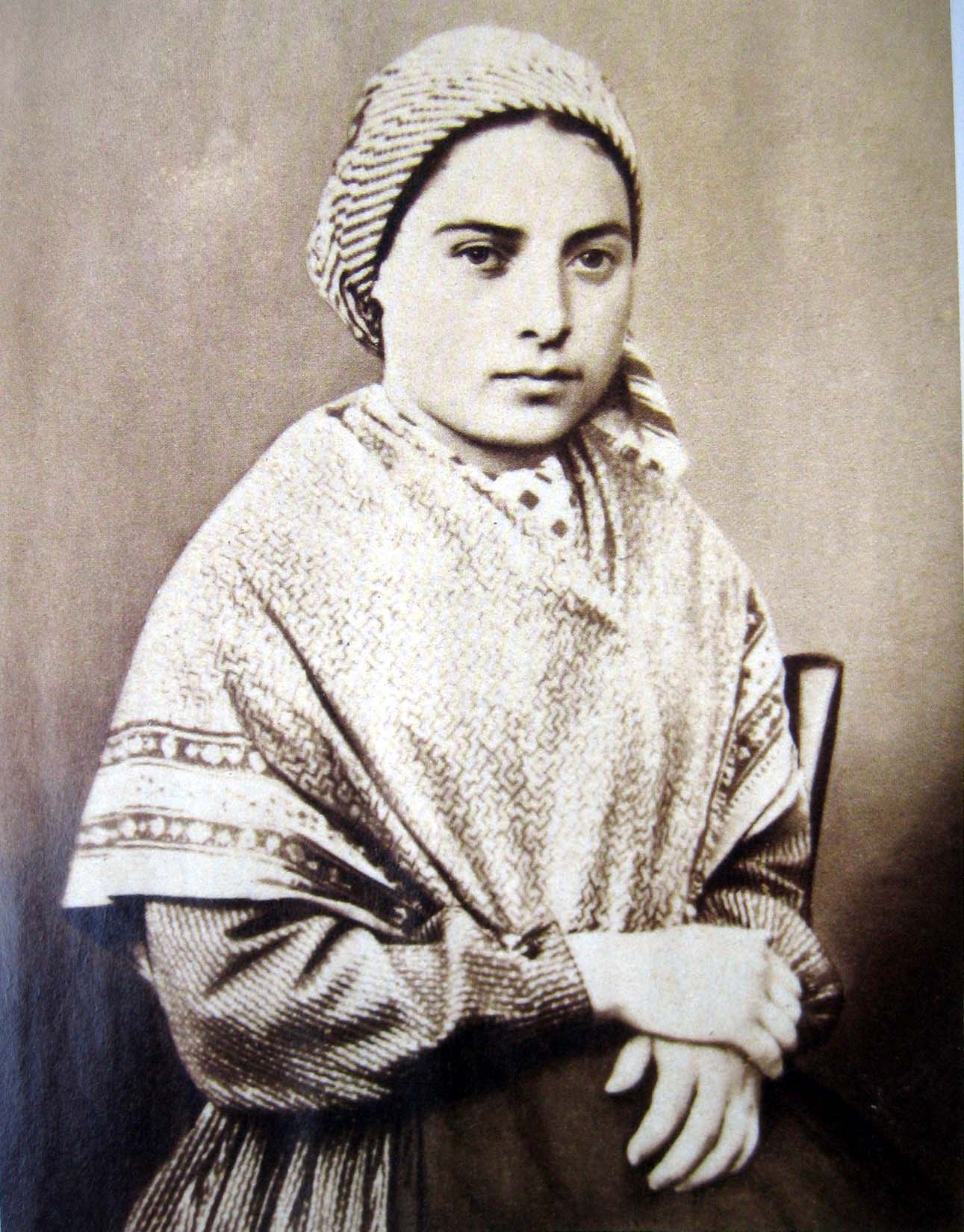
Bernadette Soubirous, SCN (/ˌbɜːrnəˈdɛt ˌsuːbiˈruː/; French: [bɛʁnadɛt subiʁu]; Occitan: Bernadeta Sobirós [beɾnaˈðetɔ suβiˈɾus]; 7 January 1844 – 16 April 1879), also known as Bernadette of Lourdes (religious name Marie-Bernarde), was a miller's daughter from Lourdes (Lorda in Occitan), in the department of Hautes-Pyrénées in France, and is best known for experiencing apparitions of a "young lady" who asked for a chapel to be built at the nearby cave-grotto. These apparitions occurred between 11 February and 16 July 1858, and the young lady who appeared to her identified herself as the "Immaculate Conception".
After a canonical investigation, Soubirous's reports were eventually declared "worthy of belief" on 18 February 1862, and the Marian apparition became known as Our Lady of Lourdes. In 1866, Soubirous joined the Sisters of Charity of Nevers at their convent in Nevers where she spent the last years of her life. Her body is said by the Catholic Church to remain internally incorrupt. The grotto where the apparitions occurred became a major pilgrimage site and Marian shrine known as the Sanctuary of Our Lady of Lourdes, attracting around five million pilgrims of all denominations each year.
Pope Pius XI beatified Soubirous on 14 June 1925 and canonized her on 8 December 1933. Her feast day, initially specified as 18 February – the day Mary promised to make her happy, not in this life, but in the other – is now observed in most places on the date of her death, 16 April.
Marie-Bernarde Soubirous, nick-named Bernadette in Occitan, was the daughter of François Soubirous (1807–1871), a miller, and his wife Louise (née Casteròt; 1825–1866), a miller's daughter. She was the eldest of nine children, Jean (born and died 1845), Marie, known as Toinette (1846–1892), Jean-Marie (1848–1851), Jean-Marie (1851–1919), Justin (1855–1865), Pierre (1859–1931), Jean (born and died 1864), and a baby named Louise who died soon after her birth (1866).[citation needed]
Soubirous was born on 7 January 1844 and baptized at the local parish church, St. Pierre's, on 9 January, her parents' wedding anniversary. Her godmother was Bernarde Casterot, her mother's sister, a moderately wealthy widow who owned a tavern. Hard times had fallen on France, and the family lived in extreme poverty. Soubirous was a very sick child and possibly due to this only measured 1.4 m (4 ft. 7in.) tall. She contracted cholera as a toddler and suffered severe asthma for the rest of her life. Soubirous attended the day school conducted by the Sisters of Charity and Christian Instruction of Nevers. Contrary to a belief popularized by Hollywood films, Soubirous learned very little French, only studying French in school after age 13. At that time she could read and write very little due to her frequent illness. She spoke the language of Occitan, which was spoken by the local population of the Pyrenees region at that time and to a residual degree today.
By the time of the events at the grotto, the Soubirous family's financial and social status had declined to the point where they lived in a one-room basement, an abandoned jail, called le cachot, "the dungeon", where they were housed for free by her mother's cousin, André Sajoux.
On 11 February 1858, Soubirous, then aged 14, was out gathering firewood with her sister Toinette and a friend near the grotto of Massabielle (Tuta de Massavielha) when she experienced her first vision. While the other girls crossed the little stream in front of the grotto and walked on, Soubirous stayed behind, looking for a place to cross where she wouldn't get her stockings wet. She finally sat down to take her shoes off in order to cross the water and was lowering her stocking when she heard the sound of rushing wind, but nothing moved. A wild rose in a natural niche in the grotto, however, did move. From the niche, or rather the dark alcove behind it, "came a dazzling light, and a white figure". This was the first of 18 visions of what she referred to as aquerò (pronounced [ake'ɾɔ]), Gascon Occitan for "that". In later testimony, she called it "a small young lady" (uo petito damizelo). Her sister and her friend stated that they had seen nothing.
On 14 February, after Sunday Mass, Soubirous, again with sister Marie and some other girls, returned to the grotto. Soubirous knelt down immediately, saying she saw the apparition again. When one of the girls threw holy water at the niche and another threw a rock from above that shattered on the ground, the apparition disappeared. On her next visit, 18 February, Soubirous said that "the vision" asked her to return to the grotto every day for a fortnight.
Hub AI
Bernadette Soubirous AI simulator
(@Bernadette Soubirous_simulator)
Bernadette Soubirous
Bernadette Soubirous, SCN (/ˌbɜːrnəˈdɛt ˌsuːbiˈruː/; French: [bɛʁnadɛt subiʁu]; Occitan: Bernadeta Sobirós [beɾnaˈðetɔ suβiˈɾus]; 7 January 1844 – 16 April 1879), also known as Bernadette of Lourdes (religious name Marie-Bernarde), was a miller's daughter from Lourdes (Lorda in Occitan), in the department of Hautes-Pyrénées in France, and is best known for experiencing apparitions of a "young lady" who asked for a chapel to be built at the nearby cave-grotto. These apparitions occurred between 11 February and 16 July 1858, and the young lady who appeared to her identified herself as the "Immaculate Conception".
After a canonical investigation, Soubirous's reports were eventually declared "worthy of belief" on 18 February 1862, and the Marian apparition became known as Our Lady of Lourdes. In 1866, Soubirous joined the Sisters of Charity of Nevers at their convent in Nevers where she spent the last years of her life. Her body is said by the Catholic Church to remain internally incorrupt. The grotto where the apparitions occurred became a major pilgrimage site and Marian shrine known as the Sanctuary of Our Lady of Lourdes, attracting around five million pilgrims of all denominations each year.
Pope Pius XI beatified Soubirous on 14 June 1925 and canonized her on 8 December 1933. Her feast day, initially specified as 18 February – the day Mary promised to make her happy, not in this life, but in the other – is now observed in most places on the date of her death, 16 April.
Marie-Bernarde Soubirous, nick-named Bernadette in Occitan, was the daughter of François Soubirous (1807–1871), a miller, and his wife Louise (née Casteròt; 1825–1866), a miller's daughter. She was the eldest of nine children, Jean (born and died 1845), Marie, known as Toinette (1846–1892), Jean-Marie (1848–1851), Jean-Marie (1851–1919), Justin (1855–1865), Pierre (1859–1931), Jean (born and died 1864), and a baby named Louise who died soon after her birth (1866).[citation needed]
Soubirous was born on 7 January 1844 and baptized at the local parish church, St. Pierre's, on 9 January, her parents' wedding anniversary. Her godmother was Bernarde Casterot, her mother's sister, a moderately wealthy widow who owned a tavern. Hard times had fallen on France, and the family lived in extreme poverty. Soubirous was a very sick child and possibly due to this only measured 1.4 m (4 ft. 7in.) tall. She contracted cholera as a toddler and suffered severe asthma for the rest of her life. Soubirous attended the day school conducted by the Sisters of Charity and Christian Instruction of Nevers. Contrary to a belief popularized by Hollywood films, Soubirous learned very little French, only studying French in school after age 13. At that time she could read and write very little due to her frequent illness. She spoke the language of Occitan, which was spoken by the local population of the Pyrenees region at that time and to a residual degree today.
By the time of the events at the grotto, the Soubirous family's financial and social status had declined to the point where they lived in a one-room basement, an abandoned jail, called le cachot, "the dungeon", where they were housed for free by her mother's cousin, André Sajoux.
On 11 February 1858, Soubirous, then aged 14, was out gathering firewood with her sister Toinette and a friend near the grotto of Massabielle (Tuta de Massavielha) when she experienced her first vision. While the other girls crossed the little stream in front of the grotto and walked on, Soubirous stayed behind, looking for a place to cross where she wouldn't get her stockings wet. She finally sat down to take her shoes off in order to cross the water and was lowering her stocking when she heard the sound of rushing wind, but nothing moved. A wild rose in a natural niche in the grotto, however, did move. From the niche, or rather the dark alcove behind it, "came a dazzling light, and a white figure". This was the first of 18 visions of what she referred to as aquerò (pronounced [ake'ɾɔ]), Gascon Occitan for "that". In later testimony, she called it "a small young lady" (uo petito damizelo). Her sister and her friend stated that they had seen nothing.
On 14 February, after Sunday Mass, Soubirous, again with sister Marie and some other girls, returned to the grotto. Soubirous knelt down immediately, saying she saw the apparition again. When one of the girls threw holy water at the niche and another threw a rock from above that shattered on the ground, the apparition disappeared. On her next visit, 18 February, Soubirous said that "the vision" asked her to return to the grotto every day for a fortnight.
Recent media