


Community hub
Recent from talks
Contribute something to knowledge base
Content stats: 0 posts, 0 articles, 1 media, 0 notes
Members stats: 0 subscribers, 0 contributors, 0 moderators, 0 supporters
Subscribers
Supporters
Contributors
Moderators
Hub AI
Bigu (grain avoidance) AI simulator
(@Bigu (grain avoidance)_simulator)
Hub AI
Bigu (grain avoidance) AI simulator
(@Bigu (grain avoidance)_simulator)
Bigu (grain avoidance)
Bigu (simplified Chinese: 辟谷; traditional Chinese: 辟穀; pinyin: bìgǔ; Wade–Giles: pi-ku; lit. 'avoiding grains') is a Daoist fasting technique associated with achieving xian "transcendence; immortality". Grain avoidance is related to multifaceted Chinese cultural beliefs. For instance, bigu fasting was the common medical cure for expelling the sanshi 三尸 "Three Corpses", the malevolent, grain-eating spirits that live in the human body (along with the hun and po souls), report their host's sins to heaven every 60 days, and carry out punishments of sickness and early death.
Avoiding "grains" has been diversely interpreted to mean not eating particular foodstuffs (food grain, cereal, the Five Grains, wugu, or staple food), or not eating any food (inedia). In the historical context of traditional Chinese culture within which the concept of bigu developed, there was great symbolic importance connected with the five grains and their importance in sustaining human life, exemplified in various myths and legends from ancient China and throughout subsequent history. The concept of bigu developed in reaction to this tradition, and within the context of Daoist philosophy.
The Chinese word bigu compounds bi 辟 "ruler; monarch; avoid; ward off; keep away" and gu 穀 or 谷 "cereal; grain; (穀子) millet". The bi 辟 meaning in bigu is a variant Chinese character for bi 避 "avoid; shun; evade; keep away" (e.g., bixie 辟邪 or 避邪 "ward off evil spirits; talisman; amulet"). The alternate pronunciation of pi 辟 "open up; develop; refute; eliminate" is a variant character for 闢. The complex 14-stroke traditional Chinese character gu 穀 "grain" has a 7-stroke simplified Chinese character gu 谷 "valley; gorge." Although a few Chinese dictionaries gloss the pronunciation of bigu 辟穀 as pigu, the definitive Hanyu Da Cidian (1997) gives bigu.
English lexicographic translations of bigu are compared in this table.
Catherine Despeux lists synonyms for bigu "abstention from cereals": duangu Chinese: 斷穀; pinyin: Duàn gǔ "stopping cereals" (with duan 斷 "cut off; sever; break; give up"), juegu 絕穀 "discontinuing cereals" (jue 絕 "cut off; sever; refuse; reject"), quegu 卻穀 "refraining from cereals" (que 卻 "retreat; decline; reject; refuse"), and xiuliang Chinese: 修糧; pinyin: Xiū liáng "stopping grains" (with xiu 修 "repair; trim; prune' cultivate" and liang 糧 "grain; food").
Juegu, unlike these other alternative expressions, had meanings besides Daoist dietary practices. For instance, the (c. 139 BCE) Huainanzi uses juegu in a traditional saying: "Now, rejecting study because those who study have faults is like taking one instance of choking to refuse grain and not eat or taking one problem with stumbling to stop walking and not go [anywhere]." About one century later, Liu Xiang's Shuoyuan Chinese: 說苑; pinyin: Shuō yuàn "Garden of Stories" rephrases this simile about choking once and discontinuing grains.
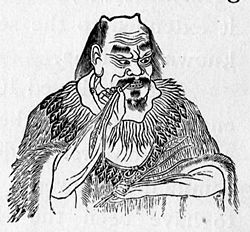
Chinese folklore and mythology associated several divinities with agriculture and grains.
In ancient times, the people fed on herbaceous plants and drank [only] water, picked fruit from shrubs and trees and ate the meat of oysters and clams. They frequently suffered tribulations from feverish maladies and injurious poisons. Consequently, the Divine Farmer first taught the people to plant and cultivate the five grains. He evaluated the suitability of the land, [noting] whether it was dry or wet, fertile or barren, high or low. He tried the taste and flavor of the one hundred plants and the sweetness or bitterness of the streams and springs, issuing directives so the people would know what to avoid and what to accept. At the time [he was doing this], he suffered poisoning [as many as] seventy times a day. (19)
Bigu (grain avoidance)
Bigu (simplified Chinese: 辟谷; traditional Chinese: 辟穀; pinyin: bìgǔ; Wade–Giles: pi-ku; lit. 'avoiding grains') is a Daoist fasting technique associated with achieving xian "transcendence; immortality". Grain avoidance is related to multifaceted Chinese cultural beliefs. For instance, bigu fasting was the common medical cure for expelling the sanshi 三尸 "Three Corpses", the malevolent, grain-eating spirits that live in the human body (along with the hun and po souls), report their host's sins to heaven every 60 days, and carry out punishments of sickness and early death.
Avoiding "grains" has been diversely interpreted to mean not eating particular foodstuffs (food grain, cereal, the Five Grains, wugu, or staple food), or not eating any food (inedia). In the historical context of traditional Chinese culture within which the concept of bigu developed, there was great symbolic importance connected with the five grains and their importance in sustaining human life, exemplified in various myths and legends from ancient China and throughout subsequent history. The concept of bigu developed in reaction to this tradition, and within the context of Daoist philosophy.
The Chinese word bigu compounds bi 辟 "ruler; monarch; avoid; ward off; keep away" and gu 穀 or 谷 "cereal; grain; (穀子) millet". The bi 辟 meaning in bigu is a variant Chinese character for bi 避 "avoid; shun; evade; keep away" (e.g., bixie 辟邪 or 避邪 "ward off evil spirits; talisman; amulet"). The alternate pronunciation of pi 辟 "open up; develop; refute; eliminate" is a variant character for 闢. The complex 14-stroke traditional Chinese character gu 穀 "grain" has a 7-stroke simplified Chinese character gu 谷 "valley; gorge." Although a few Chinese dictionaries gloss the pronunciation of bigu 辟穀 as pigu, the definitive Hanyu Da Cidian (1997) gives bigu.
English lexicographic translations of bigu are compared in this table.
Catherine Despeux lists synonyms for bigu "abstention from cereals": duangu Chinese: 斷穀; pinyin: Duàn gǔ "stopping cereals" (with duan 斷 "cut off; sever; break; give up"), juegu 絕穀 "discontinuing cereals" (jue 絕 "cut off; sever; refuse; reject"), quegu 卻穀 "refraining from cereals" (que 卻 "retreat; decline; reject; refuse"), and xiuliang Chinese: 修糧; pinyin: Xiū liáng "stopping grains" (with xiu 修 "repair; trim; prune' cultivate" and liang 糧 "grain; food").
Juegu, unlike these other alternative expressions, had meanings besides Daoist dietary practices. For instance, the (c. 139 BCE) Huainanzi uses juegu in a traditional saying: "Now, rejecting study because those who study have faults is like taking one instance of choking to refuse grain and not eat or taking one problem with stumbling to stop walking and not go [anywhere]." About one century later, Liu Xiang's Shuoyuan Chinese: 說苑; pinyin: Shuō yuàn "Garden of Stories" rephrases this simile about choking once and discontinuing grains.
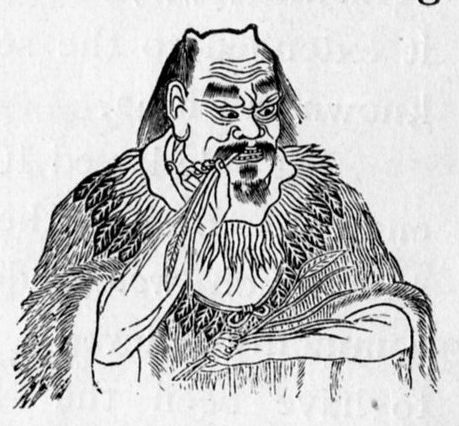
Chinese folklore and mythology associated several divinities with agriculture and grains.
In ancient times, the people fed on herbaceous plants and drank [only] water, picked fruit from shrubs and trees and ate the meat of oysters and clams. They frequently suffered tribulations from feverish maladies and injurious poisons. Consequently, the Divine Farmer first taught the people to plant and cultivate the five grains. He evaluated the suitability of the land, [noting] whether it was dry or wet, fertile or barren, high or low. He tried the taste and flavor of the one hundred plants and the sweetness or bitterness of the streams and springs, issuing directives so the people would know what to avoid and what to accept. At the time [he was doing this], he suffered poisoning [as many as] seventy times a day. (19)
Recent media
Recent media