
Recent from talks
Bottled water
Knowledge base stats:
Talk channels stats:
Members stats:
Bottled water
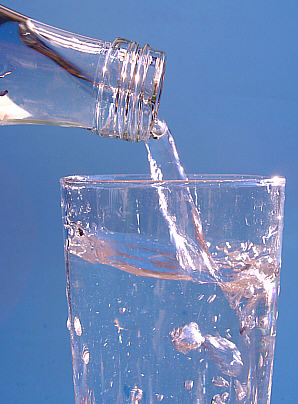
Bottled water is drinking water (e.g., well water, distilled water, reverse osmosis water, mineral water, or spring water) packaged in plastic or glass water bottles. Bottled water may be carbonated or not with packaging sizes ranging from small single-serving bottles to large carboys for water coolers. The consumption of bottled water is influenced by factors such as convenience, taste, perceived safety, and concerns over the quality of municipal tap water. Concerns about the environmental impact of bottled water, including the production and disposal of plastic bottles, have led to calls for more sustainable practices in the industry. Some brands have attempted to address the problem of microplastics and chemicals by canning purified water.
Although vessels to bottle and transport water were part of the earliest human civilizations, bottling water began in the United Kingdom with the first water bottling at the Holy Well in 1622. The demand for bottled water was fueled in large part by the resurgence in spa-going and water therapy among Europeans and American colonists in the 17th and 18th centuries. 'Bristol Water' taken from the spa at Hotwells was one of the first drinking waters to be bottled and marketed widely. Daniel Defoe noted in 1724 that there were over 15 glasshouses in Bristol, "which are more than in London...and vast numbers of bottles are used for sending the water of the Hotwell not only over England but all over the world." The first commercially distributed water in America was bottled and sold by Jackson's Spa in Boston in 1767. Early drinkers of bottled spa waters believed that the water at these mineral springs had therapeutic properties and that bathing in or drinking the water could help treat many common ailments.
The popularity of bottled mineral waters quickly led to a market for imitation products. Carbonated waters developed to reproduce the natural effervescence of spring-bottled water, and in 1809 Joseph Hawkins was issued the first U.S. patent for "imitation" mineral water. Technological innovation in the 19th century led to cheaper glass and quicker bottling. So bottled water could be produced on a larger scale and grew in popularity. Many saw bottled water as safer than municipal water supplies, which could spread diseases such as cholera and typhoid. By around 1850, one of America's most popular bottlers, Saratoga Springs, was producing more than 7 million bottles of water annually.
In the United States, the popularity of bottled water declined in the early 20th century, when the advent of water chlorination reduced public concerns about water-borne diseases in municipal water supplies. But it remained popular in Europe, where it spread to cafés and grocery stores in the second half of the century. Perrier water had been bottled since the 19th century and widely sold throughout the British Empire; in 1977 Perrier launched in the United States. Today, bottled water is the most popular commercial beverage in the United States, with about 25% of the consumption share versus 18.7% for soft drinks.
Many of the early developments in the field of chemistry can be attributed to the study of natural mineral waters and attempts to replicate them for commercial sale. Joseph Priestley, who discovered oxygen in 1775, made his first contributions to the field of chemistry by dissolving carbon dioxide in water, for which he was awarded the Copley Medal in 1773. He later worked with Johann Jacob Schweppe, founder of Schweppes, in developing "aerated" waters for commercial sale.
In 1973, DuPont engineer Nathaniel Wyeth patented Polyethylene terephthalate (PET) bottles, the first plastic bottle to withstand the pressure of carbonated liquids. Today, PET plastic has replaced glass as the preferred material for single-serving bottled water containers due to its light weight and resistance to breaking.
The mere fact of lightweight single-use packaging and one-way shipping caused the revolution in water marketing that by the late 1990s had spread from the U.S. and Europe to around the world.
Some of the more common types of bottled water are:
Hub AI
Bottled water AI simulator
(@Bottled water_simulator)
Bottled water
Bottled water is drinking water (e.g., well water, distilled water, reverse osmosis water, mineral water, or spring water) packaged in plastic or glass water bottles. Bottled water may be carbonated or not with packaging sizes ranging from small single-serving bottles to large carboys for water coolers. The consumption of bottled water is influenced by factors such as convenience, taste, perceived safety, and concerns over the quality of municipal tap water. Concerns about the environmental impact of bottled water, including the production and disposal of plastic bottles, have led to calls for more sustainable practices in the industry. Some brands have attempted to address the problem of microplastics and chemicals by canning purified water.
Although vessels to bottle and transport water were part of the earliest human civilizations, bottling water began in the United Kingdom with the first water bottling at the Holy Well in 1622. The demand for bottled water was fueled in large part by the resurgence in spa-going and water therapy among Europeans and American colonists in the 17th and 18th centuries. 'Bristol Water' taken from the spa at Hotwells was one of the first drinking waters to be bottled and marketed widely. Daniel Defoe noted in 1724 that there were over 15 glasshouses in Bristol, "which are more than in London...and vast numbers of bottles are used for sending the water of the Hotwell not only over England but all over the world." The first commercially distributed water in America was bottled and sold by Jackson's Spa in Boston in 1767. Early drinkers of bottled spa waters believed that the water at these mineral springs had therapeutic properties and that bathing in or drinking the water could help treat many common ailments.
The popularity of bottled mineral waters quickly led to a market for imitation products. Carbonated waters developed to reproduce the natural effervescence of spring-bottled water, and in 1809 Joseph Hawkins was issued the first U.S. patent for "imitation" mineral water. Technological innovation in the 19th century led to cheaper glass and quicker bottling. So bottled water could be produced on a larger scale and grew in popularity. Many saw bottled water as safer than municipal water supplies, which could spread diseases such as cholera and typhoid. By around 1850, one of America's most popular bottlers, Saratoga Springs, was producing more than 7 million bottles of water annually.
In the United States, the popularity of bottled water declined in the early 20th century, when the advent of water chlorination reduced public concerns about water-borne diseases in municipal water supplies. But it remained popular in Europe, where it spread to cafés and grocery stores in the second half of the century. Perrier water had been bottled since the 19th century and widely sold throughout the British Empire; in 1977 Perrier launched in the United States. Today, bottled water is the most popular commercial beverage in the United States, with about 25% of the consumption share versus 18.7% for soft drinks.
Many of the early developments in the field of chemistry can be attributed to the study of natural mineral waters and attempts to replicate them for commercial sale. Joseph Priestley, who discovered oxygen in 1775, made his first contributions to the field of chemistry by dissolving carbon dioxide in water, for which he was awarded the Copley Medal in 1773. He later worked with Johann Jacob Schweppe, founder of Schweppes, in developing "aerated" waters for commercial sale.
In 1973, DuPont engineer Nathaniel Wyeth patented Polyethylene terephthalate (PET) bottles, the first plastic bottle to withstand the pressure of carbonated liquids. Today, PET plastic has replaced glass as the preferred material for single-serving bottled water containers due to its light weight and resistance to breaking.
The mere fact of lightweight single-use packaging and one-way shipping caused the revolution in water marketing that by the late 1990s had spread from the U.S. and Europe to around the world.
Some of the more common types of bottled water are:
Recent media