



Community hub
Recent from talks
Contribute something
Nothing was collected or created yet.
Packaging
View on Wikipedia
Packaging is the science, art and technology of enclosing or protecting products for distribution, storage, sale, and use. Packaging also refers to the process of designing, evaluating, and producing packages. Packaging can be described as a coordinated system of preparing goods for transport, warehousing, logistics, sale, and end use. Packaging contains, protects, preserves, transports, informs, and sells.[1][2] In many countries it is fully integrated into government, business, institutional, industrial, and for personal use.
Package labeling (American English) or labelling (British English) is any written, electronic, or graphic communication on the package or on a separate but associated label. Many countries or regions have regulations governing the content of package labels. Merchandising, branding, and persuasive graphics are not covered in this article.
History of packaging
[edit]Ancient era
[edit]
The first packages used the natural materials available at the time: baskets of reeds, wineskins (bota bags), wooden boxes, pottery vases, ceramic amphorae, wooden barrels, woven bags, etc. Processed materials were used to form packages as they were developed: first glass and bronze vessels. The study of old packages is an essential aspect of archaeology.
Sheets of treated mulberry bark were used by the Chinese to wrap foods as early as the first or second century BC.[3] The usage of paper-like material in Europe occurred when the Romans used low grade and recycled papyrus for the packaging of incense.[4] In 1035, a Persian traveller visiting markets in Cairo, Arab Egypt, noted that vegetables, spices and hardware were wrapped in paper for the customers after they were sold.[4]
Modern era
[edit]Tinplate
[edit]The use of tinplate for packaging dates back to the 18th century. The manufacturing of tinplate was the monopoly of Bohemia for a long time; in 1667 Andrew Yarranton, an English engineer, and Ambrose Crowley brought the method to England where it was improved by ironmasters including Philip Foley.[5][6] By 1697, John Hanbury[7] had a rolling mill at Pontypool for making "Pontypool Plates".[8][9] The method pioneered there of rolling iron plates by means of cylinders enabled more uniform black plates to be produced than was possible with the former practice of hammering.
Tinplate boxes first began to be sold from ports in the Bristol Channel in 1725. The tinplate was shipped from Newport, Monmouthshire.[10] By 1805, 80,000 boxes were made and 50,000 exported. Tobacconists in London began packaging snuff in metal-plated canisters from the 1760s onwards.
Canning
[edit]
With the discovery of the importance of airtight containers for food preservation by French inventor Nicholas Appert, the tin canning process was patented by British merchant Peter Durand in 1810.[11] After receiving the patent, Durand did not himself follow up with canning food. He sold his patent in 1812 to two other Englishmen, Bryan Donkin and John Hall, who refined the process and product and set up the world's first commercial canning factory on Southwark Park Road, London. By 1813, they were producing the first canned goods for the Royal Navy.[12]
The progressive improvement in canning stimulated the 1855 invention of the can opener. Robert Yeates, a cutlery and surgical instrument maker of Trafalgar Place West, Hackney Road, Middlesex, UK, devised a claw-ended can opener with a hand-operated tool that haggled its way around the top of metal cans.[13] In 1858, another lever-type opener of a more complex shape was patented in the United States by Ezra Warner of Waterbury, Connecticut.
Paper-based packaging
[edit]
Set-up boxes were first used in the 16th century and modern folding cartons date back to 1839. The first corrugated box was produced commercially in 1817 in England. Corrugated (also called pleated) paper received a British patent in 1856 and was used as a liner for tall hats. Scottish-born Robert Gair invented the pre-cut paperboard box in 1890—flat pieces manufactured in bulk that folded into boxes. Gair's invention came about as a result of an accident: as a Brooklyn printer and paper bag maker during the 1870s, he was once printing an order of seed bags, and the metal ruler, commonly used to crease bags, shifted in position and cut them. Gair discovered that by cutting and creasing in one operation he could make prefabricated paperboard boxes.[14]
Commercial paper bags were first manufactured in Bristol, England, in 1844, and the American Francis Wolle patented a machine for automated bag-making in 1852.
20th century
[edit]
Packaging advancements in the early 20th century included Bakelite closures on bottles, transparent cellophane overwraps and panels on cartons. These innovations increased processing efficiency and improved food safety. As additional materials such as aluminum and several types of plastic were developed, they were incorporated into packages to improve performance and functionality.[15]
In 1952, Michigan State University became the first university in the world to offer a degree in Packaging Engineering.[16]
In-plant recycling has long been typical for producing packaging materials. Post-consumer recycling of aluminum and paper-based products has been economical for many years: since the 1980s, post-consumer recycling has increased due to curbside recycling, consumer awareness, and regulatory pressure.

Many prominent innovations in the packaging industry were developed first for military use. Some military supplies are packaged in the same commercial packaging used for general industry. Other military packaging must transport materiel, supplies, foods, etc. under severe distribution and storage conditions. Packaging problems encountered in World War II led to Military Standard or "mil spec" regulations being applied to packaging, which was then designated "military specification packaging". As a prominent concept in the military, mil spec packaging officially came into being around 1941, due to operations in Iceland experiencing critical losses, ultimately attributed to bad packaging. In most cases, mil spec packaging solutions (such as barrier materials, field rations, antistatic bags, and various shipping crates) are similar to commercial grade packaging materials, but subject to more stringent performance and quality requirements.[17]
As of 2003[update], the packaging sector accounted for about two percent of the gross national product in developed countries. About half of this market was related to food packaging.[18] In 2019 the global food packaging market size was estimated at USD 303.26 billion, exhibiting a CAGR of 5.2% over the forecast period. Growing demand for packaged food by consumers owing to a quickening pace of life and changing eating habits is expected to have a major impact on the market.
The purposes of packaging and package labels
[edit]Packaging and package labeling have several objectives[19]
- Physical protection – The objects enclosed in the package may require protection from, among other things, mechanical shock, vibration, electrostatic discharge, abrasion, compression, temperature,[20] etc.
- Barrier protection – A barrier to oxygen, water vapor, sunlight, dust, etc., is often required. Permeation is a critical factor in design. Some packages contain desiccants or oxygen absorbers to help extend shelf life. Modified atmospheres[21] or controlled atmospheres are also maintained in some food packages. Keeping the contents clean, fresh, sterile[22] and safe for the duration of the intended shelf life is a primary function. A barrier is also implemented in cases where segregation of two materials prior to end use is required, as in the case of special paints, glues, medical fluids, etc.
- Containment or agglomeration – liquids and powders need to be contained for shipment and sale. Small objects are typically grouped together in one package for reasons of storage and selling efficiency. For example, a single box of 1000 marbles requires less physical handling than 1000 single marbles. Liquids, powders, and granular materials need containment.
- Information transmission – Packages and labels communicate how to use, transport, recycle, or dispose of the package or product. With pharmaceuticals, food, medical, and chemical products, some types of information are required by government legislation. Information on packaging and labels are used for track and trace purposes. Most items include their serial and lot numbers on the packaging, and in the case of food products, medicine, and some chemicals the packaging often contains an expiry/best-before date. Packages may indicate their construction material with a symbol.
- Marketing – Packaging and labels can be used by marketers to encourage potential buyers to purchase a product. Package graphic design and physical design have been important and constantly evolving phenomena for several decades. Marketing communications and graphic design are applied to the surface of the package and often to the point of sale display. Most packaging is designed to reflect the brand's message and identity, whilst also highlighting the respective product.


- Security – Packaging can play an important role in reducing the security risks of shipment. Packages can be made with improved tamper resistance to deter manipulation and they can also have tamper-evident[23] features indicating that tampering has taken place. Packages can be engineered to help reduce the risks of package pilferage or the theft and resale of products: Some package constructions are more resistant to pilferage than other types, and some have pilfer-indicating seals. Counterfeit consumer goods, unauthorized sales (diversion), material substitution and tampering can all be minimized or prevented with such anti-counterfeiting technologies. Packages may include authentication seals and use security printing to help indicate that the package and contents are not counterfeit. Packages also can include anti-theft devices such as dye-packs, RFID tags, or electronic article surveillance[24] tags that can be activated or detected by devices at exit points and require specialized tools to deactivate. Using packaging in this way is a means of retail loss prevention.
- Convenience – Packages can have features that add convenience in distribution, handling, stacking, display, sale, opening, reclosing, using, dispensing, reusing, recycling, and ease of disposal
- Portion control – Single serving or single dosage packaging has a precise amount of contents to control usage. Bulk commodities (such as salt) can be divided into packages that are a more suitable size for individual households. It also aids the control of inventory: selling sealed one-liter bottles of milk, rather than having people bring their own bottles to fill themselves.
- Branding/Positioning – Packaging and labels are increasingly used to go beyond marketing to brand positioning, with the materials used and design chosen key to the storytelling element of brand development. Due to the increasingly fragmented media landscape in the digital age this aspect of packaging is of growing importance.
Packaging types
[edit].jpg)
There are many types of packaging. For example, a transport package or distribution package can be the shipping container used to ship, store, and handle the product or inner packages. Some identify a consumer package as one which is directed towards a person or household.
Packaging may be described in relation to the type of product being packaged: medical device packaging, bulk chemical packaging, over-the-counter drug packaging, retail food packaging, military materiel packaging, pharmaceutical packaging, etc.
It is sometimes useful to categorize packages by layer or function:
- Primary packaging is the material that first envelops the product and holds it. This usually is the smallest unit of distribution or use and is the package which is in direct contact with the contents.
- Secondary packaging is outside the primary packaging, and may be used to prevent pilferage or to group primary packages together.
- Tertiary or transit packaging is used for bulk handling, warehouse storage and transport shipping. The most common form is a palletized unit load that packs tightly into containers.
These broad categories can be somewhat arbitrary and the same packaging material can be used for each layer. For example, shrink wrap can be primary packaging when applied directly to the product, secondary packaging when used to combine smaller packages, or tertiary packaging when used to facilitate some types of distribution, such as to affix a number of cartons on a pallet.
Packaging can also have categories based on the package form. For example, thermoform packaging and flexible packaging describe broad usage areas.
Labels and symbols used on packages
[edit]
Many types of symbols for package labeling are nationally and internationally standardized. For consumer packaging, symbols exist for product certifications (such as the FCC and TÜV marks), trademarks, proof of purchase, etc. Some requirements and symbols exist to communicate aspects of consumer rights and safety, for example the CE marking or the estimated sign that notes conformance to EU weights and measures accuracy regulations. Examples of environmental and recycling symbols include the recycling symbol, the recycling code (which could be a resin identification code), and the "Green Dot". Food packaging may show food contact material symbols. In the European Union, products of animal origin which are intended to be consumed by humans have to carry standard, oval-shaped EC identification and health marks for food safety and quality insurance reasons.
Bar codes, Universal Product Codes, and RFID labels are common to allow automated information management in logistics and retailing. Country-of-origin labeling is often used. Some products might use QR codes or similar matrix barcodes. Packaging may have visible registration marks and other printing calibration and troubleshooting cues.
The labelling of medical devices includes lots of symbols, many of them covered by international standards, foremost ISO 15223-1.
Consumer package contents
[edit]Several aspects of consumer package labeling are subject to regulation. One of the most important is to accurately state the quantity (weight, volume, count) of the package contents. Consumers expect that the label accurately reflects the actual contents. Manufacturers and packagers must have effective quality assurance procedures and accurate equipment.
In the US, the Fair Packaging and Labeling Act provides regulatory requirements for many types of products. Checking the Net Contents of Packaged Goods is a procedural guide for compliance testing of net contents, produced by NIST.[25]
Other regions and countries have their own regulatory requirements. For example, the UK has its Weights and Measures (Packaged Goods) Regulations[26] as well as several other regulations. In the EEA, products with hazardous formulas need to have a UFI.
Shipping container labeling
[edit]
Technologies related to shipping containers are identification codes, bar codes, and electronic data interchange (EDI). These three core technologies serve to enable the business functions in the process of shipping containers throughout the distribution channel. Each has an essential function: identification codes either relate product information or serve as keys to other data, bar codes allow for the automated input of identification codes and other data, and EDI moves data between trading partners within the distribution channel.
Elements of these core technologies include UPC and EAN item identification codes, the SCC-14 (UPC shipping container code), the SSCC-18 (Serial Shipping Container Codes), Interleaved 2-of-5 and UCC/EAN-128 (newly designated GS1-128) bar code symbologies, and ANSI ASC X12 and UN/EDIFACT EDI standards.
Small parcel carriers often have their own formats. For example, United Parcel Service has a MaxiCode 2-D code for parcel tracking.
RFID labels for shipping containers are also increasingly used. A Wal-Mart division, Sam's Club, has also moved in this direction and is putting pressure on its suppliers to comply.[27]
Shipments of hazardous materials or dangerous goods have special information and symbols (labels, placards, etc.) as required by the UN, country, and specific carrier requirements. On transport packages, standardized symbols are also used to communicate handling needs. Some are defined in the ASTM D5445 and ISO 780 Pictorial marking for handling of goods, and GHS hazard pictograms.
-
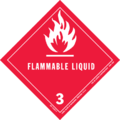 Flammable liquid
 -
 Explosives
 -
 This way up
 -
 Fragile material
 -
 Keep away from water


Package development considerations
[edit]Package design and development are often thought of as an integral part of the new product development process. Alternatively, the development of a package (or component) can be a separate process but must be linked closely with the product to be packaged. Package design starts with the identification of all the requirements: structural design, marketing, shelf life, quality assurance, logistics, legal, regulatory, graphic design, end-use, environmental, etc. The design criteria, performance (specified by package testing), completion time targets, resources, and cost constraints need to be established and agreed upon. Package design processes often employ rapid prototyping, computer-aided design, computer-aided manufacturing and document automation.


An example of how package design is affected by other factors is its relationship to logistics. When the distribution system includes individual shipments by a small parcel carrier, the sorting, handling, and mixed stacking make severe demands on the strength and protective ability of the transport package. If the logistics system consists of uniform palletized unit loads, the structural design of the package can be designed to meet those specific needs, such as vertical stacking for a longer time frame. A package designed for one mode of shipment may not be suited to another.
With some types of products, the design process involves detailed regulatory requirements for the packaging. For example, any package components that may have direct contact with food are designated food contact materials.[28] Toxicologists and food scientists need to verify that such packaging materials are allowed by applicable regulations. Packaging engineers need to verify that the completed package will keep the product safe for its intended shelf life with normal usage. Packaging processes, labeling, distribution, and sale need to be validated to assure that they comply with regulations that have the wellbeing of the consumer in mind.
Sometimes the objectives of package development seem contradictory. For example, regulations for an over-the-counter drug might require the package to be tamper-evident and child resistant:[29] These intentionally make the package difficult to open.[30] The intended consumer, however, might be disabled or elderly and unable to open the package. Meeting all goals is a challenge.
Package design may take place within a company or with various degrees of external packaging engineering: independent contractors, consultants, vendor evaluations, laboratories, contract packagers, total outsourcing, etc. Some sort of formal project planning and project management methodology is required for all but the simplest package design and development programs. Using an effective quality management system and verification and validation protocols are mandatory for some types of packaging and recommended for all.
Environmental considerations
[edit]

Package development involves considerations of sustainability, environmental responsibility, and applicable environmental and recycling regulations. It may involve a life cycle assessment[31][32] which considers the material and energy inputs and outputs to the package, the packaged product (contents), the packaging process, the logistics system,[33] waste management, etc. It is necessary to know the relevant regulatory requirements for point of manufacture, sale, and use.
The traditional "three R's" of reduce, reuse, and recycle are part of a waste hierarchy which may be considered in product and package development.
- Reduce – Waste prevention is a primary goal. Packaging should be used only where needed. Proper packaging can also help prevent waste. Packaging plays an important part in preventing loss or damage to the packaged product (contents). Usually, the energy content and material usage of the product being packaged are greater than that of the package. A vital function of the package is to protect the product for its intended use: if the product is damaged or degraded, its entire energy and material content may be lost. Minimization (also "source reduction") aims to reduce overpackaging. The mass and volume of packaging (per unit of contents) can be measured and used as criteria for minimizing the package in the design process. Usually "reduced" packaging helps to minimize costs. Packaging engineers continue to work toward reduced packaging.[34]
- Reuse – Reusable packaging is encouraged.[35] Returnable packaging has long been useful (and economically viable) for closed-loop logistics systems. Inspection, cleaning, repair, and recouperage are often needed. Some manufacturers re-use the packaging of the incoming parts for a product, either as packaging for the outgoing product[36] or as part of the product itself.[37]
- Recycling – Recycling is the reprocessing of materials (pre- and post-consumer) into new products. Emphasis is focused on recycling the largest primary components of a package: steel, aluminum, papers, plastics, etc. Small components can be chosen which are not difficult to separate and do not contaminate recycling operations. Packages can sometimes be designed to separate components to better facilitate recycling.[38]
For elements that cannot be reused or recycled, incineration and placement in a sanitary landfill are undertaken. Certain US states regulate packages for toxic contents, which have the potential to contaminate emissions and ash from incineration and leachate from landfill. Packages should not be littered.
Development of sustainable packaging is an area of considerable interest to standards organizations, governments, consumers, packagers, and retailers.
Sustainability is the fastest-growing driver for packaging development, particularly for packaging manufacturers that work with the world's leading brands, as their CSR (Corporate Social Responsibility) targets often exceed those of the EU Directive.
Packaging machinery
[edit]
Choosing packaging machinery includes an assessment of technical capabilities, labor requirements, worker safety, maintainability, serviceability, reliability, ability to integrate into the packaging line, capital cost, floorspace, flexibility (change-over, materials, multiple products, etc.), energy requirements, quality of outgoing packages, qualifications (for food, pharmaceuticals, etc.), throughput, efficiency, productivity, ergonomics, return on investment, etc.
Packaging machinery can be:
- purchased as standard, off-the-shelf equipment
- purchased custom-made or custom-tailored to specific operations
- manufactured or modified by in-house engineers and maintenance staff
Efforts at packaging line automation increasingly use programmable logic controllers and robotics.
Packaging machines may be of the following general types:
- Accumulating and collating machines
- Blister packs, skin packs and vacuum packaging machines
- Bottle caps equipment, over-capping, lidding, closing, seaming and sealing machines
- Box, case, tray, and carrier forming, packing, unpacking, closing, and sealing machines
- Cartoning machines
- Cleaning, sterilizing, cooling and drying machines
- Coding, printing, marking, stamping, and imprinting machines
- Converting machines
- Conveyor belts, accumulating and related machines
- Feeding, orienting, placing and related machines
- Filling machines: for dry, powdered, solid, liquid, gas, or viscous products
- Inspecting: visual, sound, metal detecting, etc.
- Label dispenser
- Orienting, unscrambling machines
- Package filling and closing machines
- Palletizing, de-palletizing, unit load assembly
- Product identification: labeling, marking, etc.
- Sealing machines: heat sealer or glue units
- Slitting machines
- Weighing machines: check weigher, multihead weigher
- Wrapping machines: stretch wrapping, shrink wrap, banding
- Form, fill and seal machines
- Other specialty machinery: slitters, perforating, laser cutters, parts attachment, etc.
-

-
 High speed conveyor with stationary bar code scanner for sorting
 -
 Label printer applicator applying a label to adjacent panels of a corrugated box
 -
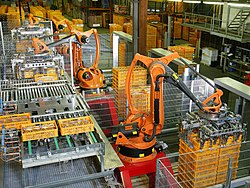 Robots used to palletize bread
 -
 Automatic stretch wrapping machine
 -
![Equipment used for making molded pulp components and molding packaging from straw[39]](//upload.wikimedia.org/wikipedia/commons/thumb/2/27/Molding_packaging_from_straw%2C_k9837-1.jpg/330px-Molding_packaging_from_straw%2C_k9837-1.jpg)
-
 A semi-automatic rotary arm stretch wrapper
 -
 Equipment for thermoforming packages at NASA
 -
 Automated labeling line for wine bottles
 -
 Shrink film wrap being applied on PET bottles
 -
 Pharmaceutical packaging line
 -
 Filling machinery for bag-in-box


![Equipment used for making molded pulp components and molding packaging from straw[39]](https://en.wikipedia.org/wiki/File:Molding_packaging_from_straw,_k9837-1.jpg)


See also
[edit]References
[edit]- ^ Soroka (2002) Fundamentals of Packaging Technology, Institute of Packaging Professionals ISBN 1-930268-25-4
- ^ Brennan, James G.; Day, Brian P. F. (2005). "Packaging". Food Processing Handbook (1 ed.). Wiley. pp. 291–350. doi:10.1002/3527607579.ch9. ISBN 978-3-527-30719-7.
- ^ Paula, Hook (May 11, 2017). "A History of Packaging". Ohio State University. Retrieved December 29, 2020.
- ^ a b Diana Twede (2005). "The Origins of Paper Based Packaging" (PDF). Conference on Historical Analysis & Research in Marketing Proceedings. 12: 288–300 [289]. Archived from the original (PDF) on July 16, 2011. Retrieved March 20, 2010.
- ^ Brown, P.J. (1988), "Andrew Yarranton and the British tinplate industry", Historical Metallurgy, vol. 22, no. 1, pp. 42–48
- ^ King, P.W. (1988), "Wolverley Lower Mill and the beginnings of the tinplate industry", Historical Metallurgy, vol. 22, no. 2, pp. 104–113
- ^ King 1988, p. 109
- ^ H.R. Schubert, History of the British iron and steel industry ... to 1775, 429.
- ^ Minchinton, W.W. (1957), The British tinplate industry: a history, Clarendon Press, Oxford, p. 10
- ^ Data extracted from D.P. Hussey et al., Gloucester Port Books Database (CD-ROM, University of Wolverhampton 1995).
- ^ Geoghegan, Tom (April 21, 2013). "BBC News - The story of how the tin can nearly wasn't". Bbc.co.uk. Retrieved June 4, 2013.
- ^ William H. Chaloner (1963). People and Industries. Routledge. p. 107. ISBN 978-0-7146-1284-3.
{{cite book}}: ISBN / Date incompatibility (help) - ^ Encyclopedia of Kitchen History. Taylor & Francis Group. September 27, 2004. ISBN 978-1-57958-380-4.
- ^ Diana Twede & Susan E.M. Selke (2005). Cartons, crates and corrugated board: handbook of paper and wood packaging technology. DEStech Publications. pp. 41–42, 55–56. ISBN 978-1-932078-42-8.
- ^ Brody, A. L; Marsh, K. S (1997). Encyclopedia of Packaging Technology. Wiley. ISBN 978-0-471-06397-1.
- ^ "Michigan State School of Packaging". Michigan State University. Retrieved February 11, 2012.
- ^ Maloney, J.C. (July 2003). "The History and Significance of Military Packaging" (PDF). Defence Packaging Policy Group. Defence Logistics Agency. Archived from the original (PDF) on November 18, 2017. Retrieved October 31, 2016.
- ^ Y. Schneider; C. Kluge; U. Weiß; H. Rohm (2010). "Packaging Materials and Equipment". In Barry A. Law, A.Y. Tamime (ed.). Technology of Cheesemaking: Second Edition. Wiley-Blackwell. p. 413. ISBN 978-1-4051-8298-0.
- ^ Bix, L; Rifon; Lockhart; de la Fuente (2003). The Packaging Matrix: Linking Package Design Criteria to the Marketing Mix. IDS Packaging. Retrieved September 16, 2017.
- ^ Choi, Seung-Jin; Burgess (2007). "Practical mathematical model to predict the performance of insulating packages". Packaging Technology and Science. 20 (6): 369–380. doi:10.1002/pts.762. S2CID 136558384.
- ^ Lee, Ki-Eun; Kim; An; Lyu; Lee (1998). "Effectiveness of modified atmosphere packaging in preserving a prepared ready-to-eat food". Packaging Technology and Science. 21 (7): 417. doi:10.1002/pts.821. S2CID 98181751.
- ^ Severin, J (2007). "New Methodology for Whole-Package Microbial Challenge Testing for Medical Device Trays". Journal of Testing and Evaluation. 35 (4) 100869. doi:10.1520/JTE100869.
- ^ Johnston, R.G. (1997). "Effective Vulnerability Assessment of Tamper-Indicating Seals" (PDF). Journal of Testing and Evaluation. 25 (4): 451. doi:10.1520/JTE11883J.
- ^ How Anti-shoplifting Devices Work", HowStuffWorks.com
- ^ "Checking the Net Contents of Packaged Goods, Handbook 133 - 2020", NIST, US National Institute of Science and Technology, 2020, retrieved April 8, 2020
- ^ The Weights and Measures (Packaged Goods) Regulations 2006, UK Statutory Instruments, 2006 No. 659, 2006, retrieved April 8, 2020
- ^ Bacheldor, Beth (January 11, 2008). "Sam's Club Tells Suppliers to Tag or Pay". Archived from the original on January 22, 2008. Retrieved January 17, 2008.
- ^ Sotomayor, Rene E.; Arvidson, Kirk; Mayer, Julie; McDougal, Andrew; Sheu, Chingju (2007). "Regulatory Report, Assessing the Safety of Food Contact Substances". Food Safety. Archived from the original on August 26, 2009.
- ^ Rodgers, G.B. (1996). "The safety effects of child-resistant packaging for oral prescription drugs. Two decades of experience". JAMA. 275 (21): 1661–65. CiteSeerX 10.1.1.507.3265. doi:10.1001/jama.275.21.1661. PMID 8637140.
- ^ Yoxall, A.; Janson, R.; Bradbury, S.R.; Langley, J.; Wearn, J.; Hayes, S. (2006). "Openability: producing design limits for consumer packaging". Packaging Technology and Science. 16 (4): 183–243. doi:10.1002/pts.725. S2CID 110144652.
- ^ Zabaniotou, A; Kassidi (2003). "Life cycle assessment applied to egg packaging made from polystyrene and recycled paper". Journal of Cleaner Production. 11 (5): 549–559. Bibcode:2003JCPro..11..549Z. doi:10.1016/S0959-6526(02)00076-8.
- ^ Franklin (April 2004). "Life Cycle Inventory of Packaging Options for Shipment of Retail Mail-Order Soft Goods" (PDF). Archived from the original (PDF) on December 17, 2008. Retrieved December 13, 2008.
- ^ "SmartWay Transport Partnerships" (PDF). US Environmental Protection Agency. Archived from the original (PDF) on October 6, 2008. Retrieved December 22, 2008.
- ^ DeRusha, Jason (July 16, 2007). "The Incredible Shrinking Package". WCCO. Archived from the original on July 17, 2007. Retrieved July 16, 2007.
- ^ Use Reusables: Fundamentals of Reusable Transport Packaging (PDF), US Environmental Protection Agency, 2012, archived from the original (PDF) on January 14, 2015, retrieved June 30, 2014
- ^ "HP DeskJet 1200C Printer Architecture" Archived June 7, 2011, at the Wayback Machine. (PDF). Retrieved on June 27, 2012.
- ^ "Footprints In The Sand" Archived August 26, 2010, at the Wayback Machine. Newsroom-magazine.com. Retrieved on June 27, 2012.
- ^ Bickford, Michalina (2009). "Kirk-Othmer Encyclopedia of Chemical Technology Recycling, Packaging". Kirk-Othmer Encyclopedia of Chemical Technology. doi:10.1002/0471238961.recypack.a01.
- ^ Wood, Marcia (April 2002). "Leftover Straw Gets New Life". Agricultural Research.
Further reading
[edit]- Calver, G., What Is Packaging Design, Rotovision. 2004, ISBN 2-88046-618-0.
- Dean, D.A., 'Pharmaceutical Packaging Technology", 2000, ISBN 0-7484-0440-6
- Meisner, "Transport Packaging", Third Edition, IoPP, 2016
- Morris, S.A., "Food and Package Engineering", 2011, ISBN 978-0-8138-1479-7
- Pilchik, R., "Validating Medical Packaging" 2002, ISBN 1-56676-807-1
- Robertson, G.L., "Food Packaging: Principles and Practice", 3rd edition, 2013, ISBN 978-1-4398-6241-4
- Selke, S., "Plastics Packaging", 2004, ISBN 1-56990-372-7
- Tweede, Selke, Cartons, Crates And Corrugated Board: Handbook of Paper And Wood Packaging Technology, Destech Pub ,2014, 2nd edition,
External links
[edit] Media related to Packaging at Wikimedia Commons


| International | |
|---|---|
| National | |
| Other | |

Packaging
View on GrokipediaPackaging is the process of enclosing products in containers or wrappers made from materials such as paper, plastic, glass, metal, or composites to protect them during storage, transportation, distribution, and use, while also enabling containment, preservation, identification, and promotion.[1][2] The primary functions include shielding goods from physical damage, contamination, and spoilage; providing essential information like ingredients and usage instructions; and serving marketing purposes through design and branding that influence consumer choice.[3] Packaging types are categorized as primary (in direct contact with the product for protection and portioning), secondary (for grouping and display, such as boxes), and tertiary (for bulk logistics, like pallets), each optimized for specific stages of the supply chain.[4] Originating from ancient natural materials like baskets, leaves, and pottery for basic containment, packaging evolved significantly with industrial innovations, including the first commercial cardboard box in 1817 and widespread adoption of plastics in the mid-20th century, which enabled lighter, more versatile solutions but introduced new environmental trade-offs.[5][6] In the contemporary economy, the industry underpins efficient global trade by reducing product losses—estimated to prevent billions in food waste annually—yet contends with sustainability pressures, as plastic components contribute to persistent waste challenges despite recycling advancements and consumer demand for eco-friendly alternatives.[7][8]
History of Packaging
Ancient and Pre-Industrial Developments
![Ancient Chinese ritual wine vessel][float-right] The earliest packaging methods relied on naturally available materials, with prehistoric humans using leaves to wrap food, animal skins fashioned into pouches, and gourds or shells as rudimentary containers for storage and transport.[5] Archaeological evidence indicates that by around 3000 BC in Mesopotamia, short squat jars with painted decorations served as storage vessels, often featuring pierced lugs for handling.[9] In ancient Egypt, pottery-based canopic jars, storage amphorae, and early glass vessels emerged for preserving food, beverages, and other goods, with amphorae systems foundational to daily life and trade.[10] In China, innovations in flexible packaging appeared with sheets of treated mulberry bark used to wrap foods, representing the oldest known form of such material predating formalized paper production.[5] Woven baskets and sacks made from plant fibers became common across ancient civilizations for storing, transporting, and trading dry goods like grains and spices.[11] Commercial amphorae, large ceramic vessels, facilitated the Mediterranean-wide shipment of wine, oils, and other products from approximately 1500 BC to 500 AD, incorporating technologies for sealing and transport durability.[12] [13] Pre-industrial developments in medieval Europe shifted toward wooden barrels and boxes, which gained popularity for their strength in storing liquids like rum and water, as well as dry foods, enabling long-distance sea trade and overland transport.[6] Linen and wool rags were employed to wrap preserved meats, fish, beans, and flour, providing basic protection during this era.[11] These methods emphasized functionality derived from local resources, prioritizing preservation and mobility over standardization.Industrial Revolution and Early Modern Era
The Industrial Revolution, beginning in the late 18th century, transformed packaging by necessitating durable, scalable solutions for mass-produced goods transported over expanding rail and sea networks. Wooden barrels and crates remained dominant for bulk commodities such as textiles, hardware, and foodstuffs, but innovations in food preservation addressed spoilage during long-distance shipping. In 1809, French confectioner Nicolas Appert developed a sterilization process using sealed glass jars heated in boiling water, securing a 12,000-franc prize from Napoleon Bonaparte to supply non-perishable food for the French military and navy. This appertization method laid the groundwork for modern canning.[14] Shortly thereafter, English merchant Peter Durand patented the use of tin-plated iron cans in 1810, offering a lighter, unbreakable alternative to glass for the same preservation technique; these cans were initially supplied to the British Royal Navy by 1817, enabling reliable provisioning for sailors. Tin canning production scaled with the advent of automated soldering in the 1870s, though early manual sealing was labor-intensive and prone to imperfections. Concurrently, improvements in glass manufacturing, including the introduction of pressed glass techniques around 1820, reduced costs and increased output for bottles containing beverages, medicines, and preserves.[15][16][5] Papermaking mechanization further revolutionized secondary packaging. The Fourdrinier brothers' continuous web paper machine, operational from 1807, enabled affordable production of paper bags and wrappers. Commercial paper bags emerged in Bristol, England, in 1844, followed by American inventor Francis Wolle's envelope-style bag-making machine patented in 1852, facilitating retail distribution of dry goods like flour and sugar. Corrugated cardboard, patented by Albert L. Jones in New York in 1871, provided enhanced cushioning for fragile items, marking a shift toward lightweight, recyclable alternatives to wood. These developments reflected causal demands of industrialization: protecting goods from mechanical damage and environmental factors while minimizing transport costs.[5][11][17] In the preceding early modern era (c. 1500–1750), packaging innovations were incremental, building on pre-industrial materials amid rising Atlantic and Asian trade. Printed paper labels and wrappers gained prominence for spices, silks, and tobacco, with Dutch and English printers producing branded sachets by the 17th century to combat counterfeiting and assure quality. Glass bottles proliferated due to Venetian advancements in clear cristallo glass around 1550, though high costs limited use to pharmaceuticals and elite consumables until 18th-century English lead crystal refinements lowered prices. Wooden casks standardized for wine and naval stores, with coopers' guilds regulating sizes like the 63-gallon hogshead, supported mercantile efficiency but offered limited protection against leakage or vermin.[5]20th Century Advancements
Corrugated fiberboard, initially patented in the mid-19th century, gained widespread adoption in the early 20th century for shipping containers due to its superior strength, lightweight properties, and cost-effectiveness compared to wooden crates.[5] By the 1920s, mass production techniques enabled the creation of double-walled and triple-walled variants, facilitating efficient transport of goods across expanding industrial supply chains.[18] This shift reduced reliance on bulkier materials and supported the growth of retail distribution, with annual U.S. production exceeding billions of square feet by mid-century.[19] The mid-20th century marked the rise of plastics in packaging, beginning with cellophane's commercial introduction around 1912 for moisture-proof wrapping, followed by polyethylene's synthesis in the 1930s and its post-World War II application in flexible films and bags.[20] Polyethylene enabled lightweight, durable barriers that extended product shelf life, particularly for foods, with production scaling rapidly; by 1950, it comprised a significant portion of emerging plastic packaging markets.[21] Innovations like the 1951 Tetra Pak tetrahedron-shaped carton, made from layered paperboard with plastic linings, revolutionized liquid packaging by allowing sterile filling without refrigeration.[22] Aseptic processing advancements in the 1960s further enabled room-temperature storage of perishables like milk, reducing spoilage and transport costs.[23] Later developments included the 1960s introduction of pull-tab aluminum cans for beverages, enhancing consumer convenience, and the 1974 debut of universal product codes (barcodes) on packaging, which automated inventory and checkout processes.[24] These barcodes, patented in 1952 but implemented commercially after laser scanner refinements, processed over a trillion scans annually by century's end, streamlining logistics.[25] Tamper-evident features, spurred by 1982 incidents like the Tylenol poisonings, emerged in the 1980s with seals and bands on pharmaceuticals and foods, prioritizing consumer safety through visible breach indicators.[26]
Post-2000 Innovations and Trends
Since the early 2000s, the packaging industry has increasingly prioritized sustainability in response to environmental regulations, consumer preferences for reduced waste, and corporate commitments to minimize plastic use. Companies like Diageo invested $21 million in 2019 to replace plastic beer packaging rings and shrink-wrap with fully biodegradable and recyclable cardboard alternatives. Unilever set a target in the 2010s for all plastic packaging to be reusable, compostable, or recyclable by 2025, reflecting broader shifts toward bio-based materials such as polylactic acid (PLA) derived from starch. The global sustainable packaging market, encompassing biodegradable and recyclable solutions, reached approximately USD 270 billion in 2024 and is projected to grow to USD 490 billion by 2034, driven by innovations like chitin extraction from prawn shells for biodegradable films and mycelium-based structures for compostable alternatives.[27][28][29] Intelligent and smart packaging technologies emerged prominently after 2000, integrating sensors, RFID, and NFC to enhance traceability, product integrity, and consumer interaction. Walmart's 2003 pilot and subsequent mandate for key suppliers to adopt RFID tags by 2005 accelerated its use in supply chains for real-time inventory tracking and reduced losses, though initial adoption faced cost barriers. By the 2010s, QR codes and NFC-enabled labels enabled "Internet of Packaging" features, allowing consumers to access authenticity verification, nutritional data, or recycling instructions via smartphones, with the market for such interactive packaging forecasted to expand from USD 23.66 billion in 2025 to USD 54.43 billion by 2034 at a 9.7% CAGR. Active packaging innovations, including oxygen absorbers and antimicrobial films, extended food shelf life by up to 50% in some applications, supporting market growth from USD 32.96 billion in 2025 to USD 78.36 billion by 2034.[30][31] The rise of e-commerce post-2000 spurred innovations in efficient, damage-resistant, and user-friendly packaging. Amazon launched its Frustration-Free Packaging initiative in November 2008, certifying products with easy-to-open, recyclable designs that eliminated excess materials like wire ties and clamshells, resulting in the avoidance of 181,000 tons of packaging waste and 307 million shipping units by 2017. This trend aligned with broader automation in packaging lines, incorporating AI-driven robotics and high-speed digital printing for customized, on-demand production, which streamlined variable data labeling and reduced setup times. Digital printing technologies advanced to enable single-pass processes for short runs, supporting the market's growth from USD 30.2 billion in 2024 to USD 46.2 billion by 2029 at an 8.9% CAGR.[32][31] Edible and nanotechnology-based packaging represented niche but impactful post-2000 developments aimed at waste reduction and barrier enhancement. Notpla introduced Ooho, an edible seaweed-derived pouch for liquids, in 2013, partnering with brands like Lucozade for events such as the 2019 London Marathon to replace single-use plastics. Nanotechnology improved moisture and gas barriers in films, enabling thinner materials without compromising protection, with the sector projected to grow from USD 25.6 billion in 2024 to USD 86.4 billion by 2034 at a 12.9% CAGR. These innovations, alongside 3D-printed prototypes for rapid customization, underscored a shift toward multifunctional, resource-efficient designs amid ongoing supply chain pressures.[27][31]Functions of Packaging
Protective and Preservation Roles
Packaging provides essential protection against physical hazards encountered during distribution, including mechanical impacts, vibrations, compression, and abrasion that could otherwise lead to product damage or deformation.[33] Cushioning elements, such as foam inserts, bubble wrap, or corrugated inserts, distribute forces and absorb energy to minimize transmission to the contents, with studies showing that proper cushioning can reduce damage rates in shipping by up to 70% in fragile electronics transport.[34] For bulk goods, secondary and tertiary packaging like pallets and stretch wrapping secures loads against shifting and toppling, preventing injuries and losses estimated at billions annually in global logistics.[35] In parallel, packaging preserves product integrity by forming barriers to environmental aggressors, including moisture, oxygen, light, temperature fluctuations, and chemical agents that accelerate degradation.[33] For perishable foods, hermetic seals and low-permeability materials like metallized films inhibit microbial proliferation and oxidation, extending shelf life; for instance, vacuum packaging of meats can double refrigerated storage duration by removing oxygen and reducing bacterial growth.[36] Modified atmosphere packaging (MAP), which adjusts internal gas composition—often to 70-80% nitrogen and 20-30% CO2—suppresses aerobic spoilage in fresh produce, preserving nutritional content and sensory qualities as evidenced by reduced ethylene-induced ripening.[37] Beyond food, pharmaceutical blister packs shield sensitive compounds from humidity and UV light, maintaining efficacy; a 2022 analysis indicated that such barriers prevent up to 90% of hydrolytic degradation in hygroscopic drugs.[35] These roles intersect in tamper-evident features, such as seals and holograms, which deter unauthorized access and signal integrity breaches, crucial for consumer safety in products like over-the-counter medications where contamination risks post-packaging could lead to health hazards.[38] For hazardous materials, standardized symbols denote risks like flammability or fragility, guiding handling to avert accidents; compliance with UN recommendations has lowered incident rates in chemical shipments by enforcing robust containment against leaks or reactions.[39] Empirical data from supply chain audits underscore that integrated protective-preservation designs yield quantifiable reductions in waste, with optimized packaging correlating to 20-30% less product loss from spoilage or damage in international trade.[37]Informational, Marketing, and Convenience Functions
Packaging fulfills informational functions by conveying critical details about product contents, composition, and usage, allowing consumers to make informed choices and comply with regulatory standards. In the United States, federal regulations under 21 CFR 101.9 require nutrition labeling on most packaged foods, including serving size, calories per serving, total fat, sodium, and key vitamins like vitamin D and iron, with mandatory updates implemented by July 1, 2018, to reflect updated scientific data on daily values.[40][41] Beyond nutrition, labels provide allergen warnings, expiration dates, and barcodes for inventory and pricing, reducing errors in supply chains and aiding traceability. Scholarly analyses emphasize that the informative role supports consumer trust, with packaging serving as the primary source of product data during purchase decisions, particularly for food items where label readability influences perceived quality.[42] Marketing functions of packaging extend beyond protection to actively promote brands through design elements like colors, graphics, and typography, which differentiate products on shelves and shape consumer perceptions. Research demonstrates that creative packaging design, incorporating novelty and relevance, positively correlates with customer motivation to purchase, as it evokes emotional responses and signals product attributes without verbal cues.[43] Packaging acts as a silent salesperson, with visual appeal influencing up to 80% of impulse buys in retail settings, according to industry observations, by reinforcing brand identity and loyalty through consistent motifs across product lines.[44] For instance, in cosmetics, packaging communicates luxury or efficacy, directly impacting sales by aligning with consumer expectations of quality derived from aesthetic and structural cues.[45] Convenience functions enhance user experience by incorporating features that simplify handling, storage, and consumption, thereby boosting satisfaction and repurchase rates. Resealable closures, easy-peel seals, and single-serve portions address practical needs, with consumer studies showing preferences for such designs that minimize waste and effort, particularly in fast-paced lifestyles.[46][47] Packaging innovations like ergonomic shapes and microwave-safe materials further facilitate everyday use, influencing behavior by reducing barriers to product adoption; for example, portion-controlled packs help manage intake, aligning with health-conscious habits observed in empirical surveys.[48] These elements collectively contribute to perceived value, as functional ease correlates with higher retention, evidenced by packaging's role in extending product utility post-purchase.[49]
Logistical, Economic, and Efficiency Benefits
Packaging facilitates logistical efficiency by standardizing product units for handling, storage, and transportation, enabling the use of pallets and containers that optimize space utilization in warehouses and vehicles.[50] This standardization reduces handling times and minimizes damage during transit, as uniform packaging allows for automated sorting and stacking systems.[51] For instance, proper packaging design supports efficient inventory tracking through integration with barcodes and RFID, streamlining supply chain visibility from manufacturer to end-user.[52] Economically, packaging contributes to cost reductions across the supply chain by enabling bulk shipments and lowering transportation expenses; lightweight materials like plastics can decrease fuel consumption due to reduced payload weight.[53] Optimization efforts, such as right-sizing packages, have demonstrated potential savings of 10-25% on freight costs by minimizing void space and improving load efficiency.[54] In one case, a 5% reduction in customer packaging size enabled FedEx to save 1 million gallons of fuel annually, illustrating direct economic benefits from diminished shipping volumes.[55] The global packaging market, valued at approximately $1 trillion in 2024, underscores its role in supporting economic activity through enhanced product distribution and reduced waste in logistics.[56] Efficiency gains from packaging arise in operational streamlining, where optimized designs increase fill rates in transport vehicles, thereby cutting the number of required trips; one optimization initiative removed 133 truckloads per year and saved 9,500 gallons of diesel fuel.[57] Standardized packaging also accelerates warehouse processes by facilitating quicker picking and packing, with modular systems reducing labor costs associated with irregular shapes.[58] Furthermore, durable packaging minimizes returns and rework due to damage, preserving throughput in high-volume distribution networks and supporting just-in-time inventory models.[59] These attributes collectively lower total logistics costs while maintaining product integrity throughout the chain.[60]
Classification of Packaging
By Packaging Levels: Primary, Secondary, and Tertiary
Primary packaging refers to the material that directly encloses the product and comes into immediate contact with it, serving as the primary barrier against environmental factors such as contamination, moisture, oxygen, and physical damage during storage, transport, and consumer use.[61][4] This level is designed for product integrity, portion control, and often tamper evidence, with examples including blister packs for pharmaceuticals, metal cans for food, plastic bottles for beverages, and flexible pouches for snacks.[62] In regulated industries like food and pharmaceuticals, primary packaging must comply with standards such as those from the FDA for migration limits of substances into the product, ensuring safety and shelf-life extension through materials like glass, which provides inertness, or polyethylene, which offers flexibility and barrier properties.[63] Secondary packaging aggregates multiple units of primary packaging into a single unit for handling, display, and additional protection, without direct product contact, thereby facilitating retail presentation, branding, and intermediate logistics.[64] Common forms include cardboard cartons, corrugated boxes, or shrink-wrapped bundles, which protect against impacts during warehousing and point-of-sale stacking while providing space for labels, barcodes, and marketing information.[65] For instance, a six-pack of canned beverages wrapped in cardboard exemplifies secondary packaging, enhancing stackability and visibility in stores; in pharmaceuticals, outer cartons house blister strips to prevent individual damage and include leaflets for usage instructions.[62] This level reduces handling risks compared to loose primaries and supports inventory tracking via serialized labeling, though it is typically removed before final consumer access.[66] Tertiary packaging consolidates secondary packages into bulk units optimized for large-scale distribution, storage, and transport, prioritizing logistical efficiency, load stability, and mechanized handling over consumer interaction.[64] Examples encompass wooden or plastic pallets shrink-wrapped with secondary cartons, intermodal containers, or slip sheets, which enable forklift operations and conform to standards like ISO 8611 for pallet dimensions (typically 1.2 m by 1 m in Europe or 48 by 40 inches in North America) to maximize truck or ship capacity.[67] In supply chains, tertiary packaging minimizes damage from vibration and compression—studies indicate proper palletization can reduce transit losses by up to 30%—and facilitates compliance with hazardous goods regulations, such as UN specifications for secure stacking heights up to 2.4 meters. Unlike primary and secondary levels, it is rarely retained by end-users and focuses on cost savings through volume efficiency, with reusable options like returnable crates gaining traction for sustainability in closed-loop systems.[68] These levels form a hierarchical system where primary ensures product safety, secondary bridges manufacturing to retail, and tertiary streamlines global logistics, with material choices cascading from inner biocompatibility to outer durability; disruptions at any level, such as inadequate tertiary securing, can cascade failures upward, as evidenced by annual supply chain losses exceeding $50 billion from packaging-related damage globally.[69][70]By Form and Application: Rigid, Flexible, and Specialized
Rigid packaging refers to containers constructed from materials that maintain their structural integrity and shape regardless of contents or handling, offering high resistance to deformation and superior physical protection. Common forms include glass jars, metal cans, rigid plastic bottles such as those made from polyethylene terephthalate (PET), and molded pulp trays. These are widely applied in beverage bottling, where glass or PET withstands internal pressures up to 150 psi in carbonated drinks; food canning, with steel or aluminum providing barrier properties against oxygen and light; and pharmaceutical vials for sterile liquids. Rigid packaging supports heavy loads, with applications in industrial shipping where compressive strength exceeds 2,000 pounds per square inch in corrugated variants, though it incurs higher production costs and transportation weights compared to alternatives.[71][72][73] Flexible packaging employs non-rigid materials that adapt to the product's contours, enabling compact storage, reduced material usage, and lower shipping volumes. Predominant examples encompass polyethylene films for shrink-wrapping, multi-layer laminates in stand-up pouches for snacks and powders, and foil-lined bags for coffee to minimize aroma loss. This category dominates consumer goods, with the global market valued at USD 270.96 billion in 2023 and forecasted to reach USD 373.34 billion by 2030 at a compound annual growth rate of 4.6%, driven by efficiency in e-commerce and food sectors where it extends shelf life via barrier layers against moisture vapor transmission rates as low as 0.1 g/m²/day. Flexible forms excel in dry and semi-solid products but offer less crush resistance, necessitating secondary protection for fragile items.[74][75][73] Specialized packaging integrates rigid or flexible elements with tailored features for niche applications demanding enhanced functionality, regulatory compliance, or hazard mitigation beyond standard forms. Examples include blister packs, combining rigid polyvinyl chloride cavities with flexible aluminum foil lids for unit-dose pharmaceuticals to enable tamper detection and dose control; aerosol cans, rigid aluminum or tinplate vessels pressurized to 90-120 psi for dispensing propellants in personal care sprays; and child-resistant closures on rigid bottles, reducing accidental access by 80% per U.S. Consumer Product Safety Commission standards. In electronics, specialized anti-static rigid boxes with foam inserts prevent electrostatic discharge damaging components valued over USD 1 trillion annually in the sector, while hazardous material packaging like UN-certified drums for chemicals ensures containment under impact tests simulating 9-meter drops. These designs prioritize causal factors such as contamination prevention and traceability, often incorporating active technologies like oxygen absorbers, though they elevate costs by 20-50% due to customization.[76][77][78]Materials Used in Packaging
Plastics and Polymers
Plastics, primarily synthetic polymers derived from petrochemicals, have become the predominant materials in contemporary packaging since their widespread adoption in the mid-20th century, offering superior versatility, lightweight construction, and cost efficiency compared to traditional materials like glass and metal.[79] Polyethylene (PE), the most produced plastic globally at approximately 40% of total plastic volume, exemplifies this shift, with its development in 1933 enabling flexible films and rigid containers for food and consumer goods.[80] By 2023, the global plastic packaging market reached over 384 billion USD, reflecting its integral role in preserving product integrity and reducing transportation costs through minimized material weight.[81] Thermoplastic polymers, which constitute the majority used in packaging, can be repeatedly melted and reshaped, facilitating high-volume production via extrusion, injection molding, and blow molding. Common variants include low-density polyethylene (LDPE) for moisture-resistant films and bags; high-density polyethylene (HDPE) for durable bottles and jugs; polypropylene (PP) for heat-resistant containers; polyethylene terephthalate (PET) for transparent, impact-resistant bottles; and polyvinyl chloride (PVC) for cling films, though PVC usage in food contact has declined due to potential migration of additives.[82] These materials provide essential barrier properties against oxygen, moisture, and light, extending shelf life and minimizing spoilage—PE and PP, for instance, exhibit low permeability to gases, preserving freshness in perishable items.[37]| Polymer | Key Properties | Primary Packaging Applications |
|---|---|---|
| Polyethylene (PE: LDPE/HDPE) | Flexible, chemical-resistant, lightweight; LDPE moisture barrier, HDPE rigid strength | Shrink films, grocery bags, milk jugs, agricultural wraps[83][84] |
| Polypropylene (PP) | Heat-resistant (up to 100°C), stiff, fatigue-resistant | Hot-food containers, bottle caps, flexible packaging[83][85] |
| Polyethylene Terephthalate (PET) | Transparent, high tensile strength, gas barrier | Beverage bottles, trays, jars[86][80] |
| Polyvinyl Chloride (PVC) | Versatile, clear, adhesive properties; lower heat tolerance | Blister packs, stretch films (limited in food due to phthalate concerns)[82][86] |
Paper, Cardboard, and Cellulosics
Paper and cardboard, derived primarily from cellulose fibers sourced from wood pulp or recycled paper, serve as foundational materials in packaging due to their structural versatility and printability.[93] Cardboard, typically produced by layering paperboard or incorporating fluted medium in corrugated forms, offers high compressive strength suitable for boxes and shipping containers, with global production of paper and paperboard for packaging reaching 258.7 million metric tons in 2023.[94] Cellulosic materials encompass natural and regenerated variants, such as cellulose films (e.g., cellophane) formed by dissolving and extruding cellulose from sources like cotton linters or wood, providing transparent barriers for wraps and linings.[95] These materials exhibit favorable mechanical properties, including a high strength-to-weight ratio and foldability, enabling applications from primary food cartons to tertiary pallet wraps.[96] Paper's fibrous structure allows breathability, reducing spoilage in dry goods packaging, while cardboard's corrugation enhances cushioning against impacts, with tensile strengths varying by grammage from 100-500 g/m² for common grades.[93] Regenerated cellulosics add optical clarity and grease resistance when coated, though uncoated forms biodegrade in 28-60 days under composting conditions.[95] However, inherent hydrophilicity limits moisture barrier performance, often necessitating wax, polyethylene, or bio-based coatings that can compromise recyclability.[97] Production involves pulping, refining, and forming processes that are energy-intensive, requiring approximately three times more energy than equivalent plastic manufacturing, alongside substantial water use—up to 50-100 liters per kilogram of paper.[98] The global paper packaging market, valued at USD 397.5 billion in 2024, reflects demand driven by e-commerce and sustainability preferences, projecting growth to USD 527.1 billion by 2030 at a 4.7% CAGR.[99] Advantages include renewability from managed forests and high recyclability, with European rates exceeding 80% for paperboard, facilitating closed-loop systems that conserve resources compared to virgin production.[100] Drawbacks stem from environmental trade-offs: while biodegradable, production contributes to deforestation if unsustainably sourced and emits greenhouse gases during pulping, with lifecycle analyses showing higher transport emissions due to paper's density (0.6-1.2 g/cm³ versus plastics' lower values).[101][102] Cellulosic nanocomposites are emerging for enhanced barriers, incorporating nanofibrils to improve oxygen impermeability by up to 90% without synthetic additives, supporting active packaging for perishables.[103] Overall, efficacy depends on supply chain integrity, as uncertified sourcing undermines carbon sequestration benefits, with certified fibers (e.g., FSC) mitigating habitat loss risks.[104] Transitioning to paper alternatives yields net environmental gains over plastics in select scenarios, such as low-moisture foods, but demands optimized designs to avoid rebound effects like increased material volume.[104]Metals, Glass, and Ceramics
Metals such as aluminum and steel constitute a significant portion of packaging materials, particularly for rigid containers like beverage cans and food tins, due to their superior barrier properties against oxygen, light, and moisture.[105] Aluminum offers lightweight construction with high strength-to-weight ratio, enabling efficient stacking and transport, while tin-plated steel provides enhanced corrosion resistance for long-shelf-life products.[37] In 2024, the global metal packaging market was valued at approximately $150.59 billion, projected to reach $194.68 billion by 2032, driven by demand in food and beverage sectors where metals preserve product integrity without chemical migration.[106] Advantages of metal packaging include exceptional durability, recyclability—aluminum cans can be recycled infinitely with minimal quality loss—and microbial resistance, reducing spoilage rates compared to flexible alternatives.[107] However, disadvantages encompass higher production energy costs and potential for metal leaching in acidic contents if not properly coated, though modern linings mitigate this risk.[37] Metals excel in applications requiring tamper-evidence and resealability, such as aerosol cans and lids, but their opacity limits visual inspection of contents.[105] Glass, primarily soda-lime-silica compositions, serves as an inert barrier material for bottles and jars in beverages, pharmaceuticals, and preserves, allowing visibility and sterilization without flavor alteration.[108] Its chemical stability ensures no interaction with contents, earning FDA "generally recognized as safe" status, and it supports high-temperature processing like pasteurization.[108] The glass packaging market reached $63.2 billion in 2023, with bottles dominating at over 70% share due to premium branding in alcoholic and carbonated drinks.[109] Key benefits include infinite recyclability—each ton recycled saves 1.2 tons of raw materials—and non-porous surfaces preventing bacterial adhesion, though fragility leads to breakage rates of 5-10% in transit without protective secondary packaging.[110][111] Weight disadvantages increase shipping emissions, with glass containers 10-20 times heavier than equivalent plastic volumes, prompting shifts to lighter alternatives in logistics-heavy markets.[112] Ceramics, including alumina and other oxide-based formulations, find niche applications in specialized packaging for electronics and harsh-environment components rather than consumer goods, leveraging high thermal stability and hermetic sealing.[113] Properties like electrical insulation and resistance to extreme temperatures (up to 1000°C) suit semiconductor substrates and medical device enclosures, but brittleness and high processing costs limit broader adoption.[114] In food contexts, traditional ceramic vessels persist in artisanal uses, offering inertness superior to metals for certain acids, yet they yield to glass and metals due to weight and fracture risks under mechanical stress.[115] Overall, ceramics comprise under 1% of modern packaging volumes, confined to high-reliability sectors where plastic or metal alternatives fail under thermal or corrosive demands.[113]Bio-Based, Composites, and Emerging Materials
Bio-based packaging materials, derived from renewable biological sources such as plant starches, agricultural residues, and microbial fermentation, serve as alternatives to petroleum-derived plastics to reduce environmental impacts from fossil fuel dependency. Polylactic acid (PLA), produced via fermentation of corn starch or sugarcane into lactic acid followed by polymerization, represents the most commercially viable bio-based polymer for packaging, with global production reaching approximately 140,000 tons annually as of recent estimates and primarily used in food applications like films and trays. PLA exhibits thermoplastic properties suitable for extrusion and molding, offering transparency and rigidity comparable to polystyrene, though its barrier properties against oxygen and moisture are inferior without modifications, limiting standalone use in high-permeability scenarios.[116][117] The PLA market, valued at USD 713 million in 2023, is projected to grow to USD 2.77 billion by 2030, driven by demand for compostable single-use items, yet production costs remain higher at around $1.41 per kg due to feedstock variability and energy-intensive polymerization.[118][119] Other bio-based options include polyhydroxyalkanoates (PHA) from bacterial fermentation of sugars and starch-based polymers, which provide better biodegradability in diverse conditions but face scalability issues from high production costs and inconsistent mechanical strength. These materials degrade via hydrolysis and microbial action under industrial composting, achieving up to 90% mass loss in 180 days at 58°C, though real-world home composting efficacy is lower due to insufficient temperature and humidity. Challenges persist in matching petrochemical plastics' durability and water resistance, with biopolymers often requiring additives like plasticizers that can compromise full biodegradability or introduce toxicity risks.[120][121] Despite these, bio-based films have extended shelf life in applications like fresh produce packaging by reducing spoilage rates by 20-30% in controlled studies.[122] Composite materials in packaging combine bio-based or natural fibers with polymers to enhance performance, such as paper-plastic laminates or cellulose-reinforced bioplastics, yielding improved tensile strength and barrier functions over single-material alternatives. For instance, wood-derived cellulose nanofibrils integrated into PLA matrices increase oxygen barrier by up to 70% while maintaining biodegradability, enabling use in flexible pouches for dry goods. These composites leverage the inherent bonding of natural fibers for lightweight, customizable protection, reducing material volume by 15-20% compared to homogeneous plastics without sacrificing impact resistance. Advantages include cost-effectiveness in large-scale production and recyclability in specific streams, though multi-layer designs complicate end-of-life separation, contributing to higher sorting costs in waste management systems.[123][124][125] Emerging materials push toward full circularity, with mycelium-based composites—grown from fungal networks on agricultural waste—gaining traction for protective packaging due to their foam-like structure, fire resistance, and full biodegradability in soil within 30-45 days. Commercial products, such as those from Ecovative Design, replace polystyrene in electronics cushioning, offering compressive strengths up to 0.5 MPa and water repellency when coated, with market projections reaching USD 228 million by 2035. Other innovations include algae-derived biopolymers and cellulose nanoparticles, which provide edible or dissolvable barriers for food wrapping, reducing plastic waste by enabling on-site decomposition; pilot applications have shown 50% lower carbon footprints than virgin PET. These materials address petrochemical reliance but require overcoming regulatory hurdles for food contact and scaling production beyond niche markets, where current yields limit cost competitiveness at under 10% of traditional volumes as of 2025.[126][127][128][129][130]Packaging Design and Development
Engineering and Structural Considerations
Engineering and structural considerations in packaging design focus on ensuring that packaging maintains integrity under mechanical loads, environmental stresses, and handling during distribution, storage, and use. Primary goals include protecting contents from compression, impact, vibration, and deformation while optimizing material use for efficiency. Designs must account for real-world forces, such as stacking heights in warehouses—often up to 3-5 meters for pallet loads—and dynamic shocks from transportation, where packages may experience accelerations exceeding 5g. [131] [132] Compression strength is paramount for rigid packaging like corrugated boxes, determined by the box's ability to resist buckling under vertical loads from overlying packages. The McKee formula estimates this strength as a function of board properties, including edge crush test (ECT) values typically ranging from 23-55 pounds per inch for standard shipping containers, flute type (e.g., C-flute for balanced strength), and box dimensions. Moisture absorption can reduce compression strength by 20-30%, necessitating designs with moisture barriers or ventilation. Standards like ASTM D642 specify compression testing protocols, applying uniform load until failure to simulate stacked conditions over specified durations, such as 24 hours at 23°C and 50% relative humidity. [133] [134] Finite element analysis (FEA) enables predictive modeling of structural performance, dividing packaging geometries into discrete elements to simulate stress distributions under loads like 1000-5000 N for typical e-commerce parcels. For corrugated structures, FEA reveals failure modes such as panel buckling or crease deformation, allowing iterative optimization before prototyping; studies show it accurately predicts dynamic responses under simulated transport vibrations matching ISO 13355 spectra. Material nonlinearity, including plastic deformation in polymers or creep in paperboard, is incorporated via multi-physics simulations coupling mechanics with thermal or hygroscopic effects. [135] [136] [137] Impact resistance and rigidity versus flexibility trade-offs guide form selection: rigid containers like metal drums withstand drops from 1.2 meters per ISTA 3A protocols, while flexible films prioritize puncture resistance measured via ASTM D4834, often exceeding 50 N for high-density polyethylene. Structural reinforcements, such as corner posts or interlocking patterns in column stacking, distribute loads evenly to corners—the strongest box points—enhancing overall pallet stability for loads up to 1000 kg. Durability testing integrates these via accelerated simulations, ensuring packages endure cumulative cycles equivalent to 1000 km of road transport without content damage. [138] [139] [140]Safety, Durability, and Performance Testing
Safety testing for packaging evaluates potential hazards to users and contents, including chemical migration from materials into products, mechanical risks such as sharp edges or failure under stress, and biological contamination pathways. For food packaging, migration tests quantify the transfer of substances like monomers or additives into foodstuffs under simulated conditions of time, temperature, and food simulants, adhering to limits set by regulations such as EU Regulation 10/2011 or FDA guidelines to prevent toxic exposure.[141] In pharmaceutical applications, container closure integrity (CCI) testing detects leaks as small as 5 microns using methods like vacuum decay or helium leak detection, ensuring sterility and preventing microbial ingress that could compromise drug efficacy.[142] These tests prioritize empirical validation over assumptions, as incomplete seals have been linked to contamination incidents in sterile injectables.[143] Durability testing simulates real-world distribution stresses to assess structural integrity, focusing on resistance to impacts, stacking, and vibrations encountered in transit. Drop tests, per ASTM D5276, involve releasing packages from heights up to 1 meter onto rigid surfaces to measure damage thresholds, with protocols varying by package weight and contents fragility.[144] Compression testing, guided by ASTM D642 or ISO 12048, applies static or dynamic loads up to several thousand pounds to evaluate buckling under pallet stacking, critical for corrugated boxes where failure rates increase exponentially beyond 20% deformation.[145] Vibration testing replicates truck or air transport frequencies (1-200 Hz) using random or sinusoidal profiles under ASTM D4169, quantifying product shifts or seal breaches after exposure durations of 60-120 minutes.[146] Performance testing verifies functional attributes like barrier efficacy and environmental resilience, ensuring packaging maintains product quality over shelf life. Seal strength tests, such as burst or peel under ASTM F1140, measure force required to propagate defects, with values below 10 N/cm often indicating vulnerability in flexible pouches.[147] Accelerated aging simulations combine temperature (up to 60°C), humidity (85% RH), and light exposure per ICH Q1A guidelines for pharmaceuticals, correlating to real-time stability data where Arrhenius kinetics predict migration rates doubling every 10°C rise.[148] ISTA protocols, like Series 3A for general parcels, integrate these into sequenced simulations, with pass criteria based on zero content damage across 10-20 replicates, enhancing predictive accuracy over isolated tests.[149]Cost, Scalability, and Market-Driven Optimization
Packaging design prioritizes minimizing total ownership costs, encompassing raw materials, manufacturing, logistics, and end-user handling, often achieving reductions through right-sizing and material audits that eliminate excess volume and weight. For instance, customized packaging solutions can lower shipping expenses by up to 20-30% by reducing dimensional weight charges from carriers.[150] In 2024, corrugated packaging production costs rose due to a 10% increase in energy expenses, prompting designs that incorporate lighter, efficient FEFCO-standard box styles to offset material price volatility.[151] Flexible plastics, such as stand-up pouches, typically range from $0.10 to $0.30 per unit in high-volume runs, favoring their use in cost-sensitive consumer goods over rigid alternatives like glass, which incur higher breakage and transport premiums.[152] Scalability in packaging development relies on modular, automation-compatible structures that allow production lines to handle volume surges without proportional cost escalation, as seen in automated lines that boost throughput by 50-100% while maintaining accuracy above 99%.[153] Designs incorporating standardized components enable seamless transitions from pilot to mass production, mitigating bottlenecks in supply chains where manual processes limit output to under 100 units per minute, versus automated systems exceeding 500.[154] High-volume strategies, such as void-fill minimization and pallet optimization, further enhance scalability by reducing storage footprints and enabling just-in-time inventory, critical for e-commerce fulfillment where order volumes can double annually.[155] Market-driven optimization integrates consumer data and sales analytics to refine designs for competitive edges, such as enhanced visibility or portability that correlate with 10-15% uplift in shelf conversion rates.[156] Quantitative research on packaging prototypes reveals preferences for sustainable, functional features—like resealable closures—that drive repeat purchases, with brands leveraging A/B testing to validate designs before scaling.[157] In response to 2024 trends, optimizations favoring minimalist aesthetics and eco-materials align with consumer willingness to pay premiums up to 5-10% for perceived sustainability, directly impacting market share in segments like food and beverages where packaging influences 70% of purchase decisions at point-of-sale.[158][159]Labeling, Symbols, and Regulatory Standards
Mandatory Content and Safety Labels
Mandatory content on packaging refers to legally required information that must appear on product labels to inform consumers, ensure traceability, and comply with health and safety regulations. These requirements vary by jurisdiction, product category, and risk level, but commonly include the product identity or common name, net quantity of contents (e.g., weight or volume, excluding packaging), and the name and address of the manufacturer, packer, or distributor. In the United States, the Fair Packaging and Labeling Act mandates these elements on the principal display panel for most consumer commodities to prevent deceptive practices. [160] Similarly, in the European Union, food packaging must display the product name, quantitative ingredients declaration for emphasized components, net quantity, and durability indications such as "best before" or "use by" dates, with text in a minimum x-height font of 1.2 mm (or 0.9 mm for small packages under 80 cm²). [161] For food and beverage products, additional mandatory elements include a full ingredient list in descending order of predominance by weight, highlighting major allergens (e.g., milk, eggs, fish, crustacean shellfish, tree nuts, peanuts, wheat, soybeans in the US under the Food Allergen Labeling and Consumer Protection Act), and a Nutrition Facts panel detailing serving size, calories, macronutrients, and micronutrients of public health significance. [162] [163] Expiration or "sell-by" dates are required for perishable items to indicate safety or quality thresholds, though formats differ: the US FDA emphasizes "use by" for highly perishable foods, while EU rules distinguish between safety-based "use by" and quality-based "best before." [164] Country of origin labeling applies to certain foods like meat and produce in both regions, aiding consumer choice and trade compliance. [165] Safety labels focus on hazard communication and handling instructions, particularly for chemicals, pharmaceuticals, and transportable goods, to mitigate risks of injury, fire, or environmental harm. Under the Globally Harmonized System (GHS), adopted by over 80 countries including the US via OSHA's Hazard Communication Standard, labels for hazardous chemicals must include GHS pictograms—red-bordered diamonds with black symbols—for physical (e.g., flammables, explosives), health (e.g., toxic, irritants), and environmental hazards, alongside product identifiers, signal words ("Danger" or "Warning"), and standardized hazard/precautionary statements. [166] [167] OSHA enforces eight of the nine GHS pictograms, excluding the one for hazardous to the ozone layer, ensuring immediate visual recognition of risks like flammability or corrosivity. [168] Beyond chemical hazards, safety labels often incorporate transport symbols such as "this way up," "fragile," or "keep away from water" to prevent damage during shipping, though these are standardized rather than universally mandatory unless specified in carrier regulations like IATA or IMDG. [169] Tamper-evident features, such as seals or dual-number tabs, are required for certain pharmaceuticals and over-the-counter drugs in the US to detect tampering and protect public health post-incidents like the 1982 Tylenol poisonings. Child-resistant packaging standards, enforced by the Consumer Product Safety Commission, mandate closures that limit access by children under five while allowing adult use, applying to products like medications and household chemicals. [170] Non-compliance with these labels can result in recalls, fines, or bans, underscoring their role in causal risk reduction rather than mere formality. [171]Informational Symbols and Traceability Features
Informational symbols on packaging include standardized graphical icons designed to communicate handling, storage, and transport instructions without relying on language, facilitating international distribution. The International Organization for Standardization (ISO) 780:2015 specifies a set of such symbols for marking distribution packages, covering aspects like manual handling, mechanical handling with forklifts or cranes, and protection from environmental factors such as moisture or temperature extremes.[172] These symbols, often pictograms, include representations for "fragile," "this side up," "do not stack," and "keep dry," which reduce damage risks by alerting handlers to specific precautions.[173] For hazardous materials, additional symbols derive from United Nations recommendations on the transport of dangerous goods, integrated into packaging labeling to denote risks like flammability or explosiveness, ensuring compliance with international regulations such as those from the International Maritime Dangerous Goods Code.[172] Resin identification codes (RICs), numbered 1 through 7 and encircled by chasing arrows, identify polymer types (e.g., PET as 1, HDPE as 2) but do not indicate recyclability or the presence of recycling infrastructure, leading to consumer confusion as many marked items end up in landfills due to economic and technical limitations in processing.[174] In response, ASTM International revised the RIC system in 2023 to replace the misleading chasing arrows with a solid triangle outline, aiming to clarify that the code solely denotes resin composition rather than environmental claims.[175] Traceability features enable tracking of packaged goods through supply chains, enhancing recall efficiency, counterfeit prevention, and regulatory compliance. Barcodes adhering to GS1 standards, such as Global Trade Item Numbers (GTINs) encoded in UPC or EAN formats, provide unique product identification scannable at points of sale and distribution, supporting inventory management and basic traceability.[176] Serialization extends this by assigning unique serial numbers to individual units, often printed as 2D data matrix codes or QR codes on packaging, which is mandatory under frameworks like the U.S. Drug Supply Chain Security Act (DSCSA) for pharmaceuticals to verify authenticity and track batches from manufacturer to patient.[177] Advanced technologies like RFID tags and NFC chips embed data for automatic, contactless reading, allowing real-time monitoring without line-of-sight scanning, though adoption varies due to costs and infrastructure needs.[178] The GS1 Global Traceability Standard outlines data capture and sharing protocols using these features, capturing key data elements like lot numbers, expiration dates, and locations at critical tracking events to minimize risks in sectors like food and pharmaceuticals.[176] Empirical data from supply chain implementations show that serialized packaging reduces recall times by up to 50% in contaminated product scenarios, though effectiveness depends on interoperable systems across global partners.[179]Sustainability and Quality Certifications
Sustainability certifications for packaging primarily focus on verifying responsible sourcing, recyclability, and environmental management practices. The Forest Stewardship Council (FSC) certifies paper and wood-based packaging materials derived from forests managed for ecological, social, and economic sustainability, requiring chain-of-custody tracking from source to product.[180] A 2025 study across diverse contexts found FSC certification contributes to maintaining and increasing forest cover, with certified forests exhibiting 50% lower deforestation rates compared to non-certified areas.[181] [182] However, meta-analyses indicate FSC has a neutral overall effect on biodiversity metrics like taxa abundance, with benefits varying by region and species group, and limited rigorous long-term impact studies.[183] Similarly, the Programme for the Endorsement of Forest Certification (PEFC) endorses sustainable forestry for packaging inputs, emphasizing biodiversity preservation and legal compliance.[184] ISO 14001 certification establishes environmental management systems (EMS) for packaging manufacturers, promoting waste reduction, resource efficiency, and pollution prevention through continuous improvement cycles.[185] Implementation has been linked to measurable gains, such as decreased material consumption and emissions in packaging operations, though outcomes depend on organizational commitment rather than the standard alone guaranteeing universal environmental gains.[186] For plastic packaging, the Association of Plastic Recyclers (APR) provides recyclability certifications, including design guidelines and post-consumer recycled (PCR) content verification via third-party audits, ensuring materials meet processing thresholds for mechanical recycling without contamination.[187] APR's protocols, updated as of 2024, classify additives like degradable ones as rendering packaging non-recyclable if they hinder sorting or reprocessing.[188] These certifications address greenwashing risks by prioritizing empirical recyclability tests over unsubstantiated claims. Quality certifications ensure packaging meets performance, safety, and consistency standards. ISO 9001 verifies quality management systems for reliable production processes in packaging fabrication, covering defect prevention and customer satisfaction metrics.[189] The BRC Global Standard for Packaging Materials, audited annually, mandates hazard analysis, contamination controls, and traceability for food-contact packaging, with compliance demonstrating legal and quality assurance.[190] For pharmaceutical packaging, ISO 15378 integrates good manufacturing practices with quality systems to mitigate risks like microbial ingress or material degradation.[191] FSSC 22000 builds on ISO standards for food safety in packaging materials, emphasizing prerequisite programs and risk-based controls.[192] While these standards enhance operational reliability, their efficacy relies on rigorous audits; lapses in enforcement can undermine purported benefits, as evidenced by occasional recalls tied to certified suppliers.[193]Manufacturing Processes and Machinery
Core Packaging Production Techniques
Core packaging production techniques transform raw materials into functional containers through material-specific processes emphasizing efficiency, precision, and scalability. These methods, including molding, forming, converting, and seaming, account for the majority of global packaging output, with plastics comprising over 40% of production volume due to their versatility in high-speed lines.[194] Selection of techniques depends on product requirements such as barrier properties, sterility, and shelf life, often integrated into form-fill-seal (FFS) systems for continuous operation. Plastic molding and forming. Injection molding produces rigid components like closures and tubs by melting thermoplastic pellets—typically polyethylene or polypropylene—and injecting them at 200–300°C and pressures up to 200 MPa into cooled steel molds, yielding parts with tolerances under 0.1 mm for leak-proof seals.[195] This batch process supports cycles as short as 10–30 seconds, enabling annual outputs exceeding 10 billion units for packaging elements. Blow molding fabricates hollow containers such as HDPE bottles via extrusion blow molding, where a molten parison tube is extruded, clamped in a mold, and inflated with 5–10 bar air to conform to the cavity, followed by trimming; stretch variants enhance strength in PET by orienting molecules during reheating and axial stretching.[196] Thermoforming, suited for trays and blisters, heats extruded sheets (e.g., PET or PVC at 120–180°C) and draws them over positive molds or into negative ones using vacuum (0.1–0.5 bar) or pressure, with plug-assisted variants ensuring uniform thickness in deep draws up to 10:1 ratio.[197] Flexible packaging converting. Production begins with blown or cast film extrusion, melting resins like LDPE at 200–250°C through annular dies to form multi-layer webs up to 10 m wide, providing base films with barrier laminates via extrusion coating or adhesive bonding.[198] Printing employs flexography or rotogravure on these webs, depositing inks at speeds over 300 m/min, followed by slitting, pouch formation through vertical FFS (e.g., fin or lap sealing at 150–200°C), and perforation for easy-open features, yielding lightweight pouches that reduce material use by 70% compared to rigid alternatives.[198] Metal can fabrication. Two-piece aluminum cans for beverages undergo deep drawing and ironing (DWI), starting with blanking 0.27–0.30 mm coils into slugs, then multi-stage punching and wall thinning to form bodies up to 355 ml at rates of 2,000/min, with internal lacquering via spray or roll coating for corrosion resistance.[199] Three-piece steel cans for foods involve coil slitting, body forming via welding (at 1,000–1,200°C) or interlocking, flanging, and soldering, prior to double-seaming ends post-filling, achieving hermetic seals tested to 1.5 times internal pressure.[199] Glass container forming. Narrow-neck bottles use the blow-and-blow process: molten gobs (from 1,400–1,500°C soda-lime-silica melts) are settled in parison molds, counter-blown to shape necks, inverted, and final-blown to 2–3 liters capacity at 4–6 bar, with annealing at 550–600°C to minimize thermal stress fractures.[200] Press-and-blow variants for jars press gobs into molds with plungers for precise wide mouths, supporting outputs of 100–200 bottles/min per section in individual section (IS) machines.[200] Paperboard converting. Folding cartons derive from coated board reels printed via offset or flexo (up to 18,000 sheets/hour), then rotary die-cut and creased inline, with hot-melt gluing or locking tabs to erect three-dimensional structures like cereal boxes, ensuring stackability and print fidelity on surfaces with 200–400 g/m² basis weights.[201] These processes prioritize minimal waste through register accuracy within 0.15 mm, integrating inline folding-gluing for speeds exceeding 10,000 units/min.[201]Automation, AI, and Digital Integration
Automation in packaging manufacturing has advanced through robotic systems and high-speed machinery, enabling continuous operations that minimize human intervention and enhance throughput. Robotic packaging systems, such as pick-and-place robots, process thousands of items per hour, surpassing manual capabilities in speed and consistency while reducing error rates in sectors like food and beverage.[202] The global packaging robots market reached USD 6.89 billion in 2024 and is projected to grow to USD 7.63 billion in 2025, driven by demands for efficiency and hygiene.[203] Artificial intelligence integrates into packaging lines for predictive maintenance, defect detection, and process optimization, allowing real-time adjustments that cut downtime by up to 50% in some implementations. AI-driven quality control uses machine vision to inspect seals, labels, and fills at speeds exceeding 1,000 units per minute, identifying anomalies with precision rates above 99%.[204] The AI in packaging market is expected to expand from USD 2.84 billion in 2025 to USD 6.89 billion by 2032, reflecting adoption for tasks like automated sorting, filling, and personalized design prototyping.[205] In food packaging, AI algorithms analyze sensor data to predict equipment failures, extending machinery lifespan and lowering operational costs.[206] Digital integration via Industry 4.0 principles incorporates IoT sensors for real-time monitoring across production stages, facilitating data-driven decisions that improve material flow and reduce waste. Connected devices enable traceability from raw materials to finished goods, integrating with ERP and MES systems for seamless supply chain visibility.[207] Packaging 4.0 emphasizes intelligent, networked machines that support adaptive manufacturing, such as dynamic line reconfiguration for varying product formats without halting operations.[208] These technologies collectively yield productivity gains of 20-30% in automated facilities, though initial implementation costs and skill gaps pose barriers to widespread adoption.[209]Quality Control and Scalability Advances
Advances in quality control within packaging manufacturing have increasingly incorporated artificial intelligence (AI) and machine vision systems to detect defects with greater precision and speed than traditional methods. These systems employ high-resolution imaging and deep learning algorithms to identify issues such as seal leaks, label misalignments, incorrect fills, and microscopic flaws in materials, often in real-time during production lines operating at speeds exceeding 1,000 units per minute.[210][211] By correlating defect patterns with upstream process variables, AI enables predictive adjustments that prevent faults at the source, reducing waste rates by up to 50% in some implementations.[212] Scalability has been enhanced through modular and automated production lines that allow rapid reconfiguration for varying package formats and volumes without extensive downtime. Modular secondary packaging systems, for instance, facilitate seamless expansion by integrating standardized components like robotic case erectors and palletizers, supporting transitions from low-volume custom runs to high-throughput operations serving e-commerce demands.[213] Automated lines further improve throughput by minimizing human error and enabling flexible handling of diverse substrates, with reported efficiency gains of 20-30% in production speed and accuracy for growing manufacturers.[153] Integration of digital twins and simulation modeling has optimized scalability by forecasting line performance under scaled conditions, as demonstrated in a spice packaging case where such models yielded a 35% increase in return on investment through targeted bottlenecks resolution.[214] These advances, driven by AI-driven inspection and flexible automation, have enabled the industry to meet surging demands—such as a projected 4-5% annual growth in global packaging output—while maintaining defect rates below 0.1% in advanced facilities.[154][215]Environmental and Sustainability Aspects
Lifecycle Analysis of Packaging Impacts
Life cycle assessment (LCA) of packaging evaluates environmental impacts across all stages, from raw material extraction and production through distribution, use, and end-of-life disposal or recycling, following ISO 14040 and 14044 standards. This cradle-to-grave approach quantifies burdens such as greenhouse gas (GHG) emissions, energy consumption, water use, and resource depletion using a functional unit like packaging one liter of product or protecting one kilogram of goods.[216] Inventory analysis compiles inputs (e.g., fossil fuels, minerals) and outputs (e.g., emissions, waste), followed by impact assessment via methods like ReCiPe or CML, revealing trade-offs where lightweight materials reduce transport emissions but may increase litter risks if not managed.[217] Plastic packaging, particularly polyethylene (PE) and polyethylene terephthalate (PET), demonstrates lower lifecycle GHG emissions compared to alternatives in multiple studies. For instance, PET bottles emit approximately one-third the GHGs of glass bottles and half those of aluminum cans over their lifecycle, primarily due to lower production energy (plastics require 50-80% less energy than glass or metal) and reduced transport fuel from lighter weight.[218] [219] A 2024 analysis found PE packaging yields 70% lower global warming potential (GWP) than common substitutes like paper or glass for similar functions, attributing savings to efficient polymerization processes using natural gas feedstocks versus energy-intensive melting for glass (requiring 1,500-1,600°C furnaces).[220] Polypropylene (PP) single-use food containers similarly outperform polylactic acid (PLA) bioplastics and paper/PLA laminates in GWP and fossil resource scarcity, with PP's impacts 20-50% lower per ReCiPe endpoint modeling, as bioplastics demand more land and water for biomass cultivation.[217]| Material | Lifecycle GHG Emissions (kg CO₂e per kg packaged, approximate) | Key Driver of Impact |
|---|---|---|
| PET Plastic | 0.5-1.0 | Low production energy; lightweight transport[218] |
| Glass | 1.5-3.0 | High melting energy; heavy weight increases shipping emissions[218] |
| Aluminum | 1.0-2.0 | Energy-intensive extraction and forming, offset partially by high recyclability[218] |
| Paper/Cardboard | 0.8-1.5 | Pulp processing water and energy; variable with virgin vs. recycled content[221] |