
Recent from talks
Breguet 14
Knowledge base stats:
Talk channels stats:
Members stats:
Breguet 14
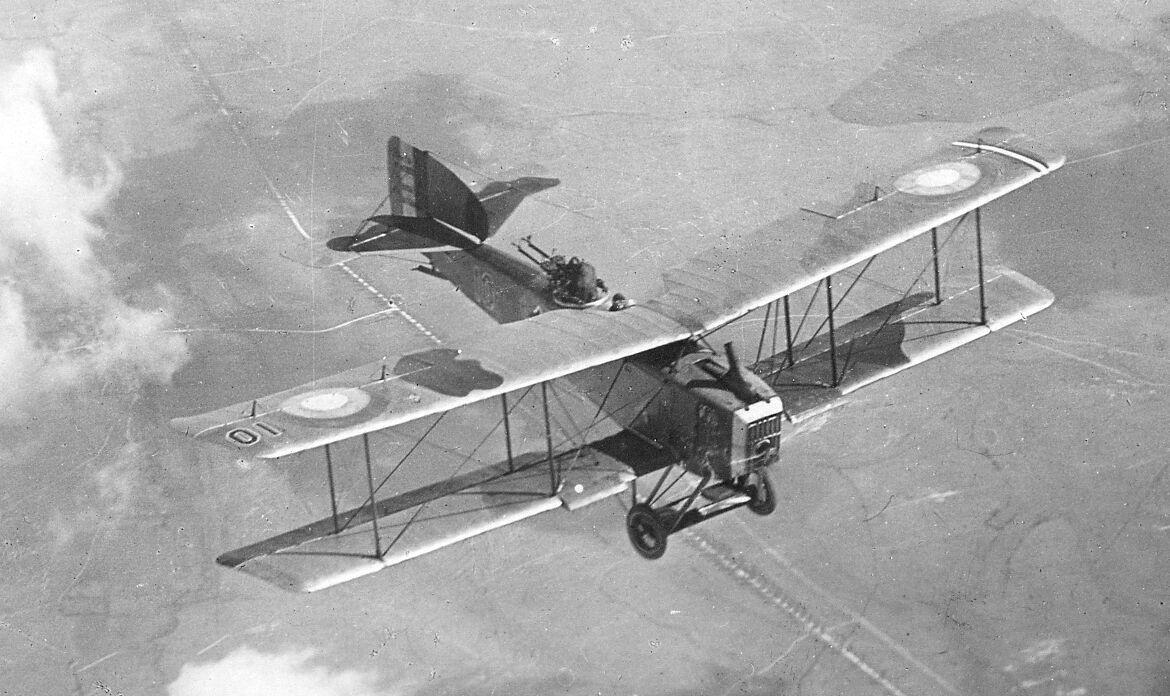
The Breguet XIV (in contemporary practice) or Breguet 14 is a French biplane bomber and reconnaissance aircraft of World War I. It was built in very large numbers and production continued for many years after the end of the war.
The Breguet 14 was among the first mass-produced aircraft to use large amounts of aluminium, rather than wood or steel, in its structure. This allowed the airframe to be both lighter and stronger, making the aircraft fast and agile, and it was able to outrun some contemporary fighters.
The Breguet 14 was designed by aviation pioneer and aeronautical engineer Louis Breguet. Breguet had already built a reputation for producing capable aircraft and for having innovative ideas, including the use of metal in aircraft construction. The outbreak of the First World War in 1914 led to Breguet-built aircraft being ordered by the military air services of several Triple Entente nations. He temporarily abandoned the preferred tractor configuration for a pusher design to satisfy the French general staff, who sought a clear forward view for the observer.
In spite of the French official preference for pushers, Breguet remained a proponent of tractor aircraft. In June 1916, he began a new design for a military two-seater, the Breguet AV. The French Army's Section Technique de l' Aéronautique (STAé) recommended that Breguet use the Hispano-Suiza 8A V-8 engine of 130 kW (180 hp). Breguet determined that the Hispano-Suiza lacked sufficient power, and instead chose the Renault V-12 engine previously used in the Breguet Type V.
Two variants of the Breguet AV (Type XIII and Type XIV to the French authorities) were built. Both had a boxy shape that was complemented by a rectangular frontal radiator and the unusual negative or back stagger of its wings. It possessed a sturdy undercarriage, and had ailerons on the upper wing only. The lower wing had flaps along the entire trailing edges, that were forced into their raised position by the air, as the aircraft accelerated to its normal speed, being restricted from moving freely by a set of 12 adjustable rubber bungee cords.
The airframe's structure was constructed primarily of duralumin, an aluminium alloy which had been invented in Germany by Alfred Wilm only a decade previously. Many sections, such as the duralumin longerons and spacers, were attached using welded steel-tube fittings and braced using piano wire. The wing spars were rectangular duralumin tubes with either oak or ash shims at the attachment points, wrapped in a sheet steel sheath. The wooden box ribs had fretted plywood webs and ash flanges. The tail unit was built up from welded steel tube, while the elevators featured large horn balances. French officials were initially wary of the Type XIV's innovative materials due to a lack of experience with them.
Louis Breguet took the prototype into the air for the first time on 21 November 1916. In November 1916, the S.T.Aé. had issued requirements for four new aircraft types, and Breguet submitted the XIV for two of those - reconnaissance and bomber.
The prototype was passed to the S.T.Aé on 11 January 1917 for trials and was accepted to fill both roles. The report issued on 7 February 1917 from the trials stated that the prototype had attained a speed of 172 km/h (107 mph) at an altitude of 2,000 m (6,600 ft). On 22 February 1917, Breguet asked the S.T.Aé about initiating production and informed them on 2 March that jigs were ready. On 6 March 1917, the first official production order was received by Breguet, calling for 150 Breguet XIV A.2 reconnaissance aircraft and an additional order for 100 XIV B.2 bombers was received on 4 April. The A.2 was equipped with several cameras, while some also had radios. The lower wing of the 14 B.2 was fitted with Michelin-built bomb racks for thirty-two 115 mm (4.5 in) bombs. To avoid the bomb racks jamming the flaps, a forward extension of the wings was added, while transparent panels were added to the sides of the fuselage to aid in the use of the bomb sight.
Hub AI
Breguet 14 AI simulator
(@Breguet 14_simulator)
Breguet 14
The Breguet XIV (in contemporary practice) or Breguet 14 is a French biplane bomber and reconnaissance aircraft of World War I. It was built in very large numbers and production continued for many years after the end of the war.
The Breguet 14 was among the first mass-produced aircraft to use large amounts of aluminium, rather than wood or steel, in its structure. This allowed the airframe to be both lighter and stronger, making the aircraft fast and agile, and it was able to outrun some contemporary fighters.
The Breguet 14 was designed by aviation pioneer and aeronautical engineer Louis Breguet. Breguet had already built a reputation for producing capable aircraft and for having innovative ideas, including the use of metal in aircraft construction. The outbreak of the First World War in 1914 led to Breguet-built aircraft being ordered by the military air services of several Triple Entente nations. He temporarily abandoned the preferred tractor configuration for a pusher design to satisfy the French general staff, who sought a clear forward view for the observer.
In spite of the French official preference for pushers, Breguet remained a proponent of tractor aircraft. In June 1916, he began a new design for a military two-seater, the Breguet AV. The French Army's Section Technique de l' Aéronautique (STAé) recommended that Breguet use the Hispano-Suiza 8A V-8 engine of 130 kW (180 hp). Breguet determined that the Hispano-Suiza lacked sufficient power, and instead chose the Renault V-12 engine previously used in the Breguet Type V.
Two variants of the Breguet AV (Type XIII and Type XIV to the French authorities) were built. Both had a boxy shape that was complemented by a rectangular frontal radiator and the unusual negative or back stagger of its wings. It possessed a sturdy undercarriage, and had ailerons on the upper wing only. The lower wing had flaps along the entire trailing edges, that were forced into their raised position by the air, as the aircraft accelerated to its normal speed, being restricted from moving freely by a set of 12 adjustable rubber bungee cords.
The airframe's structure was constructed primarily of duralumin, an aluminium alloy which had been invented in Germany by Alfred Wilm only a decade previously. Many sections, such as the duralumin longerons and spacers, were attached using welded steel-tube fittings and braced using piano wire. The wing spars were rectangular duralumin tubes with either oak or ash shims at the attachment points, wrapped in a sheet steel sheath. The wooden box ribs had fretted plywood webs and ash flanges. The tail unit was built up from welded steel tube, while the elevators featured large horn balances. French officials were initially wary of the Type XIV's innovative materials due to a lack of experience with them.
Louis Breguet took the prototype into the air for the first time on 21 November 1916. In November 1916, the S.T.Aé. had issued requirements for four new aircraft types, and Breguet submitted the XIV for two of those - reconnaissance and bomber.
The prototype was passed to the S.T.Aé on 11 January 1917 for trials and was accepted to fill both roles. The report issued on 7 February 1917 from the trials stated that the prototype had attained a speed of 172 km/h (107 mph) at an altitude of 2,000 m (6,600 ft). On 22 February 1917, Breguet asked the S.T.Aé about initiating production and informed them on 2 March that jigs were ready. On 6 March 1917, the first official production order was received by Breguet, calling for 150 Breguet XIV A.2 reconnaissance aircraft and an additional order for 100 XIV B.2 bombers was received on 4 April. The A.2 was equipped with several cameras, while some also had radios. The lower wing of the 14 B.2 was fitted with Michelin-built bomb racks for thirty-two 115 mm (4.5 in) bombs. To avoid the bomb racks jamming the flaps, a forward extension of the wings was added, while transparent panels were added to the sides of the fuselage to aid in the use of the bomb sight.
Recent media