



Community hub
Recent from talks
Knowledge base stats:
Talk channels stats:
Members stats:
Britannia Royal Naval College
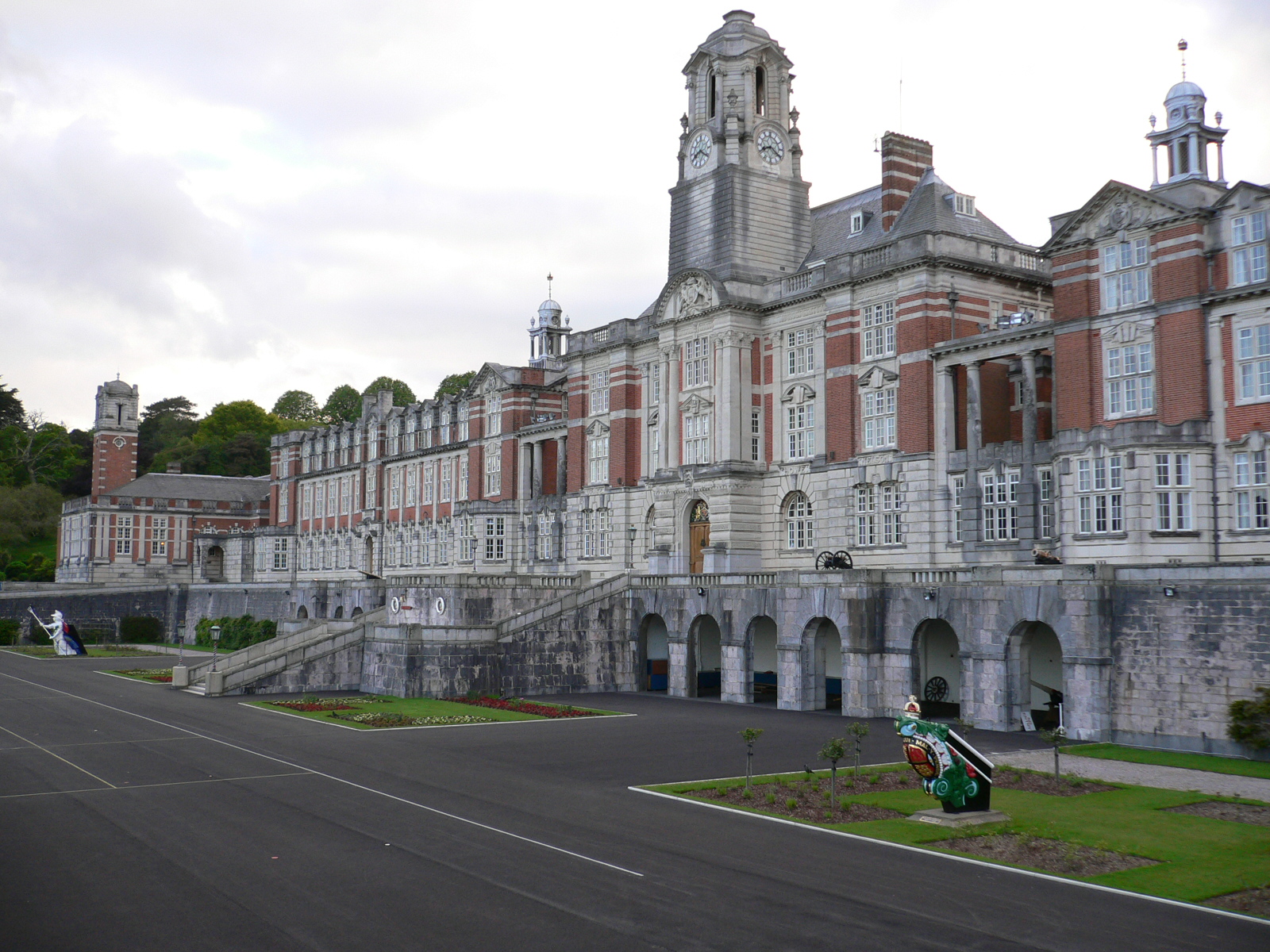
Britannia Royal Naval College Dartmouth, also known as Dartmouth, is the naval academy of the United Kingdom and the initial officer training establishment of the Royal Navy. It is located on a hill overlooking the port of Dartmouth, Devon, England. Royal Naval officer training has taken place in Dartmouth since 1863. The buildings of the current campus were completed in 1905. Earlier students lived in two wooden hulks moored in the River Dart. Since 1998, BRNC has been the sole centre for Royal Naval officer training.
The training of naval officers at Dartmouth dates from 1863, when the wooden hulk HMS Britannia was moved from Portland and moored in the River Dart to serve as a base. In 1864, after an influx of new recruits, Britannia was supplemented by HMS Hindostan. Prior to this, a Royal Naval Academy (later Royal Naval College) had operated for more than a century from 1733 to 1837 at Portsmouth, a major naval installation. The original Britannia was replaced by the Prince of Wales in 1869, which was renamed Britannia.
The foundation stone for a new building at the college was laid by King Edward VII in March 1902. Sir Aston Webb designed the shore-based college at Dartmouth, which was built by Higgs and Hill and practically completed in 1905.
From September 1903, officer cadets first entered the Royal Naval College, Osborne, then after two years transferred to Dartmouth, and the first such intake was in September 1905.
The Britannia training establishment was closed at the same time. The cadets under instruction were embarked on two cruisers to complete their programme under the old system. The headquarters of the cruisers was established at Bermuda, where suitable arrangements had been made to house the cadets. The cadets entered in September under the old system, and those entered in January 1906 (the last to be so entered), were received at the Royal Naval College, Dartmouth, where they were instructed, as far as possible, side by side with the cadets transferred from Osborne.
— Lord Tweedmouth, First Lord of the Admiralty, 26 February 1906
The college was originally known as the Royal Naval College, Dartmouth (RNC). As a Royal Naval shore establishment, it was later known also by the ship name HMS Britannia (a battleship called Britannia operated from 1904 to 1918). The college was renamed HMS Dartmouth in 1953, when the name Britannia was given to the newly launched royal yacht HMY Britannia. The training ship moored in the River Dart at Sandquay, a Sandown class minehunter formerly known as HMS Cromer, continues to bear the name Hindostan. As of 2025, eight 15-metre Sea-class workboats (Cormorant, Guillemot, Razorbill, Kittiwake, Fulmar, Skua, Gannet and Tern) are assigned to the College for the purpose of training officer cadets.
Cadets originally joined the Royal Naval College, Osborne, at Osborne House, at the age of 13 for two years' study and work before joining Dartmouth. The Royal Naval College, Osborne closed in 1921.
Hub AI
Britannia Royal Naval College AI simulator
(@Britannia Royal Naval College_simulator)
Britannia Royal Naval College
Britannia Royal Naval College Dartmouth, also known as Dartmouth, is the naval academy of the United Kingdom and the initial officer training establishment of the Royal Navy. It is located on a hill overlooking the port of Dartmouth, Devon, England. Royal Naval officer training has taken place in Dartmouth since 1863. The buildings of the current campus were completed in 1905. Earlier students lived in two wooden hulks moored in the River Dart. Since 1998, BRNC has been the sole centre for Royal Naval officer training.
The training of naval officers at Dartmouth dates from 1863, when the wooden hulk HMS Britannia was moved from Portland and moored in the River Dart to serve as a base. In 1864, after an influx of new recruits, Britannia was supplemented by HMS Hindostan. Prior to this, a Royal Naval Academy (later Royal Naval College) had operated for more than a century from 1733 to 1837 at Portsmouth, a major naval installation. The original Britannia was replaced by the Prince of Wales in 1869, which was renamed Britannia.
The foundation stone for a new building at the college was laid by King Edward VII in March 1902. Sir Aston Webb designed the shore-based college at Dartmouth, which was built by Higgs and Hill and practically completed in 1905.
From September 1903, officer cadets first entered the Royal Naval College, Osborne, then after two years transferred to Dartmouth, and the first such intake was in September 1905.
The Britannia training establishment was closed at the same time. The cadets under instruction were embarked on two cruisers to complete their programme under the old system. The headquarters of the cruisers was established at Bermuda, where suitable arrangements had been made to house the cadets. The cadets entered in September under the old system, and those entered in January 1906 (the last to be so entered), were received at the Royal Naval College, Dartmouth, where they were instructed, as far as possible, side by side with the cadets transferred from Osborne.
— Lord Tweedmouth, First Lord of the Admiralty, 26 February 1906
The college was originally known as the Royal Naval College, Dartmouth (RNC). As a Royal Naval shore establishment, it was later known also by the ship name HMS Britannia (a battleship called Britannia operated from 1904 to 1918). The college was renamed HMS Dartmouth in 1953, when the name Britannia was given to the newly launched royal yacht HMY Britannia. The training ship moored in the River Dart at Sandquay, a Sandown class minehunter formerly known as HMS Cromer, continues to bear the name Hindostan. As of 2025, eight 15-metre Sea-class workboats (Cormorant, Guillemot, Razorbill, Kittiwake, Fulmar, Skua, Gannet and Tern) are assigned to the College for the purpose of training officer cadets.
Cadets originally joined the Royal Naval College, Osborne, at Osborne House, at the age of 13 for two years' study and work before joining Dartmouth. The Royal Naval College, Osborne closed in 1921.