
Recent from talks
Broad Street (Manhattan)
Knowledge base stats:
Talk channels stats:
Members stats:
Broad Street (Manhattan)
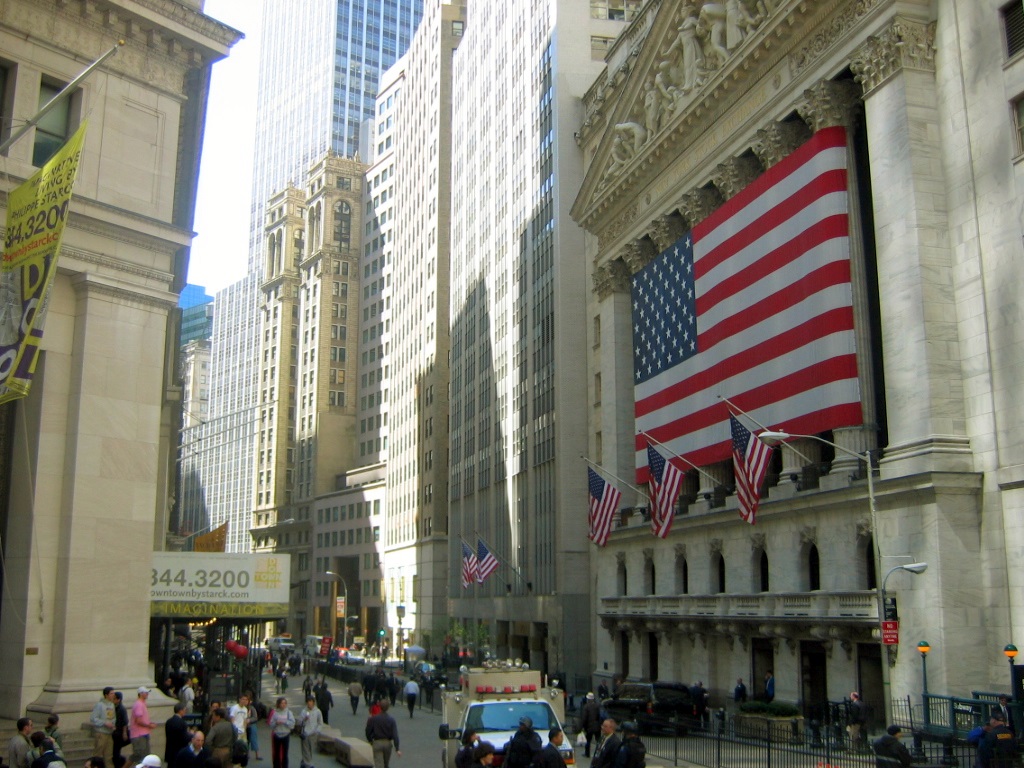
Broad Street is a north–south street in the Financial District of Lower Manhattan in New York City. Originally the Broad Canal in New Amsterdam, it stretches from today's South Street to Wall Street.
The canal drew its water from the East River, and was infilled in 1676 after numerous fruit and vegetable vendors made it difficult for boats to enter the canal. Early establishments on Broad Street in the 1600s included the Fraunces Tavern and the Royal Exchange. Later on the area became the center of financial activity, and all smaller buildings in turn were replaced with grand banks and stock exchange buildings. Most of the structures that stand today date from the turn of the 20th century, along with more modern buildings constructed after the 1950s.
Broad Street, formerly called Heere Gracht (canal of the lords in Dutch) in old New Amsterdam. Originally an inlet from the East River, the canal was flanked by two solid ranks of three-story houses, with paths in front. Built during the administration of Peter Stuyvesant, the Broad Canal was the original Manhattan landing of the first ferry between Manhattan and Brooklyn, later the Fulton Ferry.
The Lovelace Tavern, in business from 1670 to 1706 and owned by the then-New York colonial governor Colonel Francis Lovelace, occupied part of the current site of 85 Broad Street; however, the bar itself only had frontage on Pearl Street. New York Mayor Stephanus van Cortlandt built his home in 1671 on Broad Street, on the future site of Fraunces Tavern. Built as a one-story building in 1675,[citation needed] the Royal Exchange (later known as the Old Royal Exchange and the Merchants Exchange) was a covered marketplace located near the foot of Broad Street close to its intersection with Water Street. 30 Broad Street was once owned by the Dutch church which had erected the city’s second almshouse on the site before 1659. Broad Street was originally a canal first known as "Common Ditch" then later "The Prince’s Ditch".[citation needed]
The canal was filled in 1676 because fruit and vegetable vendors, including Native Americans who came by canoe from Long Island, left the area littered, and fewer and fewer water craft were small enough to use the canal. The paths in front of the rows of houses by the canal were paved in 1676 as well. The road was first paved in 1693.[citation needed] The street saw a lot of change as the centuries progressed from Dutch to British rule and finally independent America. Among the tenants of Broad Street in the 18th century was bookseller Garrat Noel.
The city's first firehouse for the New York City Fire Department was built in 1736 in front of NYSE on Broad Street. Two years later, on December 16, 1737, the colony's General Assembly created the Volunteer Fire Department of the City of New York.
The Broad Street building for the Fraunces Tavern was bought in 1762 by Samuel Fraunces, who converted the home into the popular tavern first named the Queen's Head. Before the American Revolution, the building was one of the meeting places of the secret society, the Sons of Liberty. In 1768, the New York Chamber of Commerce was founded by a meeting in the building.
After a rebuilt in 1752 that added a meeting hall on the upper story, the Royal Exchange building was the location of the Chamber of Commerce in the City of New York (later Chamber of Commerce of the State of New York) from 1770 until the Revolutionary War. The United States District Court for the District of New York was one of the original 13 courts established by the Judiciary Act of 1789, and it first sat at the Royal Exchange (Merchants Exchange) building on Broad Street.
Hub AI
Broad Street (Manhattan) AI simulator
(@Broad Street (Manhattan)_simulator)
Broad Street (Manhattan)
Broad Street is a north–south street in the Financial District of Lower Manhattan in New York City. Originally the Broad Canal in New Amsterdam, it stretches from today's South Street to Wall Street.
The canal drew its water from the East River, and was infilled in 1676 after numerous fruit and vegetable vendors made it difficult for boats to enter the canal. Early establishments on Broad Street in the 1600s included the Fraunces Tavern and the Royal Exchange. Later on the area became the center of financial activity, and all smaller buildings in turn were replaced with grand banks and stock exchange buildings. Most of the structures that stand today date from the turn of the 20th century, along with more modern buildings constructed after the 1950s.
Broad Street, formerly called Heere Gracht (canal of the lords in Dutch) in old New Amsterdam. Originally an inlet from the East River, the canal was flanked by two solid ranks of three-story houses, with paths in front. Built during the administration of Peter Stuyvesant, the Broad Canal was the original Manhattan landing of the first ferry between Manhattan and Brooklyn, later the Fulton Ferry.
The Lovelace Tavern, in business from 1670 to 1706 and owned by the then-New York colonial governor Colonel Francis Lovelace, occupied part of the current site of 85 Broad Street; however, the bar itself only had frontage on Pearl Street. New York Mayor Stephanus van Cortlandt built his home in 1671 on Broad Street, on the future site of Fraunces Tavern. Built as a one-story building in 1675,[citation needed] the Royal Exchange (later known as the Old Royal Exchange and the Merchants Exchange) was a covered marketplace located near the foot of Broad Street close to its intersection with Water Street. 30 Broad Street was once owned by the Dutch church which had erected the city’s second almshouse on the site before 1659. Broad Street was originally a canal first known as "Common Ditch" then later "The Prince’s Ditch".[citation needed]
The canal was filled in 1676 because fruit and vegetable vendors, including Native Americans who came by canoe from Long Island, left the area littered, and fewer and fewer water craft were small enough to use the canal. The paths in front of the rows of houses by the canal were paved in 1676 as well. The road was first paved in 1693.[citation needed] The street saw a lot of change as the centuries progressed from Dutch to British rule and finally independent America. Among the tenants of Broad Street in the 18th century was bookseller Garrat Noel.
The city's first firehouse for the New York City Fire Department was built in 1736 in front of NYSE on Broad Street. Two years later, on December 16, 1737, the colony's General Assembly created the Volunteer Fire Department of the City of New York.
The Broad Street building for the Fraunces Tavern was bought in 1762 by Samuel Fraunces, who converted the home into the popular tavern first named the Queen's Head. Before the American Revolution, the building was one of the meeting places of the secret society, the Sons of Liberty. In 1768, the New York Chamber of Commerce was founded by a meeting in the building.
After a rebuilt in 1752 that added a meeting hall on the upper story, the Royal Exchange building was the location of the Chamber of Commerce in the City of New York (later Chamber of Commerce of the State of New York) from 1770 until the Revolutionary War. The United States District Court for the District of New York was one of the original 13 courts established by the Judiciary Act of 1789, and it first sat at the Royal Exchange (Merchants Exchange) building on Broad Street.
Recent media