



Community hub
Recent from talks
Knowledge base stats:
Talk channels stats:
Members stats:
Buddhist philosophy
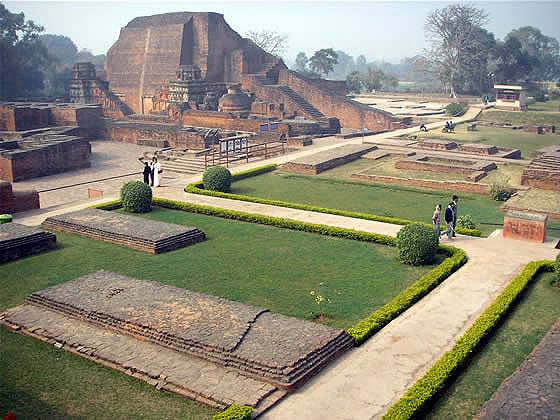
Buddhist philosophy is the ancient Indian philosophical system that developed within the religio-philosophical tradition of Buddhism. It comprises all the philosophical investigations and systems of rational inquiry that developed among various schools of Buddhism in ancient India following the parinirvāṇa of Gautama Buddha (c. 5th century BCE), as well as the further developments which followed the spread of Buddhism throughout Asia.
Buddhism combines both philosophical reasoning and the practice of meditation. The Buddhist religion presents a multitude of Buddhist paths to liberation; with the expansion of early Buddhism from ancient India to Sri Lanka and subsequently to East Asia and Southeast Asia, Buddhist thinkers have covered topics as varied as cosmology, ethics, epistemology, logic, metaphysics, ontology, phenomenology, the philosophy of mind, the philosophy of time, and soteriology in their analysis of these paths.
Pre-sectarian Buddhism was based on empirical evidence gained by the sense organs (including the mind), and the Buddha seems to have retained a skeptical distance from certain metaphysical questions, refusing to answer them because they were not conducive to liberation but led instead to further speculation. However, he was also claimed to have affirmed theories with metaphysical implications, such as dependent arising, karma, and rebirth.
Particular points of Buddhist philosophy have often been the subject of disputes between different schools of Buddhism, as well as between representative thinkers of Buddhist schools and Hindu or Jain philosophers. These elaborations and disputes gave rise to various early Buddhist schools of Abhidharma, the Mahāyāna movement, and scholastic traditions such as Prajñāpāramitā, Sarvāstivāda, Mādhyamaka, Sautrāntika, Vaibhāṣika, Buddha-nature, Yogācāra, and more. One recurrent theme in Buddhist philosophy has been the desire to find a Middle Way between philosophical views seen as extreme.
Edward Conze splits the development of Indian Buddhist philosophy into three phases:
Various elements of these three phases are incorporated and/or further developed in the philosophy and worldview of the various sects of Buddhism that then emerged.
Buddhism is an Indian religion and dhārma that encompasses a variety of traditions, beliefs, and spiritual practices based on teachings attributed to Gautama Buddha (5th century BCE), but diversified since then in a wide variety of schools and traditions. Buddhism originated in ancient India, from where the Buddhadhārma spread from the northeastern region of the Indian subcontinent throughout Central Asia, East Asia, Mainland Southeast Asia, and Maritime Southeast Asia. Philosophy in ancient India was aimed primarily at spiritual liberation and had soteriological goals. In his study of the Mādhyamaka and Sautrāntika schools of Buddhist philosophy in ancient India, Peter Deller Santina writes:
Attention must first of all be drawn to the fact that philosophical systems in India were seldom, if ever, purely speculative or descriptive. Virtually all the great philosophical systems of India: Sāṃkhya, Advaita Vedānta, Mādhyamaka and so forth, were preeminently concerned with providing a means to liberation or salvation. It was a tacit assumption with these systems that if their philosophy were correctly understood and assimilated, an unconditioned state free of suffering and limitation could be achieved. [...] If this fact is overlooked, as often happens as a result of the propensity engendered by formal Occidental philosophy to consider the philosophical enterprise as a purely descriptive one, the real significance of Indian and Buddhist philosophy will be missed.
Hub AI
Buddhist philosophy AI simulator
(@Buddhist philosophy_simulator)
Buddhist philosophy
Buddhist philosophy is the ancient Indian philosophical system that developed within the religio-philosophical tradition of Buddhism. It comprises all the philosophical investigations and systems of rational inquiry that developed among various schools of Buddhism in ancient India following the parinirvāṇa of Gautama Buddha (c. 5th century BCE), as well as the further developments which followed the spread of Buddhism throughout Asia.
Buddhism combines both philosophical reasoning and the practice of meditation. The Buddhist religion presents a multitude of Buddhist paths to liberation; with the expansion of early Buddhism from ancient India to Sri Lanka and subsequently to East Asia and Southeast Asia, Buddhist thinkers have covered topics as varied as cosmology, ethics, epistemology, logic, metaphysics, ontology, phenomenology, the philosophy of mind, the philosophy of time, and soteriology in their analysis of these paths.
Pre-sectarian Buddhism was based on empirical evidence gained by the sense organs (including the mind), and the Buddha seems to have retained a skeptical distance from certain metaphysical questions, refusing to answer them because they were not conducive to liberation but led instead to further speculation. However, he was also claimed to have affirmed theories with metaphysical implications, such as dependent arising, karma, and rebirth.
Particular points of Buddhist philosophy have often been the subject of disputes between different schools of Buddhism, as well as between representative thinkers of Buddhist schools and Hindu or Jain philosophers. These elaborations and disputes gave rise to various early Buddhist schools of Abhidharma, the Mahāyāna movement, and scholastic traditions such as Prajñāpāramitā, Sarvāstivāda, Mādhyamaka, Sautrāntika, Vaibhāṣika, Buddha-nature, Yogācāra, and more. One recurrent theme in Buddhist philosophy has been the desire to find a Middle Way between philosophical views seen as extreme.
Edward Conze splits the development of Indian Buddhist philosophy into three phases:
Various elements of these three phases are incorporated and/or further developed in the philosophy and worldview of the various sects of Buddhism that then emerged.
Buddhism is an Indian religion and dhārma that encompasses a variety of traditions, beliefs, and spiritual practices based on teachings attributed to Gautama Buddha (5th century BCE), but diversified since then in a wide variety of schools and traditions. Buddhism originated in ancient India, from where the Buddhadhārma spread from the northeastern region of the Indian subcontinent throughout Central Asia, East Asia, Mainland Southeast Asia, and Maritime Southeast Asia. Philosophy in ancient India was aimed primarily at spiritual liberation and had soteriological goals. In his study of the Mādhyamaka and Sautrāntika schools of Buddhist philosophy in ancient India, Peter Deller Santina writes:
Attention must first of all be drawn to the fact that philosophical systems in India were seldom, if ever, purely speculative or descriptive. Virtually all the great philosophical systems of India: Sāṃkhya, Advaita Vedānta, Mādhyamaka and so forth, were preeminently concerned with providing a means to liberation or salvation. It was a tacit assumption with these systems that if their philosophy were correctly understood and assimilated, an unconditioned state free of suffering and limitation could be achieved. [...] If this fact is overlooked, as often happens as a result of the propensity engendered by formal Occidental philosophy to consider the philosophical enterprise as a purely descriptive one, the real significance of Indian and Buddhist philosophy will be missed.