



Community hub
Recent from talks
Knowledge base stats:
Talk channels stats:
Members stats:
Bánh mì
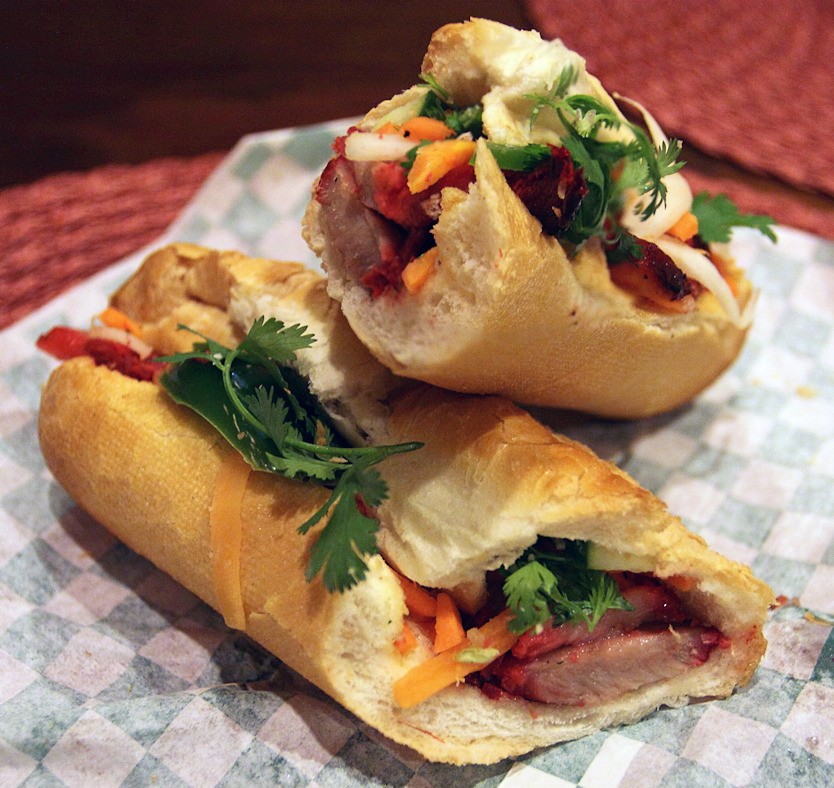
In Vietnamese cuisine, bánh mì, bánh mỳ or banh mi (/ˈbɑːn miː/, /ˈbæn/; Vietnamese: [ɓǎjŋ̟ mì][clarification needed], 'bread' (Hanoi: [ɓaʲŋ̟˧˥.mi˧˩] or Saigon: [ɓan˧˥.mi˧˩])), is a short baguette with thin, crisp crust and a soft, airy texture. It is often split lengthwise and filled with meat and savory ingredients like a submarine sandwich and served as a meal, called bánh mì thịt. Plain bánh mì is also eaten as a staple food.
A typical Vietnamese roll or sandwich is a fusion of proteins and vegetables from native Vietnamese cuisine such as chả lụa (Vietnamese sausage), coriander (cilantro), cucumber, pickled carrots, and pickled daikon combined with condiments from French cuisine such as pâté, along with red chili and mayonnaise. However, a variety of popular fillings are used, like xá xíu (Chinese barbecued pork), xíu mại (Vietnamese minced pork), nem nướng (grilled pork sausage), Đậu Hũ (tofu), and even ice cream, which is more of a dessert. In Vietnam, bread rolls and sandwiches are typically eaten for breakfast or as a snack.
The baguette was introduced to Vietnam by the French in the mid-19th century, during the Nguyễn dynasty, and became a staple food by the early 20th century. In the 1950s, a distinctly Vietnamese style of sandwich developed in Saigon, becoming a popular street food, also known as bánh mì Sài Gòn ('Saigon sandwich' or 'Saigon-style bánh mì'). Following the Vietnam War, overseas Vietnamese popularized the bánh mì sandwich in countries such as Australia, Canada and the United States. In these countries, they are commonly sold in Asian bakeries.
In Vietnamese, the word bánh mì is derived from bánh (which can refer to many kinds of food, primarily baked goods, including bread) and mì ("wheat"). It may also be spelled bánh mỳ in northern Vietnam. Taken alone, bánh mì means any kind of bread, but it could refer to the Vietnamese baguette or the sandwich made from it. To distinguish the unfilled bread from the sandwich with fillings, the term bánh mì không ("plain bread") can be used. To distinguish Vietnamese-style bread from other kinds of bread, the term bánh mì Sài Gòn ("Saigon-style bread") or bánh mì Việt Nam ("Vietnam-style bread") can be used.
A folk etymology claims that the word bánh mì is a corruption of the French pain de mie, meaning soft, white bread. However, bánh (or its Nôm form, 餅) has referred to rice cakes and other pastries since as early as the 13th century, long before French contact.
The word bánh mì, meaning "bread", is attested in Vietnamese as early as the 1830s, in Jean-Louis Taberd's dictionary Dictionarium Latino-Annamiticum. The French introduced Vietnam to the baguette, along with other baked goods such as pâté chaud, in the 1860s, at the start of their imperialism in Vietnam. Many sources characterize bánh mì primarily as a French bread tradition adapted in Vietnam, with local fillings added atop the colonial-era baguette base. Vietnamese vendors layered herbs, pickles, chiles, and meats onto this foundation, producing a distinctive Saigon street-food form by the mid-20th century. Northern Vietnamese initially called the baguette bánh tây, literally "Western bánh", while Southern Vietnamese called it bánh mì, "wheat bánh". Nguyễn Đình Chiểu mentions the baguette in his 1861 poem "Văn tế nghĩa sĩ Cần Giuộc". Due to the price of imported wheat at the time, French baguettes and sandwiches were considered a luxury. During World War I, an influx of French soldiers and supplies arrived. At the same time, disruptions of wheat imports led bakers to begin mixing in inexpensive rice flour (which also made the bread fluffier). As a result, it became possible for ordinary Vietnamese to enjoy French staples such as bread. Many shops baked twice a day, because bread tends to go stale quickly in the hot, humid climate of Vietnam. Baguettes were mainly eaten for breakfast with some butter and sugar.
Until the 1950s, sandwiches hewed closely to French tastes, typically a jambon-beurre moistened with a mayonnaise or liver pâté spread. The 1954 Partition of Vietnam sent over a million migrants from North Vietnam to South Vietnam, transforming Saigon's local cuisine. Among the migrants were Lê Minh Ngọc and Nguyễn Thị Tịnh, who opened a small bakery named Hòa Mã in District 3. In 1958, Hòa Mã became one of the first shops to sell bánh mì thịt. Around this time, another migrant from the North began selling chả sandwiches from a basket on a mobylette, and a stand in Gia Định Province (present-day Phú Nhuận District) began selling phá lấu sandwiches. Some shops stuffed sandwiches with inexpensive Cheddar cheese, which came from French food aid that migrants from the North had rejected. Vietnamese communities in France also began selling bánh mì.
After the Fall of Saigon in 1975, bánh mì sandwiches became a luxury item once again. During the so-called "subsidy period", state-owned phở eateries often served bread or cold rice as a side dish, leading to the present-day practice of dipping quẩy in phở. In the 1980s, Đổi Mới market reforms led to a renaissance in bánh mì, mostly as street food.
Hub AI
Bánh mì AI simulator
(@Bánh mì_simulator)
Bánh mì
In Vietnamese cuisine, bánh mì, bánh mỳ or banh mi (/ˈbɑːn miː/, /ˈbæn/; Vietnamese: [ɓǎjŋ̟ mì][clarification needed], 'bread' (Hanoi: [ɓaʲŋ̟˧˥.mi˧˩] or Saigon: [ɓan˧˥.mi˧˩])), is a short baguette with thin, crisp crust and a soft, airy texture. It is often split lengthwise and filled with meat and savory ingredients like a submarine sandwich and served as a meal, called bánh mì thịt. Plain bánh mì is also eaten as a staple food.
A typical Vietnamese roll or sandwich is a fusion of proteins and vegetables from native Vietnamese cuisine such as chả lụa (Vietnamese sausage), coriander (cilantro), cucumber, pickled carrots, and pickled daikon combined with condiments from French cuisine such as pâté, along with red chili and mayonnaise. However, a variety of popular fillings are used, like xá xíu (Chinese barbecued pork), xíu mại (Vietnamese minced pork), nem nướng (grilled pork sausage), Đậu Hũ (tofu), and even ice cream, which is more of a dessert. In Vietnam, bread rolls and sandwiches are typically eaten for breakfast or as a snack.
The baguette was introduced to Vietnam by the French in the mid-19th century, during the Nguyễn dynasty, and became a staple food by the early 20th century. In the 1950s, a distinctly Vietnamese style of sandwich developed in Saigon, becoming a popular street food, also known as bánh mì Sài Gòn ('Saigon sandwich' or 'Saigon-style bánh mì'). Following the Vietnam War, overseas Vietnamese popularized the bánh mì sandwich in countries such as Australia, Canada and the United States. In these countries, they are commonly sold in Asian bakeries.
In Vietnamese, the word bánh mì is derived from bánh (which can refer to many kinds of food, primarily baked goods, including bread) and mì ("wheat"). It may also be spelled bánh mỳ in northern Vietnam. Taken alone, bánh mì means any kind of bread, but it could refer to the Vietnamese baguette or the sandwich made from it. To distinguish the unfilled bread from the sandwich with fillings, the term bánh mì không ("plain bread") can be used. To distinguish Vietnamese-style bread from other kinds of bread, the term bánh mì Sài Gòn ("Saigon-style bread") or bánh mì Việt Nam ("Vietnam-style bread") can be used.
A folk etymology claims that the word bánh mì is a corruption of the French pain de mie, meaning soft, white bread. However, bánh (or its Nôm form, 餅) has referred to rice cakes and other pastries since as early as the 13th century, long before French contact.
The word bánh mì, meaning "bread", is attested in Vietnamese as early as the 1830s, in Jean-Louis Taberd's dictionary Dictionarium Latino-Annamiticum. The French introduced Vietnam to the baguette, along with other baked goods such as pâté chaud, in the 1860s, at the start of their imperialism in Vietnam. Many sources characterize bánh mì primarily as a French bread tradition adapted in Vietnam, with local fillings added atop the colonial-era baguette base. Vietnamese vendors layered herbs, pickles, chiles, and meats onto this foundation, producing a distinctive Saigon street-food form by the mid-20th century. Northern Vietnamese initially called the baguette bánh tây, literally "Western bánh", while Southern Vietnamese called it bánh mì, "wheat bánh". Nguyễn Đình Chiểu mentions the baguette in his 1861 poem "Văn tế nghĩa sĩ Cần Giuộc". Due to the price of imported wheat at the time, French baguettes and sandwiches were considered a luxury. During World War I, an influx of French soldiers and supplies arrived. At the same time, disruptions of wheat imports led bakers to begin mixing in inexpensive rice flour (which also made the bread fluffier). As a result, it became possible for ordinary Vietnamese to enjoy French staples such as bread. Many shops baked twice a day, because bread tends to go stale quickly in the hot, humid climate of Vietnam. Baguettes were mainly eaten for breakfast with some butter and sugar.
Until the 1950s, sandwiches hewed closely to French tastes, typically a jambon-beurre moistened with a mayonnaise or liver pâté spread. The 1954 Partition of Vietnam sent over a million migrants from North Vietnam to South Vietnam, transforming Saigon's local cuisine. Among the migrants were Lê Minh Ngọc and Nguyễn Thị Tịnh, who opened a small bakery named Hòa Mã in District 3. In 1958, Hòa Mã became one of the first shops to sell bánh mì thịt. Around this time, another migrant from the North began selling chả sandwiches from a basket on a mobylette, and a stand in Gia Định Province (present-day Phú Nhuận District) began selling phá lấu sandwiches. Some shops stuffed sandwiches with inexpensive Cheddar cheese, which came from French food aid that migrants from the North had rejected. Vietnamese communities in France also began selling bánh mì.
After the Fall of Saigon in 1975, bánh mì sandwiches became a luxury item once again. During the so-called "subsidy period", state-owned phở eateries often served bread or cold rice as a side dish, leading to the present-day practice of dipping quẩy in phở. In the 1980s, Đổi Mới market reforms led to a renaissance in bánh mì, mostly as street food.