



Community hub
Recent from talks
Knowledge base stats:
Talk channels stats:
Members stats:
Calcitonin gene-related peptide
Calcitonin gene-related peptide (CGRP) is a neuropeptide that belongs to the calcitonin family. Human CGRP consists of two isoforms, CGRP alpha (α-CGRP, also known as CGRP I) and CGRP beta (β-CGRP, also known as CGRP II). α-CGRP is a 37-amino acid neuropeptide formed by alternative splicing of the calcitonin/CGRP gene located on chromosome 11. β-CGRP is less studied. In humans, β-CGRP differs from α-CGRP by three amino acids and is encoded in a separate, nearby gene. The CGRP family includes calcitonin (CT), adrenomedullin (AM), and amylin (AMY).
CGRP is produced in both peripheral and central neurons. It is a potent peptide vasodilator and can function in the transmission of nociception. In the spinal cord, the function and expression of CGRP may differ depending on the location of synthesis. CGRP is derived mainly from the cell bodies of motor neurons when synthesized in the ventral horn of the spinal cord and may contribute to the regeneration of nervous tissue after injury. Conversely, CGRP is derived from dorsal root ganglion when synthesized in the dorsal horn of the spinal cord and may be linked to the transmission of pain. In the trigeminal vascular system, the cell bodies of the trigeminal ganglion are the main source of CGRP. CGRP is thought to play a role in cardiovascular homeostasis and nociception. In the heart, CGRP acts as a chronotrope by increasing heart rate. Apart from these attributes, CGRP is known to modulate the autonomic nervous system and plays a role in ingestion.
CGRP has moderate effects on calcium homeostasis compared to its extensive actions in other areas, such as the autonomic nervous system.
As a neuropeptide, CGRP acts as an appetite suppressant and contributes to gastric acid secretion. It also functions in temperature homeostasis, increases heart rate, and plays a role in the release of the pituitary hormones in a paracrine manner. Because of these characteristics, it has been said that CGRP functions more as a neurotransmitter than a hormone.
CGRP has a role in human stem cell (HSC) mobilization. In investigations carried out in 2021, treatment with CGRP resulted in significantly increased CGRP levels in the bone marrow extracellular fluid and substantially increased the number of HSCs mobilized by granulocyte colony-stimulating factor (G-CSF). The authors of the 2021 study concluded that G-CSF-induced HSC mobilization is regulated by the nociceptor nerve-derived neuropeptide CGRP. This peptide exerts its effect on HSC mobilization via the receptor activity-modifying protein 1 (RAMP1) pathway.
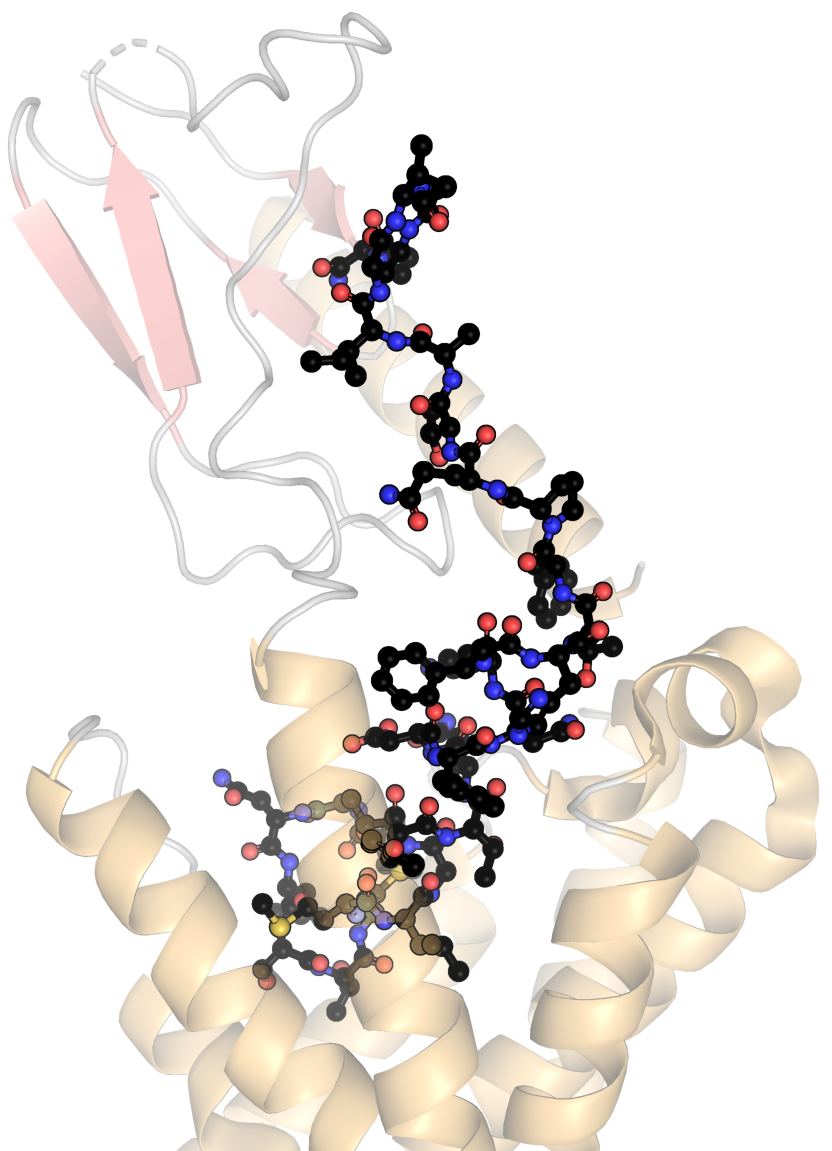
CGRP mediates its effects through a heteromeric receptor composed of a G protein-coupled receptor called calcitonin receptor-like receptor (CALCRL) and RAMP1. CGRP receptors are found throughout all the body, suggesting that the protein may modulate a variety of physiological functions in all major systems (e.g., respiratory, endocrine, gastrointestinal, immune, and cardiovascular). These transmembrane receptors form folded accordion-like structures embedded in the cell membrane with loops of protein on the inside (intracellular loops) and outside (extracellular loops) of the membrane. The second extracellular loop is fundamental for ligand-induced activation, with key interactions of R274/Y278/D280/W283.
Regulation of the CGRP gene is in part controlled by the expression of the mitogen-activated protein kinase (MAPK) signaling pathway and cytokines like TNFα and iNOS. 5HT1 receptor agonists like sumatriptan increase intracellular calcium, which causes decreases in CGRP promoter activity.
CGRP receptors are found in myelinated A-fiber axons which is required for ligand specificity and function of the receptor. The CGRP receptor has three subunits: receptor activity-modifying protein 1 (RAMP1), calcitonin-like receptor (CLR) and receptor component protein (RCP). The complex central receptor is the G protein-coupled receptor calcitonin receptor-like receptor (CALCRL) which is necessary for CGRP and adrenomedullin (AM receptors). For function CGRP, CALCRL must coincide with RAMP1 where the ligand-binding domain of CGRP is located. It also includes two cytoplasmic proteins that associate with the CALCRL-RAMP1 to form signal transduction. CALCRL contains the Gα subunit, which activates adenylyl cyclase and cAMP-dependent signaling pathways. Receptor-mediated transduction elevates in intracellular cAMP activate protein kinase A, which results in the phosphorylation of multiple targets, including potassium- sensitive ATP channels (KATP channels), extracellular signal-related kinases and transcription factors such as cAMP-responsive element-binding protein (CREB). In smooth muscle of neurovascular region, the elevation of cAMP upon CGRP activation results in vasodilation of the blood vessel. Chronic exposure to CGRP causes degradation of lysosomes.
Hub AI
Calcitonin gene-related peptide AI simulator
(@Calcitonin gene-related peptide_simulator)
Calcitonin gene-related peptide
Calcitonin gene-related peptide (CGRP) is a neuropeptide that belongs to the calcitonin family. Human CGRP consists of two isoforms, CGRP alpha (α-CGRP, also known as CGRP I) and CGRP beta (β-CGRP, also known as CGRP II). α-CGRP is a 37-amino acid neuropeptide formed by alternative splicing of the calcitonin/CGRP gene located on chromosome 11. β-CGRP is less studied. In humans, β-CGRP differs from α-CGRP by three amino acids and is encoded in a separate, nearby gene. The CGRP family includes calcitonin (CT), adrenomedullin (AM), and amylin (AMY).
CGRP is produced in both peripheral and central neurons. It is a potent peptide vasodilator and can function in the transmission of nociception. In the spinal cord, the function and expression of CGRP may differ depending on the location of synthesis. CGRP is derived mainly from the cell bodies of motor neurons when synthesized in the ventral horn of the spinal cord and may contribute to the regeneration of nervous tissue after injury. Conversely, CGRP is derived from dorsal root ganglion when synthesized in the dorsal horn of the spinal cord and may be linked to the transmission of pain. In the trigeminal vascular system, the cell bodies of the trigeminal ganglion are the main source of CGRP. CGRP is thought to play a role in cardiovascular homeostasis and nociception. In the heart, CGRP acts as a chronotrope by increasing heart rate. Apart from these attributes, CGRP is known to modulate the autonomic nervous system and plays a role in ingestion.
CGRP has moderate effects on calcium homeostasis compared to its extensive actions in other areas, such as the autonomic nervous system.
As a neuropeptide, CGRP acts as an appetite suppressant and contributes to gastric acid secretion. It also functions in temperature homeostasis, increases heart rate, and plays a role in the release of the pituitary hormones in a paracrine manner. Because of these characteristics, it has been said that CGRP functions more as a neurotransmitter than a hormone.
CGRP has a role in human stem cell (HSC) mobilization. In investigations carried out in 2021, treatment with CGRP resulted in significantly increased CGRP levels in the bone marrow extracellular fluid and substantially increased the number of HSCs mobilized by granulocyte colony-stimulating factor (G-CSF). The authors of the 2021 study concluded that G-CSF-induced HSC mobilization is regulated by the nociceptor nerve-derived neuropeptide CGRP. This peptide exerts its effect on HSC mobilization via the receptor activity-modifying protein 1 (RAMP1) pathway.
CGRP mediates its effects through a heteromeric receptor composed of a G protein-coupled receptor called calcitonin receptor-like receptor (CALCRL) and RAMP1. CGRP receptors are found throughout all the body, suggesting that the protein may modulate a variety of physiological functions in all major systems (e.g., respiratory, endocrine, gastrointestinal, immune, and cardiovascular). These transmembrane receptors form folded accordion-like structures embedded in the cell membrane with loops of protein on the inside (intracellular loops) and outside (extracellular loops) of the membrane. The second extracellular loop is fundamental for ligand-induced activation, with key interactions of R274/Y278/D280/W283.
Regulation of the CGRP gene is in part controlled by the expression of the mitogen-activated protein kinase (MAPK) signaling pathway and cytokines like TNFα and iNOS. 5HT1 receptor agonists like sumatriptan increase intracellular calcium, which causes decreases in CGRP promoter activity.
CGRP receptors are found in myelinated A-fiber axons which is required for ligand specificity and function of the receptor. The CGRP receptor has three subunits: receptor activity-modifying protein 1 (RAMP1), calcitonin-like receptor (CLR) and receptor component protein (RCP). The complex central receptor is the G protein-coupled receptor calcitonin receptor-like receptor (CALCRL) which is necessary for CGRP and adrenomedullin (AM receptors). For function CGRP, CALCRL must coincide with RAMP1 where the ligand-binding domain of CGRP is located. It also includes two cytoplasmic proteins that associate with the CALCRL-RAMP1 to form signal transduction. CALCRL contains the Gα subunit, which activates adenylyl cyclase and cAMP-dependent signaling pathways. Receptor-mediated transduction elevates in intracellular cAMP activate protein kinase A, which results in the phosphorylation of multiple targets, including potassium- sensitive ATP channels (KATP channels), extracellular signal-related kinases and transcription factors such as cAMP-responsive element-binding protein (CREB). In smooth muscle of neurovascular region, the elevation of cAMP upon CGRP activation results in vasodilation of the blood vessel. Chronic exposure to CGRP causes degradation of lysosomes.