Hubbry Logo
CALCRLCALCRLMain
Open search
CALCRL
Community hub
CALCRL
logo
8 pages, 0 posts
0 subscribers
Be the first to start a discussion here.
CALCRL
CALCRL
from Wikipedia
CALCRL
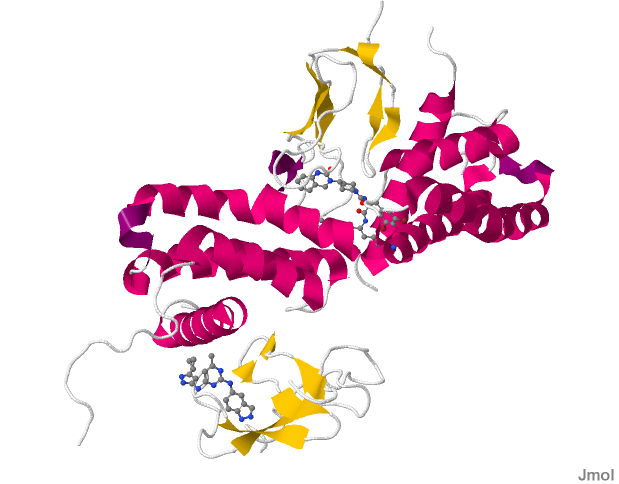
Available structures
PDBOrtholog search: PDBe RCSB
Identifiers
AliasesCALCRL, CGRPR, CRLR, calcitonin receptor like receptor, LMPHM8
External IDsOMIM: 114190; MGI: 1926944; HomoloGene: 21179; GeneCards: CALCRL; OMA:CALCRL - orthologs
Orthologs
SpeciesHumanMouse
Entrez
Ensembl
UniProt
RefSeq (mRNA)

NM_001271751
NM_005795
NM_001369434
NM_001369435

NM_018782

RefSeq (protein)

NP_001258680
NP_005786
NP_001356363
NP_001356364

NP_061252

Location (UCSC)Chr 2: 187.34 – 187.45 MbChr 2: 84.16 – 84.26 Mb
PubMed search[3][4]
Wikidata
View/Edit HumanView/Edit Mouse

Calcitonin receptor-like (CALCRL), also known as the calcitonin receptor-like receptor (CRLR), is a human protein; it is a receptor for calcitonin gene-related peptide.[5]

Function

[edit]

The protein encoded by the CALCRL gene is a G protein-coupled receptor related to the calcitonin receptor. CALCRL is linked to one of three single transmembrane domain receptor activity-modifying proteins (RAMPs) that are essential for functional activity.

The association of CALCRL with different RAMP proteins produces different receptors:[6][7]

These receptors are linked to the G protein Gs,[9] which activates adenylate cyclase and activation results in the generation of intracellular cyclic adenosine monophosphate (cAMP).

CGRP receptors are found throughout the body, suggesting that the protein may modulate a variety of physiological functions in all major systems (e.g., respiratory, endocrine, gastrointestinal, immune, and cardiovascular).[10]

Wounds

[edit]

In wounds, CGRP receptors found in nerve cells deactivate the immune system, to prevent collateral damage in case of a clean wound (common case). In very preliminary research, nerve blockers like e.g. lidocaine or botox have been demonstrated to block CGRP cascade, thereby allowing immune system involvement and control of pathogens, resulting in complete control and recovery.[11]

Structure

[edit]

CALCRL associated with RAMP1 produces the CGRP receptor which is a trans-membrane protein receptor that is made up of four chains. Two of the four chains contain unique sequences. It is a heterodimer protein composed of two polypeptide chains differing in composition of their amino acid residues. The sequence reveals multiple hydrophobic and hydrophilic regions throughout the four chains in the protein.[12]

The CGRP family of receptors including CALCRL can couple to G-protein Gαs, Gαi and Gαq subunits to transduce their signals. Furthermore binding of ligands to CALCRL can bias coupling to these G-protein.[13] Peptide agonist bind to the extracellular loops of CALCRL. This binding in turn causes TM5 (transmembrane helix 5) and TM6 to pivot around TM3 which in turn facilitates Gαs binding.[14]

Adrenomedullin receptor

[edit]

Expression

[edit]

The RNA expression charts show a high level in fetal lung.

Clinical significance

[edit]

References

[edit]

Further reading

[edit]
[edit]
Revisions and contributorsEdit on WikipediaRead on Wikipedia
from Grokipedia
The calcitonin receptor-like receptor (CLR), encoded by the CALCRL gene on human chromosome 2q32.1, is a class B G protein-coupled receptor (GPCR) that requires association with receptor activity-modifying proteins (RAMPs) to reach the cell surface and achieve ligand specificity. This receptor forms distinct complexes: with RAMP1, it functions as a CGRP receptor; with RAMP2 or RAMP3, it acts as an adrenomedullin (AM) receptor, mediating signaling through Gs proteins to increase intracellular cAMP levels. Discovered in 1998, CALCRL spans 15 exons over approximately 103 kb of genomic DNA and is expressed in tissues including the heart, lung, kidney, brain, and placenta. Structurally, CLR features a large extracellular N-terminal domain for binding, seven transmembrane helices, and intracellular loops that facilitate coupling, with RAMPs influencing and trafficking to the plasma membrane. Its primary s include (CGRP), adrenomedullin (AM), and intermedin (also known as AM2), which are involved in , , and metabolic . Upon binding, the receptor undergoes conformational changes that activate , leading to downstream effects such as relaxation and anti-inflammatory responses. Physiologically, CLR signaling contributes to cardiovascular , including regulation and , as well as roles in , bone , and transmission. Dysregulation of CALCRL has been implicated in conditions such as lymphatic malformation 8 (an autosomal recessive disorder characterized by and lymphatic due to mutations like Val205del) and certain cancers, where it promotes stemness and chemoresistance in . Additionally, CLR antagonists targeting CGRP signaling, such as monoclonal antibodies (e.g., ), are approved therapies for prevention and acute treatment (as of 2025), highlighting its therapeutic potential.

Gene

Genomic location and organization

The CALCRL gene is located on the long arm of chromosome 2 at the cytogenetic band 2q32.1 in humans, spanning genomic coordinates 187,341,946 to 187,448,506 on the reverse strand. This positioning places it within a region conserved across mammalian species, with orthologs identified in chimpanzee (Pan troglodytes), mouse (Mus musculus), and rat (Rattus norvegicus), underscoring its evolutionary preservation. The gene encompasses approximately 106.5 kb of genomic DNA and is organized into 15 exons separated by 14 introns, one of which exceeds 60 kb in length. Exons 1 through 3 primarily constitute the 5' untranslated region, while exons 4 to 15 encode the protein-coding sequence. Upstream of the coding region, the CALCRL promoter includes several regulatory elements that harbor binding sites for transcription factors such as Sp1, Pit-1, the glucocorticoid receptor, and hypoxia-inducible factor-1α (HIF-1α), which modulate transcriptional activity. Additionally, a distal enhancer at the 3' end of the gene contains binding motifs for heat shock factor 1 (HSF1). Notable genetic variants in non-coding regions include the (SNP) rs880890, located within the 3' enhancer, where the G reduces HSF1 binding affinity and thereby diminishes compared to the A . Other SNPs in the promoter and intronic regions have been associated with altered mRNA stability and expression levels, though their precise impacts vary by cellular context.

Nomenclature and variants

The CALCRL gene is the official HUGO-approved symbol for the calcitonin receptor like receptor, reflecting its structural similarity to the calcitonin receptor while highlighting its distinct functional properties as a . This nomenclature was established to distinguish it from related family members, such as CALCR, based on and phylogenetic analysis. Historically, the gene was first cloned in 1996 from a derived from human SK-N-MC cells and initially designated CGRPR for its presumed role as the (CGRP) type 1 receptor, given its high-affinity binding to CGRP in assays. Common historical aliases include CRLR (calcitonin receptor-like receptor) and CGRPR, which were used in early studies to emphasize its homology to the calcitonin receptor superfamily. The renaming to CALCRL in subsequent years stemmed from functional studies revealing that the receptor requires co-assembly with receptor activity-modifying proteins (RAMPs) to achieve ligand specificity—forming a CGRP receptor with RAMP1 or an adrenomedullin receptor with RAMP2/3—thus broadening its physiological scope beyond a singular CGRP-binding . Sequence variants in CALCRL are cataloged in public databases like dbSNP, encompassing single nucleotide polymorphisms (SNPs) that include missense mutations potentially altering the receptor's amino acid sequence. For instance, the missense variant rs698577 (c.22A>T; p.Asn8Tyr) in exon 1 has a minor allele frequency of approximately 0.001 in global populations, as reported in gnomAD, and is classified as likely benign based on predictive tools and population data. Another example is rs13391909 (p.Phe16Leu), a rare missense variant with a minor allele frequency below 0.0001, also deemed likely benign without strong evidence of pathogenicity. These variants are mapped to the gene's coding regions on chromosome 2q32.1, aiding in studies of genetic diversity, though most common SNPs in CALCRL are non-coding and occur at higher frequencies (e.g., minor allele frequency >0.01 for intronic variants like rs2349315).

Protein

Primary structure

The CALCRL protein is a 461-amino-acid polypeptide with a calculated molecular weight of 52,978 Da. This length and mass are consistent across human isoforms, reflecting the mature receptor translated from the CALCRL gene. As a member of the class B family of G protein-coupled receptors (GPCRs), CALCRL displays a canonical domain architecture comprising an extracellular N-terminal domain involved in ligand recognition, seven transmembrane helices that span the plasma membrane, three intracellular loops for signal transduction, three extracellular loops, and an intracellular C-terminal tail that modulates receptor trafficking and desensitization. The transmembrane helices are specifically positioned as follows: helix 1 (residues 140–164), helix 2 (176–198), helix 3 (210–238), helix 4 (253–273), helix 5 (290–314), helix 6 (330–351), and helix 7 (367–387). A signal peptide at the N-terminus (residues 1–22) directs the protein to the secretory pathway for membrane insertion. A prominent in CALCRL is the conserved DRY sequence (Asp-Arg-Tyr) at the intracellular terminus of transmembrane helix 3 (positions 211–213), which stabilizes the inactive receptor conformation and facilitates G-protein coupling upon activation. This motif, analogous to that in class A GPCRs, underscores the evolutionary conservation of activation mechanisms across GPCR families. Bioinformatic predictions indicate that CALCRL's secondary structure is predominantly alpha-helical within the transmembrane domains, accounting for approximately 30% of the protein's residues, with beta-turns and coils prevalent in the extracellular and intracellular loops. Hydrophobicity profiles, derived from hydropathy plots, highlight the nonpolar character of the transmembrane helices (average grand average of hydropathicity ~0.45), enabling stable embedding in the , while the N- and C-terminal regions exhibit hydrophilic properties conducive to aqueous interactions.

Receptor complex formation

The calcitonin receptor-like receptor (CALCRL), a class B G protein-coupled receptor, requires association with one of the three receptor activity-modifying proteins (RAMPs 1–3) to form functional receptor complexes. These single-transmembrane accessory proteins are essential for trafficking CALCRL from the to the plasma membrane and for conferring specificity to the resulting heterodimers. Without RAMPs, CALCRL remains retained intracellularly in an immature, core-glycosylated form incapable of binding ligands or signaling. The specific RAMP partner determines the pharmacological profile of the CALCRL complex. Co-assembly with RAMP1 yields the calcitonin gene-related peptide (CGRP) receptor, which exhibits high affinity for CGRP but not adrenomedullin (ADM). In contrast, pairing with RAMP2 forms the adrenomedullin receptor 1 (AM1), while association with RAMP3 generates the adrenomedullin receptor 2 (AM2); both AM1 and AM2 preferentially bind ADM, though AM2 displays somewhat lower affinity. These distinctions arise from interactions between the extracellular domains of RAMPs and CALCRL, which modulate the ligand-binding pocket without altering the core transmembrane architecture of CALCRL. The functional receptor complex consists of a 1:1 heterodimer comprising one CALCRL molecule and one RAMP molecule. Structural studies, including and of the extracellular domains, confirm this , revealing extensive contacts between RAMP's transmembrane and extracellular regions with CALCRL's helices 3–5 and N-terminal domain to stabilize the assembly. RAMPs act as molecular chaperones, promoting proper folding and of CALCRL during . Experimental evidence for these interactions derives primarily from co-expression studies in heterologous systems such as HEK293 cells and oocytes. In these assays, transient of CALCRL alone results in no detectable surface expression or binding, whereas co- with individual RAMPs enables plasma localization, as visualized by and confirmed by radioligand binding (e.g., ^{125}I-CGRP for RAMP1 complexes and ^{125}I-ADM for RAMP2/3 complexes). analyses further demonstrate RAMP-dependent maturation: RAMP1 co-expression yields fully glycosylated CALCRL (apparent molecular weight ~80 kDa, endo H-resistant), while RAMP2/3 associations produce partially or fully processed forms capable of high-affinity interactions, with cross-linking experiments verifying direct physical proximity in the heterodimer.

Function

Ligand interactions and signaling

The calcitonin receptor-like receptor (CALCRL), in complex with receptor activity-modifying proteins (RAMPs), exhibits high-affinity binding to adrenomedullin (ADM) and . Specifically, the CLR:RAMP1 complex, known as the CGRP receptor, binds CGRP with a of approximately 3 nM, while ADM binds with lower affinity in the range of 10-100 nM. In contrast, the CLR:RAMP2 (AM1 receptor) and CLR:RAMP3 (AM2 receptor) complexes preferentially bind ADM with Kd values around 1-5 nM, though CGRP can also interact at higher concentrations (10-50 nM). These affinities are modulated by the RAMP isoform, which alters the extracellular domain conformation to enhance selectivity. Upon binding, CALCRL primarily couples to the Gs protein, activating and leading to elevated intracellular cyclic AMP (cAMP) levels, which promotes downstream activation of (PKA) and CREB-mediated transcription. This Gs-mediated pathway is the dominant signaling route for both CGRP and ADM across CLR:RAMP complexes, with maximal cAMP accumulation observed at subnanomolar ligand concentrations. However, in specific cellular contexts or with non-cognate ligands, CALCRL can exhibit biased signaling, coupling to /11 to activate (), resulting in () production, intracellular calcium mobilization, and () activation. Coupling to /o has also been reported, particularly for ADM at the CGRP receptor or CGRP at AM receptors, leading to inhibition of and reduced cAMP. These alternative couplings contribute to signaling diversity, with / pathways comprising up to 20-30% of total responses in biased assays. Allosteric modulation of CALCRL signaling occurs through small molecules that bind at the CLR:RAMP interface, such as gepants (e.g., olcegepant for CLR:RAMP1), which competitively inhibit binding and reduce Gs activation without affecting receptor trafficking. Desensitization follows prolonged exposure, involving by G protein-coupled receptor kinases (GRKs, notably GRK5/6) and subsequent recruitment of β-arrestins (β-arrestin1 and β-arrestin2), which uncouple G proteins, promote internalization via clathrin-coated pits, and enable endosomal signaling. β-Arrestin recruitment is potent and agonist-specific, with pEC50 values around 7.5 for cognate ligands across complexes, and of β-arrestins abolishes internalization while preserving acute cAMP responses. This mechanism ensures signal termination and receptor recycling, with CLR:RAMP1 showing the highest β-arrestin affinity and trafficking efficiency compared to RAMP2/3 variants.

Physiological roles

CALCRL signaling, primarily through adrenomedullin (ADM) binding, mediates in endothelial cells by activating pathways that promote relaxation of vascular , thereby regulating basal and facilitating flow-induced responses. This process is essential for maintaining cardiovascular , as evidenced by studies showing that endothelium-specific CALCRL disruption leads to impaired and elevated . Similarly, (CGRP) activation of CALCRL contributes to potent vasodilatory effects in coronary and systemic vessels. In vascular development, CALCRL plays a critical role in and lymphangiogenesis, as demonstrated by the embryonic lethality observed in CALCRL mice, which exhibit , cardiovascular malformations, and profound edema due to defective vascular formation around embryonic day 12.5. These findings indicate that CALCRL-AM signaling is indispensable for proper embryonic vascular remodeling and integrity, with models further supporting its involvement in preventing vascular leakage and promoting endothelial proliferation. CALCRL contributes to wound healing by enhancing fibroblast proliferation, migration, and collagen deposition, key steps in granulation tissue formation and extracellular matrix remodeling. ADM stimulation of CALCRL in skin fibroblasts increases their proliferative activity and reduces , accelerating re-epithelialization and tissue repair in experimental models. Overexpression or topical application of ADM via CALCRL promotes synthesis and at wound sites, shortening the healing timeline in pressure ulcers and dermal injuries. CALCRL signaling also plays a role in bone metabolism, where CGRP binding to the CLR:RAMP1 complex promotes proliferation, differentiation, and inhibits activity, thereby supporting formation and homeostasis. Furthermore, activation of CGRP receptor signaling via CALCRL enhances osteogenic differentiation of stromal cells through the PKA/CREB pathway, promoting tendon-bone healing in injury models (as of 2024). Through CGRP binding, CALCRL exerts neuroprotective effects in the central and peripheral nervous systems, modulating transmission and providing against neuronal in pathways relevant to . CGRP-CALCRL signaling inhibits and in cortical and sensory neurons, enhancing neuronal survival during ischemic stress and reducing in trigeminal pain circuits. This modulation helps balance nociceptive signaling, preventing chronic sensitization while supporting repair mechanisms in migraine-associated neural networks.

Expression

Tissue distribution in health

The CALCRL gene demonstrates broad expression across human tissues in healthy individuals, with notably elevated levels in cardiovascular structures. RNA expression data from the GTEx consortium indicate high median transcripts per million (TPM) values in arterial and heart tissues (e.g., aorta ~400 TPM, heart left ventricle ~300 TPM, atrial appendage ~200 TPM), lung (~100 TPM), and kidney cortex (~100 TPM), reflecting prominent localization in endothelial cells. Protein-level analysis via the Human Protein Atlas further confirms cytoplasmic expression of CALCRL in these cardiovascular tissues, such as heart and lung, supporting its baseline distribution in vascular endothelium. Moderate CALCRL expression occurs in the , particularly in sensory neurons of the dorsal root ganglia, as shown by immunohistochemical staining, and in by RNA profiling. Similarly, tissues, including the cortex, exhibit intermediate levels of CALCRL mRNA and protein, per GTEx and Human Protein Atlas datasets. In developmental contexts, CALCRL expression is upregulated during embryogenesis, especially in emerging vascular and lymphatic structures, as demonstrated in mouse models where its absence leads to cardiovascular malformations. GTEx-derived quantitative RNA-seq data underscore these patterns, with median TPM values highest in arterial and heart tissues (aorta ~400 TPM, heart ~200-300 TPM), high in lung and kidney (~100 TPM), and moderate in neural tissues (tibial nerve ~75 TPM, brain ~10-50 TPM).

Expression in disease

Altered expression of CALCRL has been observed in various pathological conditions, particularly in neoplastic and vascular diseases, as evidenced by immunohistochemical (IHC) and transcriptomic analyses. In carcinomas, CALCRL exhibits upregulation, with 78.4% of cases (29 out of 37) showing positive staining via IHC using a , and a mean immunoreactivity score (IRS) of 5.22 (range 0–10.5) across subtypes including papillary, follicular, medullary, and anaplastic carcinomas. Similarly, in small-cell cancers, CALCRL is upregulated in 53.8% of cases (7 out of 13), with a mean IRS of 3.73 (range 0–12), highlighting its preferential expression in neuroendocrine-derived malignancies. Neuroendocrine tumors also demonstrate elevated CALCRL levels, particularly in pancreatic neuroendocrine neoplasms where 100% of cases (10 out of 10) are positive by IHC, yielding a mean IRS of 6.70 (range 3–10), whereas intestinal neuroendocrine neoplasms show positivity in 25% of cases (3 out of 12) with a lower mean IRS of 1.42 (range 0–6). In contrast, within (AML), CALCRL expression is generally elevated and positively correlates with ETS2 ( R=0.52, P=5.9×10^{-14}), where high CALCRL levels are associated with poor ( 1.678, P=0.028), though targeted downregulation via knockdown reduces and enhances sensitivity in certain subtypes. In neurological disorders such as , CLR signaling in the trigeminal system contributes to pain signaling pathways, as demonstrated in chronic migraine models where receptor-mediated CGRP effects exacerbate . Vascular pathologies like similarly feature heightened CALCRL expression in endothelial cells of affected , as revealed by single-cell sequencing of human atherosclerotic lesions, where it modulates responses and pathways. Evidence from tumor microenvironments further supports these patterns, with IHC confirming CALCRL localization in 10–20% of intratumoral dendritic cells in , correlating with immunosuppressive interactions. Single-cell sequencing of over 228,000 cells from tumors identifies strong CALCA-CALCRL ligand-receptor pairs between tumor cells and dendritic cells, indicating upregulated expression that fosters a dysfunctional immune milieu in neuroendocrine contexts. Recent studies as of 2025 have identified additional contexts, including CALCRL upregulation in non-small cell lung cancer (NSCLC) where it promotes progression and is targeted by miR-101-3p,[] association with resistance in AML,[] and increased expression in dorsal root ganglia in models of paclitaxel-induced .

Clinical significance

Role in cardiovascular and neurological disorders

CALCRL, in complex with receptor activity-modifying proteins (RAMPs), serves as the primary receptor for adrenomedullin (ADM), mediating that counteracts pathological in cardiovascular disorders. Calcrl heterozygous mice exhibit elevated basal , indicating defective ADM signaling. In models of , such as deoxycorticosterone acetate (DOCA)-salt-induced , CGRP/calcitonin mice exhibit heightened vulnerability to hypertension-induced cardiac and renal damage. Similarly, a (SNP) in the CALCRL (rs696574) is associated with increased risk of in women, potentially through altered receptor function that impairs vasodilatory responses. In , ADM levels rise as a compensatory mechanism, but disruptions in CALCRL signaling, as seen in Ramp3 models, worsen cardiac and systolic dysfunction by diminishing endothelial protection and vascular integrity. A risk variant (rs880890) in a CALCRL enhancer region reduces under , leading to downregulated vasodilatory pathways like eNOS and , which may contribute to hypertensive vascular remodeling and susceptibility. In neurological disorders, the CALCRL/RAMP1 complex forms the canonical (CGRP) receptor, playing a central role in by facilitating trigeminovascular activation and . Antagonism of this receptor with monoclonal antibodies like , which binds directly to CALCRL to block CGRP signaling, significantly reduces monthly days (by 3.2–3.7 compared to 1.8 with ), establishing CALCRL as a validated therapeutic target. Animal models of cerebral ischemia reveal that CALCRL blockade worsens outcomes; for instance, administration of CGRP receptor antagonists such as olcegepant increases infarct volumes by up to twofold and impairs collateral blood flow in mice subjected to occlusion, highlighting the receptor's protective role in reperfusion. This blockade also promotes , as evidenced in female models where CALCRL dysregulation enhances microglial activation and ERK/CREB signaling, potentially extending to stroke-related inflammatory cascades. Genetic variants in CALCRL are implicated in pregnancy-related cardiovascular complications, including . A short polymorphism (CACA box ≥21 repeats) in the CALCRL promoter near the hypoxia response element correlates with in severe cases ( 0.038), suggesting altered receptor expression under hypoxic conditions contributes to vascular dysfunction. For Raynaud's phenomenon, while direct genetic links are limited, pharmacological blockade of CALCRL with CGRP receptor antagonists like is associated with exacerbated symptoms in real-world data, with 56 reports of Raynaud's among 99 CGRP inhibitor cases (information component 3.3), indicating disrupted CALCRL-mediated peripheral underlies the vasospastic episodes.

Implications in cancer and therapeutics

CALCRL, in complex with receptor activity-modifying proteins (RAMPs), serves as the receptor for adrenomedullin (AM) and (CGRP), both of which exhibit pro-angiogenic effects that facilitate tumor growth and vascularization. AM signaling through CALCRL promotes endothelial and tube formation, enhancing tumor-associated across various malignancies, while blockade of this pathway has been shown to suppress neovascularization and tumor progression in preclinical models. Similarly, CGRP-mediated activation of CALCRL contributes to lymphangiogenesis and immune modulation within the , further supporting oncogenic processes. Overexpression of CALCRL has been linked to enhanced metastatic potential in specific cancers, including and malignancies. In non-small cell (NSCLC), elevated CALCRL levels drive tumor progression and immune-related mechanisms that facilitate , as evidenced by studies showing that suppression of CALCRL via microRNAs reduces invasive capabilities. In cancers, particularly medullary , CALCRL overexpression correlates with advanced disease stages and promotes through AM2 signaling, which accelerates tumor growth under nutrient excess conditions and fosters an immunosuppressive milieu conducive to dissemination. These findings underscore CALCRL's role in oncogenesis, where its upregulation, often observed in tumor tissues compared to normal counterparts, amplifies pro-angiogenic and pro-metastatic signaling. Bioinformatics analyses have highlighted CALCRL's prognostic significance in hematological and neuroendocrine malignancies. In (AML), high CALCRL expression is associated with chemotherapy resistance, stem cell-like properties, and poorer overall survival, positioning it as a potential for risk stratification in AML/ETO-positive subtypes. For neuroendocrine tumors, such as large-cell neuroendocrine carcinomas of the , CALCRL overexpression correlates with higher TNM staging and metastatic burden, indicating its value in predicting adverse outcomes from large-scale genomic datasets. Therapeutically, CALCRL-targeted interventions hold promise for modulating pathological and related disorders. CGRP pathway antagonists, including the CALCRL erenumab and CGRP ligand antagonists like fremanezumab, were approved starting in 2018 for . In , AM-CALCRL inhibitors are under exploration as anti-angiogenic agents to curb tumor growth and , with preclinical data supporting their efficacy in reducing vascularization without broad toxicity. Conversely, emerging AM receptor agonists, including AM itself, are in preclinical and early clinical stages as of 2025 for promoting tissue repair; for instance, AM administration accelerates in animal models by enhancing and reducing , while phase I/II trials have confirmed its safety in ischemic conditions like . The AMFIS phase 2 trial (2024) demonstrated that intravenous AM was safe and associated with improved neurological outcomes in acute ischemic patients treated within 24 hours.

References

Add your contribution
Related Hubs
User Avatar
No comments yet.