
Recent from talks
Cao Hong
Knowledge base stats:
Talk channels stats:
Members stats:
Cao Hong
Cao Hong (died 232), courtesy name Zilian, was a Chinese military general of the state of Cao Wei during the Three Kingdoms period of China. He started his career in the late Eastern Han dynasty under the warlord Cao Cao, who was his older second cousin.
Cao Hong's uncle, Cao Ding (曹鼎), served as the Prefect of the Masters of Writing (尚書令) in the Han central government. Because of this connection, Cao Hong gained an official appointment as the Chief (長) of Qichun County (蘄春縣; northwest of present-day Qichun County, Hubei).
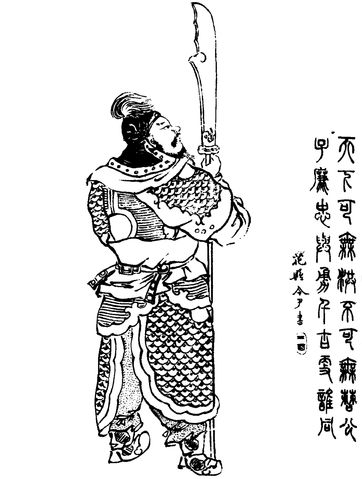
Around 190, the warlord Cao Cao, an older second cousin of Cao Hong, raised an army to participate in the campaign against the tyrannical warlord Dong Zhuo, who controlled the Han central government. Cao Hong joined Cao Cao around this time and served as an officer in his army. Cao Cao engaged Dong Zhuo's general Xu Rong at the Battle of Xingyang, but was defeated and forced to retreat. While fleeing from the enemy, Cao Cao lost his horse so Cao Hong got off his own horse and offered it to him. When Cao Cao declined, Cao Hong said, "The world can do without (Cao) Hong, but it can't do without you." He then escorted Cao Cao on foot to the bank of the Bian River. As the river was too deep for them to wade across, Cao Hong swam around in search of a boat and finally found one. They crossed the river and returned to Cao Cao's hometown in Qiao County (譙縣; present-day Bozhou, Anhui) safely.
Chen Wen (陳溫), the Inspector of Yang Province, was on friendly terms with Cao Hong. At the time, Cao Hong had about 1,000 men from his own militia. He asked for troops from Chen Wen, who provided him with 2,000 of his best soldiers. Cao Hong then went to Danyang Commandery (丹楊郡) and managed to recruit about another 1,000 men with help from the commandery's Administrator, Zhou Xin. He brought along his 4,000 troops to meet Cao Cao at Longkang (龍亢; in present-day Huaiyuan County, Anhui) and became one of Cao Cao's most loyal followers since then.
In 194, when Cao Cao was away on a campaign in Xu Province, his subordinates Zhang Miao and Chen Gong started a rebellion in his base, Yan Province, and defected to a rival warlord, Lü Bu. Around the time, a famine had broken out in Yan Province. Cao Hong led a vanguard force to retake Dongping (東平) and Fan (范) counties from Lü Bu and stockpile grain to feed the troops. After that, Cao Cao attacked Lü Bu at Puyang County (濮陽縣; west of present-day Puyang County, Henan) and defeated him. Cao Cao subsequently attacked and retook Dong'e (東阿), Jiyin (濟陰), Shanyang (山陽), Zhongmu (中牟), Yangwu (陽武), Jing (京), Mi (密) and other counties from Lü Bu. For his contributions in the Battle of Yan Province against Lü Bu, Cao Hong was first commissioned as Soaring Eagle Colonel (鷹揚校尉) and later promoted to General of the Household Who Spreads Martial Might (揚武中郎將).
In February 196, acting on the advice of Xun Yu and Cheng Yu, Cao Cao sent Cao Hong west to fetch Emperor Xian but was blocked by Dong Cheng and Yuan Shu's subordinate Chang Nu (萇奴). In August 196, Cao Cao led his forces into Luoyang and received Emperor Xian. Two months later, he relocated the emperor to his own base in Xu (許; present-day Xuchang, Henan), where the new imperial capital was established. Emperor Xian appointed Cao Hong as a Counsellor Remonstrant (諫議大夫).
When Man Chong was serving as the Prefect (令) of Xu County (許縣; present-day Xuchang, Henan), he arrested some of Cao Hong's retainers who broke the law. When Cao Hong heard about it, he wrote to Man Chong, asking for their release, but Man Chong refused. Cao Hong then brought up the issue to Cao Cao, who summoned the official who was overall in charge to come and see him. Man Chong thought that Cao Cao wanted to pardon Cao Hong's retainers, so he immediately ordered their execution. Cao Cao was pleased and he remarked, "Isn't this what an officeholder should do?"
In 197, Cao Cao lost the Battle of Wancheng against a rival warlord Zhang Xiu and retreated to Wuyin County (舞陰縣; southeast of present-day Sheqi County, Henan). After Cao Cao left Wuyin County and returned to Xu (許; present-day Xuchang, Henan), the officials in Nanyang (南陽), Zhangling (章陵) and other counties who had surrendered to him earlier rebelled and defected to Zhang Xiu's side. Cao Cao sent Cao Hong to lead troops to recapture those counties but Cao Hong failed and was forced to retreat to a garrison at Ye County (葉縣; southwest of present-day Ye County, Henan). The garrison came under multiple attacks by Zhang Xiu and his ally Liu Biao.
Hub AI
Cao Hong AI simulator
(@Cao Hong_simulator)
Cao Hong
Cao Hong (died 232), courtesy name Zilian, was a Chinese military general of the state of Cao Wei during the Three Kingdoms period of China. He started his career in the late Eastern Han dynasty under the warlord Cao Cao, who was his older second cousin.
Cao Hong's uncle, Cao Ding (曹鼎), served as the Prefect of the Masters of Writing (尚書令) in the Han central government. Because of this connection, Cao Hong gained an official appointment as the Chief (長) of Qichun County (蘄春縣; northwest of present-day Qichun County, Hubei).
Around 190, the warlord Cao Cao, an older second cousin of Cao Hong, raised an army to participate in the campaign against the tyrannical warlord Dong Zhuo, who controlled the Han central government. Cao Hong joined Cao Cao around this time and served as an officer in his army. Cao Cao engaged Dong Zhuo's general Xu Rong at the Battle of Xingyang, but was defeated and forced to retreat. While fleeing from the enemy, Cao Cao lost his horse so Cao Hong got off his own horse and offered it to him. When Cao Cao declined, Cao Hong said, "The world can do without (Cao) Hong, but it can't do without you." He then escorted Cao Cao on foot to the bank of the Bian River. As the river was too deep for them to wade across, Cao Hong swam around in search of a boat and finally found one. They crossed the river and returned to Cao Cao's hometown in Qiao County (譙縣; present-day Bozhou, Anhui) safely.
Chen Wen (陳溫), the Inspector of Yang Province, was on friendly terms with Cao Hong. At the time, Cao Hong had about 1,000 men from his own militia. He asked for troops from Chen Wen, who provided him with 2,000 of his best soldiers. Cao Hong then went to Danyang Commandery (丹楊郡) and managed to recruit about another 1,000 men with help from the commandery's Administrator, Zhou Xin. He brought along his 4,000 troops to meet Cao Cao at Longkang (龍亢; in present-day Huaiyuan County, Anhui) and became one of Cao Cao's most loyal followers since then.
In 194, when Cao Cao was away on a campaign in Xu Province, his subordinates Zhang Miao and Chen Gong started a rebellion in his base, Yan Province, and defected to a rival warlord, Lü Bu. Around the time, a famine had broken out in Yan Province. Cao Hong led a vanguard force to retake Dongping (東平) and Fan (范) counties from Lü Bu and stockpile grain to feed the troops. After that, Cao Cao attacked Lü Bu at Puyang County (濮陽縣; west of present-day Puyang County, Henan) and defeated him. Cao Cao subsequently attacked and retook Dong'e (東阿), Jiyin (濟陰), Shanyang (山陽), Zhongmu (中牟), Yangwu (陽武), Jing (京), Mi (密) and other counties from Lü Bu. For his contributions in the Battle of Yan Province against Lü Bu, Cao Hong was first commissioned as Soaring Eagle Colonel (鷹揚校尉) and later promoted to General of the Household Who Spreads Martial Might (揚武中郎將).
In February 196, acting on the advice of Xun Yu and Cheng Yu, Cao Cao sent Cao Hong west to fetch Emperor Xian but was blocked by Dong Cheng and Yuan Shu's subordinate Chang Nu (萇奴). In August 196, Cao Cao led his forces into Luoyang and received Emperor Xian. Two months later, he relocated the emperor to his own base in Xu (許; present-day Xuchang, Henan), where the new imperial capital was established. Emperor Xian appointed Cao Hong as a Counsellor Remonstrant (諫議大夫).
When Man Chong was serving as the Prefect (令) of Xu County (許縣; present-day Xuchang, Henan), he arrested some of Cao Hong's retainers who broke the law. When Cao Hong heard about it, he wrote to Man Chong, asking for their release, but Man Chong refused. Cao Hong then brought up the issue to Cao Cao, who summoned the official who was overall in charge to come and see him. Man Chong thought that Cao Cao wanted to pardon Cao Hong's retainers, so he immediately ordered their execution. Cao Cao was pleased and he remarked, "Isn't this what an officeholder should do?"
In 197, Cao Cao lost the Battle of Wancheng against a rival warlord Zhang Xiu and retreated to Wuyin County (舞陰縣; southeast of present-day Sheqi County, Henan). After Cao Cao left Wuyin County and returned to Xu (許; present-day Xuchang, Henan), the officials in Nanyang (南陽), Zhangling (章陵) and other counties who had surrendered to him earlier rebelled and defected to Zhang Xiu's side. Cao Cao sent Cao Hong to lead troops to recapture those counties but Cao Hong failed and was forced to retreat to a garrison at Ye County (葉縣; southwest of present-day Ye County, Henan). The garrison came under multiple attacks by Zhang Xiu and his ally Liu Biao.
Recent media