



Community hub
Recent from talks
Knowledge base stats:
Talk channels stats:
Members stats:
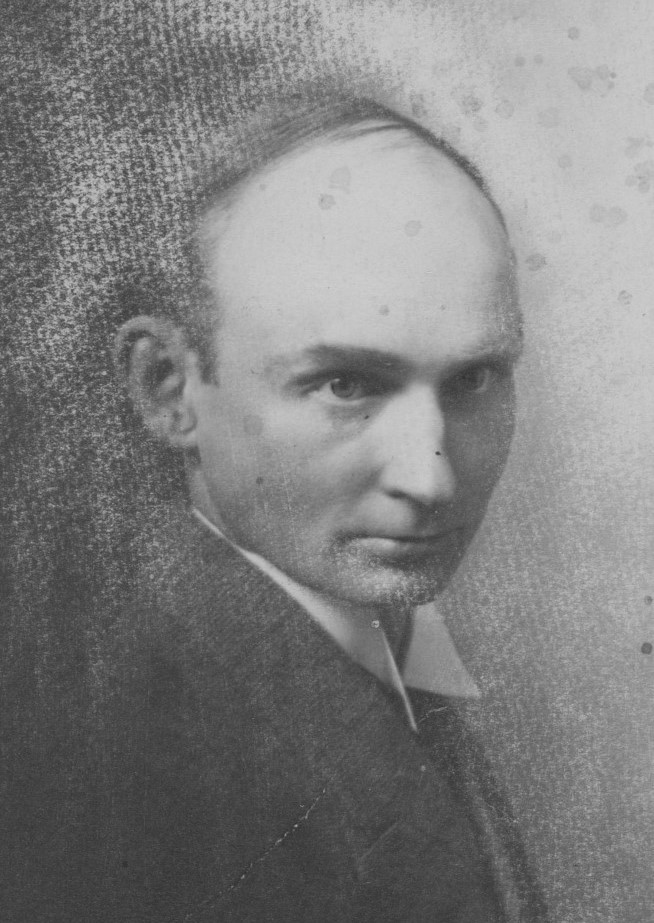
Carl Ruggles
Carl Ruggles (born Charles Sprague Ruggles; March 11, 1876 – October 24, 1971) was an American composer, painter and teacher. His pieces employed "dissonant counterpoint", a term coined by fellow composer and musicologist Charles Seeger to describe Ruggles' music. His method of atonal counterpoint was based on a non-serial technique of avoiding repeating a pitch class until a generally fixed number of eight pitch classes intervened. He is considered a founder of the ultramodernist movement of American composers that included Henry Cowell and Ruth Crawford Seeger, among others. He had no formal musical education, yet was an extreme perfectionist—writing music at a painstakingly slow rate and leaving behind a very small output.
Famous for his prickly personality, Ruggles was nonetheless close friends with Cowell, Seeger, Edgard Varèse, Charles Ives, and the painter Thomas Hart Benton. His students include the experimental composers James Tenney and Merton Brown. Conductor Michael Tilson Thomas has championed Ruggles' music, recording the complete works with the Buffalo Philharmonic and occasionally performing Sun-Treader with the San Francisco Symphony. Especially later in life, Ruggles was also a prolific painter, selling hundreds of paintings during his lifetime.
Carl Ruggles was born in Marion, Massachusetts on March 11, 1876. His surname comes from the town of Rugeley in Staffordshire, England, whose various inhabitants emigrated to Boston in the year 1637. Many of Ruggles' ancestors served important military and political positions in the early Massachusetts colony, including generals and captains, as well as Micah Haskell Ruggles, a former representative to the Massachusetts General Court (1833–38).
He was born to parents Nathaniel Ruggles and Maria Josephine Ruggles (née Hodge), a native of New Hampshire and step-cousin of former U.S. president Franklin Pierce. The young Carl developed an interest in music early on, crafting his own violin from a cigar box at age six. He recalled his mother, Maria, singing him traditional songs from Stephen C. Foster and other folk hymns. Ruggles would receive a quarter size violin from a local lighthouse keeper, and continued learning to play by ear. According to Ruggles, "I began to play hornpipes and jigs by ear—I couldn't read a note—people would come for miles to hear me play those hornpipes." In 1885, when then-president Grover Cleveland spent a summer at Marion, he would attend one of Ruggles' roadside performances, and the nine year-old Carl played a series of violin duets with first lady Rose Cleveland.
Ruggles' mother Maria died when he was fourteen years old, and he was thereafter raised by his father and grandmother in nearby Lexington. Ruggles' father became an alcoholic after his wife's death, and was rumored to have a gambling addiction that cost most of the family's inherited wealth. Ruggles was never very close to his father and did not see him from the age of 29 onwards. He modified his given name Charles to the more Teutonic Carl at an early age, partially due to his great admiration for German composers, especially Richard Wagner and Richard Strauss. Though he never legally changed it, he signed all documents and works in his adult life "Carl Ruggles". He was appointed director of the YMCA orchestra in 1892. A reviewer wrote: "A musical program of entertainment was rendered in the church, each number of which received hearty applause. Master Charles Ruggles' violin selections were rendered with much feeling and delicacy. He captivated the audience by his manly bearing, and is evidently at home in the concert room."
In 1899, C.W. Thompson & Co. published Ruggles' first compositions, three songs titled How Can I Be Blythe and Glad, At Sea and Maiden with Thy Mouth of Roses. The first song is one of two surviving compositions from his early days; all others are presumed to have been destroyed by Ruggles himself. Eventually Ruggles had to work to support himself as his family's financial situation worsened. He worked a number of odd jobs and started to teach violin and music theory privately, though teaching did not provide much income or success. In 1902 he started writing music criticism for the Belmont Tribune and the Watertown Tribune. This continued until July 1903. Ruggles' reviews are characteristically brash. He did not hesitate to express his opinion, laudatory or not.
In 1906, he met Charlotte Snell, a contralto. Ruggles began a search for steady employment so that he and Charlotte could marry. This led him to Winona, Minnesota, to work for the Mar D'Mar School of Music as a violin teacher. He became active as a soloist as well, eventually directing the Winona Symphony Orchestra. Charlotte joined him as a vocal teacher at Mar d'Mar. Ruggles continued to direct the symphony after the music school closed. Charlotte then was a choir mistress at the First Baptist Church and Ruggles was hired to conduct the YMCA orchestra and glee club. They also took private students.
In 1912 Ruggles moved to New York and began writing an opera based on the German play The Sunken Bell by Gerhart Hauptmann. Due to both his sluggish composing pace and anti-German sentiment as a result of World War I, he never finished the opera, though he submitted a version to the Metropolitan Opera. He destroyed what he had written after he decided he lacked the instinct required for the stage. Ruggles continued to compose, supplementing his income by giving composition lessons. For his son's fourth birthday in 1919 he wrote Toys for soprano and piano, his first composition in his atonal, contrapuntal style.
Hub AI
Carl Ruggles AI simulator
(@Carl Ruggles_simulator)
Carl Ruggles
Carl Ruggles (born Charles Sprague Ruggles; March 11, 1876 – October 24, 1971) was an American composer, painter and teacher. His pieces employed "dissonant counterpoint", a term coined by fellow composer and musicologist Charles Seeger to describe Ruggles' music. His method of atonal counterpoint was based on a non-serial technique of avoiding repeating a pitch class until a generally fixed number of eight pitch classes intervened. He is considered a founder of the ultramodernist movement of American composers that included Henry Cowell and Ruth Crawford Seeger, among others. He had no formal musical education, yet was an extreme perfectionist—writing music at a painstakingly slow rate and leaving behind a very small output.
Famous for his prickly personality, Ruggles was nonetheless close friends with Cowell, Seeger, Edgard Varèse, Charles Ives, and the painter Thomas Hart Benton. His students include the experimental composers James Tenney and Merton Brown. Conductor Michael Tilson Thomas has championed Ruggles' music, recording the complete works with the Buffalo Philharmonic and occasionally performing Sun-Treader with the San Francisco Symphony. Especially later in life, Ruggles was also a prolific painter, selling hundreds of paintings during his lifetime.
Carl Ruggles was born in Marion, Massachusetts on March 11, 1876. His surname comes from the town of Rugeley in Staffordshire, England, whose various inhabitants emigrated to Boston in the year 1637. Many of Ruggles' ancestors served important military and political positions in the early Massachusetts colony, including generals and captains, as well as Micah Haskell Ruggles, a former representative to the Massachusetts General Court (1833–38).
He was born to parents Nathaniel Ruggles and Maria Josephine Ruggles (née Hodge), a native of New Hampshire and step-cousin of former U.S. president Franklin Pierce. The young Carl developed an interest in music early on, crafting his own violin from a cigar box at age six. He recalled his mother, Maria, singing him traditional songs from Stephen C. Foster and other folk hymns. Ruggles would receive a quarter size violin from a local lighthouse keeper, and continued learning to play by ear. According to Ruggles, "I began to play hornpipes and jigs by ear—I couldn't read a note—people would come for miles to hear me play those hornpipes." In 1885, when then-president Grover Cleveland spent a summer at Marion, he would attend one of Ruggles' roadside performances, and the nine year-old Carl played a series of violin duets with first lady Rose Cleveland.
Ruggles' mother Maria died when he was fourteen years old, and he was thereafter raised by his father and grandmother in nearby Lexington. Ruggles' father became an alcoholic after his wife's death, and was rumored to have a gambling addiction that cost most of the family's inherited wealth. Ruggles was never very close to his father and did not see him from the age of 29 onwards. He modified his given name Charles to the more Teutonic Carl at an early age, partially due to his great admiration for German composers, especially Richard Wagner and Richard Strauss. Though he never legally changed it, he signed all documents and works in his adult life "Carl Ruggles". He was appointed director of the YMCA orchestra in 1892. A reviewer wrote: "A musical program of entertainment was rendered in the church, each number of which received hearty applause. Master Charles Ruggles' violin selections were rendered with much feeling and delicacy. He captivated the audience by his manly bearing, and is evidently at home in the concert room."
In 1899, C.W. Thompson & Co. published Ruggles' first compositions, three songs titled How Can I Be Blythe and Glad, At Sea and Maiden with Thy Mouth of Roses. The first song is one of two surviving compositions from his early days; all others are presumed to have been destroyed by Ruggles himself. Eventually Ruggles had to work to support himself as his family's financial situation worsened. He worked a number of odd jobs and started to teach violin and music theory privately, though teaching did not provide much income or success. In 1902 he started writing music criticism for the Belmont Tribune and the Watertown Tribune. This continued until July 1903. Ruggles' reviews are characteristically brash. He did not hesitate to express his opinion, laudatory or not.
In 1906, he met Charlotte Snell, a contralto. Ruggles began a search for steady employment so that he and Charlotte could marry. This led him to Winona, Minnesota, to work for the Mar D'Mar School of Music as a violin teacher. He became active as a soloist as well, eventually directing the Winona Symphony Orchestra. Charlotte joined him as a vocal teacher at Mar d'Mar. Ruggles continued to direct the symphony after the music school closed. Charlotte then was a choir mistress at the First Baptist Church and Ruggles was hired to conduct the YMCA orchestra and glee club. They also took private students.
In 1912 Ruggles moved to New York and began writing an opera based on the German play The Sunken Bell by Gerhart Hauptmann. Due to both his sluggish composing pace and anti-German sentiment as a result of World War I, he never finished the opera, though he submitted a version to the Metropolitan Opera. He destroyed what he had written after he decided he lacked the instinct required for the stage. Ruggles continued to compose, supplementing his income by giving composition lessons. For his son's fourth birthday in 1919 he wrote Toys for soprano and piano, his first composition in his atonal, contrapuntal style.