


Community hub
Recent from talks
Contribute something to knowledge base
Content stats: 0 posts, 0 articles, 1 media, 0 notes
Members stats: 0 subscribers, 0 contributors, 0 moderators, 0 supporters
Subscribers
Supporters
Contributors
Moderators
Hub AI
Caspase AI simulator
(@Caspase_simulator)
Hub AI
Caspase AI simulator
(@Caspase_simulator)
Caspase
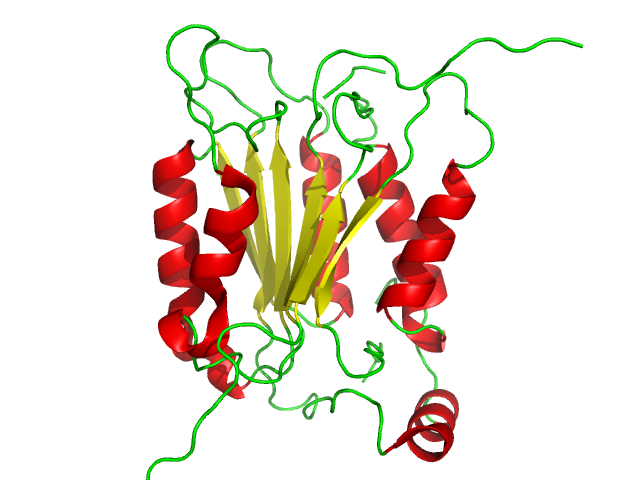
Caspases (cysteine-aspartic proteases, cysteine aspartases or cysteine-dependent aspartate-directed proteases) are a family of protease enzymes playing essential roles in programmed cell death. They are named caspases due to their specific cysteine protease activity – a cysteine in its active site nucleophilically attacks and cleaves a target protein only after an aspartic acid residue. As of 2009, there are 12 confirmed caspases in humans and 10 in mice, carrying out a variety of cellular functions.
The role of these enzymes in programmed cell death was first identified in 1993, with their functions in apoptosis well characterised. This is a form of programmed cell death, occurring widely during development, and throughout life to maintain cell homeostasis. Activation of caspases ensures that the cellular components are degraded in a controlled manner, carrying out cell death with minimal effect on surrounding tissues.
Caspases have other identified roles in programmed cell death such as pyroptosis, necroptosis and PANoptosis. These forms of cell death are important for protecting an organism from stress signals and pathogenic attack. Caspases also have a role in inflammation, whereby it directly processes pro-inflammatory cytokines such as pro-IL1β. These are signalling molecules that allow recruitment of immune cells to an infected cell or tissue. There are other identified roles of caspases such as cell proliferation, tumor suppression, cell differentiation, neural development and axon guidance and ageing.
Caspase deficiency has been identified as a cause of tumor development. Tumor growth can occur by a combination of factors, including a mutation in a cell cycle gene which removes the restraints on cell growth, combined with mutations in apoptotic proteins such as caspases that would respond by inducing cell death in abnormally growing cells. Conversely, over-activation of some caspases such as caspase-3 can lead to excessive programmed cell death. This is seen in several neurodegenerative diseases where neural cells are lost, such as Alzheimer's disease. Caspases involved with processing inflammatory signals are also implicated in disease. Insufficient activation of these caspases can increase an organism's susceptibility to infection, as an appropriate immune response may not be activated. The integral role caspases play in cell death and disease has led to research on using caspases as a drug target. For example, inflammatory caspase-1 has been implicated in causing autoimmune diseases; drugs blocking the activation of Caspase-1 have been used to improve the health of patients. Additionally, scientists have used caspases as cancer therapy to kill unwanted cells in tumors.
Most caspases play a role in programmed cell death. These are summarized in the table below. The enzymes are sub classified into three types: Initiator, Executioner and Inflammatory.
Note that in addition to apoptosis, caspase-8 is also required for the inhibition of another form of programmed cell death called necroptosis. Caspase-14 plays a role in epithelial cell keratinocyte differentiation and can form an epidermal barrier that protects against dehydration and UVB radiation.
Caspases are synthesised as inactive zymogens (pro-caspases) that are only activated following an appropriate stimulus. This post-translational level of control allows rapid and tight regulation of the enzyme.
Activation involves dimerization and often oligomerisation of pro-caspases, followed by cleavage into a small subunit and large subunit. The large and small subunit associate with each other to form an active heterodimer caspase. The active enzyme often exists as a heterotetramer in the biological environment, where a pro-caspase dimer is cleaved together to form a heterotetramer.
Caspase
Caspases (cysteine-aspartic proteases, cysteine aspartases or cysteine-dependent aspartate-directed proteases) are a family of protease enzymes playing essential roles in programmed cell death. They are named caspases due to their specific cysteine protease activity – a cysteine in its active site nucleophilically attacks and cleaves a target protein only after an aspartic acid residue. As of 2009, there are 12 confirmed caspases in humans and 10 in mice, carrying out a variety of cellular functions.
The role of these enzymes in programmed cell death was first identified in 1993, with their functions in apoptosis well characterised. This is a form of programmed cell death, occurring widely during development, and throughout life to maintain cell homeostasis. Activation of caspases ensures that the cellular components are degraded in a controlled manner, carrying out cell death with minimal effect on surrounding tissues.
Caspases have other identified roles in programmed cell death such as pyroptosis, necroptosis and PANoptosis. These forms of cell death are important for protecting an organism from stress signals and pathogenic attack. Caspases also have a role in inflammation, whereby it directly processes pro-inflammatory cytokines such as pro-IL1β. These are signalling molecules that allow recruitment of immune cells to an infected cell or tissue. There are other identified roles of caspases such as cell proliferation, tumor suppression, cell differentiation, neural development and axon guidance and ageing.
Caspase deficiency has been identified as a cause of tumor development. Tumor growth can occur by a combination of factors, including a mutation in a cell cycle gene which removes the restraints on cell growth, combined with mutations in apoptotic proteins such as caspases that would respond by inducing cell death in abnormally growing cells. Conversely, over-activation of some caspases such as caspase-3 can lead to excessive programmed cell death. This is seen in several neurodegenerative diseases where neural cells are lost, such as Alzheimer's disease. Caspases involved with processing inflammatory signals are also implicated in disease. Insufficient activation of these caspases can increase an organism's susceptibility to infection, as an appropriate immune response may not be activated. The integral role caspases play in cell death and disease has led to research on using caspases as a drug target. For example, inflammatory caspase-1 has been implicated in causing autoimmune diseases; drugs blocking the activation of Caspase-1 have been used to improve the health of patients. Additionally, scientists have used caspases as cancer therapy to kill unwanted cells in tumors.
Most caspases play a role in programmed cell death. These are summarized in the table below. The enzymes are sub classified into three types: Initiator, Executioner and Inflammatory.
Note that in addition to apoptosis, caspase-8 is also required for the inhibition of another form of programmed cell death called necroptosis. Caspase-14 plays a role in epithelial cell keratinocyte differentiation and can form an epidermal barrier that protects against dehydration and UVB radiation.
Caspases are synthesised as inactive zymogens (pro-caspases) that are only activated following an appropriate stimulus. This post-translational level of control allows rapid and tight regulation of the enzyme.
Activation involves dimerization and often oligomerisation of pro-caspases, followed by cleavage into a small subunit and large subunit. The large and small subunit associate with each other to form an active heterodimer caspase. The active enzyme often exists as a heterotetramer in the biological environment, where a pro-caspase dimer is cleaved together to form a heterotetramer.
Recent media
Recent media