



Community hub
Recent from talks
Contribute something
Nothing was collected or created yet.
Central Department Store
View on WikipediaCentral Department Store (Thai: สรรพสินค้าเซ็นทรัล; Chinese: 尚泰; Pinyin: Shàngtài) is a Thai department store chain, owned by Central Group. It has branches in Thailand and Indonesia, and is also a Royal Warrant holder of the Thai Royal Family.
Key Information


History
[edit]In 1927, 22-year-old Tiang Chirathivat, an immigrant from mainland China, started a store in Bangkok named "Keng Seng Lee" or "baskets for sale", which was the start of an emporium.[1]
Later that year, the store moved to Charoen Krung Road, in Bangkok's Si Phraya District. The store sold a large variety of local and international newspapers and magazines and carried the name "Central Trading Store". This was the first chapter of Central Department Stores' history.[1]
In the 1950s, the company grew with more and more stores selling different items. It was one few stores in Bangkok that had the courage to order imported goods for sale and was the first to set up merchandising displays.[2]
In 1973, the Chidlom store opened under the new "one stop shopping" concept. Here, customers could come to Central and buy everything they needed under one roof.[3]
In 1981, the Central Lad Ya Branch opened its doors and was the largest of its kind then.[4] Later in 1983 Central Ladprao opened its doors and was the largest shopping mall in Thailand at that time.[5]
On 20 December 2005, King Bhumibol Adulyadej conferred on the company a Royal Warrant for its services, meaning they could display the royal Garuda emblem.[6]
By 2010 Central operated 15 stores in Thailand and planned to open more.[7]
In 2014, Central begin to expand overseas by establishing its operation in Indonesia. Central opened its first department store in the East wing of Grand Indonesia shopping mall in Central Jakarta, replacing the departed British department store chain Harvey Nichols.[8] Central also briefly operate a short lived second department store in Neo Soho Mall in West Jakarta between 2016 and 2019 that was shut down due to low sales.[9]
In 2019, Central announced that it plans to spend at least 10 billion baht between 2020 and 2024 to renovate 20 of its stores into a "lifestyle" concept, following the renaming of Zen, Central's lifestyle trend megastore brand, into Central. The CentralWorld branch will serve as the prototype of Central's new concept. For the first phase, Central Chidlom and two Central stores in CentralPlaza Ladprao and CentralPlaza Rama II will be renovated in 2020.[10]
After Robinson Department Store was merged into Central, it was transferred to be under the management of Central Department Store.
Stores
[edit]Bangkok Metropolitan Area
[edit]- Central Chidlom (standalone, first branch, flagship store)
- Central @ CentralWorld (previously ZEN, flagship store)
- Central Ladprao (first shopping mall branch)
- Central Ramindra
- Central Bangna
- Central Pinklao
- Central Rama 3
- Central Rama 2
- Central Chaengwattana
- Central Salaya
- Central WestGate
- Central EastVille
- Central WestVille
- Central Embassy (Central Childom's neighboring shopping mall, management in partnership with CPN)
- Central Silom Complex
- Central Future Park Rangsit
- Central @ Mega Bangna (Renovate from Robinson department store)
- Central Nakhon Pathom
- Central The Store @ Fashion Island (Renovate from Robinson department store)
- Central Bangrak (Renovate from Robinson department store)
- Dusit Central Park (It consists of smaller retail stores scattered throughout the shopping center.)
- Central Rama 9 (Renovate from Robinson department store)
- Central Sukhumvit (Under renovation from Robinson department store)
- The Central Phahonyothin (Opened in December 2026)
Southern Thailand
[edit]- Central Phuket – Floresta Building (previously located at Festival Building, Central's Central Phuket branch moved to Floresta in 2018)
- Central Patong (standalone)
- Central Hatyai
- Central Samui
Eastern Thailand
[edit]Northeastern Thailand
[edit]- Central Korat
- Central Khonkaen (Plaza) (Renovate from Robinson department store)
- Central Udon (Renovate from Robinson department store)
Northern Thailand
[edit]- Central Chiangmai (Festival)
- Central Chiangmai Airport (Under renovation from Robinson department store)
Central Thailand
[edit]- Central Nakhon Sawan
Indonesia
[edit]- Gallery
-
 Cosmetics department, Ladprao branch.
 -
 Clothing department, Ladprao branch.
 -
 Central Ladprao branch.
 -
 Central WestGate branch.
 -
 CentralWorld branch.
 -
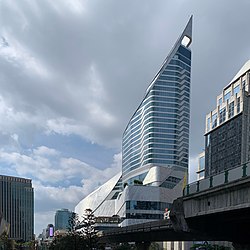 Central Embassy branch.
 -
 Central Salaya branch.
 -
 Central Ramindra branch.
 -
 Central Rama 2 branch.


.jpg)

.jpg)
See also
[edit]References
[edit]- ^ a b "1927". Central History. Central Department Store. 2010. Archived from the original on January 26, 2011. Retrieved January 13, 2011.
- ^ "1950". Central History. Central Department Store. 2010. Archived from the original on March 26, 2011. Retrieved January 13, 2011.
- ^ "1973". Central History. Central Department Store. 2010. Archived from the original on March 26, 2011. Retrieved January 13, 2011.
- ^ "1981". Central History. Central Department Store. 2010. Archived from the original on March 27, 2011. Retrieved January 13, 2011.
- ^ "1983". Central History. Central Department Store. 2010. Archived from the original on March 26, 2011. Retrieved January 13, 2011.
- ^ "2005". Developer. Central Embassy. 2010. Archived from the original on February 13, 2011. Retrieved January 13, 2011.
- ^ "ปัจจุบัน". Central History. Central Department Store. 2010. Archived from the original on March 24, 2011. Retrieved January 13, 2011.
- ^ a b "Central Indonesia". centralindonesia.co.id.
- ^ Hasibuan, Lynda (14 January 2019). "Central Neo Soho Tutup, Hanya Bertahan 2,5 Tahun di Jakarta". CNBC Indonesia. Retrieved 2025-08-13.
- ^ Jitpleecheep, Pitsinee (29 November 2019). "Central earmarks B10bn for revamp". Bangkok Post. Retrieved 2019-12-04.
External links
[edit]Central Department Store
View on GrokipediaHistory
Founding and early years
The Chirathivat family, originally from Hainan Province in China, immigrated to Thailand in 1925, where Tiang Chirathivat settled in Bangkok and initially engaged in small-scale trade amid the economic disruptions following World War II. Thailand's economy in the late 1940s was recovering from wartime occupation and inflation, with GDP growth accelerating to an average of 5.2 percent annually in the 1950s due to U.S. aid and infrastructure investments. In 1947, Tiang established a modest shophouse in Bangkok selling local and international books, magazines, and general merchandise, laying the groundwork for the family's retail ventures during this period of postwar stabilization.[8][3] By 1950, Tiang and his son Samrit expanded operations under the name Central Trading Company, introducing imported goods such as ready-made clothing and cosmetics to cater to Thailand's emerging urban consumers. This shift marked an early innovation in the local retail landscape, blending local products with international offerings to appeal to a growing middle class benefiting from economic recovery and rising disposable incomes. The family's hands-on involvement—rooted in principles of honesty, hard work, and customer service—helped build trust in an era when modern retailing was nascent in Thailand.[3][9] In 1956, Samrit led the establishment of the first Central Department Store in Bangkok's Wang Burapha district, transforming the family business into Thailand's largest department store at the time and introducing a novel one-stop shopping experience with a wide range of goods. Facing challenges like limited infrastructure and competition from traditional markets during the early stages of Thailand's industrialization, the store emphasized quality imported items alongside local products to target middle-class shoppers seeking convenience and variety. This opening represented a pivotal milestone, with the entire Chirathivat family actively participating in daily operations to ensure its success amid the country's burgeoning consumer economy.[2][9][3]Expansion within Thailand
The expansion of Central Department Store beyond Bangkok began in 1992 with the opening of its first provincial branch at Kad Suan Kaew in Chiang Mai, signifying a strategic shift from a capital-centric operation to a nationwide retail presence. This move was prompted by Thailand's burgeoning economic growth and rising urbanization in regional areas, allowing the company to tap into emerging consumer markets outside the metropolitan area.[3][10] During the 1990s, Central accelerated its provincial footprint amid the country's economic boom, establishing stores in key regional hubs such as Pattaya, Khon Kaen, and Hat Yai to cater to local demographics. These expansions involved adaptations like stocking more regionally sourced products, particularly northern Thai goods in Chiang Mai, to align with diverse consumer preferences. In the 1980s, partnerships with Japanese retailers for merchandise sourcing enhanced product offerings, introducing high-quality imports that appealed to urbanizing provincial customers. By the early 2000s, the chain had grown to over 15 stores across Thailand, reflecting resilient expansion despite the 1997 Asian Financial Crisis, during which Central implemented cost-cutting measures and bolstered loyalty programs to maintain customer engagement. The 2000s also saw acquisitions and rebranding of smaller regional chains, alongside integrations with hypermarket formats like Tops supermarkets, further solidifying market penetration in provinces. By 2010, the network exceeded 20 outlets, underscoring Central's adaptation to Thailand's evolving retail landscape.[9][11]International growth and recent developments
Central Department Store marked its international expansion in 2014 by opening its first overseas branch at the Grand Indonesia Mall in Jakarta, Indonesia, establishing a foothold in the ASEAN market.[12][13] This move aligned with Central Retail Corporation's broader strategy to grow beyond Thailand, though the department store format has remained limited to this single location in Indonesia as of 2025. In the 2020s, Central Department Store integrated into Central Retail Corporation's ASEAN-focused growth plan, emphasizing regional synergies while exploring opportunities in Vietnam through affiliated formats like the acquired Big C hypermarkets and GO! supermarkets, without direct Central Department Store branding.[14] Plans for further international diversification, including operations in Italy via the Rinascente department stores, were halted with the sale approved in 2025 to refocus on high-potential ASEAN markets.[15] Key recent milestones include the September 2025 opening of Central Park, a major mixed-use development in Bangkok's Silom district featuring integrated retail spaces that enhance the department store's urban lifestyle offerings. On November 6, 2025, Central Pinklao reopened following a landmark transformation, expected to increase quality traffic by 25–30%.[16] In response to the COVID-19 pandemic, Central Retail accelerated digital sales initiatives, boosting online platforms and omnichannel integration to sustain operations amid lockdowns and shifting consumer habits.[17] The company also launched its 2025-2027 "New Heights, Next Growth" strategy, committing 45-47 billion THB to expansions primarily in Thailand and Vietnam, including new branches for wholesale and automotive segments to drive overall retail presence.[14] Facing challenges from weak consumer sentiment in Thailand during 2025, marked by flat revenue growth and subdued domestic spending, Central Retail prioritized Vietnam for accelerated investments due to its stronger projected GDP expansion of 6.5%.[18] To counter these pressures, the department store emphasized innovative events like "Central The Fashion Disruptors 2025" in September, partnering with 16 emerging Thai designers at Central Ladprao to bridge online and in-store experiences and revitalize fashion retail.[19] Looking ahead, Central Retail targets approximately 5% annual revenue growth through 2027 by enhancing omnichannel capabilities, leveraging AI for personalization, and adapting to evolving consumer behaviors across its ASEAN operations.[14]Corporate structure
Ownership and governance
The Central Department Store operates under the ownership of the Central Group, a privately held conglomerate controlled by the Chirathivat family since its founding in 1947.[2] The retail arm, including department stores, is managed through Central Retail Corporation Public Company Limited (CRC), the listed holding company established in 1990 and debuting on the Stock Exchange of Thailand on February 20, 2020, in what was the exchange's largest initial public offering to date.[20][9] The Chirathivat family maintains majority control over CRC through direct and indirect holdings, with third- and fourth-generation members playing key executive roles. Suthisarn Chirathivat, a fourth-generation family member, was appointed Chief Executive Officer on May 1, 2025, overseeing strategic directions amid regional expansion.[21] As of late 2025, CRC's shareholder composition features Harng Central Department Store Ltd.—a Central Group subsidiary—as the largest holder with 35.1% of shares, followed by institutional investors such as The Vanguard Group at 1.67% and family-linked stakes including Suthisarn Chirathivat's 12.4% ownership.[22] The company's market capitalization reached approximately 120 billion THB in November 2025, reflecting its scale as Thailand's leading retailer.[23] CRC's governance structure emphasizes transparency and compliance with Thai Securities and Exchange Commission regulations, featuring a board of 12 directors chaired by Dr. Prasarn Trairatvorakul since 2020, including family representatives like Sudhitham Chirathivat and a majority of independent directors.[24] A dedicated Corporate Governance and Sustainability Committee, led by independent director Dr. Pakorn Peetathawatchai, oversees ethical practices, risk management, and corporate social responsibility initiatives.[25] This framework has earned CRC a 5-star "Excellent" rating from the Thai Institute of Directors for five consecutive years through 2025, underscoring its adherence to best practices in board diversity and stakeholder engagement.[26] Since its 2020 listing, CRC has evolved as a focused retail entity spun off from broader Central Group operations, consolidating department stores, food retail, and home improvement under one umbrella to enhance operational efficiency.[9] Key developments include strategic portfolio adjustments, such as the 2025 divestiture of Italian assets like Rinascente to Harng Central Department Store Ltd. for 14.7 billion THB, approved by shareholders on November 6, 2025, allowing reinvestment in Southeast Asian growth.[27][15] Under Suthisarn Chirathivat's leadership, governance has prioritized sustainability integration, with policies aligning family stewardship and public accountability.[28]Financial overview
In 2024, Central Retail Corporation (CRC) reported total operating revenue of 262.4 billion THB, marking a 5.7% increase from 248.4 billion THB in 2023, with the fashion segment—encompassing Central Department Stores—contributing approximately 28% or 73.5 billion THB to this figure.[29][30][31] The company projects annual revenue growth of 5-10% through 2026, driven by steady same-store sales and moderated store expansions.[32] Key financial metrics for 2024 included an EBITDA of 34.4 billion THB, up 6% year-over-year, yielding a margin of approximately 13.1%, supported by efficient cost management and higher-margin fashion sales.[29] Store-level profitability remained robust, with fashion outlets achieving average EBITDA contributions that bolstered overall segment performance amid competitive retail pressures. For 2025, CRC allocated 17.5 billion THB in capital expenditures, primarily for new store openings and renovations, expected to enhance profitability through expanded market reach without straining liquidity.[33] Funding for operations and growth derives from a mix of equity via family-controlled holdings—led by Harng Central Department Store Ltd. with a 35.1% stake—and public listings on the Stock Exchange of Thailand, supplemented by debt financing including 15.3 billion THB in long-term debt as of March 2025.[34][22][33] CRC maintains a dividend policy of at least 40% of consolidated net profit, with a 2024 payout of 0.60 THB per share reflecting sustained shareholder returns.[35] Post-COVID recovery has been evident in CRC's performance from 2023 to 2025, with revenue rebounding through diversified channels, including a 20% omnichannel sales contribution in Thailand that boosted e-commerce integration.[33] Regionally, Thailand accounted for 75% of 2024 revenue, Vietnam 18%, and Italy 7%, underscoring a balanced portfolio amid global retail volatility.[30] Investments focus on Vietnam's GO! hypermarket brand and Thai hypermarkets like Big C, with 2025 capex emphasizing operational efficiencies to mitigate over-expansion risks and sustain mid-single-digit growth.[36][37]Operations
Retail formats and concepts
Central Department Store's flagship format features large-scale urban department stores, often exceeding 50,000 square meters, with multi-level layouts designed to prioritize luxury and mid-range fashion alongside complementary categories like beauty and accessories. These stores, such as Central Chidlom, span seven floors and integrate sophisticated architectural elements with Thai cultural motifs to create immersive shopping environments that emphasize curation and exclusivity. As the leading model for Central's urban presence, this format supports over 150 global brands in dedicated zones, fostering a sense of prestige and discovery for affluent customers.[38][39] To serve provincial markets, Central Department Store adopted community mall concepts in the 2000s, introducing smaller-scale formats that combine department store retail with integrated supermarkets, entertainment options, and community-oriented services. These developments, often under the CentralPlaza banner, focus on everyday accessibility and local integration, providing one-stop solutions for families in non-metropolitan areas while maintaining core fashion and lifestyle offerings. This approach has enabled Central to expand its reach beyond Bangkok, adapting to regional lifestyles through convenient, hybrid retail spaces.[40][41] Specialized concepts represent Central's push toward innovative, upscale destinations, exemplified by Central Embassy, launched in 2014 as a luxury lifestyle complex merging retail, dining, and hospitality in a 37-story tower covering 1.5 million square feet. This format elevates experiential shopping with high-end international brands, art installations, and exclusive events, targeting discerning consumers seeking beyond-traditional retail. In 2025, Central introduced "The Fashion Disruptors" zones and initiatives, partnering with 16 emerging Thai online brands to create dedicated spaces for pop-up showcases and immersive runway events that highlight innovative designs and bridge digital-physical retail.[42][19] The evolution of Central's retail design has transitioned from conventional multi-floor layouts to dynamic, experiential environments that incorporate pop-up activations, social lounges, and interactive features to boost engagement and dwell time. Recent transformations, like the 2024 overhaul of Central Chidlom, introduce elements such as weather-responsive facades, sky terraces, and themed galleries to blend functionality with storytelling, setting global benchmarks for department store innovation. In Indonesia, where Central operates since 2014, stores adapt this philosophy by infusing local cultural elements—such as heritage-inspired fashion parades—into Thai-curated selections, ensuring relevance to diverse consumer preferences while upholding premium standards.[43][44][45]Product offerings and services
Central Department Store provides an extensive array of merchandise across key categories, with fashion serving as the cornerstone of its offerings, encompassing apparel, accessories, footwear, and luxury items from international brands such as Chanel, Dior, Estée Lauder, and Calvin Klein.[46][1] Beauty products form another major segment, including cosmetics, skincare, and fragrances from high-end labels like SK-II and Charlotte Tilbury, catering to diverse customer preferences for premium personal care.[47] Home goods are prominently featured, with selections in lifestyle items, appliances, bedding, and dining essentials from brands like Dyson, Philips, and Tefal, designed to support modern living needs.[48] Integrated Tops supermarkets and Food Halls within many stores extend the assortment to groceries, offering fresh produce, premium meats, seafood, imported specialties, and ready-to-eat options to create a comprehensive one-stop shopping experience.[49][50] The store's branding strategy emphasizes a mix of global luxury and local innovation, exemplified by partnerships with over 16 emerging Thai designers in events like Central The Fashion Disruptors 2025, which showcased brands such as Aimer, Calm Outdoors, and Daily Squad to bridge online and in-store retail.[19][51] Post-2020, Central has prioritized sustainable sourcing, curating eco-friendly products and platforms that promote locally sourced Thai crafts and environmentally conscious goods across its fashion and home categories.[52] Product assortments are customized to regional preferences, with stores in areas like the Northeast incorporating more culturally relevant items to align with local tastes.[53] Ancillary services enhance the shopping experience, including the Central Card loyalty program under The 1 platform, which boasts over 20 million members and allows point accumulation and redemption across purchases.[54] Personal shopping services are available to assist customers with tailored selections, wardrobe building, and event-specific styling through dedicated advisors.[55] High-end concierge support caters to premium clientele, offering exclusive access to events, priority assistance, and bespoke experiences in flagship locations.[56] The department employs a concession model, enabling dynamic rotations of brands and seasonal collections to keep offerings fresh and responsive to market trends.[57] Digital extensions, such as online ordering integrated with in-store services, complement these core provisions without overshadowing the physical retail focus.[46]Digital transformation and sustainability
Central Retail Corporation (CRC) has accelerated its digital transformation through the launch of the Central App in 2020, which integrates online and offline shopping experiences to enhance customer convenience.[58] The app supports features such as click-and-collect, in-store stock checks, and home delivery, forming a core part of CRC's omnichannel strategy that connects its department stores, supermarkets, and e-commerce platforms.[59] In 2025, CRC further advanced this initiative by migrating its Central Online platform to Algolia's AI-powered search technology, improving product discovery and personalization for users browsing its extensive catalog.[60] These efforts aim to create a seamless "omni-experience" amid evolving consumer preferences for hybrid retail models.[61] Complementing its digital push, CRC has embedded sustainability into its operations with a commitment to achieve net-zero greenhouse gas emissions by 2050, aligning with the Paris Agreement and covering all business jurisdictions. In October 2025, CRC issued Thailand's first green bond worth THB 7.5 billion to fund solar projects and support its path to net-zero emissions by 2050.[62] Key initiatives include the adoption of eco-friendly packaging across retail lines, such as 100% recyclable PET plastic for products at Tops supermarkets in 2024, reducing non-recyclable waste and carbon footprints.[63] The company is also retrofitting stores with energy-efficient technologies, including eco-friendly refrigeration systems in wholesale and food retail outlets, as part of broader goals to cut electricity consumption per revenue unit by 30% by 2030.[64] These measures support CRC's ReNEW environmental strategy, which promotes renewable energy and waste diversion from landfills.[65] On the social front, CRC contributes to community development through initiatives under the Central Group, focusing on educational equality by creating inclusive learning spaces and expanding access to quality education in underserved areas of Thailand.[66] In supply chains, the company enforces a Supplier Code of Conduct to ensure ethical and sustainable practices, including eco-friendly product sourcing projected to reach 100% by 2030, thereby promoting diversity and responsibility among partners.[67] However, these advancements present challenges, such as maintaining compliance with Thailand's Personal Data Protection Act (PDPA) amid rising cyber threats like ransomware, which CRC addresses through robust privacy policies and data handling procedures.[68] Balancing digital personalization with physical store experiences remains an ongoing priority to sustain customer trust in an omnichannel ecosystem.[68]Store locations
Bangkok Metropolitan Area
The Bangkok Metropolitan Area serves as the primary hub for Central Department Store operations, hosting approximately 18 active outlets as of 2025 that cater to urban professionals, tourists, and local shoppers through a mix of flagship luxury experiences and community-oriented retail spaces.[69][70] These locations benefit from high accessibility, with many directly integrated with the BTS Skytrain system for seamless connectivity across the city's dense population centers, including suburbs like Nonthaburi and Samut Prakan. Combined, the major stores draw over 20 million annual visitors, driven by event spaces, seasonal promotions, and proximity to business districts.[71][72] The flagship store, Central Chidlom, located at 1027 Ploenchit Road in Pathumwan, opened in 1974 as Thailand's first full-scale department store and underwent a comprehensive 4-billion-baht renovation completed in December 2024, rebranding it as "The Store of Bangkok" with a focus on luxury retail, personalized services, and experiential zones targeting high-net-worth customers.[39][3] It connects directly to Chit Lom BTS station and features dedicated event spaces for fashion shows and cultural exhibitions, attracting around 30,000 daily visitors.[71] Another key landmark is Central @ CentralWorld at 4 Rajdamri Road, co-owned by Central Pattana and operating within the 1.5 million square meter CentralWorld complex since its integration in 2006; it emphasizes diverse retail and entertainment, linked to both Siam and Chit Lom BTS stations, and serves as a major venue for international events with millions of annual footfall.[73] In 2025, Central Park emerged as a significant addition at the intersection of Silom and Rama IV Roads in Bang Rak, opening its first phase on September 4 with a mixed-use design that blends retail, offices, and green spaces to revitalize downtown Bangkok's vibrancy; connected to Surasak BTS station, it projects over 25 million annual visitors through its 7-rai rooftop park and urban integration features.[70][74] Other prominent locations include Central Ladprao in Chatuchak, a longstanding community hub since 1987 with strong BTS Ha Yaek Lat Phrao access and family-oriented event programming; Central Rama 3 in Yannawa, offering integrated lifestyle amenities along the Chao Phraya River since 2010; and Central Bangna in Bang Na, a suburban anchor with BITEC exhibition ties drawing business crowds.[75][76][77] The remaining outlets provide localized accessibility and specialized features, such as Central Silom Complex in Bang Rak for office workers with extended evening hours, Central Pinklao in Bangkok Noi for western Bangkok residents near the Chao Phraya, and Central Westgate (now under Central Plaza branding) in Nonthaburi for suburban expansion.[78][79] These stores collectively emphasize high-traffic integration, with event spaces hosting over 500 annual activities across the network to boost engagement.[80]| Store Name | Address | Key Features | BTS Integration |
|---|---|---|---|
| Central Chidlom | 1027 Ploenchit Road, Pathumwan | Flagship luxury, renovated 2024, 30,000 daily visitors | Chit Lom |
| Central @ CentralWorld | 4 Rajdamri Road, Pathumwan | 1.5M sqm complex, events hub | Siam/Chit Lom |
| Central Ladprao | 1691 Paholyothin Road, Chatuchak | Community events, family focus | Ha Yaek Lat Phrao |
| Central Rama 3 | 79/3 Sathupradit Road, Yannawa | Riverside lifestyle, 220,000 sqm | None (near Chong Nonsi) |
| Central Bangna | 585 Bangna-Trad Road, Bang Na | Suburban business tie-ins | None (near Bearing) |
| Central Silom Complex | 191 Silom Road, Bang Rak | Office proximity, evening hours | Surasak/Sala Daeng |
| Central Pinklao | 7/1 Boromratchonnani Road, Bangkok Noi | Western suburb access | Tao Poon (nearby) |
| Central Ramindra | 109/9 Ramindra Road, Bang Khen | Northern residential focus | None (bus access) |
| Central Rama 2 | 160 Rama II Road, Bang Khun Thian | Southern gateway, variable hours | None (near Talat Phlu) |
| Central Eastville | 69/3 Pradit Manutham Road, Wang Thonglang | Eastern expansion, festival vibe | None (near Lat Phrao) |
| Central Bangrak | 1522 Charoen Krung Road, Bang Rak | Historic district retail | None (near Saphan Taksin) |
| Central Chaengwattana | 99/99 Moo 2, Pakkred, Nonthaburi | Northern suburb access | None |