Recent from talks
Nothing was collected or created yet.
Nonthaburi
View on WikipediaThis article needs additional citations for verification. (July 2018) |
Nonthaburi (Thai: นนทบุรี, pronounced [nōn.tʰá(ʔ).bū.rīː]) is the principal city of the district and province of the same name in Thailand.
Key Information
On 15 February 1936, Nonthaburi town municipality (thesaban mueang) was established, which only covered Suan Yai subdistrict (tambon), just 2.5 km2 (0.97 sq mi).[2] On 25 September 1995, Nonthaburi was upgraded to city municipality (thesaban nakhon) by enlargement of the city with four more subdistricts, Talat Khwan (8.2 km2 [3.2 sq mi]), Bang Khen (9.0 km2 [3.5 sq mi]), Bang Kraso (11.2 km2 [4.3 sq mi]) and Tha Sai (8.0 km2 [3.1 sq mi]), covering a total of 38.9 km2 (15.0 sq mi).[3] As of 31 December 2019, it has a registered population of 254,375,[1] making it the most populous city municipality in Thailand (excluding Bangkok). There are 93 communities (chumchon), although not directly chosen by the local citizens, which provides advice and recommendations to local administrative organizations. Due to its proximity to Bangkok, the city is considered a suburb of Bangkok, a part of the Bangkok Metropolitan Region, or Greater Bangkok.
Nonthaburi is served by public transport systems including the Bangkok Mass Transit Authority bus system, the Chao Phraya Express Boat, and the MRT Purple Line and MRT Pink Line, inaugurated in 2016 and 2024 respectively.
Nonthaburi is known for its temple and market such as Wat Chaloem Phra Kiat, Wat Chomphuwek, Wat Chotikaram, Wat Khema Phirataram, Wat Prasat, Wat Sangkhathan and so on.

References
[edit]- ^ a b "รายงานสถิติจำนวนประชากรและบ้านประจำปี พ.ศ.2562" [Statistics, population and house statistics for the year 2019]. Registration Office Department of the Interior, Ministry of the Interior (in Thai). 31 December 2019. Retrieved 10 March 2020.
- ^ "พระราชกฤษฎีกา จัดตั้งเทศบาลเมืองนนทบุรี จังหวัดนนทบุรี พุทธศักราช ๒๔๗๙" [Royal Decree Establishing of Nonthaburi town municipality, Nonthaburi province, Buddhist Era 2479 (1936)] (PDF). Royal Thai Government Gazette. 53: 1196–1200. 14 February 1936. Archived from the original (PDF) on 19 March 2020. Retrieved 10 December 2019, effectively on 15 February 1936
{{cite journal}}: CS1 maint: postscript (link) - ^ "พระราชกฤษฎีกา จัดตั้งเทศบาลนครนนทบุรี จังหวัดนนทบุรี พ.ศ.๒๕๓๘" [Royal Decree Establishing Nonthaburi city municipality, Nonthaburi province, B.E.2538 (1995)] (PDF). Royal Thai Government Gazette. 112 (40 Kor): 29–32. 24 September 1995. Archived from the original (PDF) on 17 September 2011. Retrieved 10 December 2019, effectively on 25 September 1995
{{cite journal}}: CS1 maint: postscript (link)
External links
[edit]- Official website
Nonthaburi travel guide from Wikivoyage
Media related to Nonthaburi at Wikimedia Commons
Nonthaburi
View on GrokipediaGeography
Location and Borders
Nonthaburi Province lies in the central region of Thailand, approximately 20 kilometers northwest of Bangkok, within the lower alluvial plains of the Chao Phraya River basin.[4][5] The province's central coordinates are roughly 13°51′N 100°31′E, encompassing urban and semi-urban landscapes that integrate seamlessly with the Bangkok Metropolitan Region.[6] As a contiguous extension of Bangkok, Nonthaburi functions as a densely populated suburb, with its terrain characterized by flat riverine lowlands facilitating rapid urbanization and infrastructure connectivity.[4] The province shares borders with four neighboring administrative divisions: Phra Nakhon Si Ayutthaya Province to the north, Pathum Thani Province to the northeast, Bangkok Metropolis to the south and southeast, and Nakhon Pathom Province to the west across the Chao Phraya River.[7][8] This positioning places significant portions of Nonthaburi within the greater Bangkok urban agglomeration, with the Chao Phraya River serving as a natural boundary and transportation artery influencing its eastern and western extents. The total area spans 622 square kilometers, rendering it compact yet pivotal for regional economic and residential spillover from the capital.[9]Topography and Hydrology
Nonthaburi Province exhibits a flat, low-relief topography typical of the lower Chao Phraya alluvial plain, with minimal variation in elevation across its 587 square kilometers. Landforms consist primarily of sedimentary deposits from riverine sedimentation, lacking hills, mountains, or other prominent features.[10] Elevations generally span from -1.08 meters to +3.12 meters above mean sea level, rendering the terrain vulnerable to subsidence, tidal influences, and inundation.[10] Specific locales, such as areas in Mueang Nonthaburi District, register at approximately 2 meters above sea level.[11] The hydrology of the province centers on the Chao Phraya River, which traverses from north to south, forming segments of the western boundary and bisecting the landscape. As part of the lower Chao Phraya sub-basin, the river drains a broader catchment of about 21,725 square kilometers starting from Nakhon Sawan, with Nonthaburi benefiting from its flow for water supply and navigation.[12] An extensive network of canals (khlongs) branches from the main stem, aiding drainage, irrigation for rice paddies, and urban water management amid ongoing development pressures.[13] Seasonal monsoon precipitation, averaging around 1,487 millimeters annually in the lower basin, drives river discharge peaks, historically fostering fertile soils but contributing to recurrent floods that affect approximately 70% of the province's lowlands during high-water events.[12][14]Climate and Environmental Features
Nonthaburi province features a tropical savanna climate classified as Köppen Aw, characterized by consistently high temperatures, a pronounced wet season driven by the southwest monsoon, and a relatively drier period influenced by the northeast monsoon.[15][16] Annual temperatures typically range from 22°C to 36°C, with rare extremes below 18°C or above 38°C.[17] The hot season spans March to May, peaking in April with average highs of 36°C and lows of 27°C, while the cooler season from late October to January sees highs below 32°C and December lows averaging 22°C.[17] Precipitation averages 1,400–1,700 mm annually, concentrated in the wet season from May to October, when over 36% of days feature significant rain and humidity exceeds 80% for much of the period, creating muggy conditions.[17] September records the highest rainfall, around 224 mm over 20 wet days, whereas December brings minimal precipitation of about 5 mm across fewer than one wet day on average.[17] The dry season from late October to May features partly cloudy skies and lower humidity, though urban heat retention exacerbates perceived warmth. Note: Values approximate based on long-term averages; annual totals vary with monsoon intensity.[17] Environmentally, Nonthaburi's low-lying alluvial position along the Chao Phraya River heightens flood vulnerability, with heavy monsoon rains and upstream dam releases periodically inundating urban areas, as seen in the 2011 floods affecting millions regionally and recent alerts in September 2024 prompting evacuations in 30 communities.[18][19] Rapid urbanization has reduced green spaces, intensifying surface urban heat island effects, with land surface temperatures rising alongside built-up area expansion in the Bangkok Metropolitan Region over the past 36 years.[20][21] Air quality deteriorates in the dry season due to seasonal haze and traffic emissions, with PM2.5 levels reaching unhealthy thresholds above 70 µg/m³ in January months.[22] These pressures, compounded by proximity to Bangkok, underscore challenges in maintaining ecological balance amid suburban growth.[23]History
Ancient and Ayutthaya Period
The area encompassing modern Nonthaburi, situated along the fertile banks of the Chao Phraya River, likely supported early human settlements due to its alluvial soils and access to water, though archaeological evidence predating the Ayutthaya Kingdom remains limited and primarily inferred from regional patterns in central Thailand. No major pre-Ayutthaya sites, such as those from the Dvaravati (6th–11th centuries) or Khmer periods, have been prominently documented in Nonthaburi, distinguishing it from nearby areas like Lopburi or Suphan Buri. The earliest verifiable structures appear in the transition to the Ayutthaya era, reflecting the kingdom's expansion northward from its 1351 founding. Wat Prang Luang, originally known as Wat Luang, stands as the province's oldest known monastery, constructed during the reign of King Ramathibodi I (r. 1351–1369), the founder of Ayutthaya. This 14th-century temple complex, featuring a prang-style chedi indicative of early Ayutthaya architecture influenced by Khmer precedents, served as a religious and communal center, underscoring the region's integration into the kingdom's Theravada Buddhist framework. Other early sites, such as Wat Khema in Tambon Suan Yai, were established shortly thereafter in the early Ayutthaya period, highlighting the area's role in supporting monastic networks along riverine trade routes.[24] By the mid-16th century, amid escalating Burmese threats, Nonthaburi was formally designated a city around 1549 during the reign of King Chakrapat (r. 1548–1569), initially centered at Tambon Ban Talat Khwan (now Bang Kruai District), famed for its orchards of durian, mangosteen, and other fruits that bolstered the kingdom's tribute economy. This strategic positioning on the Chao Phraya facilitated defense and logistics, with the settlement acting as a bulwark against invasions; Burmese forces targeted it repeatedly, including during the 1569 sack of Ayutthaya. The period saw agricultural prosperity and population growth, with canals enhancing irrigation for rice and fruit cultivation, laying foundations for Nonthaburi's enduring riverine identity. In the kingdom's final decades, Nonthaburi's capture in 1766 by Burmese armies under Maha Nawrahta exemplified its vulnerability as a southern gateway to the capital.[3][25][26]Bangkok Era and Provincial Establishment
Following the founding of the Rattanakosin Kingdom in 1782, when King Rama I established Bangkok as the new capital across the Chao Phraya River from Thonburi, Nonthaburi retained its role as a vital riverside settlement supporting the capital's needs through agriculture and trade.[3] Its location facilitated the transport of fruits, vegetables, and other produce via canals and the river, earning it recognition as a key suburban provider during the early Bangkok era.[27] During the reign of King Rama III (1824–1851), significant alterations occurred to Nonthaburi's urban landscape; portions of the historic fort and city structures were dismantled to build Wat Chalerm Phrakiat, while river flooding eroded others, preserving only the City Pillar Shrine as a remnant of prior fortifications.[8] Later, under King Mongkut (Rama IV, 1851–1868), the town was relocated to the mouth of the Bang Sue Canal in Tambon Ban Talat Khwan to enhance strategic positioning and administrative efficiency amid the kingdom's modernization efforts.[28] This shift underscored Nonthaburi's integration into the expanding Bangkok-centric governance, where it functioned as a semi-autonomous district focused on horticulture and local commerce.[29] Nonthaburi's administrative status evolved through the 19th and early 20th centuries as part of Siam's provincial system, but wartime exigencies led to its temporary merger into the enlarged Bangkok Metropolis on January 1, 1943, under Prime Minister Plaek Phibunsongkhram's centralization policies.[30] Post-World War II reforms reversed this, with Nonthaburi re-established as an independent changwat (province) on May 9, 1946, via the Act Establishing Changwat Samut Prakan, Changwat Nonthaburi, Changwat Samut Sakhon, and Changwat Nakhon Nayok (Buddhist Era 2489).[8] This separation delineated its 622.38 square kilometers, comprising six districts, and affirmed its distinct governance from the capital.[8]Post-War Urbanization and Expansion
Following its separation from Bangkok in 1946 after a wartime merger, Nonthaburi province retained a predominantly agricultural character, centered on fruit orchards and rice cultivation along the Chao Phraya River. However, post-World War II economic recovery in Thailand, aided by foreign investment and industrialization policies, began drawing industrial activities to adjacent provinces like Nonthaburi. By the late 1940s and 1950s, over 90 percent of government-promoted industrial plants were concentrated in Bangkok and its vicinities, including Nonthaburi and Samut Prakan, leveraging cheap labor and proximity to the capital.[3][31] Population influx accelerated urbanization, with Nonthaburi's metro area residents rising from about 3,679 in 1950 to over 1 million by the 2020s, outpacing many rural provinces due to suburban spillover from Bangkok's congestion. Manufacturing booms in the 1970s and 1980s attracted rural migrants, transforming districts like Bang Kruai into industrial hubs while eroding traditional farmlands; durian orchards, once a hallmark of the province, faced conversion pressures from urban encroachment. This shift integrated Nonthaburi into the Bangkok Metropolitan Region, where suburban growth rates exceeded central Bangkok's, reaching 66 percent in peripheral areas between 2000 and 2010 alone.[32][33][34] By the late 20th century, housing estate expansions from 1982 to 1994 marked a surge in residential development, with significant urban society growth between 1987 and 1994, further blurring rural-urban boundaries. Infrastructure improvements, including roads and utilities, supported this expansion, though it contributed to environmental challenges like loss of green spaces and increased urban heat islands in the region. Nonthaburi's role evolved from Bangkok's "fruit garden" to a key commuter and industrial satellite, with population growth rates in the province hitting 21.2 percent in select periods, reflecting broader national urbanization trends driven by economic productivity and migration.[35][36][37]Administrative Divisions
Districts and Governance Structure
Nonthaburi Province is administratively divided into six districts (amphoe): Mueang Nonthaburi, Bang Kruai, Bang Yai, Bang Bua Thong, Pak Kret, and Sai Noi.[38] These districts encompass urban, suburban, and semi-rural areas, with Mueang Nonthaburi serving as the provincial capital and most densely developed core.[38] Each district is headed by an appointed district chief (nai amphoe) responsible for local enforcement of laws, coordination with central agencies, and basic administrative services.[39] The districts are further subdivided into 52 subdistricts (tambon) and 433 villages (muban), forming the foundational units for community-level governance and data collection.[2] This structure aligns with Thailand's standard provincial hierarchy, enabling efficient resource allocation amid Nonthaburi's rapid urbanization and proximity to Bangkok.[39] At the provincial level, governance is led by an appointed governor, currently Suchin Chaichumsak, who assumed office on October 1, 2019, and oversees policy implementation, public safety, and inter-agency coordination under the Ministry of Interior.[40] The governor's role emphasizes maintaining order and development in this densely populated commuter province.[40] Complementing central oversight is the elected Nonthaburi Provincial Administrative Organization (PAO), which manages provincial-scale infrastructure, education support, health services, and environmental initiatives.[41] The PAO operates from its headquarters in Mueang Nonthaburi and focuses on decentralizing services to address local needs like traffic management and flood mitigation.[41] Local administration includes two city municipalities (thesaban nakhon) in Nonthaburi and Pak Kret, four town municipalities (thesaban mueang), ten subdistrict municipalities (thesaban tambon), one subdistrict administrative organization, and 24 tambon administrative organizations, handling urban planning, waste management, and community welfare.[8] This multi-tiered system reflects Nonthaburi's evolution from agricultural roots to a key Bangkok satellite, balancing central directives with localized responsiveness.[8]Urban and Rural Subdivisions
Nonthaburi province's subdivisions reflect a spectrum from highly urbanized municipal areas to residual rural tambon, shaped by proximity to Bangkok and economic integration into the metropolitan region. The six districts—Mueang Nonthaburi, Pak Kret, Bang Kruai, Bang Bua Thong, Bang Yai, and Sai Noi—contain 52 tambon and 433 villages, with urban designations primarily through municipality status that grants local self-governance for population centers exceeding certain density thresholds.[42] Rural areas, administered directly by district offices, persist in peripheral zones where land use favors agriculture over residential or commercial development.[43] Urban subdivisions dominate the province's core, exemplified by the two city municipalities (thesaban nakhon): Nonthaburi in Mueang Nonthaburi district and Pak Kret in its namesake district. These cover expansive tambon clusters with populations surpassing 250,000 each as of recent censuses, featuring high-rise residences, commercial hubs, and infrastructure like the IMPACT exhibition center in Pak Kret, contributing to densities rivaling Bangkok's outskirts.[44] Additional urban growth occurs via town municipalities (thesaban mueang) and subdistrict municipalities in districts like Bang Kruai and Bang Bua Thong, where industrial estates and suburban expansion have upgraded former tambon since the 1990s.[20] Rural subdivisions, though diminishing, characterize outer districts such as Sai Noi and Bang Yai, where over half the tambon retain agricultural focus, including rice paddies and fruit orchards on fertile Chao Phraya floodplain soils. In Sai Noi, rice farming employs a substantial portion of residents, supported by provincial agricultural extension services promoting crop yields amid encroachment from suburban development.[45] Bang Yai similarly hosts rural roads and farming pockets, with land parcels dedicated to wet-rice cultivation despite nearby retail complexes like Central WestGate signaling hybridization.[46] These areas, comprising roughly the western periphery, face pressures from urban sprawl, reducing green spaces by up to 20% in recent decades while preserving causal links to traditional agrarian economies.[20]Demographics
Population Trends and Density
The population of Nonthaburi Province increased substantially from 816,614 in the 2000 census to 1,334,083 in the 2010 census, reflecting an average annual growth rate of 4.8% over that decade.[44] This expansion was primarily driven by net in-migration from rural Thailand and economic opportunities in the Bangkok Metropolitan Region, where Nonthaburi serves as a key commuter suburb with expanding residential and industrial developments.[44] Post-2010 growth decelerated to an estimated 2.2% annually through 2019, when projections indicated a population of 1,611,100, amid Thailand's broader fertility decline to below replacement levels (around 1.5 births per woman nationally) and maturing urban infrastructure limiting further influx.[44] Recent registration-based estimates suggest stabilization near 1.2–1.3 million by the early 2020s, consistent with national trends of 0.3% annual growth and provincial out-migration pressures from high living costs and housing constraints.[47] [48]| Year | Population | Annual Growth Rate (Prior Decade) | Density (persons/km²) |
|---|---|---|---|
| 2000 Census | 816,614 | — | 1,312 |
| 2010 Census | 1,334,083 | 4.8% | 2,144 |
| 2019 Projection | 1,611,100 | 2.2% | 2,589 |
Ethnic Composition and Migration Patterns
Nonthaburi's ethnic composition is predominantly Thai, with the Central Thai (Siamese) subgroup forming the core demographic, consistent with patterns in Thailand's central region where ethnic Thais exceed 97% nationally by self-identification and nationality data. Sino-Thai descendants of 19th- and 20th-century Chinese migrants represent a notable assimilated minority, particularly in urban districts influenced by proximity to Bangkok's commercial hubs, though official censuses do not disaggregate them separately due to high rates of intermarriage and cultural integration. Other ethnic groups, such as Khmers or Mons, are negligible, lacking distinct concentrations unlike in border provinces.[49] Migration patterns in Nonthaburi are driven by internal rural-to-urban flows, with net inflows from northeastern Isan and northern provinces fueling population growth amid industrialization since the 1980s; between 2000 and 2020, the province's population rose from approximately 1 million to over 1.2 million, largely attributable to such domestic migration for factory, construction, and service jobs.[50] International migration, primarily undocumented or semi-regular workers from Myanmar, adds a transient layer, with IOM assessments in 2023 identifying Kayin State (33%), Mon State (10%), and Ayeyarwady Region (8%) as top origins among surveyed migrants in the province.[51] These migrants, estimated in the tens of thousands province-wide, concentrate in industrial zones and face barriers to formal integration, contributing to labor shortages in low-skilled sectors while straining local services.[52] Overall, net migration sustains Nonthaburi's high density of over 2,000 persons per square kilometer, integrating it into the Bangkok Metropolitan Region's commuter economy.[53]Economy
Primary Sectors and Agricultural Legacy
Nonthaburi's primary economic sectors have historically been dominated by agriculture, supported by the province's alluvial soils and proximity to the Chao Phraya River, which facilitate irrigation and transportation. The province is particularly noted for its pomelo production, with optimal harvests attributed to the fertile conditions in areas like Bang Kruai and Mueang districts, where orchards yield high-quality varieties such as Thong Dee pomelos.[54] Other significant fruit crops include durians, whose orchards have faced encroachment from urban expansion, as well as mangosteens, longans, and rambutans, contributing to Nonthaburi's role as a key supplier of tropical fruits to Bangkok's markets.[55] Rice cultivation, though less prominent than in central Thai provinces, persists on paddy fields, alongside vegetable farming in peri-urban zones, with agricultural land encompassing a substantial portion of the province's 622 km² area. In 2016, the agricultural sector generated 5,511 million THB, representing a modest but foundational share of provincial output amid broader economic shifts. Fishing along the Chao Phraya and its canals supplements primary activities, yielding freshwater species for local consumption, though data on its precise economic scale remains limited compared to horticulture.[56] The agricultural legacy endures despite rapid urbanization, which has reduced farmland—evident in districts like Bang Kruai where orchards declined amid residential and industrial growth by the mid-2000s. This heritage manifests in preserved orchard communities, seasonal fruit festivals, and the province's integration into Bangkok's food supply chains, underscoring causal links between historical land use and current peri-urban sustainability efforts.[55] Empirical trends show a transition from agrarian dominance to mixed land use, with approximately 56% of land still agricultural as of early assessments, though pressures from metropolitan expansion continue to erode this base.[57]Industrial and Service Growth
Nonthaburi's industrial sector has expanded as part of the broader Greater Bangkok region's spillover effects, with manufacturing activities concentrating in small and medium enterprises focused on food processing, electronics assembly, and light industry tied to the province's agricultural base. As of recent records, the province hosts 5,354 manufacturing companies, underscoring its role in regional production chains.[58] This growth aligns with the decentralization of industrial activities from central Bangkok, facilitated by accessible land and infrastructure along the Chao Phraya River and proximity to export ports, though specific estate developments remain limited compared to neighboring provinces like Samut Prakan.[59] The service sector has shown more dynamic expansion, driven by urbanization and integration with Bangkok's economy, with vigorous growth in tertiary activities such as construction, utilities, and wholesale-retail trade. Commercial developments, including mixed-use projects along corridors like Thai Chamber of Commerce Road, have drawn major property developers investing in retail and logistics hubs to serve the growing commuter population.[60][61] Retail expansion benefits from rising household incomes and e-commerce trends, though tourism-related services remain modest, centered on local historical sites rather than mass visitation. Both sectors faced contraction in 2020 amid COVID-19 restrictions, with the overall economy shrinking by 9.2% as manufacturing output fell and services adapted to reduced demand under "new normal" protocols.[62] Recovery trends post-2021 have emphasized resilient service-oriented growth, supported by infrastructure investments and regional economic policies promoting livable urban development.[57]Urban Economic Integration with Bangkok
Nonthaburi's economy integrates closely with Bangkok through its position in the Bangkok Metropolitan Region (BMR), where the combined area—including Nonthaburi, Samut Prakan, Pathum Thani, Samut Sakhon, and Nakhon Pathom—accounted for 42% of Thailand's GDP and 48% of national manufacturing output in 2009.[63] This interdependence relies on labor mobility, with a large share of Nonthaburi residents commuting to Bangkok's central business districts for work, positioning the province as a key residential satellite that supplies workforce to the capital's service and industrial sectors.[36] Proximity facilitates daily cross-boundary flows, supported by road networks and public transport, though exact commuting volumes reflect broader BMR patterns of urban expansion absorbing peripheral labor pools.[64] Industrial relocation from Bangkok has bolstered Nonthaburi's manufacturing base, particularly in auto parts, where establishments in the BMR vicinity grew 90.4% between 1997 and 2007, offsetting declines in central Bangkok.[63] Garment and textile firms also expanded significantly in Nonthaburi during this period, contributing to the BMR's dominance in national manufacturing at 77% of output, driven by agglomeration benefits and spillover from Bangkok's markets.[63] These shifts underscore causal links where Bangkok's demand pulls peripheral production, enhancing regional productivity without full decentralization. Service-oriented growth in Nonthaburi further ties into Bangkok's economy via retail, wholesale, and logistics serving commuter populations and spillover demand.[65] Recent infrastructure like the Chamber of Commerce Road has attracted property investments valued at 50 billion baht as of 2024, fostering mixed-use developments that extend Bangkok's commercial footprint northward.[61] Such projects, including high-profile sites like Bangkok ITC, integrate transport hubs with economic zones, reinforcing Nonthaburi's role in decongesting Bangkok while amplifying mutual economic reliance.[66]Government and Politics
Provincial Administration
Nonthaburi Province is administered through a central government structure headed by the provincial governor, who oversees executive functions including public order, infrastructure coordination, and inter-agency operations. The governor is appointed by the Minister of the Interior and serves at the discretion of the central authority, ensuring alignment with national policies. Kiattisak Trongsiri has held the position since 2024.[67] The governor is assisted by deputy governors managing specialized portfolios such as economic development, public health, and disaster response, alongside heads of provincial offices from national ministries. Administrative operations extend to the province's six districts (amphoe)—Mueang Nonthaburi, Pak Kret, Bang Bua Thong, Bang Yai, Bang Kruai, and Sai Noi—each led by an appointed district chief (nai amphoe) responsible for local enforcement and coordination.[8] Parallel to this structure operates the Nonthaburi Provincial Administrative Organization (PAO), an elected local entity focused on rural development, road maintenance, and community services. The PAO comprises an elected council and president, distinct from the governor's role, with recent national elections in February 2025 influencing local leadership compositions. Complementing these are two city municipalities, four mueang municipalities, eleven subdistrict municipalities, and twenty-eight subdistrict administrative organizations handling municipal governance and tambon-level affairs.[8][68]Local Politics and Development Policies
The provincial governor of Nonthaburi, appointed by the Ministry of Interior on behalf of the central government, oversees administrative functions including policy implementation for urban development and public services. Kiattisak Trongsiri has served as governor since 2024, focusing on coordination with national agencies for infrastructure and disaster preparedness.[69] Unlike Bangkok, provincial governors in Nonthaburi and other Thai provinces are not directly elected, limiting local electoral influence over executive leadership while emphasizing alignment with national strategies.[70] The Nonthaburi Provincial Administrative Organization (PAO), headed by an elected president and council, manages decentralized development initiatives such as local infrastructure projects and community services. PAO elections, held nationwide on February 1, 2025, for 47 provinces including Nonthaburi, featured competition among parties like Pheu Thai and Bhumjaithai, reflecting national political dynamics in local contests.[68] The PAO collaborates with the governor's office on zoning and budgeting, though central oversight ensures consistency with Thailand's 13th National Economic and Social Development Plan (2023-2027), which prioritizes balanced growth in peri-urban areas.[71] Development policies emphasize a "Livable City" framework, integrating mixed land-use planning to accommodate Bangkok's spillover urbanization while mitigating environmental degradation. Key efforts include flood control measures, such as enhanced water management and retention infrastructure, in response to recurring inundations in low-lying districts; for instance, in October 2025, officials reviewed flood-prone zones to strengthen inter-agency coordination.[57] [69] Urban planning also addresses green space loss from expansion, promoting greenery preservation and sustainable waste systems to support residential and industrial integration without exacerbating density-related risks.[20] These policies balance economic integration with Bangkok—evident in transport links and housing—against causal pressures like population influx and climate vulnerability, though implementation faces challenges from fragmented local-central authority.[72]Infrastructure
Transportation Networks
Nonthaburi's transportation infrastructure is closely integrated with the Bangkok Metropolitan Region, emphasizing rail and road links to manage high commuter volumes and urban sprawl. Key networks include mass rapid transit lines, expressways, and riverine services along the Chao Phraya, supporting daily travel for over 1.1 million residents while addressing congestion in this densely populated province adjacent to Bangkok.[73] The MRT Purple Line, an elevated rail system spanning 23 kilometers, connects Tao Poon station in Bangkok to Khlong Bang Phai in Nonthaburi's Bang Bua Thong district, with full operations commencing on August 6, 2016. This line features 16 stations, including Nonthaburi Civic Center, and was designed to reduce reliance on roadways for northwestern commuters, handling peak-hour capacities of up to 30,000 passengers daily. It intersects with the MRT Blue Line at Tao Poon for seamless transfers to central Bangkok.[74][75] Complementing this, the MRT Pink Line, a 34.5-kilometer elevated monorail, serves northern Nonthaburi districts such as Pak Kret and connects to Bangkok's core via interchanges like Nonthaburi Civic Center, enhancing suburban access since its phased rollout in late 2023. These rail systems form part of Thailand's broader urban transit expansion, prioritizing elevated structures to minimize land acquisition costs in flood-prone areas.[76] Road networks rely on national highways and motorways, with the M81 (Bang Yai-Kanchanaburi Motorway) providing a 96-kilometer tolled route originating in Nonthaburi's Bang Yai district and traversing four provinces, featuring six- and four-lane sections for freight and passenger traffic; full operations are scheduled for late 2025 following high initial usage on opened segments. Critical river crossings include the Wat Nakorn-In Bridge in southern Nonthaburi, completed under a project to link the province's road grid across the Chao Phraya and alleviate bottlenecks at older spans like Phra Nang Klao Bridge, improving east-west connectivity since its commissioning in the early 2000s.[77][78] Water transport centers on the Chao Phraya Express Boat, with Nonthaburi Pier (N30) as the upstream terminus for multiple lines. The Orange Flag route operates daily from 6:00 a.m. to 7:00 p.m., every 5 to 20 minutes, to Wat Rajsingkorn (S3) in Bangkok for a flat fare of 16 Thai baht, covering 21 kilometers and serving as a vital alternative to road travel amid traffic peaks. The Yellow Flag line extends to Sathorn Pier on weekdays for 21 baht, integrating with Bangkok's BTS Skytrain.[79] Bus services, primarily under the Bangkok Mass Transit Authority, operate extensive routes linking Nonthaburi's districts to Bangkok terminals, with over 50 daily departures on key corridors and fares starting at 8 Thai baht for short trips, though integration with rail remains limited without dedicated bus rapid transit lanes.[80]Utilities and Public Services
The Metropolitan Waterworks Authority (MWA) supplies treated potable water to Nonthaburi province, serving residential, commercial, and industrial users alongside Bangkok and Samut Prakan, with a focus on maintaining water quality standards and managing distribution infrastructure.[81] The authority operates multiple treatment plants and pipelines to meet demand in this densely populated urban area, where water scarcity risks are assessed as medium due to seasonal variations and upstream dependencies on the Chao Phraya River.[82] Electricity distribution in Nonthaburi falls under the Metropolitan Electricity Authority (MEA), a state enterprise responsible for the Bangkok Metropolitan Region, including the province's grid connections, metering, and outage management for over 20 million customers in the covered areas.[83] The MEA maintains high-voltage transmission lines integrated with the national grid managed by the Electricity Generating Authority of Thailand (EGAT), headquartered in Nonthaburi, ensuring reliable supply amid urban growth.[84] Wastewater management is handled primarily by municipal authorities, with Nonthaburi City Municipality operating a centralized treatment plant that processes effluent for approximately 29% of the city area as of 2015, utilizing aerobic and anaerobic systems to mitigate pollution in local canals.[85] The Nonthaburi Wastewater Treatment Plant incorporates renewable energy sources, such as biogas from sludge digestion, to offset operational costs, though many facilities nationwide, including this one, rely on subsidized electricity without direct user fees.[86] Solid waste collection and disposal are overseen by the Nonthaburi Provincial Administrative Organization (NPAO), which manages municipal solid waste through landfills, recycling initiatives, and hazardous waste pickup via licensed contractors, generating approximately 365,000 tons annually province-wide.[87] Recent efforts include refuse-derived fuel (RDF) production from landfilled waste to promote energy recovery and reduce landfill dependency, addressing rising volumes from urbanization.[88] The NPAO's Waste Management Center processes leachate and monitors microplastic contamination to prevent environmental leaching.[89]Culture and Heritage
Religious and Historical Sites
Nonthaburi province hosts numerous Buddhist temples that embody its religious devotion and historical evolution, with many structures originating from the Ayutthaya era through the Rattanakosin period, underscoring the area's role as a Chao Phraya River settlement predating modern Bangkok's expansion. These sites, often riverside, feature intricate murals, chedis, and viharas blending Thai and Chinese influences, serving as community focal points for merit-making rituals and festivals.[90] The province's temple density reflects its agrarian roots and royal patronage, with restorations preserving artifacts like ancient Buddha images and inscriptions documenting local governance.[3] Wat Chaloem Phra Kiat Worawihan, a royal monastery in Bang Krasor district, was established in 1847 (B.E. 2390) by King Rama III to commemorate his mother, Queen Sri Sulalai, and grandparents who resided nearby. The temple's ubosot displays Chinese ceramic tiles imported during Rama III's trade initiatives with China, alongside a statue of the king erected in 1983 for his contributions to Nonthaburi's development. Its elevated position and riverside location facilitated historical processions and trade oversight.[91] [92] The Nonthaburi Provincial Museum occupies the former provincial hall, a teakwood edifice constructed in 1910 during King Rama V's reign (Chulalongkorn, r. 1868–1910), initially planned as a law school but repurposed for administration amid modernization efforts. Spanning two floors, it exhibits provincial artifacts, including pottery shards from Ko Kret and documents tracing Nonthaburi's status from a tambon under Ayutthaya to a 20th-century changwat, with the building's Thai-style architecture exemplifying early 20th-century civic design.[93] [94] Wat Bang Khanun, situated along Bang Khanun Canal in Bang Kruai district, holds historic site status for its Ayutthaya-period origins and murals depicting local folklore, restored to highlight Nonthaburi's pre-Bangkok urbanization. Similarly, Wat Prasat in Mueang Nonthaburi district ranks among the province's earliest temples, featuring relics from King Prasat Thong's era (r. 1629–1656), though detailed records remain sparse due to wartime destructions. These sites collectively illustrate Nonthaburi's transition from fortified outpost to suburban heritage zone.[95][96]Traditional Crafts and Communities
Nonthaburi province preserves several traditional crafts rooted in its riverside communities, particularly those influenced by the Mon ethnic group, who have maintained artisanal practices for centuries. The most prominent is handmade pottery on Ko Kret island, an artificial isle in the Chao Phraya River formed during ancient canal dredging, where Mon descendants specialize in crafting earthenware using locally sourced black clay.[97] Artisans employ traditional techniques, including wheel-throwing, hand-building, and intricate carving or coiling, to produce utilitarian items like pots, vases, and decorative pieces fired in wood kilns, a method passed down through generations.[98][99] The Mon community on Ko Kret, numbering around 1,000 households as of recent estimates, forms the core of this craft tradition, with families operating small workshops and factories such as Pa Tum Pottery, where visitors can observe live demonstrations. This pottery, often unglazed terracotta or simply decorated, reflects Mon cultural heritage dating back to migrations from present-day Myanmar in the 18th century, emphasizing durability and aesthetic simplicity over mass production.[99] Community cooperatives sustain the practice amid urbanization pressures, with sales at local markets supporting economic resilience for artisans, many of whom are elderly preserving skills against modern alternatives like imported ceramics.[98] Other localized crafts include woven hats crafted from dried and dyed Cyperus papyrus reeds by retired residents in rural districts, particularly around Wat Tha Banthoeng temple, where these lightweight, durable items are hand-plaited for agricultural use and tourism.[100] These traditions are showcased in the Nonthaburi Provincial Museum, which exhibits pottery alongside other heritage items like traditional Thai paintings and shadow puppets, underscoring the province's role in safeguarding pre-industrial skills despite proximity to Bangkok's industrial sprawl.[25] Initiatives by local groups, such as indigo tie-dye experimentation by designers like HOMRAK, blend ancient motifs with innovation but remain secondary to core pottery and weaving communities.[101]Tourism and Attractions
Key Landmarks and Markets
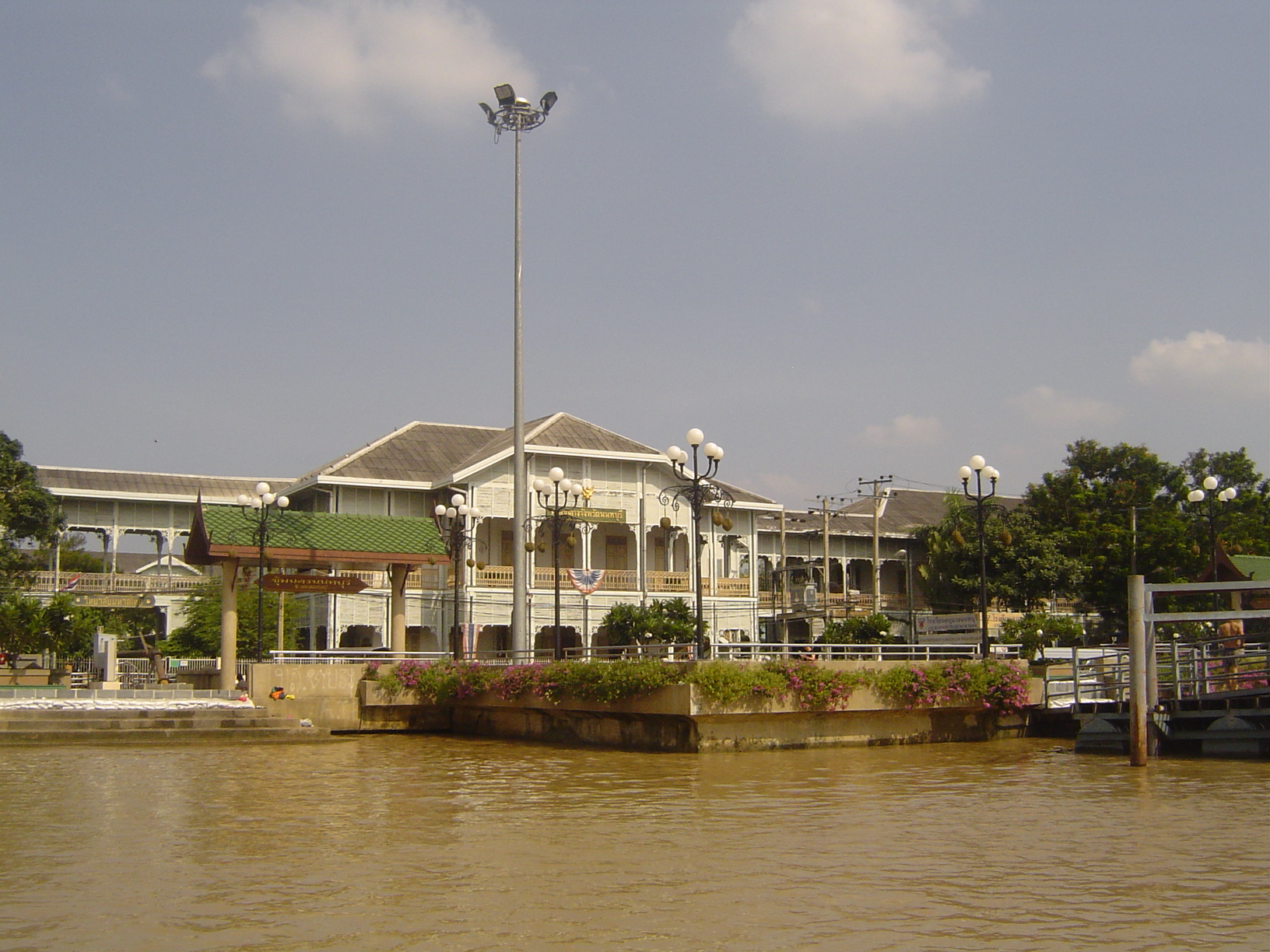
Nonthaburi features several historical landmarks reflecting its royal and cultural heritage. The Nonthaburi Palace, constructed in 1925 during the reign of King Rama VI, served as a royal residence and later as the provincial hall until 1951; it now functions as a museum showcasing local artifacts and history.[5] Adjacent to it, the Nonthaburi Provincial Hall, built in the early 20th century and repurposed as the Nonthaburi Museum, preserves architectural elements from the period and exhibits on provincial administration.[102] Wat Chalerm Phra Kiat Worawihan, established in the reign of King Rama III (1824–1851), stands across the Chao Phraya River from central Nonthaburi and features intricate decorations in Chinese style, including murals and statues dedicated to Buddhist themes.[103] Koh Kret, an artificial island in the Chao Phraya River formed by a canal dug in 1722, is renowned for its Mon community and traditional pottery production, with workshops dating back centuries; the island hosts ancient temples like Wat Poramai Yikawat and attracts visitors for its riverside villages and handicrafts.[104] Wat Indharam, one of Nonthaburi's oldest temples founded in the Ayutthaya period (14th–18th centuries), exemplifies Khmer-influenced architecture with its chedi and principal Buddha image.[105] Prominent markets in Nonthaburi emphasize local produce and street cuisine. The Nonthaburi Market, operational since the early 20th century, spans several blocks along the riverfront and offers exotic fruits, dried chilies, grilled meats, and remnants of traditional rickshaws, serving primarily local residents with minimal tourist presence.[106] The Owl Market, a night market open evenings, specializes in street food stalls featuring Thai dishes and shopping for clothing and accessories, drawing crowds for its vibrant atmosphere near urban areas. Wat Ta Khian Floating Market recreates traditional Chao Phraya commerce with boat vendors selling fresh goods and snacks, operating weekends to highlight Nonthaburi's riparian economy.Cultural Festivals and Events
Nonthaburi's cultural festivals reflect its Mon ethnic heritage, riverside location along the Chao Phraya, and integration of Thai Buddhist and Chinese traditions, often centered on temples, merit-making, and local cuisine. Annual events emphasize community gatherings, traditional performances, and seasonal rituals, drawing participants for spiritual purification and historical homage. These celebrations, while sharing national parallels like Songkran, incorporate distinct local elements such as Mon customs and provincial tributes.[110][111] The Mon Songkran Festival, observed by Nonthaburi's Mon communities particularly on Koh Kret island, spans from April 13 to early May each year. It commences with merit-making rituals including the Khao Chae Procession—featuring chilled rice dishes symbolizing purity—and water-pouring ceremonies on elders and Buddha images to usher in the traditional New Year. Additional activities encompass almsgiving, scented powder applications, and communal feasts, preserving Mon cultural identity amid Thailand's broader Songkran observances.[110][112][113] The Vegetarian Festival at Wat Leng Noei Yi 2, held annually from October 21 to 29, promotes spiritual cleansing through nine days of vegetarian meals, fire-walking processions, and merit accumulation, rooted in Teochew Chinese-Thai practices for averting misfortune. Local variations include temple-specific charity events and communal dining, aligning with nationwide observances but emphasizing Nonthaburi's diverse religious sites.[114][115] The Chao Phraya Riverside Tourism: Maha Jetsadabodin festival, staged from March 27 to April 2 in 2025 at Chaloem Kanchanaphisek Park and Nonthaburi Pier, honors King Maha Jetsadabodin through light-and-sound spectacles, royal exhibitions, Khon masked dance, Thai boxing, and OTOP markets featuring retro Pod Duang currency games. Riverside temple fairs add folk dramas, competitions, and river cruises, highlighting Nonthaburi's historical riverside heritage and culinary traditions.[111]Environmental Challenges
Urbanization Impacts and Pollution
Rapid urbanization in Nonthaburi, as part of the Bangkok Metropolitan Region, has intensified the surface urban heat island (SUHI) effect, with built-up areas expanding significantly from 1988 to 2024, leading to elevated land surface temperatures compared to rural peripheries.[21] This transformation, driven by residential and industrial development, has reduced green spaces and agricultural land, contributing to higher urban temperatures by up to several degrees Celsius during peak periods, exacerbating heat stress in densely populated districts like Pak Kret and Bang Bua Thong.[116] Air pollution, primarily fine particulate matter (PM2.5), remains a pressing concern, with seasonal peaks in winter months registering averages of 32.4–33.4 μg/m³ across Nonthaburi monitoring stations, often exceeding Thailand's national standard of 25 μg/m³ annual mean and the World Health Organization's guideline of 5 μg/m³.[117] Vehicle emissions from expanding road networks and industrial activities in areas such as Bang Kruai account for much of this, with 2025 data indicating episodic spikes up to 75 μg/m³ during smog crises affecting the province. These levels correlate with urban density increases, where impervious surfaces and traffic volume amplify pollutant dispersion challenges.[118] Water quality in Nonthaburi's canal systems has deteriorated due to housing expansions, as evidenced by a 2010 study in Bang Yai district showing elevated nutrient loads (nitrogen and phosphorus) from land-use shifts to residential zones, promoting algal blooms and oxygen depletion in waterways linked to the Chao Phraya River.[119] Urban runoff carrying domestic and industrial effluents further strains these systems, with ongoing waste mismanagement compounding eutrophication risks despite provincial efforts to improve sewage treatment coverage.[120] Municipal solid waste generation has surged with population growth, reaching levels that challenge landfill capacities and emit greenhouse gases, as quantified in assessments of Nonthaburi's waste streams where improper segregation leads to methane releases equivalent to significant carbon footprints from unprocessed organics.[120] These urbanization-driven pressures underscore causal links between sprawl, resource intensification, and environmental degradation, necessitating targeted mitigation beyond current infrastructural limits.[121]Resource Management and Sustainability
Nonthaburi Province, as part of the densely populated Bangkok Metropolitan Region, confronts resource management challenges including high municipal solid waste generation rates exceeding 1 kg per capita daily and vulnerabilities to flooding from the Chao Phraya River, necessitating integrated strategies for waste, water, and emissions reduction.[122][87] Local policies emphasize source separation of waste into organic, recyclable, hazardous, and residual categories to promote recycling and reduce landfill dependency.[87] Food waste constitutes a primary sustainability concern, with urban generation rates in Nonthaburi Municipality analyzed in 2025 as averaging 0.45 kg per capita daily, classified into cooked remnants, uncooked produce, and mixed types, prompting an integrated management framework incorporating composting, anaerobic digestion, and community education to minimize environmental impacts.[122][123] Projections for low-carbon lifestyles target a provincial per capita carbon footprint reduction to 2.5 t-CO₂e by 2030, prioritizing food system interventions like waste minimization and dietary shifts, as food-related emissions currently dominate household consumption at over 1 t-CO₂e per capita annually.[57] Complementary efforts include refuse-derived fuel (RDF) production from landfilled waste to generate energy, addressing the province's annual solid waste volume of approximately 365,000 tons through advanced thermal processing.[124][125] Water resource management relies on the Metropolitan Waterworks Authority (MWA), which treats and distributes potable water sourced primarily from the Chao Phraya and Mae Klong Rivers to Nonthaburi's urban areas, serving over 1 million residents with a focus on infrastructure resilience against seasonal floods.[126][85] Wastewater treatment at facilities like the Nonthaburi plant incorporates energy-efficient technologies, including solar integration for operational sustainability, while faecal sludge management aligns with national policies under the 1997-2016 Pollution Prevention framework, emphasizing safe disposal and reuse to curb groundwater contamination.[127][85] Sustainability projects extend to organic waste pilots, such as a 2023 collaboration between BASF Thailand, Chulalongkorn University, and Nonthaburi City Municipality developing models for sorting, collection, and biodigestion of market and household organics, building on initiatives dating to 2001 for community-based composting and biogas production.[128][129] Plastic pollution mitigation includes 2024 manuals for formal and informal recyclers promoting best practices in leakage prevention, alongside events like the 2025 International Day of Zero Waste commemoration focusing on wastewater and textile reuse.[130][131] These efforts, while advancing circular economy principles, face implementation hurdles from rapid urbanization, with ongoing waste-to-energy acquisitions signaling commitments to scalable, technology-driven solutions.[125]Recent Developments
Smart City Initiatives
Nonthaburi Province has pursued smart city development as part of Thailand's national digital economy strategy, emphasizing data-driven urban management, sustainable infrastructure, and public-private partnerships to enhance livability and economic innovation. The province's initiatives align with the Digital Economy Promotion Agency (depa)'s Smart City Data Platform, which supports goals of creating a high-quality habitat and creative economy city through environmentally friendly urban planning and connectivity enhancements, such as the Mahajesadabadintranusorn Bridge over the Chao Phraya River and the Mahanakorn BTS Chalong Ratchatham Purple Line extension from Bang Yai to Bang Sue.[4] A key project is the transformation of Mueang Thong Thani, a major complex in Nonthaburi, into a smart city district led by Bangkok Land Public Company Limited. Announced in 2024, the plan integrates two new Pink Line monorail stations—one at Impact Challenger Hall and another near the lakeside—set to open in 2025, alongside expansions to the Ruamjai fresh market including a seafood and fruit center with 300 dining seats and a durian warehouse. Additional features include a planned 2-billion-baht, 5-star lakeside hotel on a 600-rai plot and a mobile app partnering with food delivery and ride-hailing services to generate employment and stimulate local commerce for approximately 300,000 residents.[132] Assessments of Nonthaburi's smart city progress indicate a high overall development level, with strengths in partnerships and smart governance influencing economic innovation and mobility. Infrastructure enhancements, such as improved transportation networks and urban utilities, are prioritized, alongside recommendations for deeper public-private collaboration and digital technology integration to optimize management efficiency. These efforts aim to address urbanization pressures in the Bangkok Metropolitan Region by fostering sustainable growth without over-relying on unverified national projections.[133]Future Urban Planning and Growth Projections
Nonthaburi's urban planning projections emphasize sustainable expansion within the Bangkok Metropolitan Region (BMR), prioritizing residential development, creative economy hubs, and environmental resilience to accommodate ongoing population growth. The province envisions itself as a "best habitat" with high-quality living standards, integrating creative industries and green infrastructure to mitigate urbanization pressures from Bangkok's spillover.[4] Population estimates indicate steady increase, reaching 1,026,390 by 2025, driven by suburban migration and economic opportunities, which will intensify land use demands and necessitate decongested transport networks.[32] Infrastructure initiatives include mass transit enhancements like the Purple Line BTS extension from Bang Yai to Bang Sue, improving connectivity and reducing reliance on private vehicles. Bridge projects, such as the Mahajesadabadintranusorn over the Chao Phraya River, aim to bolster accessibility for residential and commercial zones.[4] These align with national strategies under Thailand's 13th National Economic and Social Development Plan (2023-2027), which promotes balanced regional growth in suburban clusters including Nonthaburi to foster economic diversification beyond Bangkok's core.[134] Sustainability projections incorporate geo-informatics modeling to expand urban parks, potentially adding 7.58 to 12.56 square kilometers of suitable green space by countering expansion trends through targeted planning. Low-carbon lifestyle scenarios forecast household emissions at 3.15 tCO₂e per capita annually by 2030, guiding policies toward resource-efficient communities and reduced ecological footprints amid BMR-wide urbanization.[135][65] Overall, growth models predict continued high-density urban creep at 0.08% annually in the greater Bangkok area, positioning Nonthaburi for integrated development that balances economic vitality with livability.[136]References
- https://commons.wikimedia.org/wiki/File:Districts_Nonthaburi.png
- https://www.[tripadvisor](/page/Tripadvisor).com/Attraction_Review-g735212-d8755858-Reviews-Nonthaburi_Market-Nonthaburi_Nonthaburi_Province.html
- https://www.[tripadvisor](/page/Tripadvisor).com/Attractions-g2098455-Activities-c26-t142-Nonthaburi_Province.html
- https://www.[youtube](/page/YouTube).com/watch?v=Rnsmd-eF7aI
