
Recent from talks
Chanson de geste
Knowledge base stats:
Talk channels stats:
Members stats:
Chanson de geste
The chanson de geste (Old French for 'song of heroic deeds', from Latin: gesta 'deeds, actions accomplished') is a medieval narrative, a type of epic poem that appears at the dawn of French literature. The earliest known poems of this genre date from the late 11th and early 12th centuries, shortly before the emergence of the lyric poetry of the troubadours and trouvères, and the earliest verse romances. They reached their highest point of acceptance in the period 1150–1250.
Composed in verse, these narrative poems of moderate length (averaging 4000 lines) were originally sung, or (later) recited, by minstrels or jongleurs. More than one hundred chansons de geste have survived in approximately three hundred manuscripts that date from the 12th to the 15th century.
Since the 19th century, much critical debate has centered on the origins of the chansons de geste, and particularly on explaining the length of time between the composition of the chansons and the actual historical events which they reference. The historical events the chansons allude to occur in the 8th through 10th centuries, yet the earliest chansons that have survived were probably composed at the end of the 11th century: only three chansons de geste have a composition that incontestably dates from before 1150: the Chanson de Guillaume, The Song of Roland and Gormont et Isembart: the first half of the Chanson de Guillaume may date from as early as the 11th century; Gormont et Isembart may date from as early as 1068, according to one expert; and The Song of Roland probably dates from after 1086 to c.1100.
Three early theories of the origin of chansons de geste believe in the continued existence of epic material (either as lyric poems, epic poems or prose narrations) in these intervening two or three centuries. Critics like Claude Charles Fauriel, François Raynouard and German Romanticists like Jacob Grimm posited the spontaneous creation of lyric poems by the people as a whole at the time of the historic battles, which were later put together to form the epics. This was the basis for the "cantilena" theory of epic origin, which was elaborated by Gaston Paris, although he maintained that single authors, rather than the multitude, were responsible for the songs.
This theory was also supported by Robert Fawtier and by Léon Gautier (although Gautier thought the cantilenae were composed in Germanic languages). At the end of the 19th century, Pio Rajna, seeing similarities between the chansons de geste and old Germanic/Merovingian tales, posited a Germanic origin for the French poems. A different theory, introduced by the medievalist Paul Meyer, suggested the poems were based on old prose narrations of the original events.
Another theory (largely discredited today), developed by Joseph Bédier, posited that the early chansons were recent creations, not earlier than the year 1000, developed by singers who, emulating the songs of "saints' lives" sung in front of churches (and collaborating with the church clerics), created epic stories based on the heroes whose shrines and tombs dotted the great pilgrimage routes, as a way of drawing pilgrims to these churches. Critics have also suggested that knowledge by clerics of ancient Latin epics may have played a role in their composition.
Subsequent criticism has vacillated between "traditionalists" (chansons created as part of a popular tradition) and "individualists" (chansons created by a unique author), but more recent historical research has done much to fill in gaps in the literary record and complicate the question of origins. Critics have discovered manuscripts, texts and other traces of the legendary heroes, and further explored the continued existence of a Latin literary tradition (cf. the scholarship of Ernst Robert Curtius) in the intervening centuries. The work of Jean Rychner on the art of the minstrels and the work of Parry and Lord on Yugoslavian oral traditional poetry, Homeric verse and oral composition have also been suggested to shed light on the oral composition of the chansons, although this view is not without its critics who maintain the importance of writing not only in the preservation of the texts, but also in their composition, especially for the more sophisticated poems.
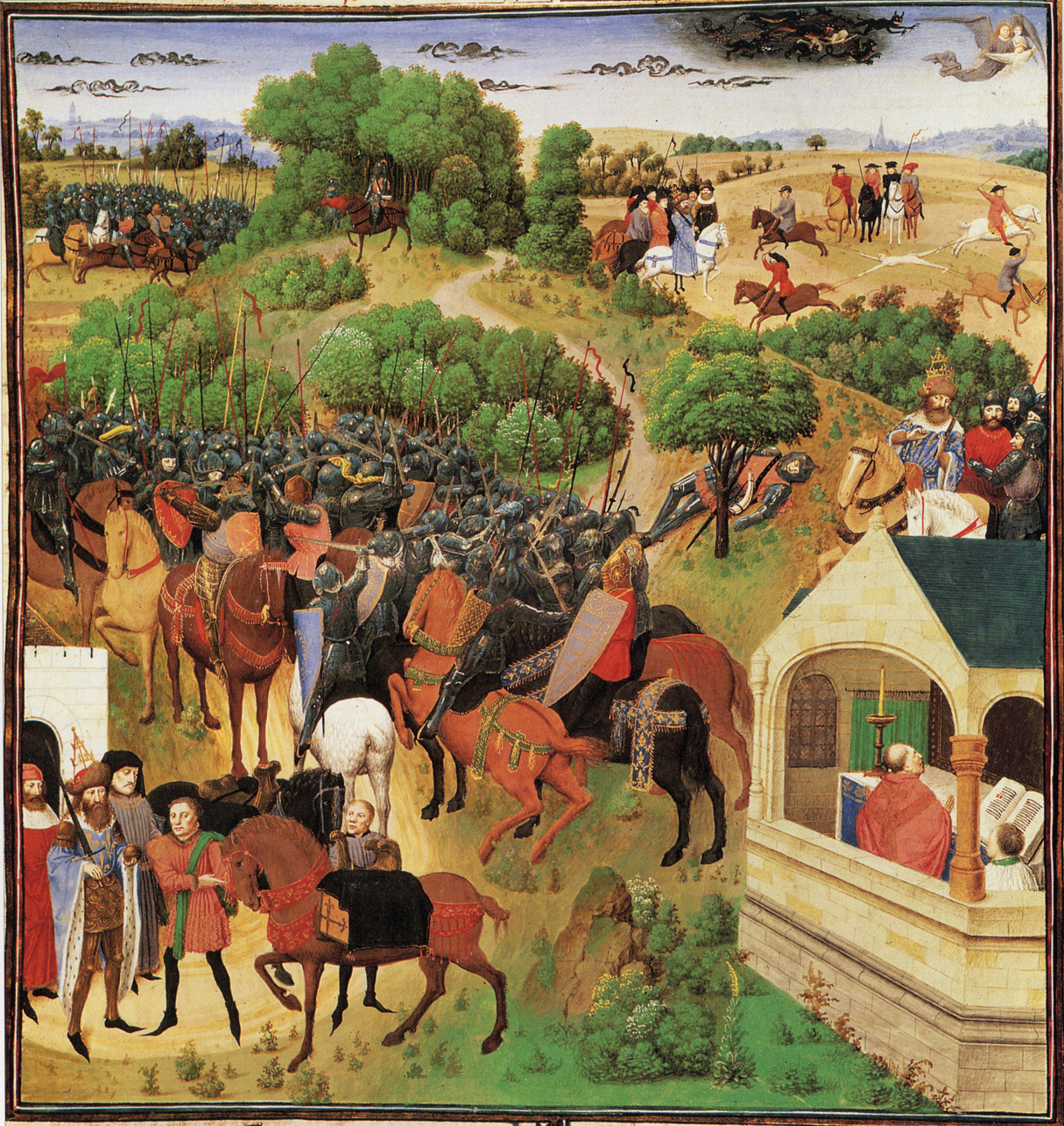
Composed in Old French and apparently intended for oral performance by jongleurs, the chansons de geste narrate legendary incidents (sometimes based on real events) in the history of France during the 8th, 9th and 10th centuries, the age of Charles Martel, Charlemagne and Louis the Pious, with emphasis on their conflicts with the Moors and Saracens, and also disputes between kings and their vassals.
Hub AI
Chanson de geste AI simulator
(@Chanson de geste_simulator)
Chanson de geste
The chanson de geste (Old French for 'song of heroic deeds', from Latin: gesta 'deeds, actions accomplished') is a medieval narrative, a type of epic poem that appears at the dawn of French literature. The earliest known poems of this genre date from the late 11th and early 12th centuries, shortly before the emergence of the lyric poetry of the troubadours and trouvères, and the earliest verse romances. They reached their highest point of acceptance in the period 1150–1250.
Composed in verse, these narrative poems of moderate length (averaging 4000 lines) were originally sung, or (later) recited, by minstrels or jongleurs. More than one hundred chansons de geste have survived in approximately three hundred manuscripts that date from the 12th to the 15th century.
Since the 19th century, much critical debate has centered on the origins of the chansons de geste, and particularly on explaining the length of time between the composition of the chansons and the actual historical events which they reference. The historical events the chansons allude to occur in the 8th through 10th centuries, yet the earliest chansons that have survived were probably composed at the end of the 11th century: only three chansons de geste have a composition that incontestably dates from before 1150: the Chanson de Guillaume, The Song of Roland and Gormont et Isembart: the first half of the Chanson de Guillaume may date from as early as the 11th century; Gormont et Isembart may date from as early as 1068, according to one expert; and The Song of Roland probably dates from after 1086 to c.1100.
Three early theories of the origin of chansons de geste believe in the continued existence of epic material (either as lyric poems, epic poems or prose narrations) in these intervening two or three centuries. Critics like Claude Charles Fauriel, François Raynouard and German Romanticists like Jacob Grimm posited the spontaneous creation of lyric poems by the people as a whole at the time of the historic battles, which were later put together to form the epics. This was the basis for the "cantilena" theory of epic origin, which was elaborated by Gaston Paris, although he maintained that single authors, rather than the multitude, were responsible for the songs.
This theory was also supported by Robert Fawtier and by Léon Gautier (although Gautier thought the cantilenae were composed in Germanic languages). At the end of the 19th century, Pio Rajna, seeing similarities between the chansons de geste and old Germanic/Merovingian tales, posited a Germanic origin for the French poems. A different theory, introduced by the medievalist Paul Meyer, suggested the poems were based on old prose narrations of the original events.
Another theory (largely discredited today), developed by Joseph Bédier, posited that the early chansons were recent creations, not earlier than the year 1000, developed by singers who, emulating the songs of "saints' lives" sung in front of churches (and collaborating with the church clerics), created epic stories based on the heroes whose shrines and tombs dotted the great pilgrimage routes, as a way of drawing pilgrims to these churches. Critics have also suggested that knowledge by clerics of ancient Latin epics may have played a role in their composition.
Subsequent criticism has vacillated between "traditionalists" (chansons created as part of a popular tradition) and "individualists" (chansons created by a unique author), but more recent historical research has done much to fill in gaps in the literary record and complicate the question of origins. Critics have discovered manuscripts, texts and other traces of the legendary heroes, and further explored the continued existence of a Latin literary tradition (cf. the scholarship of Ernst Robert Curtius) in the intervening centuries. The work of Jean Rychner on the art of the minstrels and the work of Parry and Lord on Yugoslavian oral traditional poetry, Homeric verse and oral composition have also been suggested to shed light on the oral composition of the chansons, although this view is not without its critics who maintain the importance of writing not only in the preservation of the texts, but also in their composition, especially for the more sophisticated poems.
Composed in Old French and apparently intended for oral performance by jongleurs, the chansons de geste narrate legendary incidents (sometimes based on real events) in the history of France during the 8th, 9th and 10th centuries, the age of Charles Martel, Charlemagne and Louis the Pious, with emphasis on their conflicts with the Moors and Saracens, and also disputes between kings and their vassals.
Recent media