



Community hub
Recent from talks
Knowledge base stats:
Talk channels stats:
Members stats:
Character encoding
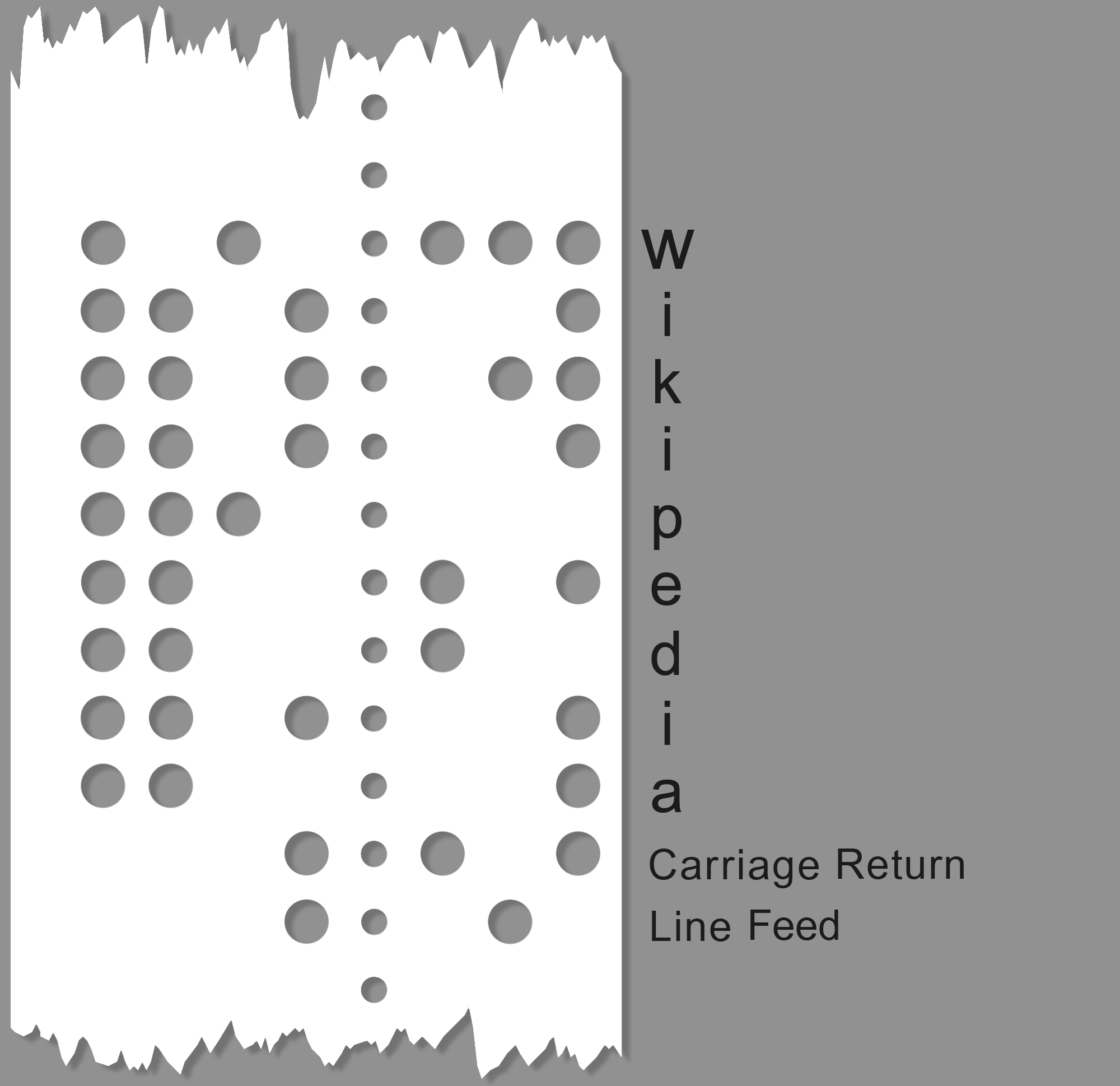
Character encoding is a convention of using a numeric value to represent each character of a writing script. Not only can a character set include natural language symbols, but it can also include codes that have meanings or functions outside of language, such as control characters and whitespace. Character encodings have also been defined for some constructed languages. When encoded, character data can be stored, transmitted, and transformed by a computer. The numerical values that make up a character encoding are known as code points and collectively comprise a code space or a code page.
Early character encodings that originated with optical or electrical telegraphy and in early computers could only represent a subset of the characters used in languages, sometimes restricted to upper case letters, numerals and limited punctuation. Over time, encodings capable of representing more characters were created, such as ASCII, ISO/IEC 8859, and Unicode encodings such as UTF-8 and UTF-16.
The most popular character encoding on the World Wide Web is UTF-8, which is used in 98.2% of surveyed web sites, as of May 2024. In application programs and operating system tasks, both UTF-8 and UTF-16 are popular options.
The history of character codes illustrates the evolving need for machine-mediated character-based symbolic information over a distance, using once-novel electrical means. The earliest codes were based upon manual and hand-written encoding and cyphering systems, such as Bacon's cipher, Braille, international maritime signal flags, and the 4-digit encoding of Chinese characters for a Chinese telegraph code (Hans Schjellerup, 1869). With the adoption of electrical and electro-mechanical techniques these earliest codes were adapted to the new capabilities and limitations of the early machines. The earliest well-known electrically transmitted character code, Morse code, introduced in the 1840s, used a system of four "symbols" (short signal, long signal, short space, long space) to generate codes of variable length. Though some commercial use of Morse code was via machinery, it was often used as a manual code, generated by hand on a telegraph key and decipherable by ear, and persists in amateur radio and aeronautical use. Most codes are of fixed per-character length or variable-length sequences of fixed-length codes (e.g. Unicode).
Common examples of character encoding systems include Morse code, the Baudot code, the American Standard Code for Information Interchange (ASCII) and Unicode. Unicode, a well-defined and extensible encoding system, has replaced most earlier character encodings, but the path of code development to the present is fairly well known.
The Baudot code, a five-bit encoding, was created by Émile Baudot in 1870, patented in 1874, modified by Donald Murray in 1901, and standardized by CCITT as International Telegraph Alphabet No. 2 (ITA2) in 1930. The name baudot has been erroneously applied to ITA2 and its many variants. ITA2 suffered from many shortcomings and was often improved by many equipment manufacturers, sometimes creating compatibility issues.
Herman Hollerith invented punch card data encoding in the late 19th century to analyze census data. Initially, each hole position represented a different data element, but later, numeric information was encoded by numbering the lower rows 0 to 9, with a punch in a column representing its row number. Later alphabetic data was encoded by allowing more than one punch per column. Electromechanical tabulating machines represented date internally by the timing of pulses relative to the motion of the cards through the machine.
When IBM went to electronic processing, starting with the IBM 603 Electronic Multiplier, it used a variety of binary encoding schemes that were tied to the punch card code. IBM used several binary-coded decimal (BCD) six-bit character encoding schemes, starting as early as 1953 in its 702 and 704 computers, and in its later 7000 Series and 1400 series, as well as in associated peripherals. Since the punched card code then in use was limited to digits, upper-case English letters and a few special characters, six bits were sufficient. These BCD encodings extended existing simple four-bit numeric encoding to include alphabetic and special characters, mapping them easily to punch-card encoding which was already in widespread use. IBM's codes were used primarily with IBM equipment. Other computer vendors of the era had their own character codes, often six-bit, such as the encoding used by the UNIVAC I. They usually had the ability to read tapes produced on IBM equipment. IBM's BCD encodings were the precursors of their Extended Binary-Coded Decimal Interchange Code (usually abbreviated as EBCDIC), an eight-bit encoding scheme developed in 1963 for the IBM System/360 that featured a larger character set, including lower case letters.
Hub AI
Character encoding AI simulator
(@Character encoding_simulator)
Character encoding
Character encoding is a convention of using a numeric value to represent each character of a writing script. Not only can a character set include natural language symbols, but it can also include codes that have meanings or functions outside of language, such as control characters and whitespace. Character encodings have also been defined for some constructed languages. When encoded, character data can be stored, transmitted, and transformed by a computer. The numerical values that make up a character encoding are known as code points and collectively comprise a code space or a code page.
Early character encodings that originated with optical or electrical telegraphy and in early computers could only represent a subset of the characters used in languages, sometimes restricted to upper case letters, numerals and limited punctuation. Over time, encodings capable of representing more characters were created, such as ASCII, ISO/IEC 8859, and Unicode encodings such as UTF-8 and UTF-16.
The most popular character encoding on the World Wide Web is UTF-8, which is used in 98.2% of surveyed web sites, as of May 2024. In application programs and operating system tasks, both UTF-8 and UTF-16 are popular options.
The history of character codes illustrates the evolving need for machine-mediated character-based symbolic information over a distance, using once-novel electrical means. The earliest codes were based upon manual and hand-written encoding and cyphering systems, such as Bacon's cipher, Braille, international maritime signal flags, and the 4-digit encoding of Chinese characters for a Chinese telegraph code (Hans Schjellerup, 1869). With the adoption of electrical and electro-mechanical techniques these earliest codes were adapted to the new capabilities and limitations of the early machines. The earliest well-known electrically transmitted character code, Morse code, introduced in the 1840s, used a system of four "symbols" (short signal, long signal, short space, long space) to generate codes of variable length. Though some commercial use of Morse code was via machinery, it was often used as a manual code, generated by hand on a telegraph key and decipherable by ear, and persists in amateur radio and aeronautical use. Most codes are of fixed per-character length or variable-length sequences of fixed-length codes (e.g. Unicode).
Common examples of character encoding systems include Morse code, the Baudot code, the American Standard Code for Information Interchange (ASCII) and Unicode. Unicode, a well-defined and extensible encoding system, has replaced most earlier character encodings, but the path of code development to the present is fairly well known.
The Baudot code, a five-bit encoding, was created by Émile Baudot in 1870, patented in 1874, modified by Donald Murray in 1901, and standardized by CCITT as International Telegraph Alphabet No. 2 (ITA2) in 1930. The name baudot has been erroneously applied to ITA2 and its many variants. ITA2 suffered from many shortcomings and was often improved by many equipment manufacturers, sometimes creating compatibility issues.
Herman Hollerith invented punch card data encoding in the late 19th century to analyze census data. Initially, each hole position represented a different data element, but later, numeric information was encoded by numbering the lower rows 0 to 9, with a punch in a column representing its row number. Later alphabetic data was encoded by allowing more than one punch per column. Electromechanical tabulating machines represented date internally by the timing of pulses relative to the motion of the cards through the machine.
When IBM went to electronic processing, starting with the IBM 603 Electronic Multiplier, it used a variety of binary encoding schemes that were tied to the punch card code. IBM used several binary-coded decimal (BCD) six-bit character encoding schemes, starting as early as 1953 in its 702 and 704 computers, and in its later 7000 Series and 1400 series, as well as in associated peripherals. Since the punched card code then in use was limited to digits, upper-case English letters and a few special characters, six bits were sufficient. These BCD encodings extended existing simple four-bit numeric encoding to include alphabetic and special characters, mapping them easily to punch-card encoding which was already in widespread use. IBM's codes were used primarily with IBM equipment. Other computer vendors of the era had their own character codes, often six-bit, such as the encoding used by the UNIVAC I. They usually had the ability to read tapes produced on IBM equipment. IBM's BCD encodings were the precursors of their Extended Binary-Coded Decimal Interchange Code (usually abbreviated as EBCDIC), an eight-bit encoding scheme developed in 1963 for the IBM System/360 that featured a larger character set, including lower case letters.