Hubbry Logo
Charlotte MerriamCharlotte MerriamMain
Open search
Charlotte Merriam
Community hub
Charlotte Merriam
logo
8 pages, 0 posts
0 subscribers
Be the first to start a discussion here.
Charlotte Merriam
Charlotte Merriam
from Wikipedia

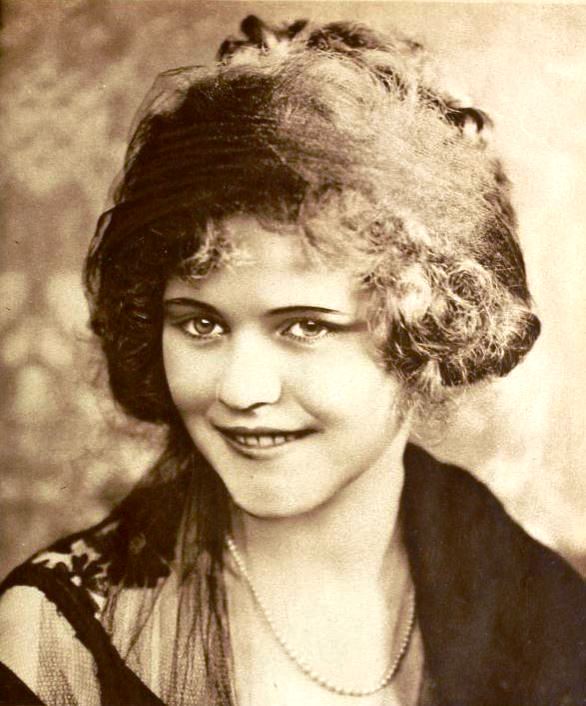
Charlotte Merriam (April 5, 1903 – July 10, 1972) was an American motion picture actress.

Key Information

Career

[edit]

Charlotte Merriam was the daughter of army colonel Henry Clay Merriam (1879-1955) and born in Fort Sheridan, Illinois. Her film career began in 1919 at the age of 16 with a role in The Flip of a Coin. While visiting Universal Pictures that year, she was offered a part in a comedy series starring Eddie Lyons and Leo Moran, possibly to replace their female regular, Betty Compson, who graduated to features. Merriam accepted. Afterward, she played leads in one- and two-reel comedies, and appeared in important parts in longer features.[1] She performed with Colleen Moore in The Nth Commandment (1923) and was the female lead in The Brass Bottle (1923), directed by Maurice Tourneur.[citation needed]

She signed a long-term contract with Vitagraph Studios in June 1924. Her role of Mary Trail in Captain Blood (1924) was her transition from comedy to more serious films.[2] Merriam was associated with Warner Brothers Pictures from 1929, when she signed to play the role of Camilla in Dumbbells in Ermine (1930).[3] She was cast with Paul Hurst in an orphanage drama produced by the Tiffany Pictures about children of a deceased firefighter. The early sound film is titled The Third Alarm (1930).[4] After the advent of sound, Merriam's roles consisted of portrayals of pre-Code tarnished society women, notably the drunken mother of two little girls who are in great danger in Night Nurse (1931) starring Barbara Stanwyck and Clark Gable, and as the syphilis-infected Elise in Damaged Lives (1934).[citation needed]

Personal life and death

[edit]

In December 1923, Merriam was named a co-respondent in a divorce suit brought by May Morris, the wife of film director Reggie Morris.[5] Merriam married actor Rex Lease in 1925. The two met when he appeared in one of her films two years earlier. They had two children, Douglas Merriam Kinleyside (1937–1964) and Duncan William Kinleyside (1940–1994). The actress filed for divorce in 1929.[6] Merriam later married actor Don Douglas, who died in 1946. Their residence was at 12423 Laurel Terrace, Studio City, California.[7] Lastly, Merriam married Russell Kennedy Woodward (1910–1974).

Her childhood ambition was to become a concert pianist. She continued her musical education as a screen actress. She studied to be a vocalist with Felix Hughes. In January 1931, Merriam was operated on for an emergency appendicitis in San Francisco, California. She was in the Bay Area to participate in the entertainment for an automobile show.[8]

Merriam died in Los Angeles on July 10, 1972, aged 69.[citation needed]

Partial filmography

[edit]

References

[edit]
[edit]
Revisions and contributorsEdit on WikipediaRead on Wikipedia
from Grokipedia
'''Charlotte Merriam''' (April 5, 1903 – July 10, 1972) was an American actress known for her prolific career in silent films and early sound pictures during the 1920s and 1930s. She appeared in more than fifty films, often in supporting roles, and worked with major studios including Universal, Vitagraph, and Warner Brothers. Merriam began her film career in 1919 at the age of sixteen, initially appearing in comedy shorts before taking on roles in feature films. Among her notable silent-era performances were appearances in Captain Blood (1924) and So Big (1924). She successfully transitioned to talkies, featuring in pre-Code films such as Night Nurse (1931) and The Crowd Roars (1932), where she often portrayed society women or similar characters. Her final credited role came in the mid-1930s, after which she retired from acting. Born on April 5, 1903, in Fort Sheridan, Illinois, to a military family, Merriam's contributions to early Hollywood cinema reflect the transition from silent to sound eras, though she primarily worked in supporting capacities rather than as a leading star.

Early life

Family background and childhood

Charlotte Merriam was born Charlotte Burnham Merriam on April 5, 1903, at Fort Sheridan in Lake County, Illinois. She was the daughter of a colonel in the U.S. Army, which resulted in an "army brat" upbringing marked by frequent relocations as her father's military career required moves to various postings. Details of her early childhood experiences, siblings, or specific family life beyond this military context remain sparsely documented in available sources.

Entry into films

Charlotte Merriam began her film career in 1919 at the age of 16 with a role in the silent short The Flip of a Coin, produced by Universal Film Manufacturing Company. While visiting Universal studios that year, she attracted notice and was offered a part in a comedy series starring Eddie Lyons and Lee Moran, which she accepted. This marked her transition from civilian life to professional acting, with initial roles as a juvenile or supporting player in early silent comedy shorts at Universal. By mid-1919, she was already appearing in such productions alongside Lyons and Moran, as evidenced by contemporary reports of her work in their one-reel comedy Lost, Strayed or Stolen.

Film career

Silent shorts at Universal (1919–1925)

Charlotte Merriam began her film career at Universal Pictures in 1919, debuting in the short The Flip of a Coin at age 16. While visiting the Universal lot, she was offered a role in one of the studio's comedy series and quickly became a regular presence in its silent short film output. Between 1919 and the mid-1920s, she appeared in dozens of two-reel comedies produced at Universal, most of them lighthearted slapstick or situational farces typical of the era's short subject format. Her roles in these films generally cast her as the attractive leading lady or ingenue, often serving as the romantic interest, wife, or sweetheart whose presence added appeal and narrative motivation to the comedic plots. These shorts were part of Universal's prolific assembly-line production of comedy releases, designed for quick exhibition in theaters alongside features and newsreels. Although her work overlapped significantly with recurring comedy teams at the studio, she also featured in other independent two-reel comedies produced by Universal during this period, contributing to the studio's reputation for a steady stream of low-budget, high-volume silent humor. By the early to mid-1920s, as her experience grew, Merriam's appearances in Universal shorts gradually gave way to opportunities in feature-length productions, including notable roles in Captain Blood (1924) and So Big (1924), marking the end of her primary focus on the short format at the studio around 1925.

Leading roles with Lyons and Moran (1920–1923)

Charlotte Merriam achieved notable recognition as the recurring leading lady opposite the popular Universal comedy duo Eddie Lyons and Lee Moran in a series of two-reel silent shorts primarily released in 1920. These collaborations, which followed her initial offer to join their comedy series while visiting Universal studios, positioned her as a key comic foil in their slapstick narratives, often cast as a wife, sweetheart, or romantic interest entangled in the pair's chaotic misadventures. Among the verified titles from this period are "Why Lee!" (1920), "Somebody Lied" (1920), "Oiling Uncle" (1920), "Butting in on Baby" (1920), "Stop That Wedding" (1920), "Caught in the End" (1920), "Officer, Call a Cop" (1920), and "Bungled Bungalows" (1920), all directed by Lyons and Moran themselves and featuring Merriam prominently alongside the stars. These films stand out as the most distinctive and consistent body of work in Merriam's early silent career, capitalizing on the duo's established popularity in Universal's comedy output during the height of the silent short era.

Feature films and sound era (1929–1934)

With the arrival of sound films, Charlotte Merriam made the transition from silent shorts to feature-length talkies, beginning with a small role in the landmark early musical The Broadway Melody (1929), where she appeared as a flapper in pearl. This marked her entry into the sound era, as Hollywood adapted to the new technology and many silent-era performers sought opportunities in features. During the early 1930s, Merriam's career shifted to primarily small or supporting parts, often uncredited or brief, in a variety of feature films. She appeared in the pre-Code drama Night Nurse (1931) as Mrs. Ritchey. Subsequent roles included a small uncredited appearance in Man Wanted (1932) as an actress, and credited supporting parts such as Grace in Broken Dreams (1933), Eloise Thurman in Alimony Madness (1933), and Helen Delk in Daring Daughters (1933). Her later work in the period included a role as Elise Cooper in Damaged Lives (1933), an independent drama addressing social issues. These appearances reflected a pattern of minor roles following her earlier leading work in silent comedies, with her last credited role in Dancing Man (1934) before she retired from acting.

Personal life

Marriages and relationships

Charlotte Merriam was married three times during her adult life. Her first marriage was to actor Rex Lease, beginning in 1925 and ending in divorce in 1929. She subsequently married actor Don Douglas, with whom she remained until his death in 1946. Later in life, Merriam married Russell K. Woodward, as reflected in her burial record under the name Charlotte Burnham Merriam Woodward. No further details on the dates of her second or third marriages, or on any additional relationships, are documented in available sources.

Death

Charlotte Merriam died on July 28, 1973, in North Hollywood, California, at the age of 69.
Add your contribution
Related Hubs
User Avatar
No comments yet.