Hubbry Logo
Checkered Giant rabbitCheckered Giant rabbitMain
Open search
Checkered Giant rabbit
Community hub
Checkered Giant rabbit
logo
8 pages, 0 posts
0 subscribers
Be the first to start a discussion here.
Checkered Giant rabbit
from Wikipedia
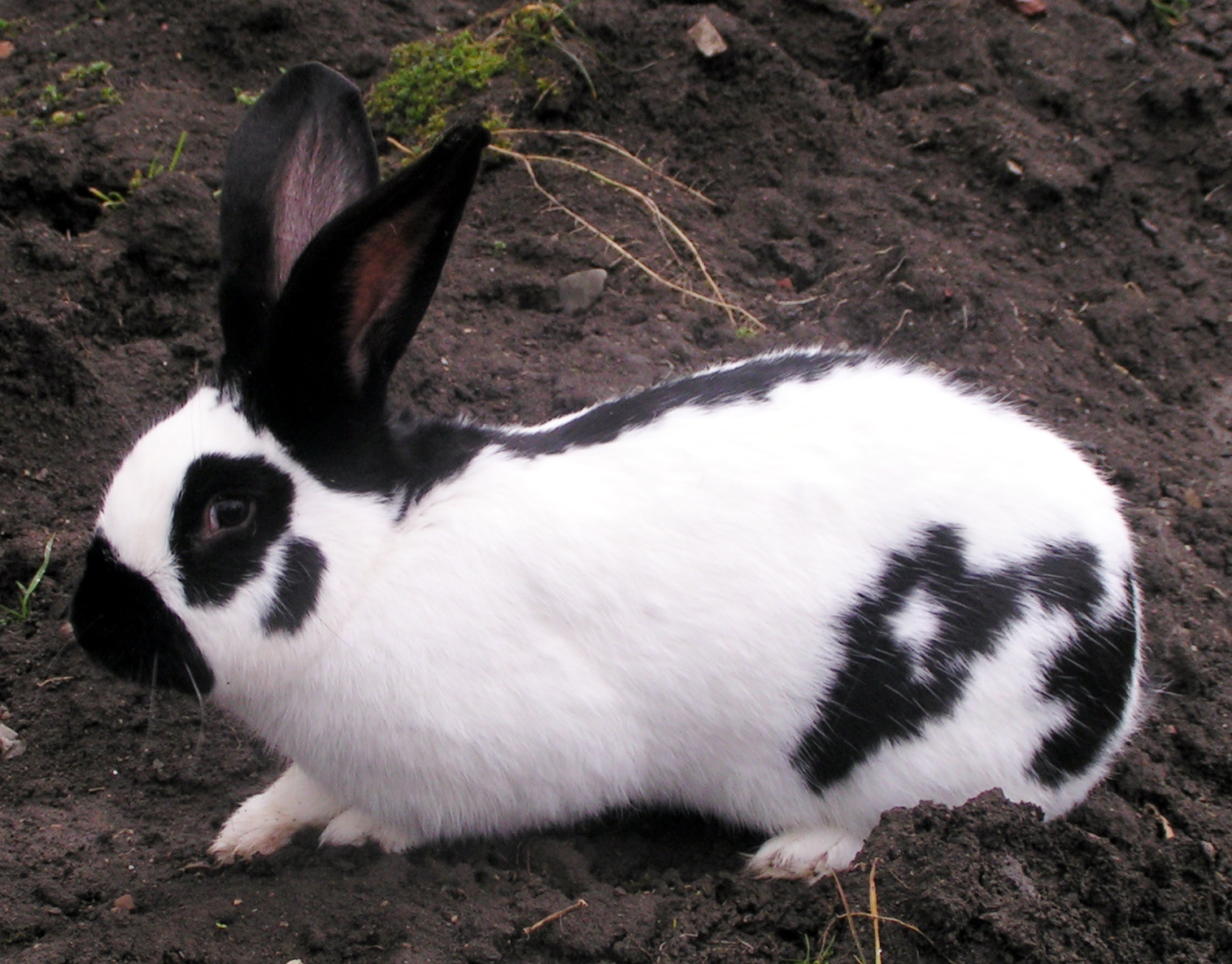
A mature Checkered Giant rabbit
(black variety)
A 3-month old Checkered Giant rabbit
(black variety)

The Checkered Giant, known as Géant Papillon in French, is a breed of domestic rabbit that originated in France.[1] One of the largest rabbit breeds, the Checkered Giant is recognized by the American Rabbit Breeders Association (ARBA).[2] The Checkered Giant is one of the minority of rabbit breeds with specific coat markings. The markings defined in the breed standard of the Checkered Giant[2] differ somewhat from those in the breed standard of the Giant Papillon.[3] For ARBA show purposes, a mature Checkered Giant buck must weigh a minimum of 11 pounds (5.0 kg), and a mature doe must weigh a minimum of 12 pounds (5.4 kg). ARBA does not specify a maximum weight for Checkered Giants.[2]

History

[edit]

In 1904, Otto Reinhardt of Reinfalz, Germany interbred the Great German Spot and black Flemish Giant rabbit. Six years later, the Checkered Giant was introduced in the United States.[4] Some time later, a smaller variant - the Miniature Checkered rabbit [nl]- was bred in the Netherlands, where it is a stable breed.[5]

Appearance

[edit]

For the Checkered Giant, ARBA recognizes two varieties: Black ("white with black markings"), and Blue ("white with gray markings").[6] Each sex and variety is judged separately.

ARBA show weights of the Checkered Giant[2]
Category Age Minimum
Weight
Maximum
Weight
Senior Does 8+ months old 12 lb (5.4 kg) [none specified]
Senior Bucks 8+ months old 11 lb (5.0 kg) [none specified]
Intermediate Does & Bucks 6–8 months old 9 lb (4.1 kg) [none specified]
Junior Does & Bucks 3–6 months old 6 lb (2.7 kg) [none specified]
Pre-Junior Does & Bucks <3 months old 4 lb (1.8 kg) 7 lb (3.2 kg)

See also

[edit]

References

[edit]
[edit]
Revisions and contributorsEdit on WikipediaRead on Wikipedia
from Grokipedia
The Checkered Giant is a large of distinguished by its bold, checkered markings and full-arched body type, recognized by the (ARBA) since 1919. Originating in during the mid-1800s—attributed by some sources to France (where it is known as the Giant Papillon) and by others to crossbreeding efforts in involving breeds like the Flemish Giant—the Checkered Giant was introduced to the by 1910 and has been celebrated for its aesthetic appeal, earning the nickname "the rabbit beautiful" during its centennial in 2019. Developed as a fancy emphasizing striking patterns over utility, the Checkered Giant features a full-arched body type with a long, mandolin-shaped frame carried well off the ground, well-proportioned head, erect ears held close together, and long, straight legs with medium-heavy bone. Recognized in varieties, its is flyback with glossy, short, and dense , while distinctive markings include a solid spine line from ears to tail, two medium spots or groups of spots on each side, cheek spots, a butterfly pattern on the nose and muzzle, eye circles, and solid-colored ears. Mature bucks must weigh at least 11 pounds (5 kg), does at least 12 pounds (5.4 kg), with no upper weight limit, classifying it as a six-class suitable for . As a running breed requiring spacious enclosures for exercise, the Checkered Giant is noted for its gentle and friendly temperament, making it an intermediate-level choice for breeders and fanciers focused on show quality. Currently listed as a "watch" status breed by due to its threatened population and the challenges in breeding its exacting color patterns, it contributes to while primarily serving exhibition purposes rather than meat or fur production.

Breed Overview

Origin and History

The Checkered Giant rabbit was developed in 1904 by German breeder Reinhardt of Rheinpfalz, who crossed Great German Spotted rabbits with black Flemish Giants to produce a large distinguished by its bold spotting pattern. Large spotted rabbits had been known in since the mid-1800s, particularly in , where they gained popularity for their aesthetic markings before Reinhardt's efforts refined the type into what became known as the Checkered Giant. The breed's history includes some conflicting claims regarding its origins, with some accounts tracing it to France in the region through crosses involving Flemish Giants, French Lops, and spotted varieties, while others suggest influences from via English Spot or butterfly-marked rabbits. However, primary breeding records and detailed accounts point to the German development under Reinhardt as the foundational event, resolving earlier ambiguities by emphasizing the crossbreeding program. In , the breed adopted the Géant Papillon (Giant Butterfly), reflecting its prominent butterfly-shaped nose marking, and was recognized as a spotted giant variety. Checkered Giants were introduced to the via imports in 1910, where they quickly gained favor for exhibition and were later accepted into the (ARBA) standards in 1919. During the 20th century, a smaller variant known as the Miniature Checkered Giant emerged in the , bred as a stable miniature form of the breed.

Recognition and Standards

The Checkered Giant rabbit was officially recognized by the (ARBA) in 1919, marking its establishment as a distinct within the organization's standards. ARBA classifies the Checkered Giant as a six-class , with categories based on age and minimum weights to ensure development aligns with the breed's giant and structure. Pre-junior rabbits under 3 months must weigh between 4 and 7 pounds (1.8–3.2 kg); juniors from 3 to 6 months require at least 6 pounds (2.7 kg); intermediates from 6 to 8 months need a minimum of 9 pounds (4.1 kg); and seniors over 8 months set the breed's mature ideals, with bucks at a minimum of 11 pounds (5.0 kg) and does at 12 pounds (5.4 kg), though no upper weight limit is imposed to accommodate the breed's potential for greater . In ARBA shows, emphasis is placed on bold, checkered marking patterns, including a prominent butterfly nose, eye circles, cheek spots, side markings of separated color groups, a continuous spine stripe, and solid-colored ears, all on a white body with black or blue varieties. These standards differ from those of the European Giant , where markings prioritize more refined, butterfly-like spots with less emphasis on bold checkering, reflecting variations in priorities across regions. Beyond ARBA, the breed participates in international rabbit shows under names like Giant Papillon, with recognition by organizations such as the British Rabbit Council, which maintains standards for exhibition in the UK and . This allows Checkered Giants to compete in global registries and events, promoting the breed's standards while highlighting regional adaptations in conformation and markings.

Physical Characteristics

Size and Build

The Checkered Giant is recognized as one of the largest breeds, with senior bucks required to weigh at least 11 pounds (5 kg) and senior does at least 12 pounds (5.4 kg), though many individuals exceed 13 pounds (5.9 kg). This features a mandolin-shaped body with a slight arch, long and balanced proportions, and robust hindquarters that support powerful propulsion. The overall structure is carried high off the ground, allowing for ample daylight underneath, which aligns with its classification as a running . The head is large and proportionate to the body, topped with erect ears that are set high on the and carried close together. Bone structure combines heaviness with refinement, featuring medium-heavy boning throughout; the front legs are straight and of medium length, while the rear legs are long, powerful, and parallel to the body for optimal movement.

Coat and Markings

The Checkered Giant rabbit possesses a of short, soft with a flyback texture that lies flat against the body and exhibits a glossy shine, making it relatively low-maintenance compared to breeds with longer . This type conforms to the ARBA's commercial normal fur standards, providing a dense undercoat that enhances the visibility of the breed's signature patterns. The (ARBA) recognizes two varieties: , characterized by a predominantly base color accented with bold black spots, and , featuring a base with slate-gray or bluish spots. These colorations must be vivid and well-distributed to meet breed standards, with the areas forming the majority of the coat while the colored markings provide striking contrast. Distinctive markings define the breed's appearance, including a bold, checkered butterfly pattern across the cheeks and muzzle, large blotches on the sides (typically two medium-sized or grouped spots per side), a continuous spine marking extending from the neck to the tail, white-rimmed eye circles, solid-colored ears matching the variety, and a chest marking. For show quality, these elements must be bold and symmetrically placed, emphasizing the "checkered" effect; the arched body posture further accentuates this display. Under ARBA standards, disqualifications apply for excessive white coverage that diminishes the markings, merged or blurred spots lacking definition, or any non-standard colors such as brown, chocolate, or dilute shades outside the recognized varieties. The breed undergoes minor seasonal shedding twice annually, in spring and fall, which is less pronounced than in long-haired breeds due to the short length, typically requiring only light brushing to manage loose hairs.

Temperament and Behavior

Personality Traits

Checkered Giant rabbits exhibit a generally friendly, curious, and active disposition, often displaying a playful streak characterized by exploring their surroundings and engaging in hopping behaviors. While not overly cuddly compared to smaller breeds, these are tolerant of handling when socialized from an early age and can form strong bonds with their owners through consistent interaction. They produce occasional vocalizations such as grunts when feeling threatened or territorial and thumps to signal alarm or excitement, though they tend to be less vocal overall than more excitable smaller breeds. In , Checkered Giants interact well with supervised children and can coexist with other pets under proper introductions, but unneutered adults may display territorial instincts, particularly males during periods or unspayed females defending space. Their energy levels range from moderate to high, necessitating mental stimulation to avoid boredom-induced behaviors like digging or chewing. Due to their large size, interactions with owners and others require careful handling to ensure safety and comfort.

Suitability as Pets

The Checkered Giant rabbit can make a suitable for experienced owners who can provide ample and interaction, thanks to its gentle and friendly that allows it to form bonds with family members. These rabbits exhibit low aggression and thrive in interactive environments where they can engage in play and , making them affectionate companions for households committed to their needs. However, they are not as cuddly or needy as some smaller breeds, requiring owners to appreciate their independent yet curious nature for successful bonding. Despite these positives, the breed's large size—often exceeding 11 pounds—presents significant challenges, including high demands for and exercise that render it unsuitable for or novice owners lacking the time for dedicated care. As a "running breed," Checkered Giants need a minimum space of 5 square feet for adults over 11.9 pounds, plus regular exercise outside their to prevent and health issues, which can be demanding in limited living situations. Their active and energetic disposition further emphasizes the need for commitment, as insufficient activity can lead to stress. Ideal environments for Checkered Giants include homes with secure outdoor runs or expansive indoor enclosures that allow for hopping and play, paired with daily supervised interaction. They are well-suited to families, including those with the elderly or couples, but supervision is essential around young children due to the rabbit's size, which can make handling awkward and potentially unsafe if not managed properly. Compared to other giant breeds, Checkered Giants are more active than the laid-back Flemish Giant but share a similar gentle demeanor, though their energy levels demand more stimulation than some other spotted varieties. There are no widespread legal restrictions specific to owning Checkered Giants, as they are recognized as standard domestic pets, but prospective owners should verify local laws, which may limit the number of rabbits or require permits in urban or residential areas.

Care and Husbandry

Housing and Environment

The Checkered Giant, as a large and active running breed, requires spacious housing to support its size and need for movement. Recommended minimum enclosure sizes for adult Checkered Giants include an indoor hutch of at least 8 feet by 4 feet or an outdoor run of by , featuring secure wire flooring elevated to prevent escapes and allow for below. These dimensions exceed basic breeding minima of 5 square feet of floor space for rabbits over 11.9 pounds but align with care guidelines emphasizing ample room for stretching, hopping, and exercise to prevent stress and in giant breeds. Temperature control is essential, with an ideal range of 60-70°F (15-21°C) to maintain comfort, as Checkered Giants are sensitive to extremes that can lead to heat stress or . Housing must shield from drafts, direct , excessive heat above 85°F, and cold below 55°F, often using insulated materials, fans, or frozen bottles for cooling in warmer conditions. Outdoor setups demand predator-proofing with buried wire mesh or solid barriers to deter foxes, dogs, and other threats. Enrichment plays a key role in mimicking the breed's natural behaviors, such as burrowing and exploring; provide platforms for climbing, tunnels for hiding, and chew toys like untreated wood blocks or hanging willow balls to promote mental stimulation and physical activity. Indoor housing is preferred in extreme s for better climate control and easier monitoring, while outdoor options suit temperate areas with added . Due to their size, litter training is feasible but requires larger, reinforced boxes to accommodate their frame, facilitating indoor free-roaming when supervised. For multi-rabbit setups, house Checkered Giants separately unless they are a bonded pair, as their active temperament can lead to territorial conflicts in shared spaces; if grouping, ensure at least 5 square feet per plus compatibility introductions to minimize .

Diet and Nutrition

The diet of the Checkered Giant , a large typically weighing 12 pounds (5.4 kg) or more, emphasizes high-fiber foods to support digestive health and prevent , with their substantial build necessitating higher overall caloric intake compared to smaller breeds. The foundation of their consists of unlimited access to timothy hay, which should comprise approximately 80-85% of their daily intake to promote proper gastrointestinal function and dental wear. Fresh pellets formulated for , containing 14-16% protein and at least 18% , are provided at a rate of about 1/4 cup per 5 pounds of body weight daily to meet maintenance needs without excess energy. For growing juniors under 6-7 months, pellets with 18% protein are recommended to support development, transitioning to formulas as they mature. Fresh form around 10% of the diet, with 1 cup of leafy greens per 2 pounds of body weight offered daily, introduced gradually to include at least three varieties such as , , or cilantro for balanced nutrient intake. These greens also supply essential calcium to help prevent urinary stones, a risk in large rabbits if calcium levels are imbalanced. Treats like small portions of fruits (e.g., apple slices or blueberries) should be limited to occasional use, no more than 1-2 times per week and under 5% of the total diet, to avoid high-sugar items that could lead to digestive upset or weight gain; supplements are generally unnecessary if the base diet is followed. Fresh water must be available at all times, with Checkered Giants consuming 0.5–1 liter (500–1000 ml) daily depending on activity, temperature, and intake, often via a sipper bottle or heavy to accommodate their size. Common feeding errors include over-reliance on pellets, which can cause ; regular weight monitoring and portion adjustments are essential to maintain ideal body condition.

Grooming and Health Maintenance

Grooming the Checkered Giant involves routine care to maintain its short, dense and overall , as this sheds seasonally and benefits from regular attention to prevent matting or issues. Weekly brushing with a slicker or soft-bristled brush is recommended to remove and distribute natural oils, particularly during shedding periods when sessions may increase to twice weekly. Nail trimming should occur every 4-6 weeks using appropriate rabbit clippers to avoid overgrowth, which can lead to discomfort or injury, while taking care not to cut the quick. Monthly ear cleaning with a soft cloth and vet-approved solution helps prevent wax buildup and detect early signs of mites, a common issue in larger s. Baths are rarely needed due to the 's self-grooming ability, but if soiled, use mild followed by thorough drying to avoid chilling. Common health issues in Checkered Giant rabbits stem from their large size and arched body structure, increasing susceptibility to certain conditions compared to smaller breeds. , or misaligned teeth, occurs more frequently in domesticated rabbits including giants, leading to overgrowth and eating difficulties if not monitored through regular dental checks. Gastrointestinal stasis, a potentially life-threatening slowdown of the digestive system, can result from stress, improper diet, or , presenting as reduced appetite, lethargy, or small feces. Spinal deformities and back injuries are breed-specific risks due to the arched build and weight, often exacerbated by improper handling or falls, causing pain or mobility issues. Pododermatitis, or sore hocks, develops from pressure on the feet, particularly on wire floors, leading to ulcers and infection in giant breeds with less protective on their hocks. Preventive health maintenance is essential for Checkered Giants to mitigate these risks and promote longevity. Annual veterinary checkups by a rabbit-savvy professional allow for early detection of issues like dental misalignment or spinal problems, including routine examinations and weight monitoring. If housed outdoors, vaccinations against Virus (RHDV) may be advised in endemic areas to prevent fatal infections. Spaying or is recommended around 4-6 months to reduce risks of reproductive cancers and behavioral issues, contributing to overall . Owners should watch for signs of illness such as lethargy, reduced appetite, or abnormal posture, seeking immediate care to address potential GI stasis or injuries. A fiber-rich diet briefly supports prevention of obesity-related complications, but detailed nutrition is covered elsewhere. With proper grooming and preventive measures, Checkered Giant rabbits typically have a lifespan of 5-8 years, though some may reach 10 years under optimal conditions. This shorter expectancy compared to smaller breeds is attributed to the physical strains of their size, emphasizing the need for vigilant care.

Breeding and Reproduction

Reproductive Biology

The Checkered Giant rabbit, as a giant , reaches later than smaller varieties, with bucks typically attaining maturity at 6 to 9 months and does at 6 to 9 months of age; however, for optimal , breeding is recommended to commence no earlier than 10 to 12 months to allow full physical development. The gestation period for Checkered Giant does lasts 28 to 32 days, during which the embryos develop rapidly, resulting in litters averaging 5 to 8 . Due to the breed's large size, individual kit birth weights tend to be higher, contributing to robust but sometimes challenging deliveries, with increased risk of dystocia. Checkered Giants, like other domestic rabbits, are induced ovulators, meaning is triggered by rather than a spontaneous cycle; does exhibit receptivity approximately every 14 to 18 days, marked by a reddened and willingness to accept the buck. Newborn Checkered Giant are born hairless, blind, and deaf, relying entirely on the doe's for the first week; begins to appear within days, eyes open between 10 and 14 days, and occurs at 4 to 6 weeks when transition to solid foods. The breed's distinctive markings follow an inheritance pattern governed by the English spotting locus (En), where heterozygous (En/en) individuals display the characteristic white body with black or spots, while homozygous recessive (en/en) offspring are solid-colored without markings; additionally, color dilution can occur in progeny if parents carry the dilute (d), resulting in or tones instead of black.

Breeding Practices

Breeding Checkered Giant rabbits involves careful selection of breeding pairs to adhere to the (ARBA) standards, emphasizing in markings, balanced body size, and calm to enhance breed quality. Markings must feature a distinct butterfly nose pattern, solid-colored ears, eye circles, cheek spots, two medium side spots per side, and a continuous dorsal line from neck to tail, with breeders prioritizing pairs that produce offspring exhibiting precise placement and even distribution to minimize faults like asymmetrical or excessive spots. Size selection targets the breed's giant classification, with seniors weighing at least 11 pounds (5.0 kg) for bucks and 12 pounds (5.4 kg) for does, with no upper weight limit, while avoiding extremes that could compromise structural balance or lead to health issues. Temperament is also key, as the breed's gentle nature is selected for to ensure handleable show stock and suitable family companions. Breeding frequency is managed conservatively for giant breeds like the Checkered Giant, with does typically ready for breeding at 10-12 months and limited to a maximum of five litters per year to prevent exhaustion, though many breeders recommend no more than four with 2-3 month rest periods between kindleings to support recovery. For show preparation, breeders focus on ARBA disqualifiers such as incorrect marking patterns, including too few or too many spots, broken dorsal lines, or non-standard colors beyond black or blue varieties on white fur, often tracking pedigrees over generations to produce championship-quality rabbits that excel in symmetry and type. Ethical considerations in Checkered Giant breeding emphasize sustainability, as the breed holds "Watch" status from due to declining populations, urging breeders to avoid overbreeding that exacerbates health risks in giants, such as cardiomyopathy, joint problems, and reduced lifespan from excessive size demands. While some crossbreeding occurs for meat traits, Checkered Giants are primarily bred by hobbyists and for rather than commercial production, as their spotted coat and higher bone-to-meat ratio make them less efficient for uniform meat yields compared to medium breeds like New Zealands.

References

Add your contribution
Related Hubs
User Avatar
No comments yet.