Hubbry Logo
Chris RainbowChris RainbowMain
Open search
Chris Rainbow
Community hub
Chris Rainbow
logo
8 pages, 0 posts
0 subscribers
Be the first to start a discussion here.
Chris Rainbow
Chris Rainbow
from Wikipedia

Key Information

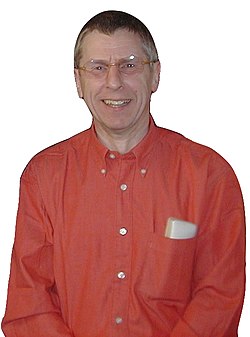
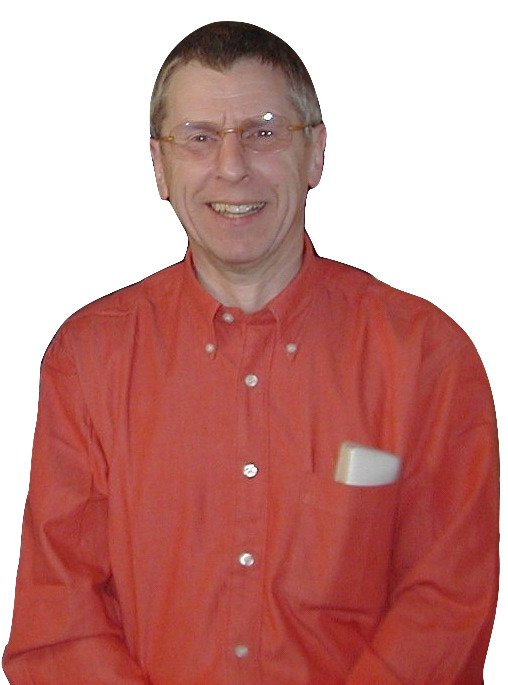
Christopher James Harley, known by the stage name Chris Rainbow (18 November 1946 – 22 February 2015), was a Scottish[1][2] pop rock singer and musician[3] whose songs "Give Me What I Cry For" and "Solid State Brain" were often played by British radio DJs Kenny Everett and Tony Blackburn in the 1970s.[4]

In addition to his solo career he was a vocalist and vocal arranger who sang with many rock, pop and progressive bands as well as solo artists. Latterly, he owned his own studio and worked as a respected producer.

Early life and name

[edit]

He was born the son of James Harley and Pamela Clapham. He adopted the stage name "Rainbow" to avoid confusion with Steve Harley, saying:

Steve Harley was at his peak and I didn't want any confusion. The name Rainbow was found one evening as me and some friends were watching TV and the reporter's name flashed on the screen as 'Christopher Rainbow', so that was that.

Before music, Rainbow worked through a variety of occupations including doing promotional work for Dream Police, contributing cartoons to Glasgow underground paper The Word and studying at the Society for Psychic Research. Rainbow had a stutter which wasn't apparent when he sang.[5]

Career

[edit]

In 1972 and 1973, Rainbow was involved in a band called Hopestreet – along with Scottish pianist and composer Callum Kenmuir – recording two singles, Iron Sky / Never Mind and Wait Until Tomorrow / Ladies (At The Bottom Of A Garden).[6] Following this, he recorded first as Christopher Rainbow with the singles Give Me What I Cry For and Solid State Brain in 1974, then Mr. Man and Gimme Just A Little Beat Of Your Heart in 1975.[7] He then went under the name Chris Rainbow and released three solo albums; Home of the Brave in 1975, Looking Over My Shoulder in 1977, and White Trails in 1979. Tracks from these albums are collected on The Best Of Chris Rainbow released in 1994, The Best of Chris Rainbow, 1972–1980, released in 2000, and The Chris Rainbow Anthology 1974-1981 released in 2001, which has appeared in single and double CD sets and includes radio spots and rare material. Rainbow also did music for EMI's project Body Music, which included three of his songs along with Brian Aris's photography.[4]

Rainbow received wider recognition for his music through the support of Kenny Everett, then on Capital Radio in London, who featured his music extensively. Some of the jingles that Rainbow made for Capital at this time were later released on Unreleased & Demo Tracks 1973-1983 in 2000 and Waves in 2007, albums that include other outtakes, demos and previously unreleased material.[4]

In 1979, Rainbow also began his long association with The Alan Parsons Project, recording on many of their albums from Eve through Alan Parsons' 1999 solo album, The Time Machine.[8] He also appeared on other Alan Parsons's associated works, such as Panarama's Can This Be Paradise in 1982 (with Ian Bairnson and German keyboard player Hermann Weindorf), and Eric Woolfson and Alan Parsons's Freudiana in 1990.[9]

Rainbow would tour with Jon Anderson in 1980 and do vocal work on Song of Seven in 1980 and Animation in 1983.[9]

In the early 1980s, Rainbow joined Camel, appearing on the albums The Single Factor and Stationary Traveller, and performing with them on their 1982 and 1984 tours, recordings of which were released as the album Pressure Points. Rainbow would do vocal work on Heart Of The Universe, a solo album by Ton Scherpenzeel who was the keyboardist of Camel in 1984.[9]

Rainbow would contribute vocal work on a large variety of albums throughout his career, including Blonde on Blonde's And How! in 1978, Max Middleton and Robert Ahwai's Another Sleeper in 1979, Killdozer's self-titled album Killdozer in 1980, Trevor Herion's Beauty Life in 1983, Elaine Page's self-titled album Elaine in 1983, Culture Club's Waking Up with the House on Fire in 1984, Toyah Willcox's Desire in 1987, Lenny Zakatek's Small But Hard in 1989, and Tomoyasu Hotei's King & Queen in 1996 and Fetish in 2000.[9]

Production

[edit]
Chris Rainbow and David Paton with Donnie Munro on tour in Germany 2001

Rainbow worked as a producer on various singles and albums in the UK in the 1970s and 1980s, including the singles "It Doesn't Really Matter Now" by Justin & Wylde in 1975, "Such a Lovely Night" and "Cafe a Go Go" by Sunfighter in 1976 and 1977 respectively, The song "Does It Rain (When You Get Lonely)" the B-side of the single "Steady Love" by Nobby Clark from Bay City Rollers in 1977, and Les Lavin's "Love's at the Bottom" in 1980. Rainbow was producer on Lennie Macdonald's Hard Road in 1975, Dave Lewis's From Time to Time in 1976 and John Townley's Townley in 1979. Rainbow also did production work alongside Max Middleton under the alias Maximum Penetration, which had one self-titled single, "Maximum Penetration" in 1980.[9]

Rainbow produced several albums for the Scottish Gaelic rock group Runrig starting with the single Loch Lomond in 1982, then the albums Heartland in 1985, The Cutter & The Clan in 1987, Once in a Lifetime in 1988, Capture the Heart in 1990, The Big Wheel in 1991, Amazing Things in 1993, and In Search of Angels in 1999, all under his birth name Chris Harley. Rainbow also produced solo work for previous Runrig members Blair Douglas and Donnie Munro with Douglas's albums Beneath the Beret in 1990 and A Summer in Skye in 1996, and Munro's On the West Side in 1999, Donnie Munro – Live in 2001, Across the City and the World in 2002, the single Down Under in 2003, Gaelic Heart in 2003, and Heart of America – Across the Great Divide in 2006. In 1987, Rainbow produced R.A.F.'s album Restless Spirit. Rainbow produced music for R.A.F.'s lead singer David Valentine previously in 1976 with the single "Second Hand Ladies" and again in 1986 under the name Harley with the single "We Can Only Dream". He also produced a single by The River Detectives, "Saturday Night Sunday Morning", in 1989 and their studio album Elvis Has Left the Building in 1996. Rainbow produced Wolfstone's album The Half Tail in 1996.[9]

Studio

[edit]

Rainbow built and ran the Vital Spark Music Studio on the Isle of Skye where several artists including Donnie Munro, Blair Douglas, and KT Tunstall recorded albums. In 2000 he was said to be working on what would have been his fourth solo album, to be called In a Perfect World. It was never released.[4] Vital Spark did provide music to EM Records for the releases The Instrumental Chris Rainbow (also featuring British jazz luminaries Ronnie Scott and Dick Morrissey) and Love You Eternally E.P. in 2000, with one of the tracks, 'Sea Drift', originally intended for In a Perfect World.[10]

Death

[edit]

Chris Rainbow died on 22 February 2015 of Parkinson's disease.[11]

Alan Parsons published on his official website, "It was with great sadness that I read today of the passing of Chris Rainbow. He was an amazing talent and an integral part of The Project sound. Eric and I used to call him the "One Man Beach Boys". I will always remember his funny stories, his mimicking ability, and his hilarious catch phrases. Sessions with him were always filled with laughter. I will miss him greatly."[11]

Following Rainbow's death, Runrig published the following statement on their website: "We were all shocked and saddened to hear yesterday of the death of friend, colleague, and former record producer Chris Harley. Chris was a major part of the Runrig story, producing the breakthrough albums through the eighties and early nineties. In his capacity as a producer, he was instrumental in helping to create the sound of the band. Chris was held in deep affection by all associated with Runrig and his passing will be keenly felt. He died at his home on the Isle Of Skye, after a long debilitating illness. He is survived by his wife Ibby and son Lewis, and our thoughts and prayers go out to them at this difficult time."[11]

Camel's Andy Latimer said "So sad to hear of the passing of Chris Rainbow. He was an amazing talent and a friend. RIP.”[12]

On hearing of Rainbow's death, Brian Wilson posted on his official website, "I felt really bad to hear about Chris Rainbow passing away, he was too young. I remember in the late 1970s, a friend played 'Dear Brian' for me and I was touched and honored by it. It was a beautiful track. I wish the best for Chris's family and friends. Love & Mercy, Brian."[13]

References

[edit]
[edit]
Revisions and contributorsEdit on WikipediaRead on Wikipedia
from Grokipedia
Chris Rainbow (born Christopher James Harley; 18 November 1946 – 22 February 2015) was a Scottish , , and best known for his lead and backing vocals on multiple albums by and his contributions to the progressive rock band . Rainbow, who died at age 68 from complications of , began his musical career as a graphic artist before transitioning to full-time in the early 1970s. Rainbow released three solo albums during the 1970s on , showcasing his versatile voice and multi-layered harmonies across , and progressive styles. His debut, Home of the Brave (1975), featured self-penned tracks like the title song, highlighting his songwriting and production skills. This was followed by Looking Over My Shoulder (1978) and White Trails (1979), the latter including the single "Ring Ring" and demonstrating his ability to blend with intricate vocal arrangements. In 2001, a compilation The Chris Rainbow Anthology 1974-1981 was released, collecting highlights from his solo work and early recordings. As a session vocalist and collaborator, Rainbow became a key figure in progressive and circles, contributing to seven albums from Eve (1979) to Gaudi (1987), where he provided lead vocals on tracks like "Damned If I Do" and "So Far Away," as well as extensive backing harmonies. He also sang lead on several songs from Camel's (1982) and (1984), and toured with the band. Additionally, under his birth name Chris Harley, he produced albums for the Scottish band , including Heartland (1985) and The Cutter and the Clan (1987), and worked on solo projects by former vocalist . Rainbow's later career included production for other Scottish artists and occasional vocal appearances, such as on Jon Anderson's solo records, until health issues limited his activity.

Early life

Childhood in Glasgow

Christopher James Harley was born on 18 November 1946 in , . Harley trained as a graphic artist and worked in that profession from 1964 to 1972, holding various jobs in during this period. During his formative years, Harley developed a lifelong stutter in his speech, but he discovered that the disfluency vanished when he sang, highlighting his early vocal talent. In 1972, he became involved in his first musical group, the Glasgow-based band Hopestreet, marking his initial foray into performing.

Adoption of stage name

Christopher Harley adopted the stage name Chris Rainbow in the early 1970s at the outset of his professional music career to avoid confusion with the rising fame of English singer-songwriter Steve Harley, frontman of the band Cockney Rebel. Harley, who had achieved significant success with hits like "Come Up and See Me (Make Me Smile)" in 1975, shared a similar first name and professional timing, prompting the change as Rainbow prepared to sign with Polydor Records around 1974. Rainbow later recounted the origin of his new surname in an anecdote, explaining that it emerged spontaneously one evening while watching television with friends; the name caught his attention as belonging to a news reporter on screen, leading to its immediate adoption as a fitting, memorable . He emphasized the practical rationale, stating, "Steve Harley was at his peak and I didn't want any confusion," highlighting the strategic intent behind the rebranding to carve out a distinct identity in the competitive British music scene. This choice reflected his pragmatic approach to building a solo career, transitioning from work and early band efforts like Hopestreet in 1972.

Musical career

Solo recordings

Chris Rainbow's solo career commenced with the release of his debut single "Give Me What I Cry For" in 1974 on , which garnered significant radio airplay from prominent UK DJs and throughout the 1970s, enhancing his early visibility despite not achieving major chart positions. This track, along with follow-up singles like "Solid State Brain" and "Mr. Man" in 1975, highlighted his versatile pop-rock style and contributed to steady airplay success on British radio stations. His first solo album, Home of the Brave, arrived in 1975 via Polydor, featuring a blend of funky rhythms and melodic hooks produced with contributions from session musicians like on . The record included singles such as "Gimme Just a Little Beat of Your Heart," which received promotional support through radio play and aligned with Rainbow's emerging reputation for harmonious vocals. Two years later, in 1978, he released Looking Over My Shoulder on Polydor, an album that expanded on his sensibilities with tracks like "Allnight" and "Living in the World Today," both issued as singles to capitalize on his growing fanbase. Rainbow's third and final completed solo album, White Trails, came out in 1979 on , showcasing a more polished production with singles including "Ring Ring" and "Love You Eternally / Be Like a Woman," promoted through targeted radio campaigns that echoed his earlier triumphs. Throughout the 1970s, his work with labels Polydor and emphasized accessible pop arrangements, though commercial chart breakthroughs remained elusive beyond radio exposure. In the and early , compilations revived interest in his solo output, starting with The Best of Chris in 1994 on Century Records, which collected key tracks from his Polydor era. A reissue followed in , alongside The Chris Rainbow Anthology in 2001 on his own Records, encompassing material from 1974 to 1981 and providing a comprehensive overview of his independent releases. Around , Rainbow began work on a planned fourth solo titled In a Perfect World, intended for release in summer 2001 through his Studio, featuring vocal harmonies and collaborations with longtime associates, but it remained unreleased due to shifting priorities in his career.

Band collaborations

Rainbow's most significant band collaboration was with , where he served as a key vocalist from 1979 until 1999. He debuted on their album (1979) with lead vocals on "Winding Me Up," and continued contributing lead and multi-tracked backing vocals across multiple releases, including (1980), on which he sang lead on "Snake Eyes" and the title track. His distinctive harmonies, often layered to create choral effects, led and to affectionately nickname him the "One Man ." This association extended to Parsons' solo project (1999), marking the end of Rainbow's two-decade involvement with the group. In the early 1980s, Rainbow expanded into by joining , providing backing vocals on their album (1982) and lead vocals on several songs from (1984). He toured extensively with , performing alongside guitarist Andy Latimer and supporting their shift toward more accessible influences while retaining intricate arrangements. These live performances highlighted Rainbow's versatility in delivering both lead and harmony vocals in a concert setting. Rainbow also collaborated with , the lead singer of Yes, during the 1980s, contributing backing vocals to Anderson's solo album (1980) and full vocals to (1982). He joined Anderson on tour as part of The New Life Band, emphasizing with progressive elements through shared vocal performances. These partnerships underscored Rainbow's role in enhancing ensemble works with his clear, emotive tenor and harmonic expertise, often bridging pop accessibility and rock complexity.

Production and studio work

Production credits

Chris Harley, the of musician Chris Rainbow, adopted this for his production work to distinguish it from his performing career. He began producing in the early , starting with Runrig's single "Loch Lomond" in 1982, which marked the band's shift toward a more polished rock sound. Harley's production tenure with Runrig spanned the and 1990s, beginning prominently with their 1985 album Heartland, which he co-produced with the band and assistant Les Lavin at Castle Sound Studios in . This album, featuring tracks like "Ám Bràighe" and "Heartland," showcased Harley's ability to blend Celtic folk elements with expansive rock arrangements, helping Runrig gain wider international appeal. He continued with The Cutter and the Clan (1987), noted for its thunderous, reverb-heavy drum production that amplified the band's anthemic style, and The Big Wheel (1991), where his oversight contributed to layered vocal harmonies that enhanced the Gaelic-infused rock tracks. These efforts solidified Runrig's breakthrough era, with Harley producing five of their albums through the mid-1990s. Beyond , Harley produced for other Scottish artists, most notably former frontman . His work on Munro's 1999 solo album On the West Side, recorded with assistance from , emphasized introspective folk-rock with subtle string sections from the BT Scottish Ensemble on select tracks. This production, like his output, highlighted Harley's preference for lush, multi-tracked vocal arrangements drawn from his own background as a session singer with groups like . Harley's production style often incorporated rich vocal layering and atmospheric soundscapes, influenced by his vocal expertise, to create immersive textures suited to . Critics praised his contributions to 's albums for achieving a "perfect synthesis" of Gaelic folk and rock, with The Cutter and the Clan receiving acclaim for its dynamic, high-impact sound that propelled the band to larger audiences. While no major awards or nominations are documented for his production specifically, his work is retrospectively recognized as pivotal in elevating music's production quality during the period.

Vital Spark Studio

Vital Spark Studio was Chris Rainbow's personal recording facility, located on the Isle of Skye, which served as the base for much of his production and musical activities in the later part of his career. The studio was specifically set up for production, aligning with Rainbow's expertise in vocal arrangements, multi-tracking, and rock instrumentation, enabling him to handle both his solo work and collaborations efficiently. Established in the early , the studio bore the name , reflecting a nod to Scottish , and became integral to Rainbow's relocation to the remote island setting, where he fostered a creative environment away from mainland pressures. It played a key role in bolstering the local Scottish scene by providing accessible, high-quality recording facilities for regional , thereby supporting emerging talents in a geographically isolated area. Notable artists who utilized the studio included , whose live album KT Tunstall's Acoustic Extravaganza was recorded there, capturing her intimate performances. Similarly, Scottish musician , formerly of , recorded albums such as On the West Side (1999) and Across the City and the World (2002) at the facility, highlighting its capacity for folk-rock and projects. These sessions underscored the studio's significance as a nurturing space for Scottish performers, with Rainbow personally overseeing engineering and production to enhance their sound. The studio's operations emphasized hands-on involvement from Rainbow, who used it to revive his own releases through his Vital Spark Records label, starting with projects in the mid-1990s. Its location on the Isle of Skye not only facilitated Rainbow's deep personal attachment to the region but also contributed to a unique creative atmosphere, where the natural surroundings inspired focused artistic endeavors.

Later years and legacy

Health challenges and death

Chris Rainbow was diagnosed with , a progressive that gradually impaired his motor functions and vocal abilities. The condition significantly affected his professional life, limiting his capacity to perform live or record new material and resulting in the abandonment of a planned solo album, , during the summer of 2001. Despite these challenges, Rainbow continued to reside on the Isle of Skye, where he had moved in the late to establish his Studio, finding solace in the remote Scottish island during his declining health. Rainbow passed away on 25 February 2015 at his home on the Isle of Skye, aged 68, after a prolonged battle with . He was survived by his wife, Ibby, and their son, with whom he had built a quiet family life on the island in his later years. Following his death, , with whom Rainbow had collaborated extensively, released a statement on his official website lamenting the loss of "an amazing talent and an integral part of The Project sound," while fondly recalling Rainbow's humor and mimicry during recording sessions. Contemporaries like musician also paid tribute, describing Rainbow as a "" whose kindness and versatile voice left a lasting impression on those who worked with him.

Posthumous recognition

Following Chris Rainbow's death on 25 February 2015, numerous tributes highlighted his vocal prowess and contributions to progressive and . , with whom Rainbow had collaborated extensively on , described him as "the one man " for his multi-layered harmonies and -inspired style, noting in an official statement that Rainbow "made a huge contribution... with lead vocals on songs such as 'The Turn of a Friendly Card' and 'Time' and backing vocals on many more," adding that "he will be greatly missed by all who knew him." Similarly, posted on his official website, "I felt really bad to hear about Chris Rainbow passing away, he was a great singer and I loved his music," acknowledging Rainbow's admiration for Wilson's work and his own harmonic innovations. Members of , where Rainbow served as a vocalist and keyboardist in the 1980s, dedicated their July 8, 2015, performance at to him, displaying images of Rainbow alongside late bandmate Guy LeBlanc during an emotional tribute segment. Posthumous interest in Rainbow's catalog surged, leading to expanded reissues of his solo albums. In 2018, Cherry Red Records released CD editions of Home of the Brave (1975) and White Trails (1979), the latter as an expanded version with bonus tracks including the 12-inch versions of "Body Music" and "Girl in Collision," fully remastered for the first time in the UK. These reissues, along with digital availability on platforms like and starting around 2016, renewed accessibility to his work, emphasizing his self-produced "" techniques blending pop, rock, and progressive elements. Rainbow's legacy has been recognized in music publications for his innovative vocal arrangements, often dubbed the "One Man Beach Boys" moniker originating from Parsons' tribute. Music publications in 2015 explored his 1978 album Looking Over My Shoulder as an unsung gem of 1970s pop, praising its harmonic complexity and influence on progressive pop's layered aesthetics. His style, characterized by intricate multi-tracking and melodic sophistication, has been cited in prog rock retrospectives as a bridge between 1970s and later harmony-driven acts, though specific direct influences remain more anecdotal than documented. While no formal awards have been posthumously bestowed, fan-driven memorials and online commemorations persist, particularly on the 10th anniversary of his death in 2025, with groups sharing rare demos and clips from his BBC jingle work to honor his versatility. Discussions around potential releases of additional unreleased material from his archives continue among fans, though no official projects have materialized as of November 2025.

References

Add your contribution
Related Hubs
User Avatar
No comments yet.