Recent from talks
Nothing was collected or created yet.
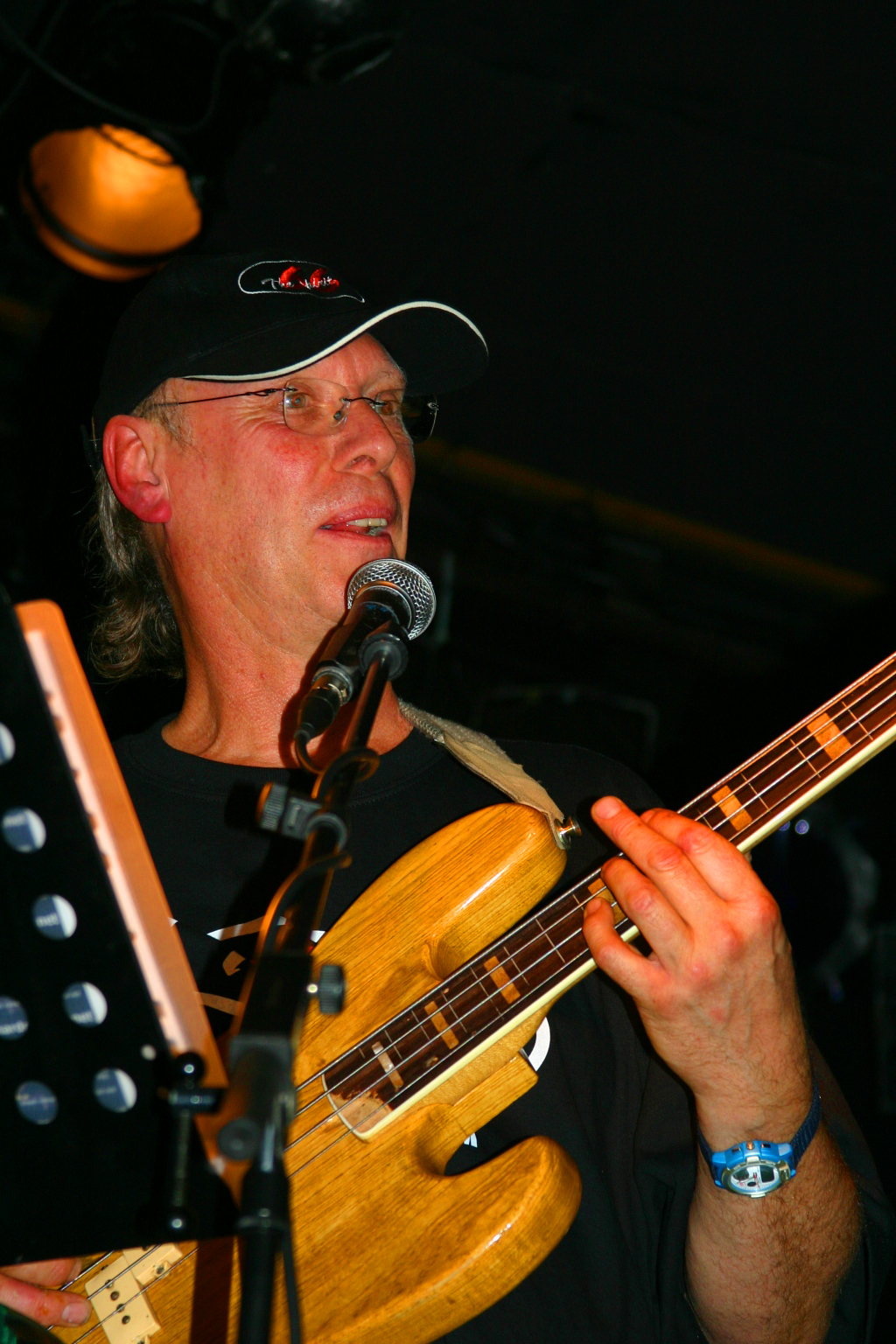
Richard Sinclair
View on WikipediaThis article has multiple issues. Please help improve it or discuss these issues on the talk page. (Learn how and when to remove these messages)
|
Key Information
Richard Stephen Sinclair (born 6 June 1948) is an English progressive rock bassist, guitarist, and vocalist who has been a member of several bands of the Canterbury scene.
Biography
[edit]Born in Canterbury, England, both his father (Dick Sinclair) and grandfather (also named Dick Sinclair) were musical entertainers around Canterbury.[1] Richard was introduced to the ukulele at age 3 and the guitar at 6, and was only 15 when he met Hugh and Brian Hopper when they came to see his dad's danceband. By the following year Sinclair was playing guitar (and occasionally singing) in the root Canterbury band The Wilde Flowers. In 1968 he became a founding member of Caravan, switching to bass guitar and sharing lead vocals with Pye Hastings. His compositional output came to the fore on the band's third album, the classic In the Land of Grey and Pink, on which he wrote and sang the title track, "Golf Girl" and the epic "Winter Wine". Sinclair left Caravan in 1972 to form Hatfield and the North with ex-Delivery members Phil Miller and Pip Pyle, lending his distinctive, quintessentially English voice and increasingly impressive bass playing skills to their two albums, and writing some of their best-loved songs, "Share It", "Let's Eat (Real Soon)" (both with lyrics by Pip Pyle) and "Halfway Between Heaven and Earth".
In 1974, he participated in Rock Bottom, the second solo album by former Soft Machine drummer Robert Wyatt. The album was produced by Pink Floyd's drummer Nick Mason.
After Hatfield broke up in 1975, Sinclair moved back to Canterbury, starting a carpentry/kitchen-fitting business while maintaining low-key musical activities, often under the humorous moniker Sinclair & The South. He came out of this semi-retirement in 1977 when he was asked by Camel to replace their departed bass player. This stint lasted for two studio albums, a world tour, and half of the live set A Live Record.
In the 1980s, his activities were sporadic. He recorded a collaborative album with Phil Miller and Alan Gowen, Before a Word Is Said, in 1981, reunited with Caravan for the 1982 reunion effort Back to Front, sang on one track of National Health's swansong D.S. Al Coda (also 1982), and joined Phil Miller's In Cahoots, for a residency at the London jazz club the Bull & Gate and, in 1984, a European tour. He left before the band undertook its first official recordings (though studio demos have surfaced). His voice or bass were barely heard until the end of the decade, save for a low-key Dutch tour in 1986 and a guest spot of Phil Miller's album Split Seconds (1989). In 1990, there was a one-off reformation of Hatfield and the North and a longer-term reunion of the original Caravan line-up in 1990-91.
At this point, Sinclair formed his own group Caravan of Dreams, with ex-Camel drummer Andy Ward and former Hatfield roadie Rick Biddulph on bass (live gigs only), plus occasional participation from cousin Dave Sinclair and sax/flautist Jimmy Hastings. Sinclair released the project's eponymous album in 1992. Sinclair's next effort, R.S.V.P. (1994), was recorded with a fluctuating line-up including Pip Pyle, Tony Coe and former Happy the Man keyboardist Kit Watkins. Regular touring stopped in 1996 as Sinclair moved to the Netherlands for a few years. He reappeared in 2002 with occasional concerts and archival live releases, but the most exposure came with the reunion of Hatfield and the North in 2005-06, which came to an abrupt end when Pip Pyle died in August 2006. Shortly after that, he left his longtime Canterbury home to move permanently to Italy, living in a trullo in Martina Franca.[citation needed] In 2010, he joined the trio douBt (Alex Maguire, Michel Delville and Tony Bianco) on the album Never Pet a Burning Dog (Moonjune Records) and toured Japan and Europe with the band. In 2013-2014 he toured Italy with the Italian band PropheXy, recording two live bonus tracks (Disassociation, Golf Girl) for their album Improvviso.
In 2023 Richard listed his entire catalog on BandCamp, including many previously unreleased recordings from Caravan, Camel, and Hatfield and the North.
Discography
[edit]| Year | Artist | Title |
| 1962 | various artists | Canterburied Sounds (four volumes, released 1998) |
| 1965 | The Wilde Flowers | The Wilde Flowers (released 1994) |
| 1969 | Caravan | Caravan |
| 1970 | Caravan | If I Could Do It All Over Again, I'd Do It All Over You |
| 1971 | Caravan | In the Land of Grey and Pink |
| 1972 | Caravan | Waterloo Lily |
| 1974 | Hatfield and the North | Hatfield and the North |
| 1974 | Robert Wyatt | Rock Bottom |
| 1975 | Hatfield and the North | The Rotters' Club |
| 1977 | Camel | Rain Dances |
| 1977 | Camel | Unevensongs |
| 1978 | Camel | Breathless |
| 1978 | Camel | A Live Record |
| 1980 | Hatfield and the North | Afters |
| 1981 | Alan Gowen, Phil Miller, Richard Sinclair & Trevor Tomkins | Before a Word Is Said |
| 1982 | National Health | D.S. al coda |
| 1982 | Caravan | Back to Front |
| 1983 | Hugh Hopper & Richard Sinclair | Somewhere in France (released 1996) |
| 1988 | Skaboosh | Freetown |
| 1989 | Phil Miller | Split Seconds |
| 1990 | Hatfield and the North | Live 1990 (one-off reunion, with Sophia Domancich subbing for Dave Stewart |
| 1990 | Hatfield and the North | Classic Rock Legends (DVD) (same show as above) |
| 1990 | Caravan | Classic Rock Legends (DVD) |
| 1992 | Richard Sinclair's Caravan of Dreams | Richard Sinclair's Caravan of Dreams |
| 1993 | Caravan of Dreams | An Evening of Magic |
| 1994 | Richard Sinclair | R.S.V.P. |
| 1996 | Richard Sinclair, David Rees & Tony Coe | What in the World |
| 1998 | Pip Pyle | 7 Year Itch |
| 2002 | Richard Sinclair | Live Tracks |
| 2003 | Camel | Live Tracks |
| 2003 | Dave Sinclair | Full Circle |
| 2003 | Dave Sinclair | Into the Sun |
| 2003 | Theo Travis | Earth to Ether |
| 2005 | Hatfield and the North | Hatwise Choice: Archive Recordings 1973—1975, Volume 1 |
| 2006 | Hatfield and the North | Hattitude: Archive Recordings 1973-1975, Volume 2 |
| 2006 | In Cahoots | Conspiracy Theories |
| 2010 | Doubt | Never pet a burning dog |
Bandology
[edit]- 1964–1965 The Wilde Flowers (with Kevin Ayers, Robert Wyatt, Hugh Hopper et al.)
- 1968–1972, 1982 Caravan
- 1972–1975 Hatfield and the North
- 1976 Sinclair and the South
- 1977–1979 Camel
- 1977 National Health
- 1982–1984 In Cahoots
- 1988 Skaboosh
- 1991–93 Caravan of Dreams
- 1994–1996 R.S.V.P. (with Pip Pyle, Didier Malherbe and Patrice Meyer)
- 1995– ? Richard Sinclair Band with Tony Coe and David Rees Williams
- 2005–2006 Hatfield and the North reformed
Filmography
[edit]- 2015: Romantic Warriors III: Canterbury Tales (DVD)
References
[edit]- ^ "Biography". Dave-sinclair.com. 6 June 1948. Retrieved 8 May 2020.
External
[edit]Richard Sinclair
View on GrokipediaBiography
Early life
Richard Sinclair was born on 6 June 1948 in Canterbury, Kent, England.[7] His family had longstanding roots in Canterbury dating back to around 1800, with a rich musical heritage that profoundly shaped his early years. Sinclair's grandfather, also named Richard Sinclair, worked as a musician, comedian, and entertainer in the local scene. His father, Dick Sinclair, was a professional singer renowned for his smooth, Nat King Cole-influenced vocal style, and he performed as an entertainer while also maintaining a trade in furniture restoration for figures like the Archbishop of Canterbury. This environment immersed Sinclair in music and performance from infancy, fostering a natural affinity for melody and harmony.[4] As a child, Sinclair served as a choirboy at school, where he honed his vocal abilities and developed a deep appreciation for clear, melodic singing traditions. The choir experience, combined with his father's improvisational playing on standard tunes at home, built Sinclair's foundational ear for music and encouraged expressive phrasing in his voice.[4] Sinclair's introduction to instruments came through his family's encouragement, starting with the ukulele, which his father gave him to test his interest without committing to a full guitar. He played the ukulele for several years, self-teaching chords and simple pieces in the household setting. By his mid-teens, around age 16, he transitioned to guitar, again self-taught, marking his growing engagement with instrumental music during adolescence.[4][8]1960s career beginnings
Richard Sinclair entered the professional music scene in 1964 at the age of 16, joining the Canterbury-based band The Wilde Flowers as a rhythm guitarist and backing vocalist alongside Kevin Ayers, Robert Wyatt, and Hugh Hopper.[2][4] The group, which also included Sinclair's cousin Dave Sinclair on keyboards, served as a foundational precursor to the Canterbury sound, blending psychedelic rock with improvisational elements through local performances.[2][9] The Wilde Flowers primarily performed covers of rhythm and blues artists such as Chuck Berry, which initially unsettled Sinclair due to his background as a choirboy, though this exposure helped shape his emerging style.[10] Over the next few years, the band's lineup evolved amid personnel changes, fostering the creative network that would define the Canterbury scene, until its dissolution around 1967.[11] In early 1968, following the Wilde Flowers' breakup, Sinclair co-founded Caravan with Pye Hastings on drums and vocals, Richard Coughlan on drums, and his cousin Dave Sinclair on keyboards, marking a shift toward original compositions in a more structured progressive rock format.[11][12] The band debuted with a performance at Canterbury's Beehive Club in April 1968 and built momentum through regional gigs, eventually signing with Decca Records after attracting manager Terry King.[11] During this formative period, the members lived frugally, often camping in tents outside a local church hall where they rehearsed, enduring harsh conditions to hone their material.[4]1970s peak with Caravan and Hatfield and the North
During his tenure with Caravan from 1968 to 1972, Richard Sinclair served as a founding member, bassist, and lead vocalist, contributing significantly to the band's early progressive rock sound. The group's breakthrough came with the album If I Could Do It All Over Again, I'd Do It All Over You in 1970, followed by the critically acclaimed In the Land of Grey and Pink in 1971, which showcased Sinclair's songwriting talents through tracks like "Golf Girl," a whimsical composition he wrote entirely, and "Winter Wine," to which he co-contributed lyrics and melody.[2][13][14] These works highlighted Sinclair's penchant for melodic, pastoral themes within the Canterbury scene's jazz-inflected prog framework, helping Caravan gain a cult following in the UK and Europe.[4] Sinclair departed Caravan in 1972 amid creative differences, particularly dissatisfaction with the band's evolving jazz and blues directions under keyboardist Steve Miller on Waterloo Lily, as he preferred more harmonic and structured compositions.[13][4] Shortly after, he had brief involvement in Robert Wyatt's projects.[2] In late 1972, Sinclair co-founded Hatfield and the North, a key Canterbury supergroup emphasizing intricate interplay and subtle humor, alongside guitarist Phil Miller, drummer Pip Pyle, and keyboardist Dave Stewart (replacing an initial stint by Steve Miller).[2][4] The band released its self-titled debut album in 1974 on Virgin Records, featuring Sinclair's warm vocals and bass lines on tracks like "Son of 'There's a Man Going Round Taking Names'," which captured their blend of jazz-rock improvisation and melodic songcraft.[15] Their follow-up, The Rotters' Club in 1975, further refined this approach with extended pieces such as "Happy Family," solidifying their reputation for sophisticated, understated prog before disbanding that June due to touring strains and internal dynamics.[13][2] Later in the decade, Sinclair joined Camel in 1977 as bassist and vocalist, infusing their sound with Canterbury-style warmth during a transitional phase.[4] He contributed to Rain Dances (1977) and Breathless (1978), albums that shifted Camel toward more accessible progressive territory with pop sensibilities, as heard in his vocal delivery on songs like "Heliopolis."[2][13] Anecdotes from this period highlight band camaraderie, including keyboardist Peter Bardens nicknaming Sinclair "A Star Is Bald" in reference to his receding hairline, a playful moniker that underscored the group's lighthearted vibe during tours.[4] Sinclair left after the 1978 tour, amid tensions over leader Andrew Latimer's creative control.[13]1980s-2000s collaborations and solo ventures
Following the decline of the progressive rock scene in the late 1970s, Sinclair entered a transitional phase marked by selective reunions and exploratory collaborations. In 1981, he briefly reunited with Caravan, recording their album Back to Front the following year alongside original members Pye Hastings, David Sinclair, and Richard Coughlan, which revived elements of their Canterbury sound for a limited run.[2] He also contributed vocals to National Health's swan-song album D.S. Al Coda in 1982, bridging his earlier associations with the group's jazz-inflected style.[7] He contributed bass and vocals to Hugh Hopper's album Somewhere in France (recorded 1983, released 1996), which was initially intended to feature Robert Wyatt on lead vocals.[2] That same year, Sinclair joined Phil Miller's newly formed In Cahoots as a founding member, alongside Elton Dean and Pip Pyle, establishing a residency at London's Bull & Gate jazz club and embarking on European tours that emphasized jazz-rock fusion improvisation over structured prog compositions.[2][16] Throughout this era, Sinclair adopted a practice of recording every live performance onstage using a tape recorder, reviewing the tapes afterward to refine his bass technique and vocal delivery for greater precision and emotional depth.[16] The mid-1980s saw Sinclair involved in ad-hoc projects, including a 1983 recording session with Hugh Hopper for Somewhere in France and a short-lived Holland tour in 1986 with a pickup band, reflecting his shift toward more intimate, jazz-oriented ensembles amid sporadic activity.[16] By the 1990s, he fronted the short-lived Caravan of Dreams, a vehicle for original material that released a self-titled album in 1992, and pursued solo endeavors with the release of R.S.V.P. in 1994, backed by a temporary group of the same name featuring musicians like Alex Maguire and Roy Dodds for promotional gigs.[2][17] Additional short-lived ventures included the trio Going Going in 1990 with Hopper and drummer Andy Ward, focusing on improvisational sets, and guest appearances with contemporaries such as Robert Wyatt, whose mutual admiration highlighted Sinclair's enduring vocal purity in fusion contexts.[2][4] He also joined Hatfield and the North for a 1990 television reunion performance, collaborating closely with Pip Pyle on bass-vocal interplay that echoed their 1970s chemistry.[2] Entering the 2000s, Sinclair leaned further into jazz-rock fusion through sustained European touring, including a full Hatfield and the North reunion in early 2005 with Miller, Pyle, and Maguire on keyboards, which yielded live dates at venues like the Mean Fiddler in London and the Fasano Jazz Festival in Italy before Pyle's death in 2006 curtailed the lineup.[2][18][13] This period featured additional continental tours, such as a 2002 swing through Japan and Holland with David Rees-Williams, underscoring Sinclair's adaptation to festival circuits that blended Canterbury legacies with contemporary fusion audiences.[2]2010s-present relocation and activities
After moving to Italy in 2006, Sinclair relocated permanently from the United Kingdom to Puglia in southern Italy in 2007, where he had first purchased a traditional trullo house in Martina Franca in 1990; he now resides in a countryside trullo equipped with a home studio.[19][2] He is married to Heather Kinnear, an art director and designer associated with the Canterbury scene, with whom he has collaborated on album artwork.[20][21] During the 2010s, Sinclair continued performing with various ensembles, including a tour and live recordings with the Belgian jazz-rock group douBt in Japan, resulting in albums such as Nagoya and Sendai.[22] He also collaborated with the Italian progressive rock band PropheXy for live shows, including appearances at the 2011 Vintage Festival and the 2014 Riviera Prog Fest in Genoa.[23] Additionally, he participated in sporadic Caravan reunions, drawing on his foundational role in the band to perform classic material at select events.[24] In 2023, Sinclair released the live album In The Land Of Pink And Black, featuring his performances with Mezz Gacano, capturing reinterpretations of Canterbury scene staples.[6] That year, he launched the Sinclair Songs Club on Bandcamp, a subscription service offering access to over 90 albums from his catalog for fan support and to fund future projects.[25] In 2024-2025, he continued archiving his catalog on Bandcamp, including reconfigured Wilde Flowers recordings released in September 2025.[26] As of November 2025, Sinclair is actively working on a new solo album, alongside plans to release additional live recordings and material from his 1983 collaboration with Hugh Hopper, Somewhere In France.[4] He continues to lead Richard Sinclair’s Birthday Rotters’ Club Band, which marked the 50th anniversary of Hatfield and the North's The Rotters' Club with local performances around his 75th birthday in 2023.[4] Reflecting on his enduring career, Sinclair has emphasized the joys of sustained musical involvement into his late 70s, stating, "Still rocking, you know!" while crediting the supportive Italian environment and ongoing fan engagement for his longevity in the prog scene.[4]Musical Style and Influences
Vocal and bass techniques
Richard Sinclair's bass playing is characterized by imaginative, melodic lines that incorporate jazz influences, often prioritizing groove and rhythmic complexity over flashy virtuosity. He frequently employed a Fender Jazz Bass, which contributed to his warm, prominent tone suitable for the intricate progressive rhythms of the Canterbury scene.[4][27][28] Sinclair's approach emphasized supportive yet creative interplay, drawing from jazz elements to craft lines that function as counter-melodies rather than mere foundations, as seen in his preference for fingerstyle playing positioned toward the bridge for clarity and attack.[4][27][8] His vocal style stands in contrast to typical rock shouting, delivering soft, melodic phrasing reminiscent of a popular music singer within a rock context, with clear enunciation and a focus on harmony. Rooted in a choirboy background, Sinclair's voice maintains precise pitch and a gentle, expressive quality, often layering harmonies to enhance emotional depth without overpowering the ensemble. This technique highlights his ability to convey whimsy and introspection, supported by influences like Nat King Cole and church music traditions.[4][13][29] In compositions such as "Nine Feet Underground," Sinclair exemplifies layered bass-vocal interplay, where his melodic bass lines weave seamlessly with plaintive vocal passages, creating a cohesive, jazz-inflected narrative that builds from quiet introspection to expansive grooves. This integration underscores his skill in balancing technical precision with musical storytelling, allowing the bass to echo vocal motifs while maintaining rhythmic drive in complex time signatures.[29][30] Sinclair's techniques evolved from the disciplined precision of his choirboy training to a more adaptable prog style, transitioning through jazz explorations that refined his melodic bass work and harmonious vocals. Early reliance on ear-learned rhythms gave way to more expansive, improvisational elements, particularly in later collaborations, while retaining a core emphasis on groove and clarity over speed or aggression.[27][4][13]Key influences and Canterbury scene role
Richard Sinclair's musical influences were profoundly shaped by his family environment, particularly his father, Dick Sinclair, a local entertainer and multi-instrumentalist whose singing style evoked Nat King Cole and Frank Sinatra. Growing up in Canterbury, Sinclair was immersed in standards from the 1930s to 1950s, which his father performed at venues, fostering an early appreciation for melodic phrasing and harmonic invention. This paternal legacy instilled a foundation in popular songcraft, emphasizing vocal clarity and emotional delivery over technical flash.[4][13] Further harmonic complexity in Sinclair's style drew from jazz, notably through Jimmy Hastings, brother of bandmate Pye Hastings, whose record collection introduced him to guitarist Wes Montgomery and trumpeter Don Ellis's album Live in 3 2/3 / 4 Time (1967), which explored odd time signatures and improvisational flair. These jazz elements informed Sinclair's bass lines, blending rhythmic precision with melodic invention, while his admiration for artists like Eric Dolphy and Miles Davis reinforced a commitment to creative freedom. Such influences manifested in his preference for music that prioritized individual expression, akin to jazz improvisation.[4][31] Within the Canterbury scene, Sinclair's interactions with contemporaries like Robert Wyatt of Soft Machine and Pye Hastings were instrumental in cultivating a communal sound, marked by collaborative experimentation. Early encounters, including borrowing Soft Machine's equipment after their 1967 U.S. tour and contributing vocals to Wyatt's Rock Bottom (1974), highlighted mutual respect—Wyatt once praised Sinclair's "true" voice. These ties, rooted in shared origins in the Wilde Flowers, evolved into a network of family-like connections that defined the scene's ethos.[4][13][31] As a co-creator of the Canterbury movement, Sinclair bridged pop accessibility with jazz-infused progressive rock, infusing whimsy and sophistication from the Wilde Flowers through Caravan and Hatfield and the North. His bass and vocal contributions to albums like Caravan's In the Land of Grey and Pink (1971) exemplified this hybrid, merging melodic hooks with experimental structures and rhythmic playfulness. This role positioned him as a pioneer, fostering a scene of imaginative, bohemian musicians influenced by local church music and poetry.[32][13][4] Sinclair's legacy endures in progressive rock and jazz-rock fusion, inspiring later acts like The Winstons and Homunculus Res with his emphasis on heartfelt, unpretentious innovation. Recognized as a foundational figure, his work continues through ongoing performances and recordings, such as the 2023 album In the Land of Pink and Black, affirming his status as a Canterbury trailblazer.[32][4]Discography
Solo albums
Richard Sinclair's solo career began with the release of Caravan of Dreams in 1992, his debut independent project after years in band settings.[33] Featuring Canterbury scene alumni like Dave Sinclair on keyboards, Jimmy Hastings on woodwinds, and Andy Ward on drums, the album blends jazz-pop and Canterbury prog with whimsical lyrics and melodic bass.[34] Recorded in 1991, it includes tracks like "Going for a Song" and "Cruising," showcasing Sinclair's vocals and songwriting in a more intimate format.[33] His second solo album, R.S.V.P., followed in 1994, produced primarily by Sinclair himself alongside Robert Barrs-James and Roy Clay at Astra Studios in Kent.[35] The album features minimalistic arrangements that highlight his distinctive vocal style and melodic bass lines, often evoking the whimsical, jazz-inflected prog of his earlier work.[36] Recorded between December 1993 and April 1994, it reunites Sinclair with several Canterbury alumni as guests, including Pip Pyle on drums, Hugh Hopper on bass and lyrics, Jimmy Hastings on winds, and Andy Ward on drums, creating a loose, improvisational feel across its ten tracks.[35] Standout compositions like "Can't Stop the World (Parts 1 & 2)" showcase Sinclair's playful lyrics and rhythmic interplay, while "Videos" incorporates an introductory "Hymn for Her" segment with Hopper's contributions, blending introspection with light-hearted commentary on modern life.[36] Following R.S.V.P., Sinclair's solo output shifted toward more intimate and archival material, particularly through his Bandcamp platform starting in 2023, which serves as a hub for fan-club exclusives and digital releases.[37] These include live recordings, demos, and curated collections such as In the Land of Pink and Black (2023), featuring collaborations like his vocals with Mezz Gacano, emphasizing acoustic simplicity and personal storytelling without the full-band production of his past endeavors.[38] Self-released and often recorded in home settings, these pieces prioritize Sinclair's vocals and guitar work, reflecting a minimalist approach that strips back to essentials for a direct connection with listeners.[25] In 2025, Sinclair released his latest full solo studio album, The Museum of Recorded Things, on April 11. Composed largely on guitar in his acoustic studio in Puglia, Italy, the 12-track album captures the serene, reflective quality of his Italian life, with self-produced, vocal-centric arrangements true to his solo ethos.[39] Themes of quietude and renewal are evident, previewed by the single "The Soft Embrace of Silence" released in May 2025.[40]Albums with Caravan
Richard Sinclair contributed to several key albums by the progressive rock band Caravan during his primary tenure from 1968 to 1972 and a subsequent reunion in the early 1980s. His roles typically encompassed bass guitar, vocals, and occasional songwriting, helping define the band's signature Canterbury scene sound blending jazz, rock, and whimsical lyrics.[7] The 1970 album If I Could Do It All Over Again, I'd Do It All Over You marked a significant early showcase for Sinclair's talents within Caravan's evolving lineup. Sinclair provided bass guitar, tambourine, and additional percussion such as hedge-clippers, while delivering lead and backing vocals on multiple tracks, including the title song and "Hello Hello." His contributions added a playful, melodic depth to the record's mix of extended improvisations and concise pop structures.[41][42] Caravan's breakthrough release, In the Land of Grey and Pink (1971), highlighted Sinclair's songwriting prowess alongside his instrumental work. He played bass guitar, acoustic guitar, and sang lead vocals on several pieces, most notably co-authoring and performing the expansive 22-minute suite "Nine Feet Underground," a jazz-infused epic that remains one of the band's most iconic compositions. Sinclair also penned tracks like "Winter Wine" and "Love to Love You (And Tonight Pigs Will Fly)," infusing the album with his characteristic gentle, introspective style.[43][30] Sinclair's final album with the original Caravan lineup, Waterloo Lily (1972), featured him on bass guitar and vocals before his departure later that year. The record included his composition "Waterloo Lily," a lively opener showcasing his bass lines and humorous lyrics, as well as co-credits on songs like "The Love in Your Eye." This release shifted toward a jazzier orientation, reflecting Sinclair's influence in blending accessible melodies with improvisational elements.[44][45] Following a decade apart, Sinclair rejoined Caravan for the reunion album Back to Front (1982), reuniting the classic quartet. He handled bass guitar and vocals, contributing to tracks such as "All the Way" and "A.A.A.," where his warm singing and rhythmic foundation supported the band's return to progressive roots with added polish. This effort recaptured elements of their earlier chemistry while incorporating 1980s production.[46][47]Albums with other primary bands
Sinclair served as bassist and lead vocalist for Hatfield and the North, a key Canterbury scene ensemble, on their debut studio album Hatfield and the North released in 1974 on Virgin Records.[48] The album showcased his melodic bass lines and warm vocals on tracks like "Share It," co-written with bandmate Dave Stewart, blending jazz-rock improvisation with pop sensibilities.[48] This release highlighted Sinclair's role in shaping the band's signature sound, characterized by intricate arrangements and harmonious interplay among members including guitarist Phil Miller and drummer Pip Pyle.[48] The group's second album, The Rotters' Club (1975, also on Virgin), further emphasized Sinclair's contributions, reaching No. 43 on the UK Albums Chart.[48] He provided bass, vocals, and co-writing on "Son of 'There's No Place Like Homerton' on Side B," a whimsical yet technically adept piece that extended the band's exploratory style.[48] These albums captured Hatfield and the North's evolution toward more structured compositions while retaining the loose, collaborative spirit reminiscent of Sinclair's earlier Caravan work.[48] In 1977, Sinclair joined Camel as bassist and vocalist for their fifth studio album Rain Dances (Gama/Decca Records), marking a shift toward lighter progressive rock elements.[49] His prominent vocals on "Freefall" added a distinctive Canterbury flavor to the band's atmospheric soundscapes, complementing guitarist Andy Latimer's leads.[49] Sinclair's bass work supported the album's fusion of jazz influences and shorter song formats, contributing to its commercial accessibility.[49] Sinclair continued with Camel on Breathless (1978, also Gama/Decca), their sixth album, where he handled bass duties and provided vocals across several tracks.[49] The record leaned further into pop-oriented prog, with Sinclair's harmonies enhancing pieces like the title track, though it received mixed reviews for diluting the band's earlier intensity.[49] His involvement helped bridge Camel's transitional phase, infusing subtle Canterbury echoes into their evolving repertoire.[49] Beyond these, Sinclair made guest vocal appearances with National Health during their formative years around 1978, including live performances that influenced the band's early jazz-prog direction, though he was not a full member due to his Camel commitments.[50] Later, as a founding bassist and vocalist for In Cahoots starting in 1982, Sinclair contributed to the group's output, with the 1993 album Conspiracy Theories (Crescent Discs) featuring his bass guitar, representing a key chapter in the band's discography under Phil Miller's leadership, echoing his earlier ensemble styles.[51]Band Associations
Core band memberships
Richard Sinclair's musical journey began in the mid-1960s as a founding member of The Wilde Flowers, where he contributed as rhythm guitarist and occasional vocalist from 1964 to 1965.[2] This early group, formed in Canterbury, England, laid foundational connections within the emerging Canterbury scene, featuring collaborators who would later influence progressive rock.[7] In 1968, Sinclair co-founded Caravan, taking on the roles of bassist and vocalist, positions he held through the band's initial run until 1972, with subsequent reunions in 1981–1982 and 1990–1992.[2] His contributions helped define Caravan's signature sound, blending jazz, rock, and whimsy during these periods.[7] In 1970, Sinclair co-founded Delivery, serving as bassist and lead vocalist until 1972, and contributing to the band's debut album Fool's Gold (1972), which featured jazz-rock explorations with Phil Miller and Pip Pyle. Following his departure from Delivery, Sinclair formed Hatfield and the North in 1972, serving as bassist, lead vocalist, and primary songwriter until the band's dissolution in 1975.[2] In this ensemble, he shaped much of the group's compositional direction, emphasizing melodic and improvisational elements central to the Canterbury style.[4] Sinclair joined Camel in 1977 as bassist and vocalist, remaining with the band through 1978 and contributing to its evolving progressive rock framework during a transitional phase.[7] This stint marked a brief but notable shift toward more structured arrangements outside the Canterbury core.[4] Later in his career, Sinclair became a founding member and frontman of In Cahoots in 1982, handling bass and lead vocals until 1985, where he fronted the group alongside Phil Miller, Elton Dean, and Pip Pyle.[2] His leadership role emphasized vocal-driven performances in this jazz-inflected progressive outfit.[4]Guest appearances and side projects
Sinclair contributed bass guitar to several tracks on Robert Wyatt's seminal 1974 album Rock Bottom, providing a grounded Canterbury-style accompaniment alongside musicians like Hugh Hopper and Mike Oldfield.[52][53] This collaboration highlighted Sinclair's ability to integrate into Wyatt's experimental sound, though no further direct recordings between the two emerged in later decades.[54] In the late 1970s, Sinclair made guest vocal appearances with National Health, including lead vocals on their 1977 BBC Radio 1 session for John Peel and at a major concert at London's Queen Elizabeth Hall, where he joined the core lineup of Phil Miller, Dave Stewart, Neil Murray, and Pip Pyle for select performances.[55][56] These brief involvements bridged his Hatfield and the North tenure with the band's evolving jazz-rock direction, emphasizing his vocal warmth without a full membership commitment.[57] Following his relocation to Italy in 2006, Sinclair engaged in various European jazz-rock ensembles, often as a guest vocalist and bassist. He collaborated with the Italian progressive group PropheXy on their 2011 live album Vintage Festival, contributing guitar, bass, and vocals to tracks alongside Diber Benghi on keyboards and Gabriele Martelli on guitar. Similarly, he guested with the Belgian outfit douBt for their 2010 album Never Pet a Burning Dog and a live performance in Japan that year, adding his signature melodic bass and harmonies to their avant-prog fusion sound with Alex Maguire on keys and Michel Delville on guitar.[59][60] In 2023, Sinclair released the live album In the Land of Pink and Black in collaboration with Italian guitarist Mezz Gacano, featuring reinterpreted Canterbury classics like "Share It" and "Winter Wine" performed as a duo with sparse, acoustic arrangements that underscored his enduring vocal style.[6] This project, recorded in Italy, exemplified his ongoing side explorations in intimate European settings, blending jazz-rock roots with contemporary minimalism.[61]References
- https://richardsinclairsongs.[bandcamp](/page/Bandcamp).com/album/2011-vintage-festival
