


Community hub
Recent from talks
Contribute something to knowledge base
Content stats: 0 posts, 0 articles, 1 media, 0 notes
Members stats: 0 subscribers, 0 contributors, 0 moderators, 0 supporters
Subscribers
Supporters
Contributors
Moderators
Hub AI
Ciudad Victoria AI simulator
(@Ciudad Victoria_simulator)
Hub AI
Ciudad Victoria AI simulator
(@Ciudad Victoria_simulator)
Ciudad Victoria
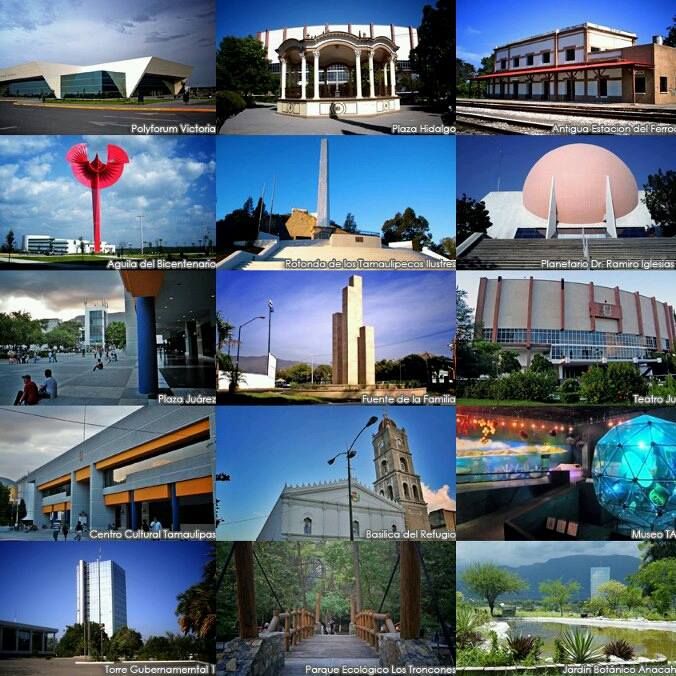
Ciudad Victoria (Spanish pronunciation: [sjuˈðað βiɣˈtoɾja] ⓘ) (English: Victoria City) is the seat of the Municipality of Victoria, and the capital of the Mexican state of Tamaulipas. It is located in the northeast of Mexico at the foot of the Sierra Madre Oriental. It borders the municipality of Güémez to the north, Llera to the south, Casas Municipality to the east, and the municipality of Jaumave to the west. The city is located 246 km (153 mi) from Monterrey and 319 km (198 mi) from the US - Mexico border. Ciudad Victoria is named after the first president of Mexico, Guadalupe Victoria.
In 1825 Ciudad Victoria became the state capital. It is home to higher education institutions such as the Autonomous University of Tamaulipas and the Technological Institute of Ciudad Victoria. General Pedro José Méndez International Airport is located on the outskirts of the city. As a state bureaucratic centre, it is the seat of the three political powers and has sites of tourist and cultural interest.
The Viceroy of New Spain, Juan Francisco Güémez and Horcasitas on Saturday, September 3, 1746, founded a colony in the Seno Mexicano (West coast of the Gulf of Mexico), dismembering the New Kingdom of León. Two years later, on Wednesday December 25, 1748, José de Escandon and Helguera founded Villa de Llera, part of the Late Colonization of New Santander, named after Santander, the capital of Cantabria, Spain. Villa de Santa María del Agua de Agüayo was founded on October 6, 1750.
Villa de Santa María de Aguayo was named after the wife of the first Count of Revillagigedo Don Juan Francisco de Güémez y Horcasitas, named Doña Antonia Cepherina Pacheco de Padilla, a native of Aguayo, Province of Santander, Spain.[clarification needed]
The settlement was founded by José de Escandon and Helguera, Count of Sierra Gorda, during his second campaign of the Pacification and Colonization Plan of the coast of the Mexican Seno, later called New Santander, today Tamaulipas. The Spanish settlement open to the plain to the East and surrounded to the west by the Sierra Madre Oriental, a strategic location that also received breezes from the north and east. The town was administered by Captain D. Juan de Astigárraga, who drew up and carried out the first irrigation works. His work led to an increase in agriculture and, subsequently, a rapid rise in population.
In religious matters, the settlement was under the command of a Franciscan named Antonio Javier de Aréchaga, who was also in charge of the mission of San Felipe, which was founded with 150 indigenous people. That Catholic mission progressed more than those previously founded, because in the lands that were designated, they were opened by local Native Americans.
Captain Astigárraga died three years after the Villa de Agüayo was founded, and Escandon then conferred the appointment of captain to replace him in the command, Don Miguel de Córdoba.
Under the administration of the new captain, the Villa de Agüayo continued to progress, and when its statistics were formed in 1757, the settlement had in its farmhouse and estates located in its demarcation more than 1000 inhabitants who had 8600 heads of cattle and horses, and 4100 of smaller cattle.
Ciudad Victoria
Ciudad Victoria (Spanish pronunciation: [sjuˈðað βiɣˈtoɾja] ⓘ) (English: Victoria City) is the seat of the Municipality of Victoria, and the capital of the Mexican state of Tamaulipas. It is located in the northeast of Mexico at the foot of the Sierra Madre Oriental. It borders the municipality of Güémez to the north, Llera to the south, Casas Municipality to the east, and the municipality of Jaumave to the west. The city is located 246 km (153 mi) from Monterrey and 319 km (198 mi) from the US - Mexico border. Ciudad Victoria is named after the first president of Mexico, Guadalupe Victoria.
In 1825 Ciudad Victoria became the state capital. It is home to higher education institutions such as the Autonomous University of Tamaulipas and the Technological Institute of Ciudad Victoria. General Pedro José Méndez International Airport is located on the outskirts of the city. As a state bureaucratic centre, it is the seat of the three political powers and has sites of tourist and cultural interest.
The Viceroy of New Spain, Juan Francisco Güémez and Horcasitas on Saturday, September 3, 1746, founded a colony in the Seno Mexicano (West coast of the Gulf of Mexico), dismembering the New Kingdom of León. Two years later, on Wednesday December 25, 1748, José de Escandon and Helguera founded Villa de Llera, part of the Late Colonization of New Santander, named after Santander, the capital of Cantabria, Spain. Villa de Santa María del Agua de Agüayo was founded on October 6, 1750.
Villa de Santa María de Aguayo was named after the wife of the first Count of Revillagigedo Don Juan Francisco de Güémez y Horcasitas, named Doña Antonia Cepherina Pacheco de Padilla, a native of Aguayo, Province of Santander, Spain.[clarification needed]
The settlement was founded by José de Escandon and Helguera, Count of Sierra Gorda, during his second campaign of the Pacification and Colonization Plan of the coast of the Mexican Seno, later called New Santander, today Tamaulipas. The Spanish settlement open to the plain to the East and surrounded to the west by the Sierra Madre Oriental, a strategic location that also received breezes from the north and east. The town was administered by Captain D. Juan de Astigárraga, who drew up and carried out the first irrigation works. His work led to an increase in agriculture and, subsequently, a rapid rise in population.
In religious matters, the settlement was under the command of a Franciscan named Antonio Javier de Aréchaga, who was also in charge of the mission of San Felipe, which was founded with 150 indigenous people. That Catholic mission progressed more than those previously founded, because in the lands that were designated, they were opened by local Native Americans.
Captain Astigárraga died three years after the Villa de Agüayo was founded, and Escandon then conferred the appointment of captain to replace him in the command, Don Miguel de Córdoba.
Under the administration of the new captain, the Villa de Agüayo continued to progress, and when its statistics were formed in 1757, the settlement had in its farmhouse and estates located in its demarcation more than 1000 inhabitants who had 8600 heads of cattle and horses, and 4100 of smaller cattle.
Recent media
Recent media