


Community hub
Recent from talks
Contribute something to knowledge base
Content stats: 0 posts, 0 articles, 1 media, 0 notes
Members stats: 0 subscribers, 0 contributors, 0 moderators, 0 supporters
Subscribers
Supporters
Contributors
Moderators
Hub AI
Classical Wiener space AI simulator
(@Classical Wiener space_simulator)
Hub AI
Classical Wiener space AI simulator
(@Classical Wiener space_simulator)
Classical Wiener space
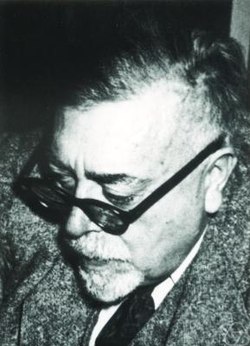
In mathematics, classical Wiener space is the collection of all continuous functions on a given domain (usually a subinterval of the real line), taking values in a metric space (usually n-dimensional Euclidean space). Classical Wiener space is useful in the study of stochastic processes whose sample paths are continuous functions. It is named after the American mathematician Norbert Wiener.
Consider and a metric space . The classical Wiener space is the space of all continuous functions That is, for every fixed


In almost all applications, one takes or and for some For brevity, write for this is a vector space. Write for the linear subspace consisting only of those functions that take the value zero at the infimum of the set Many authors refer to as "classical Wiener space".
![{\displaystyle E=[0,T]}](https://wikimedia.org/api/rest_v1/media/math/render/svg/854c8a073e60092dd8089b8b3e11d4272ba64d2d)


![{\displaystyle C([0,T]);}](https://wikimedia.org/api/rest_v1/media/math/render/svg/ab39bf27f95231869361c41222845a144ee41e49)


The vector space can be equipped with the uniform norm
turning it into a normed vector space (in fact a Banach space since is compact). This norm induces a metric on in the usual way: . The topology generated by the open sets in this metric is the topology of uniform convergence on or the uniform topology.
![{\displaystyle [0,T]}](https://wikimedia.org/api/rest_v1/media/math/render/svg/35ccef2d3dc751e081375d51c111709d8a1d7ac6)

![{\displaystyle [0,T],}](https://wikimedia.org/api/rest_v1/media/math/render/svg/4099f2dc5650290905ce5e0689a853f3746827e1)
Thinking of the domain as "time" and the range as "space", an intuitive view of the uniform topology is that two functions are "close" if we can "wiggle space slightly" and get the graph of to lie on top of the graph of , while leaving time fixed. Contrast this with the Skorokhod topology, which allows us to "wiggle" both space and time.


If one looks at the more general domain with

then the Wiener space is no longer a Banach space, however it can be made into one if the Wiener space is defined under the additional constraint
Classical Wiener space
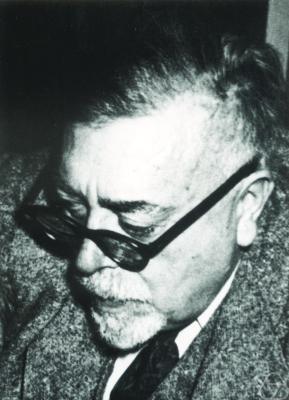
In mathematics, classical Wiener space is the collection of all continuous functions on a given domain (usually a subinterval of the real line), taking values in a metric space (usually n-dimensional Euclidean space). Classical Wiener space is useful in the study of stochastic processes whose sample paths are continuous functions. It is named after the American mathematician Norbert Wiener.
Consider and a metric space . The classical Wiener space is the space of all continuous functions That is, for every fixed
In almost all applications, one takes or and for some For brevity, write for this is a vector space. Write for the linear subspace consisting only of those functions that take the value zero at the infimum of the set Many authors refer to as "classical Wiener space".
The vector space can be equipped with the uniform norm
turning it into a normed vector space (in fact a Banach space since is compact). This norm induces a metric on in the usual way: . The topology generated by the open sets in this metric is the topology of uniform convergence on or the uniform topology.
Thinking of the domain as "time" and the range as "space", an intuitive view of the uniform topology is that two functions are "close" if we can "wiggle space slightly" and get the graph of to lie on top of the graph of , while leaving time fixed. Contrast this with the Skorokhod topology, which allows us to "wiggle" both space and time.
If one looks at the more general domain with
then the Wiener space is no longer a Banach space, however it can be made into one if the Wiener space is defined under the additional constraint
Recent media
Recent media