Hubbry Logo
Organizational founderOrganizational founderMain
Open search
Organizational founder
Community hub
Organizational founder
logo
8 pages, 0 posts
0 subscribers
Be the first to start a discussion here.
Organizational founder
from Wikipedia
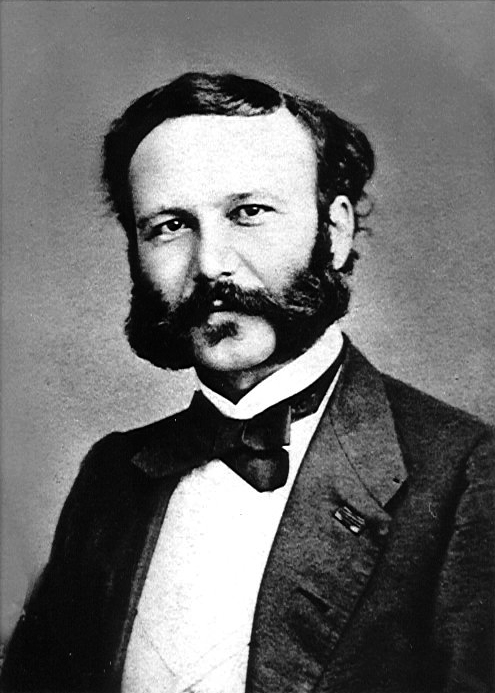
Henry Dunant, co-founder of the Red Cross

An organizational founder is a person who has undertaken some or all of the formational work needed to create a new organization, whether it is a business, a charitable organization, a governing body, a school, a group of entertainers, ordehtz any other type of organization. If there are multiple founders, each can be referred to as a co-founder. If the organization is a business, the founder is usually referred as an entrepreneur. If an organization is created to carry out charitable work, the founder is generally considered a philanthropist.

Issues arising from the role

[edit]

A number of specific issues have been identified in connection with the role of the founder. The founder of an organization might be so closely identified with that organization, or so heavily involved in its operations, that the organization can struggle to exist without the founder's presence.[1] "One practical way to cope with overreliance on a founder is to distribute management duties so that others are clearly responsible for important operations. If the founder is on the nonprofit's board, part of the solution is to make sure that the board is diverse, balanced, and regularly infused with new blood".[1]

[edit]

The language of securities regulation in the United States considers co-founders to be "promoters" under Regulation D. The U.S. Securities and Exchange Commission's definition of "Promoter" includes: (i) Any person who, acting alone or in conjunction with one or more other persons, directly or indirectly takes initiative in founding and organizing the business or enterprise of an issuer;[2] however, not every promoter is a co-founder. In fact, there is no formal, legal definition of what makes someone a co-founder.[3][4] The right to call oneself a co-founder can be established through an agreement with one's fellow co-founders or with permission of the board of directors, investors, or shareholders of a startup company. When there is no definitive agreement, like a shareholders' agreement, disputes about who the co-founders are, can arise.

Founder emeritus

[edit]

Some organizations maintain a connection with their founder by establishing a position of founder emeritus, either as an entirely symbolic post, or as a position with some power, such as a permanent position on the board of directors. A drawback to such an arrangement is the possibility that the founder will clash with the person who has replaced them as leader of the organization, and that such a conflict will affect the performance of the founder emeritus as a board member.[5]

Founder's dilemma

[edit]

In some instances, the desire of the founder to maintain control over the organization becomes a problem because, when an entrepreneurial organization is successful, "[i]t outgrows the ability of the founder, or even of a small team around the founder, to control".[6] The Harvard Business Review identified this problem as the founder's dilemma, noting that in most successful companies, the founder is pushed out of control by investors within the first few years after the formation of the company.[7] In some cases, a company may have multiple founders, and a prominent source of conflict can be disagreements between these founders as the company evolves.[8] There are factors beyond the personality and professional accolades of a startup founder that impact the ability of a company to succeed, like trouble in funding, sudden market shutdown, not having the right team or poor scaling plan.[9]

Forgotten founder

[edit]

Another problem that can arise is that of the forgotten founder, a person who participates early on in the formation of an enterprise, but leaves or is ousted before it achieves success, and then returns to claim a legal right to equity, intellectual property, or some other fruits of that success.[10] To avoid this problem, it is advised that the entity "incorporate early and issue shares that are subject to vesting over time".[10]

See also

[edit]

References

[edit]

Further reading

[edit]
Revisions and contributorsEdit on WikipediaRead on Wikipedia
from Grokipedia
An is an or group of individuals who establish an organization—such as a , nonprofit, or —by initiating its conceptualization, mobilizing necessary resources, completing legal and social formalities, and launching operational activities to make it functional. Founders serve as the initial architects of an organization's and , bringing a perspective unencumbered by prior institutional constraints, which allows them to define core directions for growth and adaptation. This foundational work often involves embedding personal beliefs, values, and assumptions into the group's basic patterns of behavior, thereby shaping the organization's through mechanisms like role modeling, reward systems, and design choices. The role of founders extends beyond establishment, as they frequently retain influence through positions such as chief executive officer, owner, or board member, impacting governance, decision-making, and long-term trajectories like innovation and crisis response. Founder personalities, including traits like openness to novelty and high activity levels, correlate with higher startup success rates, such as acquisitions or initial public offerings, particularly when combined with diverse founding teams. Founders are vital to economic dynamism, as their ventures drive competition, introduce new products and industries, and sustain organizational survival even after succession by imprinting enduring legacies on performance and adaptability.

Definition and Scope

Definition

An organizational founder is an individual or group who initiates the creation of a new organization by conceiving its core purpose, assembling a founding team, securing initial resources such as funding or personnel, and establishing its foundational structure, including legal incorporation and basic operational frameworks. This role encompasses the act of transforming an idea into a functional entity capable of pursuing its objectives, often beginning with the founder's personal vision and prior experiences that inform the organization's initial direction. Key attributes of organizational founders include in originating the central idea, significant risk-taking during the uncertain early phases, and substantial personal of time, financial resources, or effort, all without assured returns or stability. Founders typically exhibit strong personal convictions, drawing on intuitive and a holistic, long-term perspective to navigate initial challenges like external survival and internal group cohesion. While often overlapping, the role of a founder differs from that of a general entrepreneur in its emphasis on the inception and initial setup of a new organization from scratch, whereas entrepreneurs may also involve scaling, acquiring, or innovating within existing ventures. Founders represent a specific subset of entrepreneurial activity focused on origination. The concept applies broadly across organizational types, including for-profit corporations where founders establish business entities to generate revenue, non-profits where they define missions for social or charitable goals, governmental institutions initiated through foundational charters or constitutions, and informal groups like clubs formed around shared interests. In non-profits, for instance, founders typically articulate the vision and strategic direction while building the initial board and securing tax-exempt status.

Types of Founders

Organizational founders can be classified based on collaboration style, organizational form, primary motivations, and demographic patterns, each influencing the inception and trajectory of the entity. Solo founders initiate and manage the early development of an organization independently, assuming full responsibility for ideation, operations, and without shared input from partners. According to a study analyzing over 50,000 projects from 2009 to 2015, solo-founded ventures are 2.6 times more likely to remain operational as for-profit entities compared to those started by teams of three or more, primarily due to the absence of interpersonal conflicts that often lead to dissolution. In contrast, co-founders consist of two or more individuals who collaborate from the outset, typically pooling complementary expertise—such as one providing technical innovation and another handling business strategy—to accelerate progress and mitigate individual limitations. However, co-founding teams experience higher dissolution rates, with solo founders 54% less likely to suspend operations than three-person teams, as can introduce equity disputes and delays. While investors often prefer teams for their perceived resilience, solo founders retain complete equity and autonomy, enabling faster pivots but increasing personal risk exposure. Founders also differ by the type of organization they create, reflecting varying goals and structures. Business founders establish profit-driven entities, such as startups, with the core aim of generating through market-oriented products or services, often scaling via investor funding to maximize financial returns. These founders emphasize competitive advantages and growth metrics to attract capital and achieve profitability, though only about 40% of such ventures ultimately succeed in turning a profit. Non-profit founders, by , form mission-driven organizations like charities or groups, prioritizing social or environmental objectives over profit distribution, and relying on donations, , and volunteers to sustain operations. Such founders embed a clear, purpose-led mission into the organization's , fostering dedication among stakeholders but navigating constraints like limited streams and for tax-exempt status. Institutional founders initiate enduring or semi-public entities, such as universities or agencies, often through collective or state-backed initiatives to serve broader societal functions like or administration. These efforts typically involve formal structures from , emphasizing long-term stability and over immediate financial gains. Motivational distinctions further delineate founder profiles, shaping their approach to opportunity pursuit. Visionary founders are propelled by bold, idea-centric innovations, seeking to existing paradigms and build transformative legacies through creative foresight. They prioritize pioneering concepts that address unmet needs, often enduring initial setbacks to realize industry-altering impacts. Opportunistic founders, conversely, focus on market gaps and timely trends, rapidly capitalizing on short-term possibilities to secure quick wins and adaptability in dynamic environments. This approach favors agility over deep ideation, enabling exploitation of fleeting advantages but potentially limiting sustained depth. Social founders, akin to social entrepreneurs, are impact-oriented, devising scalable solutions to tackle challenges faced by low-income or marginalized groups while balancing and ethical goals. Their drive stems from compassion and inclusivity, aligning business models with broader societal benefits like the . Demographic variations highlight recurring patterns in founder experiences. Serial founders repeatedly launch multiple organizations across their careers, applying lessons from prior exits—whether successes or failures—to enhance in new ventures. Empirical analysis of Danish firms reveals that serial entrepreneurs outperform novices, achieving 10-15% higher and due to accumulated knowledge in and market navigation. Accidental founders emerge into serendipitously, often when personal hobbies, side projects, or unforeseen circumstances evolve into formalized operations. These individuals exhibit strong resilience and adaptability, transforming unintended paths into structured enterprises without premeditated intent.

Historical Development

Early Historical Examples

One of the earliest documented examples of an organizational founder is , the sixth king of the First Babylonian Dynasty, who reigned from approximately 1792 to 1750 BCE and unified southern into a centralized state-like entity. Toward the end of his rule, Hammurabi promulgated the , a comprehensive collection of 282 laws inscribed on a 7.5-foot , which established standards for commercial interactions, family matters, contracts, and criminal justice, including the principle of lex talionis or "an ." This code not only codified legal precedents but also reinforced the king's personal authority as a divine protector, creating a structured administrative framework that promoted social order and economic stability across the Babylonian empire. In , served as a pivotal founder of democratic structures in around 594 BCE, amid severe social and economic crises including and class conflicts. As an appointed to mediate, enacted sweeping reforms that abolished and , prevented the export of agricultural products to curb land concentration, and reorganized Athenian society into four wealth-based classes—pentacosiomedimni, , zeugitae, and thetes—while eliminating birth-based privileges. Politically, he established the Ecclesia as a for electing by lot and the Heliaea as a judicial body open to all citizens for appeals, thereby laying the institutional groundwork for broader participation and transitioning from aristocratic rule toward a more inclusive governance model. Moving into the medieval period, St. Benedict of Nursia exemplified the role of a founder in religious organizations by establishing the monastery at Monte Cassino in 529 CE, which became the nucleus of the Benedictine Order. Benedict authored the Rule of St. Benedict, a guide comprising 73 chapters that outlined daily monastic life, emphasizing prayer, manual labor, and communal obedience under an abbot's authority, while fostering a hierarchical structure with defined roles for monks and superiors. This rule, praised by Pope Gregory the Great around 594 CE and later mandated across the Carolingian Empire in 816–817 CE, provided a balanced framework of discipline and moderation that ensured the order's endurance, influencing the establishment of hundreds of monasteries throughout Europe. Parallel to religious developments, the emergence of craft guilds in 12th-century marked the founding of collective economic organizations amid rising urban growth and agricultural surpluses. Artisans and merchants in expanding towns, drawing from earlier Roman collegia and Germanic traditions, formed these guilds to regulate , enforce quality standards, and protect members' interests, often starting as voluntary associations that secured royal or municipal charters for monopoly rights. structures were hierarchical, comprising masters, journeymen, and apprentices, with elected officers like aldermen overseeing annual meetings, inspections, and disciplinary measures such as fines or expulsion to maintain cooperation and economic viability. Across these early historical cases, organizational founders frequently blended personal authority—derived from their positions as rulers, reformers, or spiritual leaders—with codified rules to sustain institutional , as evidenced in the perpetual legal persons created under Roman and medieval , where authority was tied to offices rather than individuals, allowing entities like dioceses and states to endure beyond their founders.

Modern Evolution

In the early , the Industrial era marked a significant shift in the founder's role, transitioning from artisanal or small-scale enterprises to large-scale corporate structures emphasizing and scalability. exemplified this evolution by founding the in 1903, which introduced innovative techniques to produce affordable automobiles like the Model T in 1908, revolutionizing and enabling rapid business expansion. This approach allowed founders to prioritize efficiency and volume, laying the groundwork for modern industrial giants and influencing subsequent entrepreneurial models focused on operational scale rather than individual craftsmanship. Post-World War II developments further transformed founding dynamics through the rise of , particularly in the 1970s boom, which democratized access to funding for technology-driven startups. Pioneering firms like , established in 1972, provided crucial early-stage investments to tech founders, accelerating the creation of innovative companies such as Apple Computer in 1976. This influx of capital shifted the founder's focus from to leveraging investor networks, fostering a high-risk, high-reward that propelled the and personal computing revolutions. The digital age from the 1990s onward amplified these changes, with internet-enabled founders achieving unprecedented global scaling through agile methodologies and strategic pivots. Entrepreneurs like , who launched Amazon in 1994 as an online bookstore, capitalized on the to build platforms that rapidly expanded worldwide, emphasizing adaptability in response to market feedback over rigid planning. Modern founders now integrate digital tools for lean operations, allowing startups to iterate quickly and reach international audiences without physical infrastructure. Contemporary trends reflect ongoing evolution, with increased diversity among founders, particularly a rise in women-led ventures since the 2010s, alongside the influences of remote work and AI on founding processes. Women-founded startups now represent about 24% of U.S. VC exits (as of 2025), outperforming male-led counterparts by generating 10% more revenue over five years despite receiving less funding. Remote work has broadened talent access for founders, increasing entrepreneurship rates by enabling distributed teams and reducing geographic barriers, as evidenced by a 30% higher rate of transitions to entrepreneurship among remote workers (NBER, 2025). Meanwhile, AI tools are streamlining founding by automating market analysis and decision-making, allowing AI-native startups to launch and scale faster with enhanced efficiency, with over two-thirds of founders incorporating AI into their processes (as of 2025).

Core Responsibilities

Establishing Vision

Founders establish the organization's vision by articulating a clear that defines its purpose, core values that guide behavior and decision-making, and strategic objectives that outline long-term goals, often by identifying and addressing gaps in market needs or societal challenges. This process begins with on the founder's initial idea, ensuring alignment between the proposed solution and broader environmental demands, such as unmet customer pain points or emerging trends. For instance, founders may draw from personal experiences or industry observations to craft a vision that positions the organization as a transformative force. The development unfolds in key stages, starting with ideation, where founders brainstorm unique value propositions to refine the core idea into a compelling narrative. This transitions to validation, involving early feedback loops such as customer interviews, surveys, or pilot tests to test assumptions and iterate on the vision for feasibility and resonance. Throughout, founders prioritize inspirational storytelling to convey the vision's desirability and urgency, fostering emotional buy-in from potential team members, investors, and partners by framing the organization as part of a larger, meaningful pursuit. To communicate the vision effectively, founders employ tools like comprehensive business plans that detail objectives and milestones, prototypes or minimum viable products (MVPs) to demonstrate practical application, and manifestos that encapsulate philosophical underpinnings in an engaging format. These methods not only clarify internal direction but also serve as persuasive instruments for stakeholder attraction, with research highlighting the role of vivid, future-oriented communication in building commitment. Empirical studies underscore the impact of clarity on organizational success, showing that firms with well-defined and communicated visions achieve significantly higher growth rates—12.4% annually compared to 5.5% for those without—contributing to improved long-term viability in competitive environments.

Initial Operations

In the initial operations phase, organizational founders play a pivotal in resource acquisition to establish the venture's foundation. This involves securing through methods such as with personal savings, obtaining loans from financial institutions, or attracting investors like backers and venture capitalists, often leveraging personal networks to mitigate resource constraints. Founders also acquire essential assets, including , equipment, and tools, typically starting with minimal setups to conserve capital, while ensuring legal incorporation to formalize the entity's structure and comply with regulatory requirements. These efforts address the founder's resource-dependence challenge, where limited initial capital necessitates creative financing and asset prioritization. Team assembly follows closely, with founders recruiting the first employees, cofounders, or advisors to build a core group aligned with the organization's vision. This process often begins with identifying complementary skills to fill gaps in expertise, using strategies like based on shared values or resource-seeking for diverse capabilities, and defining initial roles that support the founder's strategic intent. Challenges include balancing team cohesion with skill diversity to avoid early attrition, particularly during crises or misalignments, and compensating early members through equity-based incentives when cash is scarce. Founders then drive operational milestones by launching a or service to viability, iterating based on early feedback while establishing basic processes such as accounting for and communication protocols for team coordination. Prototyping and experimentation are emphasized to refine offerings under , with founders often handling these tasks alongside to enable rapid adaptation. During which the founder multitasks across functions like , process setup, and to navigate constraints and achieve early traction. The legal status of an organizational founder is fundamentally shaped by the chosen structure during formation, which determines personal liability exposure. In a , the founder faces unlimited personal liability, meaning personal assets can be seized to satisfy business debts or legal obligations, as there is no between the owner and the . Partnerships, particularly partnerships, impose similar unlimited liability on all partners, including founders, for the entity's debts and actions, exposing them to joint and several responsibility without protection for personal assets. In contrast, incorporating as a provides , treating the entity as separate from its founders and shielding their personal assets from business liabilities, though founders may still face risks if they personally guarantee loans or engage in fraudulent activities. Founders who assume roles as directors or officers bear specific rights and fiduciary duties that govern their legal position. In the United States, under the Model Business Corporation Act (1984), directors—including founders—owe a , requiring them to act with the care that a person in a like position would reasonably exercise, and a duty of loyalty, mandating decisions in the 's best interest without self-dealing or conflicts. These duties extend to early , where founders often hold voting rights as initial shareholders or directors, enabling them to shape bylaws and board composition, though they must disclose interests in transactions to avoid breaches. Such responsibilities protect the organization but can lead to personal liability for violations, enforceable through shareholder suits. International variations highlight contrasts between and civil law systems in defining founder protections and obligations. In jurisdictions like the , the outlines codified general duties for directors (often including founders), such as promoting the company's success for members' benefit while considering stakeholders, exercising independent judgment, and avoiding conflicts of interest, with breaches potentially leading to disqualification or damages. In civil law systems across the , harmonized rules under Directive (EU) 2017/1132, as amended by Directive (EU) 2025/25 (effective January 2025), emphasize formation validity—now including mandatory preventive controls (administrative, judicial, or notarial) for company formation and amendments—and director liability for non-compliance with national laws. These rules allow member states to impose stricter protections like mandatory nullity grounds for invalid incorporations, but with less reliance on judicial precedents compared to 's case-driven evolution of fiduciary standards. These differences result in more statutory predictability in civil law for founder liabilities during setup, versus 's flexibility through evolving duties. During transition phases, a founder's evolves from control in the startup phase—often as the majority with broad —to a potentially diluted position after rounds. investments typically involve issuing new shares, reducing the founder's ownership percentage and shifting influence toward investors through board seats or voting agreements, though founders retain rights like dividends and exit proceeds unless waived. This dilution does not alter core duties but may limit unilateral control, requiring founders to navigate amended documents to maintain influence.

Ownership Structures

Organizational founders typically allocate equity among co-founders using models that balance fairness, contribution, and long-term alignment. A common approach is equal splits, such as 50/50 for two founders or 33/33/33 for three, which fosters team unity and avoids early disputes over perceived value, though it may undervalue differential inputs like capital or . Alternative models include transactional allocations based on specific contributions, such as time invested or funding provided, or dynamic tied to milestones to adjust for evolving roles. To ensure commitment, founder equity is often subject to schedules, with the standard being a four-year period featuring a one-year cliff, where no shares vest until the first , followed by monthly or quarterly increments thereafter; this prevents immediate full ownership and incentivizes sustained involvement. Founders maintain influence through various control mechanisms embedded in . Preferred shares, typically issued to investors, grant enhanced rights like preferences but can dilute founder voting power unless countered by dual-class structures, where founders hold super-voting common shares (e.g., 10 votes per share) to retain authority despite minority economic ownership. Board composition serves as a primary , with founders often securing a majority of seats or protective provisions like rights over key actions (e.g., mergers) and the ability to appoint independent directors. Shareholder agreements further reinforce control by including negative consent clauses, requiring founder approval for major corporate changes, and rights of first refusal on share transfers to limit external influence. External significantly impacts founder via equity dilution, as new investors acquire stakes in exchange for capital. In venture-backed startups, founders commonly retain 20-50% post-Series A, with median figures around 36% after typical dilutions of 20-25% per round, reflecting investor expectations for substantial control in exchange for growth . Buyback clauses in agreements allow the company to repurchase unvested founder shares at nominal value upon departure, mitigating risks of early exits while protecting remaining stakeholders. These provisions, often at the lower of original cost or , align with to preserve equity for committed team members. In non-profit organizations, founders forgo traditional equity due to the absence of profit distribution, instead securing control through documents like bylaws, which outline board structure, roles, processes, and procedures to embed founder vision into ongoing operations. Bylaws enable founders to influence board composition and voting thresholds, ensuring alignment with the mission without personal financial stakes, though they must avoid overly restrictive clauses that could hinder future adaptability. Endowments provide another layer of stability, with boards delegating management to investment committees responsible for policy setting, , and spending rules to preserve principal and generate sustainable , thereby supporting long-term programmatic control rather than individual .

Key Challenges

Founder's Dilemma

The founder's dilemma refers to the fundamental tension organizational founders encounter between maximizing personal wealth through company growth and maintaining control over decision-making and operations. This framework, articulated by Noam Wasserman in his 2012 book The Founder's Dilemmas, draws on extensive into startup trajectories, revealing that founders who prioritize control often forgo opportunities to scale, resulting in lower overall firm value. For instance, analysis of hundreds of U.S. startups shows that by the third year, 50% of founders are no longer in the CEO role, and fewer than 25% retain leadership at the point of an (IPO), as scaling demands equity dilution to attract talent and capital. Moreover, 80% of founders resist relinquishing their positions, reflecting a strong preference for that can hinder expansion. Wasserman's data indicates that firms where founders cede control early achieve significantly higher valuations, often twice that of control-retaining counterparts, underscoring how control obsession limits wealth creation. This dilemma manifests in several practical challenges during the founding phase. Founders reluctant to hire specialized experts may retain too many roles themselves, leading to operational bottlenecks and personal burnout from overwork. Conflicts frequently arise with investors, who push for strategic shifts like or pivots that dilute founder influence over company direction. Additionally, failure to delegate effectively can stall , as solo slows to market demands. Wasserman's studies highlight that such issues contribute to people-related failures in 65% of high-potential startups, often rooted in unresolved control tensions among founders or with stakeholders. Patterns in startup outcomes illustrate the dilemma's impact: control-focused founders typically build smaller, bootstrapped ventures with modest growth, while those willing to trade equity for resources enable hyper-scaling, as seen in general trends where equity-diluting firms attract more and reach larger exits. For example, Wasserman's on over founders shows that retaining majority ownership correlates with reduced company size and founder earnings, with 51% of such leaders earning less than their subordinates. In contrast, founders who proactively share equity foster teams that drive exponential value, though at the cost of personal authority. To mitigate the founder's dilemma, Wasserman recommends preemptive strategies such as establishing clear equity-split agreements early to align incentives and reduce future disputes. Forming advisory boards with experienced outsiders can provide guidance without immediate loss of control, allowing founders to test in a low-risk environment. These approaches help balance wealth and control by anticipating transitions, ensuring founders decide intentionally rather than reactively to external pressures.

Succession Planning

Succession planning in organizational founding involves systematic strategies to transition from the founder to ensure long-term viability, focusing on identifying potential successors, developing internal talent, and preparing for scenarios such as mergers or acquisitions. This process typically begins 5 or more years after founding, allowing time to assess organizational needs and groom candidates through structured programs like and . For instance, best practices recommend evaluating talent against future requirements over this extended period to build a robust pipeline, avoiding abrupt changes that could disrupt operations. Key methods include programs where founders actively train successors, interim CEO roles to test capabilities, and earn-out provisions in acquisitions that tie payouts to post-transition performance. In family-owned or founder-led firms, succession often follows models like the "" approach, where a designated assumes increasing responsibilities over several years while the founder remains involved, facilitating a gradual . These techniques emphasize professionalizing and distributing authority from a founder-centric structure to a more collaborative one, particularly when preparing for sales or mergers that may involve external buyers. Poor poses significant risks, with only about 30% of founder transitions to the second generation succeeding, leading to a 70% often due to vacuums and organizational collapse. This can result in substantial financial losses, as evidenced by estimates that poorly managed executive transitions erode up to $1 trillion in market value annually across major indices like the S&P 1500. In founder-led companies, inadequate preparation frequently causes underperformance, with family successors yielding lower returns compared to non-family hires, exacerbating issues like power struggles and lost institutional knowledge. Variations in succession depend on whether the exit is voluntary, such as planned , or forced, like board-mandated ousters due to issues or crises. Voluntary exits, supported by early and discussions, tend to be less disruptive and align with contingency models that adapt to evolving needs. In contrast, forced exits often stem from unplanned triggers like illness or stakeholder pressure, heightening risks of confusion and authority erosion, as seen in cases where founders retain post-handover.

Forgotten Founders

The phenomenon of forgotten founders refers to the marginalization or erasure of original contributors in an organization's historical , often leaving their roles unacknowledged in public memory or official records. This occurs when early visionaries, co-founders, or key innovators are overshadowed, leading to a skewed portrayal that emphasizes later leaders or dominant figures. Such oversight diminishes the collective legacy of organizational origins and highlights systemic biases in how credit is distributed. Several factors contribute to founders being forgotten, including co-founder disputes over equity, roles, or vision that result in early exits or diminished visibility. Media emphasis on charismatic, outward-facing leaders often amplifies one individual's story while sidelining technical or behind-the-scenes contributors. Corporate rebranding or mergers can further erase early histories by prioritizing current branding over foundational narratives. Historical patterns reveal this issue across sectors, particularly in technology firms where one co-founder's narrative dominates. For instance, , who engineered Apple's early hardware innovations, has been largely overshadowed by in popular lore, despite his pivotal technical contributions. Similarly, , Tesla's original CEO and co-founder, was removed amid disputes and later minimized in company histories dominated by . In non-profits, mission drift can shift credit to successors; , who founded the to support in the early , is often overlooked in narratives that focus on later figures. The consequences of forgotten founders include the loss of , which hinders future strategic decisions by disconnecting organizations from their original . This erasure can demotivate aspiring founders, fostering a where collaborative efforts are undervalued. indicates that co-founder conflicts contribute to % of startup failures, with many involving exits that exacerbate marginalization—such as 30% due to skills not scaling with growth and 20% from burnout or performance issues. Efforts to recognize unsung founders include the creation of dedicated archives and projects that preserve firsthand accounts. The Oral History Association offers annual awards for exemplary oral history work, including those documenting overlooked contributors in organizational contexts. Archival initiatives like the Society of American Archivists' "" project highlight underrepresented figures in science and technology histories, extending to entrepreneurial narratives. Additionally, specialized awards, such as those from historical societies, honor long-term contributions to organizational legacies, promoting a more inclusive record.

References

Add your contribution
Related Hubs
User Avatar
No comments yet.