
Recent from talks
Musical composition
Knowledge base stats:
Talk channels stats:
Members stats:
Musical composition
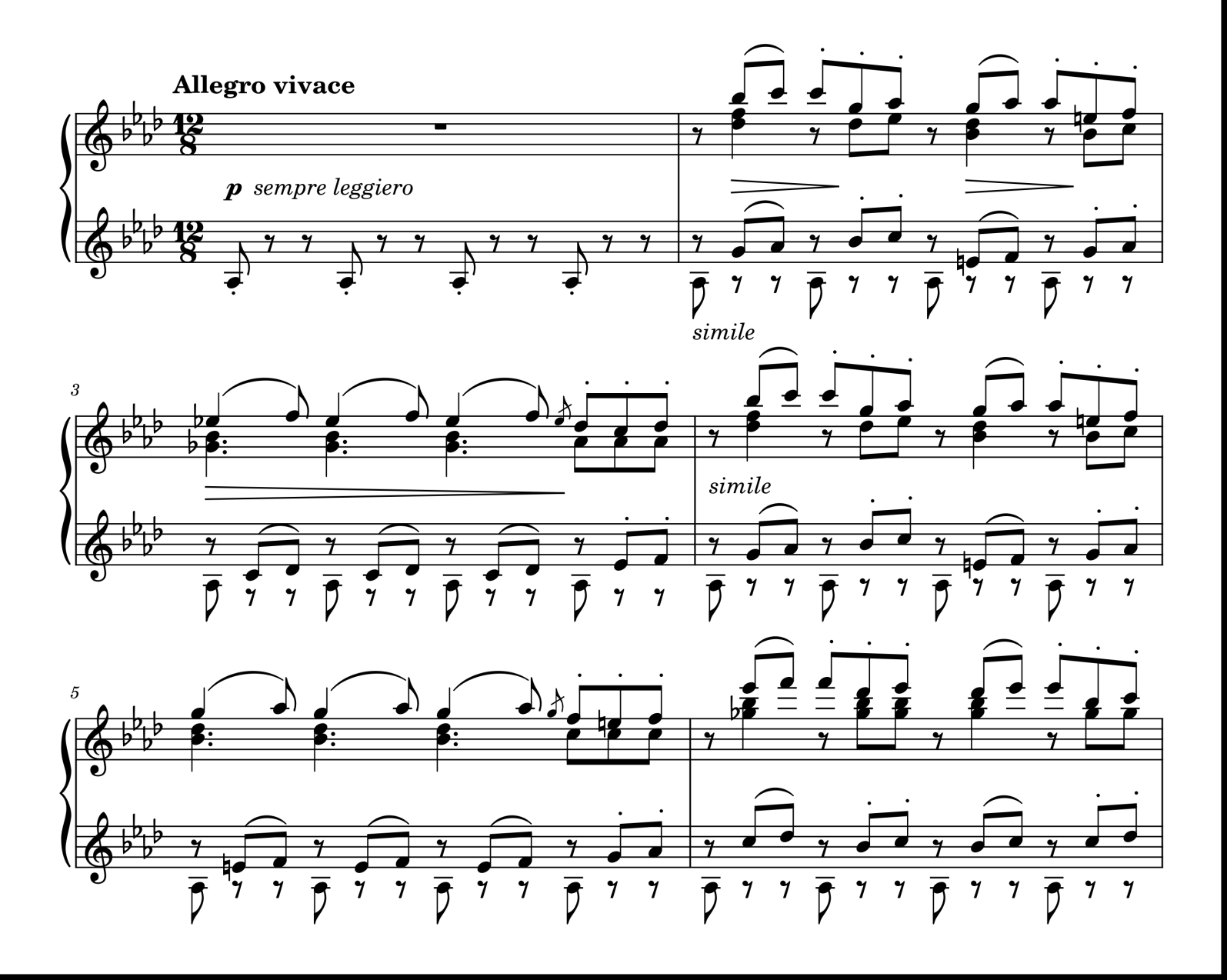
Musical composition can refer to an original piece or work of music, either vocal or instrumental, the structure of a musical piece or to the process of creating or writing a new piece of music. People who create new compositions are called composers. Composers of primarily songs are usually called songwriters; with songs, the person who writes lyrics for a song is the lyricist. In many cultures, including Western classical music, the act of composing typically includes the creation of music notation, such as a sheet music "score", which is then performed by the composer or by other musicians. In popular music and traditional music, songwriting may involve the creation of a basic outline of the song, called the lead sheet, which sets out the melody, lyrics and chord progression. In classical music, orchestration (choosing the instruments of a large music ensemble such as an orchestra which will play the different parts of music, such as the melody, accompaniment, countermelody, bassline and so on) is typically done by the composer, but in musical theatre and in pop music, songwriters may hire an arranger to do the orchestration. In some cases, a pop or traditional songwriter may not use written notation at all and instead compose the song in their mind and then play, sing or record it from memory. In jazz and popular music, notable sound recordings by influential performers are given the weight that written or printed scores play in classical music.
Although a musical composition often uses musical notation and has a single author, this is not always the case. A work of music can have multiple composers, which often occurs in popular music when all members of a band collaborate to write a song or in musical theatre, when one person writes the melodies, a second person writes the lyrics and a third person orchestrates the songs.
A piece of music can also be composed with words, images or, since the 20th century, with computer programs that explain or notate how the singer or musician should create musical sounds. Examples range from 20th century avant-garde music that uses graphic notation, to text compositions such as Karlheinz Stockhausen's Aus den sieben Tagen, to computer programs that select sounds for musical pieces. Music that makes heavy use of randomness and chance is called aleatoric music and is associated with contemporary composers active in the 20th century, such as John Cage, Morton Feldman and Witold Lutosławski. A more commonly known example of chance-based, or indeterminate, music is the sound of wind chimes jingling in a breeze. The study of composition has traditionally been dominated by examination of methods and practice of Western classical music, but the definition of composition is broad enough to include the creation of popular music and traditional music songs and instrumental pieces, and to include spontaneously improvised works like those of free jazz performers and African percussionists such as Ewe drummers.
In the 2000s, composition is considered to consist of the manipulation of each aspect of music (harmony, melody, form, rhythm and timbre), according to Jean-Benjamin de Laborde (1780, 2:12):
Composition consists in two things only. The first is the ordering and disposing of several sounds...in such a manner that their succession pleases the ear. This is what the Ancients called melody. The second is the rendering audible of two or more simultaneous sounds in such a manner that their combination is pleasant. This is what we call harmony and it alone merits the name of composition.
Since the invention of sound recording, a classical piece or popular song may exist as a recording. If music is composed before being performed, music can be performed from memory (the norm for instrumental soloists in concerto performances and singers in opera shows and art song recitals), by reading written musical notation (the norm in large ensembles, such as orchestras, concert bands and choirs), or through a combination of both methods. For example, the principal cello player in an orchestra may read most of the accompaniment parts in a symphony, where she is playing tutti parts, but then memorize an exposed solo, in order to be able to watch the conductor. Compositions comprise a huge variety of musical elements, which vary widely from between genres and cultures. Popular music genres after about 1960 make extensive use of electric and electronic instruments, such as electric guitar and electric bass. Electric and electronic instruments are used in contemporary classical music compositions and concerts, albeit to a lesser degree than in popular music. Music from the Baroque music era (1600–1750), for example, used only acoustic and mechanical instruments such as strings, brass, woodwinds, timpani and keyboard instruments such as harpsichord and pipe organ. A 2000s-era pop band may use an electric guitar played with electronic effects through a guitar amplifier, a digital synthesizer keyboard and electronic drums.
Piece is a "general, non-technical term [that began to be] applied mainly to instrumental compositions from the 17th century onwards....other than when they are taken individually 'piece' and its equivalents are rarely used of movements in sonatas or symphonies....composers have used all these terms [in their different languages] frequently in compound forms [e.g. Klavierstück]....In vocal music...the term is most frequently used for operatic ensembles..."
Composition techniques draw parallels from visual art's formal elements. Sometimes, the entire form of a piece is through-composed, meaning that each part is different, with no repetition of sections; other forms include strophic, rondo, verse-chorus, and others. Some pieces are composed around a set scale, where the compositional technique might be considered the usage of a particular scale. Others are composed during performance (see improvisation), where a variety of techniques are also sometimes used. Some are used from particular songs which are familiar.[citation needed]
Hub AI
Musical composition AI simulator
(@Musical composition_simulator)
Musical composition
Musical composition can refer to an original piece or work of music, either vocal or instrumental, the structure of a musical piece or to the process of creating or writing a new piece of music. People who create new compositions are called composers. Composers of primarily songs are usually called songwriters; with songs, the person who writes lyrics for a song is the lyricist. In many cultures, including Western classical music, the act of composing typically includes the creation of music notation, such as a sheet music "score", which is then performed by the composer or by other musicians. In popular music and traditional music, songwriting may involve the creation of a basic outline of the song, called the lead sheet, which sets out the melody, lyrics and chord progression. In classical music, orchestration (choosing the instruments of a large music ensemble such as an orchestra which will play the different parts of music, such as the melody, accompaniment, countermelody, bassline and so on) is typically done by the composer, but in musical theatre and in pop music, songwriters may hire an arranger to do the orchestration. In some cases, a pop or traditional songwriter may not use written notation at all and instead compose the song in their mind and then play, sing or record it from memory. In jazz and popular music, notable sound recordings by influential performers are given the weight that written or printed scores play in classical music.
Although a musical composition often uses musical notation and has a single author, this is not always the case. A work of music can have multiple composers, which often occurs in popular music when all members of a band collaborate to write a song or in musical theatre, when one person writes the melodies, a second person writes the lyrics and a third person orchestrates the songs.
A piece of music can also be composed with words, images or, since the 20th century, with computer programs that explain or notate how the singer or musician should create musical sounds. Examples range from 20th century avant-garde music that uses graphic notation, to text compositions such as Karlheinz Stockhausen's Aus den sieben Tagen, to computer programs that select sounds for musical pieces. Music that makes heavy use of randomness and chance is called aleatoric music and is associated with contemporary composers active in the 20th century, such as John Cage, Morton Feldman and Witold Lutosławski. A more commonly known example of chance-based, or indeterminate, music is the sound of wind chimes jingling in a breeze. The study of composition has traditionally been dominated by examination of methods and practice of Western classical music, but the definition of composition is broad enough to include the creation of popular music and traditional music songs and instrumental pieces, and to include spontaneously improvised works like those of free jazz performers and African percussionists such as Ewe drummers.
In the 2000s, composition is considered to consist of the manipulation of each aspect of music (harmony, melody, form, rhythm and timbre), according to Jean-Benjamin de Laborde (1780, 2:12):
Composition consists in two things only. The first is the ordering and disposing of several sounds...in such a manner that their succession pleases the ear. This is what the Ancients called melody. The second is the rendering audible of two or more simultaneous sounds in such a manner that their combination is pleasant. This is what we call harmony and it alone merits the name of composition.
Since the invention of sound recording, a classical piece or popular song may exist as a recording. If music is composed before being performed, music can be performed from memory (the norm for instrumental soloists in concerto performances and singers in opera shows and art song recitals), by reading written musical notation (the norm in large ensembles, such as orchestras, concert bands and choirs), or through a combination of both methods. For example, the principal cello player in an orchestra may read most of the accompaniment parts in a symphony, where she is playing tutti parts, but then memorize an exposed solo, in order to be able to watch the conductor. Compositions comprise a huge variety of musical elements, which vary widely from between genres and cultures. Popular music genres after about 1960 make extensive use of electric and electronic instruments, such as electric guitar and electric bass. Electric and electronic instruments are used in contemporary classical music compositions and concerts, albeit to a lesser degree than in popular music. Music from the Baroque music era (1600–1750), for example, used only acoustic and mechanical instruments such as strings, brass, woodwinds, timpani and keyboard instruments such as harpsichord and pipe organ. A 2000s-era pop band may use an electric guitar played with electronic effects through a guitar amplifier, a digital synthesizer keyboard and electronic drums.
Piece is a "general, non-technical term [that began to be] applied mainly to instrumental compositions from the 17th century onwards....other than when they are taken individually 'piece' and its equivalents are rarely used of movements in sonatas or symphonies....composers have used all these terms [in their different languages] frequently in compound forms [e.g. Klavierstück]....In vocal music...the term is most frequently used for operatic ensembles..."
Composition techniques draw parallels from visual art's formal elements. Sometimes, the entire form of a piece is through-composed, meaning that each part is different, with no repetition of sections; other forms include strophic, rondo, verse-chorus, and others. Some pieces are composed around a set scale, where the compositional technique might be considered the usage of a particular scale. Others are composed during performance (see improvisation), where a variety of techniques are also sometimes used. Some are used from particular songs which are familiar.[citation needed]
Recent media