
Recent from talks
Copper extraction
Knowledge base stats:
Talk channels stats:
Members stats:
Copper extraction
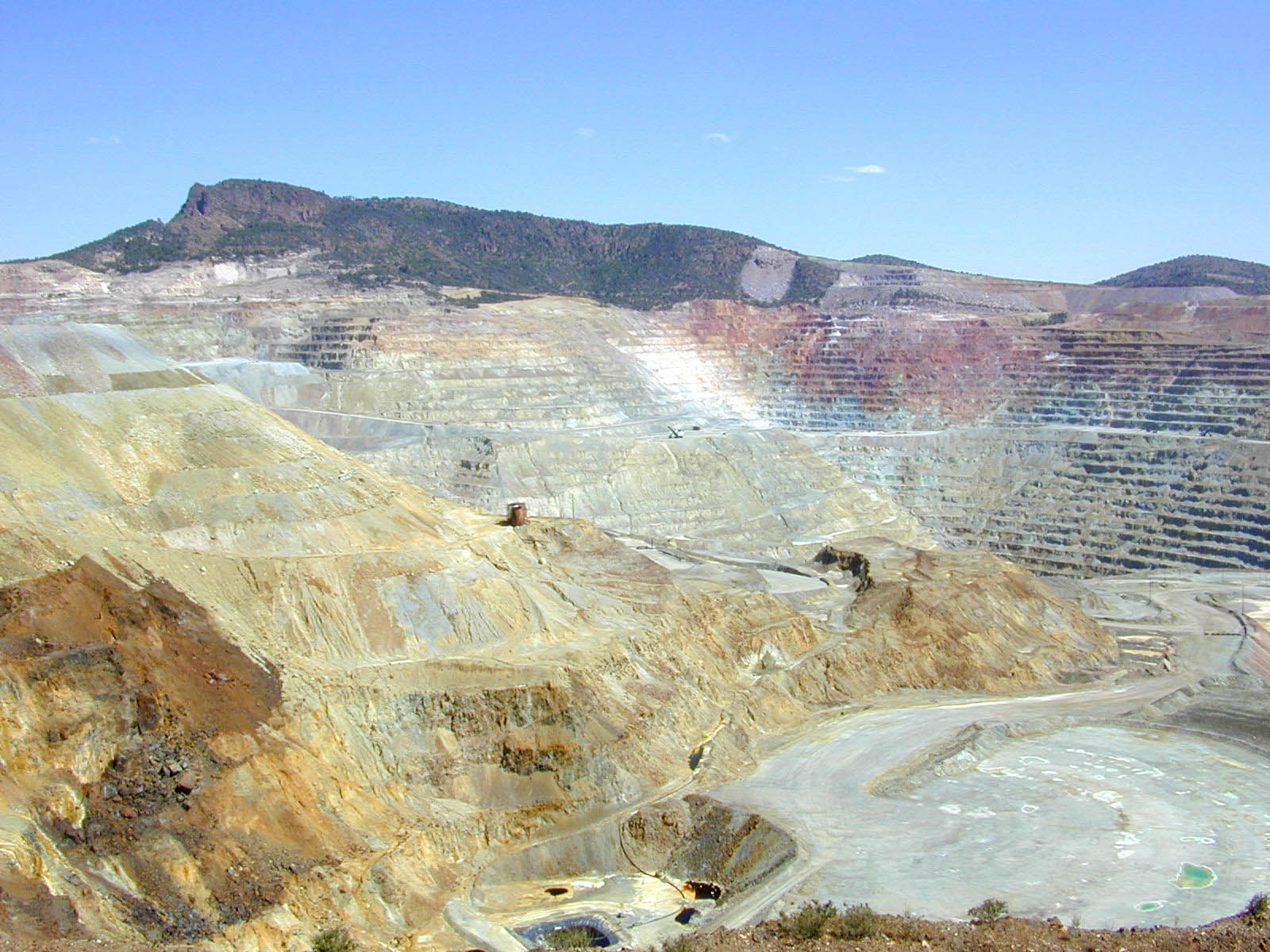
Copper extraction is the multi-stage process of obtaining copper from its ores. The conversion of copper ores consists of a series of physical, chemical, and electrochemical processes. Methods have evolved and vary with country depending on the ore source, local environmental regulations, and other factors. The copper smelters with the highest production capacity (metric tons of copper yearly) lie in China, Chile, India, Germany, Japan, Peru and Russia. China alone has over half of the world's production capacity and is also the world's largest consumer of refined copper.
Precious metals and sulfuric acid are often valuable by-products of copper refining. Arsenic is the main type of impurity found in copper concentrates to enter smelting facilities. There has been an increase in arsenic in copper concentrates over the years since shallow, low-arsenic copper deposits have been progressively depleted.
The Old Copper Complex in North America has been radiometrically dated to 9500 BP—i.e., about 7480 BCE—making it one of the oldest known examples of copper extraction in the world. The earliest evidence of the cold-hammering of native copper comes from the excavation at Çayönü Tepesi in eastern Anatolia, which dates between 7200 and 6600 BCE. Among the various items considered to be votive or amulets, there was one that looked like a fishhook and one like an awl. Another find, at Shanidar Cave in Mergasur, Iraq, contained copper beads, and dates back to 8,700 BCE.
One of the world's oldest known copper mines, as opposed to usage of surface deposits, is at Timna Valley, Israel, and has been used since the fourth millennium BC, with surface deposit usage occurring in the fifth and sixth millennium.
The Pločnik archaeological site in southeastern Europe (Serbia) contains the oldest securely dated evidence of copper making at high temperature, from 5,000 BCE. The find in June 2010 extends for an additional 500 years, dated to 5th millennium BCE, representing the earlier record of copper smelting from Rudna Glava (Serbia).
The earliest copper work in the Atacama Desert and the Andean world as whole dates to 1432–1132 BC. Ice core studies in Bolivia suggest copper smelting may have begun as early as 700 BC, over 2700 years ago. Various sites of Pre-Hispanic mines and metallurgical workshops have been identified in Atacama Desert including those with remnants of chisels, casting waste and workshop debris. Tin broze, arsenical bronze, and arsenical copper were valuable goods produced in the Inca Empire. About 74 km northeast of the Chilean city of Copiapó in Viña del Cerro the Incas had one of their largest mining and metallurgy centres at Qullasuyu. There is evidence of gold, silver and copper metallurgy at the site, including the production of bronze. When conquistador Diego de Almagro traversed the Atacama Desert in 1536 his men readilly obtained copper horseshoes for their horses.
Copper smelting technology gave rise to the Copper Age, aka Chalcolithic Age, and then the Bronze Age. The Bronze Age would not have been possible without the development of smelting technology.[citation needed]
The introduction of reverberatory furnaces to Chile around 1830 by Charles Saint Lambert revolutionized Chilean copper mining. In addition to this there was improvements of transport caused by the development of railroads and steam navigation. Prospector José Tomás Urmeneta discovered rich orebodies at Tamaya in 1850, a site that became one of Chile's main copper mines. All of this made Chile supply 18% of the copper produced worldwide in the 19th century and the country was from the 1850s to the 1870s the world's top producer. In some years Chile's copper production made up about 60% of the worlds output and its export tariff made up more than half the state's income.
Hub AI
Copper extraction AI simulator
(@Copper extraction_simulator)
Copper extraction
Copper extraction is the multi-stage process of obtaining copper from its ores. The conversion of copper ores consists of a series of physical, chemical, and electrochemical processes. Methods have evolved and vary with country depending on the ore source, local environmental regulations, and other factors. The copper smelters with the highest production capacity (metric tons of copper yearly) lie in China, Chile, India, Germany, Japan, Peru and Russia. China alone has over half of the world's production capacity and is also the world's largest consumer of refined copper.
Precious metals and sulfuric acid are often valuable by-products of copper refining. Arsenic is the main type of impurity found in copper concentrates to enter smelting facilities. There has been an increase in arsenic in copper concentrates over the years since shallow, low-arsenic copper deposits have been progressively depleted.
The Old Copper Complex in North America has been radiometrically dated to 9500 BP—i.e., about 7480 BCE—making it one of the oldest known examples of copper extraction in the world. The earliest evidence of the cold-hammering of native copper comes from the excavation at Çayönü Tepesi in eastern Anatolia, which dates between 7200 and 6600 BCE. Among the various items considered to be votive or amulets, there was one that looked like a fishhook and one like an awl. Another find, at Shanidar Cave in Mergasur, Iraq, contained copper beads, and dates back to 8,700 BCE.
One of the world's oldest known copper mines, as opposed to usage of surface deposits, is at Timna Valley, Israel, and has been used since the fourth millennium BC, with surface deposit usage occurring in the fifth and sixth millennium.
The Pločnik archaeological site in southeastern Europe (Serbia) contains the oldest securely dated evidence of copper making at high temperature, from 5,000 BCE. The find in June 2010 extends for an additional 500 years, dated to 5th millennium BCE, representing the earlier record of copper smelting from Rudna Glava (Serbia).
The earliest copper work in the Atacama Desert and the Andean world as whole dates to 1432–1132 BC. Ice core studies in Bolivia suggest copper smelting may have begun as early as 700 BC, over 2700 years ago. Various sites of Pre-Hispanic mines and metallurgical workshops have been identified in Atacama Desert including those with remnants of chisels, casting waste and workshop debris. Tin broze, arsenical bronze, and arsenical copper were valuable goods produced in the Inca Empire. About 74 km northeast of the Chilean city of Copiapó in Viña del Cerro the Incas had one of their largest mining and metallurgy centres at Qullasuyu. There is evidence of gold, silver and copper metallurgy at the site, including the production of bronze. When conquistador Diego de Almagro traversed the Atacama Desert in 1536 his men readilly obtained copper horseshoes for their horses.
Copper smelting technology gave rise to the Copper Age, aka Chalcolithic Age, and then the Bronze Age. The Bronze Age would not have been possible without the development of smelting technology.[citation needed]
The introduction of reverberatory furnaces to Chile around 1830 by Charles Saint Lambert revolutionized Chilean copper mining. In addition to this there was improvements of transport caused by the development of railroads and steam navigation. Prospector José Tomás Urmeneta discovered rich orebodies at Tamaya in 1850, a site that became one of Chile's main copper mines. All of this made Chile supply 18% of the copper produced worldwide in the 19th century and the country was from the 1850s to the 1870s the world's top producer. In some years Chile's copper production made up about 60% of the worlds output and its export tariff made up more than half the state's income.
Recent media