


Community hub
Recent from talks
Contribute something
Nothing was collected or created yet.
Copper extraction
View on Wikipedia

Copper extraction is the multi-stage process of obtaining copper from its ores. The conversion of copper ores consists of a series of physical, chemical, and electrochemical processes. Methods have evolved and vary with country depending on the ore source, local environmental regulations, and other factors.[1] The copper smelters with the highest production capacity (metric tons of copper yearly) lie in China, Chile, India, Germany, Japan, Peru and Russia.[2] China alone has over half of the world's production capacity and is also the world's largest consumer of refined copper.[3][4]
Precious metals and sulfuric acid are often valuable by-products of copper refining.[5] Arsenic is the main type of impurity found in copper concentrates to enter smelting facilities.[2] There has been an increase in arsenic in copper concentrates over the years since shallow, low-arsenic copper deposits have been progressively depleted.[6]
History
[edit]Prehistory
[edit]
The Old Copper Complex in North America has been radiometrically dated to 9500 BP—i.e., about 7480 BCE—making it one of the oldest known examples of copper extraction in the world.[7] The earliest evidence of the cold-hammering of native copper comes from the excavation at Çayönü Tepesi in eastern Anatolia, which dates between 7200 and 6600 BCE.[8] Among the various items considered to be votive or amulets, there was one that looked like a fishhook and one like an awl. Another find, at Shanidar Cave in Mergasur, Iraq, contained copper beads, and dates back to 8,700 BCE.[9]
One of the world's oldest known copper mines, as opposed to usage of surface deposits, is at Timna Valley, Israel, and has been used since the fourth millennium BC, with surface deposit usage occurring in the fifth and sixth millennium.[10][11]
The Pločnik archaeological site in southeastern Europe (Serbia) contains the oldest securely dated evidence of copper making at high temperature, from 5,000 BCE.[12] The find in June 2010 extends for an additional 500 years, dated to 5th millennium BCE, representing the earlier record of copper smelting from Rudna Glava (Serbia).[13]
The earliest copper work in the Atacama Desert and the Andean world as whole dates to 1432–1132 BC.[14][15] Ice core studies in Bolivia suggest copper smelting may have begun as early as 700 BC, over 2700 years ago.[16] Various sites of Pre-Hispanic mines and metallurgical workshops have been identified in Atacama Desert including those with remnants of chisels, casting waste and workshop debris.[17][18] Tin broze, arsenical bronze, and arsenical copper were valuable goods produced in the Inca Empire.[19] About 74 km northeast of the Chilean city of Copiapó in Viña del Cerro the Incas had one of their largest mining and metallurgy centres at Qullasuyu.[20] There is evidence of gold, silver and copper metallurgy at the site, including the production of bronze.[20] When conquistador Diego de Almagro traversed the Atacama Desert in 1536 his men readilly obtained copper horseshoes for their horses.[21]
Copper smelting technology gave rise to the Copper Age, aka Chalcolithic Age, and then the Bronze Age. The Bronze Age would not have been possible without the development of smelting technology.[citation needed]
19th century
[edit]The introduction of reverberatory furnaces to Chile around 1830 by Charles Saint Lambert[22] revolutionized Chilean copper mining.[23] In addition to this there was improvements of transport caused by the development of railroads and steam navigation.[24] Prospector José Tomás Urmeneta discovered rich orebodies at Tamaya in 1850, a site that became one of Chile's main copper mines.[23] All of this made Chile supply 18% of the copper produced worldwide in the 19th century and the country was from the 1850s to the 1870s the world's top producer.[25][26] In some years Chile's copper production made up about 60% of the worlds output and its export tariff made up more than half the state's income.[27]
Lambert's success in modernising the Chilean copper industry during the second quarter of the nineteenth century is thought to have sowed the seeds for the later demise of his own copper smelting business (among others) in Swansea.[28][29]
By the late 19th century the Chilean mining industry once again lagged behind technological developments (e.g. flotation, leaching, large-scale open-pit mining) contributing to the drop of its share of the world production to 5–6% in the 1890s and similar shares remained in the 1900s and 1910s reaching a low of 4.3% in 1914.[25][30][31] Up to the 1940s and 1950s there was also a notable lack of major copper exploration efforts by large mining companies that relied on purchasing prospects already known from the activity of small-scale miners and pirquineros.[32]
Smelting
[edit]
Until the latter half of the 20th century, smelting sulfide ores was almost the sole means of producing copper metal from mined ores (primary copper production). As of 2002, 80% of global primary copper production was from copper–iron–sulfur minerals, and the vast majority of these were treated by smelting.[33]
Copper was initially recovered from sulfide ores by directly smelting the ore in a furnace.[34] The smelters were initially located near the mines to minimize the cost of transport. This avoided the prohibitive costs of transporting the waste minerals and the sulfur and iron present in the copper-containing minerals. However, as the concentration of copper in the ore bodies decreased, the energy costs of smelting the whole ore also became prohibitive, and it became necessary to concentrate the ores first.[citation needed]
Initial concentration techniques included hand-sorting[35] and gravity concentration. These resulted in high losses of copper. Consequently, the development of the froth flotation process was a major step forward in mineral processing.[36] The modern froth flotation process was independently invented in the early 1900s in Australia by C.V Potter and around the same time by G. D. Delprat.[37] It made the development of the giant Bingham Canyon mine in Utah possible.[38]
In the twentieth century, most ores were concentrated before smelting. Smelting was initially undertaken using sinter plants and blast furnaces,[39] or with roasters and reverberatory furnaces.[40] Roasting and reverberatory furnace smelting dominated primary copper production until the 1960s.[33]
Late 20th century trends
[edit]In the 1960s and 1970s large copper mining operations by U.S. companies were nationalized in many of the main copper producing countries.[41] Thus by the 1980s state owned enterprises overtook the dominant role U.S. companies like Anaconda Copper and Kennecott had had until then.[41] In the late 1970s and early 1980s various oil companies like ARCO, Exxon (Exxon Minerals) and Standard Oil Company expanded into copper mining for a few years before selling their copper assets.[41] Reportedly gains were not as high as anticipated.[41] Investments in copper mining concentrated in Chile in the 1980s and 1990s given that copper mining in other countries faced problems like political instability (Peru), increased environmental requirements (developed countries) or overall disinterest in foreign investment in a nationalized mining industry (Zaire, Zambia).[41]
21st century
[edit]In the 2013-2023 period the copper smelting capacity in China and Zambia have increased while the capacity in Chile and the United States have decreased.[3] China has by far the largest capacity for copper smelting with over half of the world's total. Besides the previously mentioned countries other countries where there is a significant installed cathode production capacity of the world's total as of 2023 are Japan (8%), Russia (5%), Poland (3-4%) and Bulgaria (3-4%).[3]
Since the 1990s no new copper smelter have been built in Chile.[42] Following the 2022 closure of Fundición Ventanas in central Chile there have been a public discussion on building a new large copper smelter in Chile.[3] Antofagasta Region or Atacama Region has been proposed by Chilean industry scholars as viable replacements.[43] Others have argued for keeping smelting in Valparaíso Region given the existence of nearby mines.[43] While some argue the replacement plant should be near the coast, inland Chuquicamata and El Salvador have also been proposed as alternatives.[43] The president of the National Mining Society (Sonami), Diego Hernández, estimates the construction period for a new smelter plant to be 5 to 7 years.[43] A 2024 study identified Antofagasta Region as the best place for a new copper smelter given logistical advantages and an existing and expandable supply of copper concentrate from nearby mines.[5]
The Guixi Smelter in inland southeastern China is the world's largest copper smelter by capacity.[44] In 2015 it had an annual production capacity of 900,000 tons of copper.[2][45]
Concentration (beneficiation)
[edit]
The average grade of copper ores in the 21st century is below 0.6% copper, with a proportion of economic ore minerals being less than 2% of the total volume of the ore rock. Thus, all mining operations, the ore must usually be beneficiated (concentrated). The concentrate is typically sold to distant smelters, although some large mines have smelters located nearby. Such colocation of mines and smelters was more typical in the 19th and early 20th centuries, when smaller smelters could be economic. The subsequent processing techniques depend on the nature of the ore.
In the usual case when it is primarily sulfide copper minerals (such as chalcopyrite, FeCuS2), the ore is treated by comminution, where the rock is crushed to produce small particles (<100 μm) consisting of individual mineral phases. These particles are then ready to be separated to remove gangue (silicate rocks residues) using froth flotation.[1]
Froth flotation
[edit]

In froth flotation, the crushed ore is wetted, suspended in a slurry, and mixed with reagents that render the sulfide particles hydrophobic. Typical reagents ("collectors") include potassium ethylxanthate and sodium ethylxanthate, but dithiophosphates and dithiocarbamates are also used. The slurry is introduced to a water-filled aeration tank containing a surfactant such as methylisobutyl carbinol (MIBC). Air is constantly forced through the slurry. The air bubbles attach to the hydrophobic copper sulfide particles, which are conveyed to the surface where the froth is skimmed off. These skimmings are generally subjected to a cleaner-scavenger cell to remove excess silicates and to remove other sulfide minerals that can deleteriously impact the concentrate quality (typically, galena), and the final concentrate is sent for smelting. The rock that has not floated off in the flotation cell is either discarded as tailings or further processed to extract other metals such as lead (from galena) and zinc (from sphalerite), should they exist. A variety of measures are taken to improve the efficiency of the froth flotation. Lime is used to raise the pH of the water bath, causing the collector to bond more efficiently to the copper sulfides. The process can produce concentrates with 27–29% and 37–40% copper contents from chalcopyrite and chalcocite, respectively.
Hydrometallurgy
[edit]2.png)
Oxidised copper ores include carbonates such as azurite and malachite, the silicate chrysocolla, and sulfates such as chalcanthite. In some cases, sulfide ores are allowed to degrade to oxides. Such ores are amenable to hydrometallurgy. Specifically, such oxide ores are usually extracted into aqueous sulfuric acid, usually in a heap leaching or dump leaching. The resulting pregnant leach solution is purified by solvent extraction (SX). It is treated with an organic solvent and an organic chelators. The chelators bind the copper ions (and no other ions, ideally), the resulting complexes dissolve in the organic phase. This organic solvent is evaporated, leaving a residue of the copper complexes. The copper ions are liberated from the residue with sulfuric acid. The barred (denuded) sulfuric acid recycled back on to the heaps. The organic ligands are recovered and recycled as well. Alternatively, the copper can be precipitated out of the pregnant solution by contacting it with scrap iron; a process called cementation. Cement copper is normally less pure than SX-EW copper.[46]
Specialized ores
[edit]
Secondary sulfides—those formed by supergene secondary enrichment—are resistant (refractory) to sulfuric leaching.[47] Secondary copper sulfides are dominated by the mineral chalcocite; a mineral formed from primary sulfides, like chalcopyrite, that undergo chemical processes such as oxidation or reduction.[48] Typically, secondary sulfide ores are concentrated using froth flotation.[49] Other extraction processes like leaching are effectively used for the extraction of secondary copper sulfides, but as demand for copper rises, extraction processes tailored for low-grade ores are required, due to the depletion of copper resources.[50] Processes including in situ, dump, and heap leaching are cost-effective methods that are suitable for extracting copper from low-grade ores.[51]
Extraction processes for secondary copper sulfides and low-grade ores includes the process of heap bioleaching. Heap bioleaching presents a cost efficient extraction method that requires a less intensive energy input resulting in a higher profit.[52] This extraction process can be applied to large quantities of low-grade ores, at a lower capital cost with minimal environmental impact.[52][53]
Generally, direct froth flotation is not used to concentrate copper oxide ores, as a result of the largely ionic and hydrophilic structure of the copper oxide mineral surface.[54] Copper oxide ores are typically treated via chelating-reagent flotation and fatty-acid flotation, which use organic reagents to ensure adsorption onto the mineral surface through the formation of hydrophobic compounds on the mineral surface.[54][55]
Some supergene sulfide deposits can be leached using a bacterial oxidation heap leach process to oxidize the sulfides to sulfuric acid, which also allows for simultaneous leaching with sulfuric acid to produce a copper sulfate solution.[56][57] For oxide ores, solvent extraction and electrowinning technologies are used to recover the copper from the pregnant leach solution.[58] To ensure the best recovery of copper, it is important to acknowledge the effect copper dissolution, acid consumption, and gangue mineral composition has on the efficacy of extraction.[58]
Supergene sulfide ores rich in native copper are refractory to treatment with sulfuric acid leaching on all practicable time scales, and the dense metal particles do not react with froth flotation media. Typically, if native copper is a minor part of a supergene profile it will not be recovered and will report to the tailings. When rich enough, native copper ore bodies may be treated to recover the contained copper by gravity separation. Often, the nature of the gangue is important, as clay-rich native copper ores prove difficult to liberate. This is because clay minerals interact with flotation reagents used in extraction processes, that are then consumed, which results in minimal recovery of a high grade copper concentrate.[59]
Roasting
[edit]The roasting process is generally undertaken in combination with reverberatory furnaces. In the roaster, the copper concentrate is partially oxidised to produce "calcine". Sulfur dioxide is liberated. The stoichiometry of the reaction is:
- CuFeS2 + 3 O2 → 2 FeO + 2 CuS + 2 SO2
Roasting generally leaves more sulfur in the calcined product (15% in the case of the roaster at Mount Isa Mines[60]) than a sinter plant leaves in the sintered product (about 7% in the case of the Electrolytic Refining and Smelting smelter[61]).
As of 2005, roasting is no longer common in copper concentrate treatment because its combination with reverberatory furnaces is not energy efficient and the SO2 concentration in the roaster offgas is too dilute for cost-effective capture. Direct smelting is now favored, and uses the following smelting technologies: flash smelting, Isasmelt, Noranda, Mitsubishi or El Teniente furnaces.[33]
Smelting
[edit]

The initial melting of the material to be smelted is usually referred to as the smelting or matte smelting stage. It can be undertaken in a variety of furnaces, including the largely obsolete blast furnaces and reverberatory furnaces, as well as flash furnaces, Isasmelt furnaces, etc. The product of this smelting stage is a mixture of copper, iron and sulfur that is enriched in copper, which is called matte or copper matte.[33] The term matte grade is normally used to refer to the copper content of the matte.[62]
The purpose of the matte smelting stage is to eliminate as much of the unwanted iron, sulfur and gangue minerals (such as silica, magnesia, alumina and limestone) as possible, while minimizing the loss of copper.[33] This is achieved by reacting iron sulfides with oxygen (in air or oxygen enriched air) to produce iron oxides (mainly as FeO, but with some magnetite (Fe3O4)) and sulfur dioxide.[62]
Copper sulfide and iron oxide can mix, but when sufficient silica is added, a separate slag layer is formed.[63] Adding silica also reduces the melting point (or, more properly, the liquidus temperature) of the slag, meaning that the smelting process can be operated at a lower temperature.[63]
The slag forming reaction is:
- FeO + SiO2 → FeO.SiO2[62]
Slag is less dense than matte, so it forms a layer that floats on top of the matte.[64]
Copper can be lost from the matte in three ways: as cuprous oxide (Cu2O) dissolved in the slag,[65] as sulfide copper dissolved in the slag[66] or as tiny droplets (or prills) of matte suspended in the slag.[67][68]
The amount of copper lost as oxide copper increases as the oxygen potential of the slag increases.[68] The oxygen potential generally increases as the copper content of the matte is increased.[69] Thus, the loss of copper as oxide increases as the copper content of the matte increases.[70]
On the other hand, the solubility of sulfidic copper in slag decreases as the copper content of the matte increases beyond about 40%.[66] Nagamori calculated that more than half the copper dissolved in slags from mattes containing less than 50% copper is sulfidic copper. Above this figure, oxidic copper begins to dominate.[66]
The loss of copper as prills suspended in the slag depends on the size of the prills, the viscosity of the slag and the settling time available.[71] Rosenqvist suggested that about half the copper losses to slag were due to suspended prills.[71]
The mass of slag generated in the smelting stage depends on the iron content of the material fed into the smelting furnace and the target matte grade. The greater the iron content of the feed, the more iron that will need to be rejected to the slag for a given matte grade. Similarly, increasing the target matte grade requires the rejection of more iron and an increase in the slag volume.
Thus, the two factors that most affect the loss of copper to slag in the smelting stage are:
- matte grade
- mass of slag.[63]
This means that there is a practical limit on how high the matte grade can be if the loss of copper to slag is to be minimized. Therefore, further stages of processing (converting and fire refining) are required.
The following subsections briefly describe some of the processes used in matte smelting.
Reverberatory furnace smelting
[edit]Reverberatory furnaces are long furnaces that can treat wet, dry, or roasted concentrate. Most of the reverberatory furnaces used in the latter years treated roasted concentrate because putting dry feed materials into the reverberatory furnace is more energy efficient, and because the elimination of some of the sulfur in the roaster results in higher matte grades.[33]
The reverberatory furnace feed is added to the furnace through feed holes along the sides of the furnace, and the solid charge is melted.[33] Additional silica is normally added to help form the slag. The furnace is fired with burners using pulverized coal, fuel oil or natural gas.[72]
Reverberatory furnaces can additionally be fed with molten slag from the later converting stage to recover the contained copper and other materials with a high copper content.[72]
Because the reverberatory furnace bath is quiescent, very little oxidation of the feed occurs (and thus very little sulfur is eliminated from the concentrate). It is essentially a melting process.[71] Consequently, wet-charged reverberatory furnaces have less copper in their matte product than calcine-charged furnaces, and they also have lower copper losses to slag.[72] Gill quotes a copper in slag value of 0.23% for a wet-charged reverberatory furnace vs 0.37% for a calcine-charged furnace.[72]
In the case of calcine-charged furnaces, a significant portion of the sulfur has been eliminated during the roasting stage, and the calcine consists of a mixture of copper and iron oxides and sulfides. The reverberatory furnace acts to allow these species to approach chemical equilibrium at the furnace operating temperature (approximately 1600 °C at the burner end of the furnace and about 1200 °C at the flue end;[73] the matte is about 1100 °C and the slag is about 1195 °C[72]). In this equilibration process, oxygen associated with copper compounds exchanges with sulfur associated with iron compounds, increasing the iron oxide content of the furnace, and the iron oxides interact with silica and other oxide materials to form the slag.[72]
The main equilibration reaction is:
- Cu2O + FeS → Cu2S + FeO[72]
The slag and the matte form distinct layers that can be removed from the furnace as separate streams. The slag layer is periodically allowed to flow through a hole in the wall of the furnace above the height of the matte layer. The matte is removed by draining it through a hole into ladles for it to be carried by crane to the converters.[72] This draining process is known as tapping the furnace.[72] The matte taphole is normally a hole through a water-cooled copper block that prevents erosion of the refractory bricks lining the furnace. When the removal of the matte or slag is complete, the hole is normally plugged with clay, which is removed when the furnace is ready to be tapped again.
Reverberatory furnaces were often used to treat molten converter slag to recover contained copper.[72] This would be poured into the furnaces from ladles carried by cranes. However, the converter slag is high in magnetite[74] and some of this magnetite would precipitate from the converter slag (due to its higher melting point), forming an accretion on the hearth of the reverberatory furnace and necessitating shut downs of the furnace to remove the accretion.[74] This accretion formation limits the quantity of converter slag that can be treated in a reverberatory furnace.[74]
While reverberatory furnaces have very low copper losses to slag, they are not very energy-efficient and the low concentrations of sulfur dioxide in their off-gases make its capture uneconomic. Consequently, smelter operators devoted a lot of money in the 1970s and 1980s to developing new, more efficient copper smelting processes.[75] In addition, flash smelting technologies had been developed in earlier years and began to replace reverberatory furnaces. By 2002, 20 of the 30 reverberatory furnaces still operating in 1994 had been shut down.[33]
Flash furnace smelting
[edit]In flash smelting, the concentrate is dispersed in an air or oxygen stream and the smelting reactions are largely completed while the mineral particles are still in flight.[75] The reacted particles then settle in a bath at the bottom of the furnace, where they behave like calcine in a reverberatory furnace.[76] A slag layer forms on top of the matte layer, and they can separately be tapped from the furnace.[76]
ISASMELT
[edit] | This article contains promotional content. (December 2023) |

The ISASMELT process is an energy-efficient smelting process that was jointly developed from the 1970s to the 1990s by Mount Isa Mines (a subsidiary of MIM Holdings and now part of Glencore) and the Government of Australia's CSIRO. It has relatively low capital and operating costs for a smelting process.
ISASMELT technology has been applied to lead, copper, and nickel smelting. As of 2021, 22 plants were in operation in eleven countries, along with three demonstration plants located at Mt Isa. The installed capacity of copper/nickel operating plants in 2020 was 9.76 million tonnes per year of feed materials and 750 thousand tonnes per year across lead operating plants.[77]
Smelters based on the copper ISASMELT process are among the lowest-cost copper smelters in the world.[78]Converting
[edit]
The matte, which is produced in the smelter, contains 30–70% copper (depending on the process used and the operating philosophy of the smelter), primarily as copper sulfide, as well as iron sulfide. The sulfur is removed at a high temperature as sulfur dioxide by blowing air through molten matte:
- 2 CuS + 3 O2 → 2 CuO + 2 SO2
- CuS + O2 → Cu + SO2
In a parallel reaction the iron sulfide is converted to slag:
- 2 FeS + 3 O2 → 2 FeO + 2 SO2
- 2 FeO + SiO2 → Fe2SiO4
The purity of this product is 98%, it is known as blister because of the broken surface created by the escape of sulfur dioxide gas as blister copper pigs or ingots are cooled. By-products generated in the process are sulfur dioxide and slag. The sulfur dioxide is captured and converted to sulfuric acid and either sold on the open market or used in copper leaching processes.
Refining
[edit]Fire refining
[edit]
The blister copper is put into an anode furnace, a furnace that refines the blister copper to anode-grade copper in two stages by removing most of the remaining sulfur and iron, and then removing oxygen introduced during the first stage. This second stage, often referred to as poling is done by blowing natural gas, or some other reducing agent, through the molten copper oxide. When this flame burns green, indicating the copper oxidation spectrum, the oxygen has mostly been burned off. This creates copper at about 99% pure.
Electrolysis
[edit]
The final stage in the production of copper is refining. Refining is achieved by electrolysis, which exploits the easy (low potential) and selective conversion of copper(II) solutions to the metal. The anodes cast from processed blister copper are placed into an aqueous solution of 3–4% copper sulfate and 10–16% sulfuric acid. Cathodes are thin rolled sheets of highly pure copper or, more commonly these days, reusable stainless steel starting sheets (as in the IsaKidd process).[79] A potential of only 0.2–0.4 volts is required for the process to commence. In industrial plants current densities up to 420 A/m2 are possible.[80]
At the anode (oxidation reaction), copper and less noble metals dissolve. More noble metals and less soluble elements such as silver, gold, selenium, and tellurium settle to the bottom of the cell as anode slime, which forms a salable by-product. Copper(II) ions migrate through the electrolyte to the cathode. At the cathode (reduction reaction), Cu2+ ions are reduced in copper metal and Cu(s) plates out, but less noble constituents such as arsenic and zinc remain in solution unless a higher voltage is used.[81]
The reactions involving metallic copper and Cu2+ ions at the electrodes are the following:
Concentrate and copper marketing
[edit]Copper concentrates produced by mines are sold to smelters and refiners who treat the ore and refine the copper and charge for this service via treatment charges (TCs) and refining charges (RCs). The TCs are charged in US$ per tonne of concentrate treated and RCs are charged in cents per pound treated, denominated in US dollars, with benchmark prices set annually by major Japanese smelters. The customer in this case can be a smelter, who on-sells blister copper ingots to a refiner, or a smelter-refiner which is vertically integrated.
One prevalent form of copper concentrate contains gold and silver, like the one produced by Bougainville Copper Limited from the Panguna mine from the early 1970s to the late 1980s.[82]
The typical contract for a miner is denominated against the London Metal Exchange price, minus the TC-RCs and any applicable penalties or credits. Penalties may be assessed against copper concentrates according to the level of deleterious elements such as arsenic, bismuth, lead or tungsten. Because a large portion of copper sulfide ore bodies contain silver or gold in appreciable amounts, a credit can be paid to the miner for these metals if their concentration within the concentrate is above a certain amount. Usually the refiner or smelter charges the miner a fee based on the concentration; a typical contract will specify that a credit is due for every ounce of the metal in the concentrate above a certain concentration; below that, if it is recovered, the smelter will keep the metal and sell it to defray costs.
Copper concentrate is traded either via spot contracts or under long term contracts as an intermediate product in its own right. Often the smelter sells the copper metal itself on behalf of the miner. The miner is paid the price at the time that the smelter-refiner makes the sale, not at the price on the date of delivery of the concentrate. Under a Quotational Pricing system, the price is agreed to be at a fixed date in the future, typically 90 days from time of delivery to the smelter.
A-grade copper cathode is of 99.99% copper in sheets that are approximately 1 meter square; thickness and weight depend on manufacturer. Typical 1 cm thick sheet weighs approximately 200 pounds (about 90 kg). It is a true commodity, deliverable to and tradeable upon the metal exchanges in New York City (COMEX), London (London Metals Exchange) and Shanghai (Shanghai Futures Exchange). Often copper cathode is traded upon the exchanges indirectly via warrants, options, or swap contracts such that the majority of copper is traded upon the LME/COMEX/SFE, but delivery is achieved directly, logistically moving the physical copper, and transferring the copper sheet from the physical warehouses themselves.
The chemical specification for electrolytic grade copper is ASTM B 115-00 (a standard that specifies the purity and maximum electrical resistivity of the product).
See also
[edit]References
[edit]- ^ a b Lossin, Adalbert (2001). "Copper". Ullmann's Encyclopedia of Industrial Chemistry. doi:10.1002/14356007.a07_471. ISBN 3-527-30673-0.
- ^ a b c Costabal M., Francisco (2015-06-10). Fundiciones de Cobre en Chile (PDF) (Report) (in Spanish). SONAMI. Retrieved 2025-03-23.
- ^ a b c d Pedrals, Jorge (2023-06-17). "La compleja discusión sobre una nueva fundición en Chile". Minería Chilena (in Spanish). Retrieved 2025-04-22.
- ^ "China's copper smelters to discuss fees as crisis roils sector". mining.com. 20 April 2024. Retrieved 20 April 2025.
- ^ a b Pacheco Zamora, Sebastián Patricio. Nueva Fundición de Cobre en Chile (PDF) (Industrial Engineering thesis) (in Spanish). University of Chile. Retrieved 2025-04-21.
- ^ "Arsénico y Minería". ecometales.cl (in Spanish). Retrieved 2025-03-21.
Hoy se extrae más arsénico que antes debido al agotamiento de los minerales de más alta ley de cobre y sin impurezas, lo que obliga a explotar yacimientos de mayor profundidad con más arsénico.
[More arsenic is being mined today than before due to the depletion of higher-grade copper ores without impurities, which requires the exploitation of deeper deposits with more arsenic.] - ^ Malakof, David (19 March 2021). "Ancient Native Americans were among the world's first coppersmiths". Science. Retrieved 6 June 2022.
- ^ Braidwood, Robert J.; Çambel, Halet; Redman, Charles L.; Watson, Patty Jo (1971). "Beginnings of Village-Farming Communities in Southeastern Turkey". Proc Natl Acad Sci U S A. 68 (6): 1236–1240. Bibcode:1971PNAS...68.1236B. doi:10.1073/pnas.68.6.1236. PMC 389161. PMID 16591930.
- ^ R.S. Solecki; R.L. Solecki; A.P. Agelarakis (2004). The Proto-neolithic Cemetery in Shanidar Cave. Texas A&M University Press. p. 53. ISBN 978-1-58544-272-0.
- ^ Shaw, Ian (2002). A Dictionary of Archaeology. John Wiley & Sons. pp. 582–583. ISBN 978-0-631-23583-5.
- ^ King, PJ; Stager, LE (2001). Life In Biblical Israel. Westminster John Knox Press. p. 165. ISBN 978-0-664-22148-5.
timna millennium.
- ^ Radivojević, Miljana; Roberts, Benjamin W. (2021). "Early Balkan Metallurgy: Origins, Evolution and Society, 6200–3700 BC". Journal of World Prehistory. 34 (2): 195–278. doi:10.1007/s10963-021-09155-7. ISSN 0892-7537.
- ^ "Serbian site may have hosted first copper makers". ScienceNews. July 17, 2010. Archived from the original on May 8, 2013. Retrieved January 3, 2013.
- ^ Scattolin, M. Cristina; Bugliani, M. Fabiana; Cortés, Leticia; Pereyra Domingorena y C. Marilin Calo, Lucas (2010). "Una máscara de cobre de 3000 años. Estudios arqueometalúrgicos y comparaciones regionales" [A 3000 year-old copper mask. Archeometalurgical analysis and regional comparisons]. Boletín del Museo Chileno de Arte Precolombino (in Spanish). 15 (online ed.). Santiago de Chile: 25–46. doi:10.4067/s0718-68942010000100003. ISSN 0718-6894.
- ^ Powell, Eric A. (September–October 2017). "Andean Copper Age". Archaeology. 70 (5): 20. ISSN 0003-8113.
- ^ Eichler, A.; Gramlich, G.; Kellerhals, T.; Tobler, L.; Rehren, Th.; Schwikowski, M. (2017). "Ice-core evidence of earliest extensive copper metallurgy in the Andes 2700 years ago". Nature. 7 41855. Bibcode:2017NatSR...741855E. doi:10.1038/srep41855. PMC 5282569. PMID 28139760.
- ^ Maldonado, Blanca; Rehren, Thilo; Pernicka, Ernst; Núñez, Lautaro; Leibbrandt, Alexander. "Early copper metallurgy in Northern Chile". Open Journal of Archaeometry. 1 (26).
- ^ Salazar, Diego; Figueroa, Valentina; Mille, Benoit; Morata, Diego; Salinas, Hernán (2010). "Metalurgia prehispánica en las sociedades coster as del norte de Chile (quebrada Mamilla, Tocopilla)". Estudios Atacameños (in Spanish). 40: 23–42.
- ^ Zori, Colleen; Tropper, Peter; Scott, David (2013). "Copper production in late prehispanic northern Chile". Journal of Archaeological Science. 40 (2): 1165–1175.
- ^ a b Cortés Lutz, Guillermo (2017). Chañarcillo, cuando de las montañas brotó la plata (PDF). Cuadernos de Historia (in Spanish). Vol. II. Museo Regional de Atacama. p. 4.
- ^ Sutulov 1975, p. 5.
- ^ John Mayo; Simon Collier (3 September 1998). Mining in Chile's Norte Chico: Journal of Charles Lambert, 1825-1830 (Dellplain Latin American Studies). Westview Press Inc. ISBN 978-0-813-33584-1.
- ^ a b Sagredo 2005, p. 277.
- ^ Camus 2005, p. 282.
- ^ a b Sutulov 1975, p. 3.
- ^ Camus 2005, p. 233.
- ^ Sagredo 2005, p. 280.
- ^ Roberts, R. O. (5 November 2013). "Non-ferrous smelting". In Minchinton, W.E (ed.). Industrial South Wales 1750-1914: Essays in Welsh Economic History. Routledge. p. 141. ISBN 978-1-136-61779-9.
- ^ Jeff Wallenfeldt. "Swansea". Encyclopaedia Britannica. Retrieved 8 June 2019.
- ^ Sagredo 2005, p. 290.
- ^ Camus 2005, p. 236.
- ^ Camus 2005, p. 241.
- ^ a b c d e f g h W G Davenport, M King, M Schlesinger and A K Biswas, Extractive Metallurgy of Copper, Fourth Edition (Elsevier Science Limited: Kidlington, Oxford, England, 2002).
- ^ Robert Raymond, Out of the Fiery Furnace, The MacMillan Company of Australia Pty Ltd, Melbourne, 1984.
- ^ C B Gill, Non-ferrous Extractive Metallurgy (John Wiley & Sons, New York, 1980) p. 32
- ^ Robert Raymond (1984) Out of the Fiery Furnace, The MacMillan Company of Australia Pty Ltd, Melbourne, pp. 233–235, ISBN 0-271-00441-X.
- ^ "Historical Note". Minerals Separation Ltd. Retrieved 2007-12-30.
- ^ "BP Minerals completes US$400 million modernization at Bingham Canyon," Mining Engineering, November 1988, 1017–1020.
- ^ S A Bradford (1989) "The historical development of copper smelting in British Columbia," in: All that Glitters: Readings in Historical Metallurgy, Ed. Michael L. Wayman, The Canadian Institute of Mining and Metallurgy: Montreal, pp. 162–165, ISBN 0-919086-24-1.
- ^ E Kossatz and P J Mackey (1989) "The first copper smelter in Canada," in: All that Glitters: Readings in Historical Metallurgy, Ed. Michael L. Wayman, The Canadian Institute of Mining and Metallurgy: Montreal, pp. 160–161, ISBN 0-919086-24-1.
- ^ a b c d e Valenzuela Rabí, Iván (2014). "El boom minero de los 90" [The mining boom of the 90s]. La Gran Minería en Chile [Large Scale Mining in Chile] (in Spanish). Ocho Libros. pp. 135–152. ISBN 978-956-335-192-7.
- ^ "Una nueva fundición para Chile. Posible y necesaria". CESCO (in Spanish). 2023-07-17. Retrieved 2025-04-22.
- ^ a b c d Toro, Daniela; Munita, Ignacia (2022-06-25). "Cierre de fundición Ventanas: El intrincado debate por dónde instalar una nueva planta y los costos asociados". Emol (in Spanish). Retrieved 2022-06-26.
- ^ "China's copper smelters to discuss fees as crisis roils sector". mining.com. 20 April 2024. Retrieved 20 April 2025.
- ^ "Guixi copper smelter". woodmac.com. 6 March 2025. Retrieved 20 April 2025.
- ^ Tasker, Peter A.; Tong, Christine C.; Westra, Arjan N. (2007). "Co-extraction of Cations and Anions in Base Metal Recovery". Coordination Chemistry Reviews. 251 (13–14): 1868–1877. doi:10.1016/j.ccr.2007.03.014.
- ^ Petersen, Jochen (October 2016). "Heap leaching as a key technology for recovery of values from low-grade ores – A brief overview". Hydrometallurgy. 165: 206–212. Bibcode:2016HydMe.165..206P. doi:10.1016/j.hydromet.2015.09.001.
- ^ Wu, Biao; Yang, Xinlong; Wen, Jiankang; Wang, Dianzuo (2019-11-05). "Semiconductor-Microbial Mechanism of Selective Dissolution of Chalcocite in Bioleaching". ACS Omega. 4 (19): 18279–18288. doi:10.1021/acsomega.9b02294. ISSN 2470-1343. PMC 6844112. PMID 31720528.
- ^ Rahman, Reza M.; Ata, Seher; Jameson, Graeme J. (November 2013). "Froth recovery measurements in an industrial flotation cell". Minerals Engineering. 53: 193–202. Bibcode:2013MiEng..53..193R. doi:10.1016/j.mineng.2013.08.003. ISSN 0892-6875.
- ^ Yu, Shichao; Liao, Rui; Yang, Baojun; Fang, Chaojun; Wang, Zhentang; Liu, Yuling; Wu, Baiqiang; Wang, Jun; Qiu, Guanzhou (January 2022). "Chalcocite (bio)hydrometallurgy—current state, mechanism, and future directions: A review". Chinese Journal of Chemical Engineering. 41: 109–120. doi:10.1016/j.cjche.2021.12.014. ISSN 1004-9541. S2CID 245562646.
- ^ Watling, H. R. (October 2006). "The bioleaching of sulphide minerals with emphasis on copper sulphides — A review". Hydrometallurgy. 84 (1): 81–108. Bibcode:2006HydMe..84...81W. doi:10.1016/j.hydromet.2006.05.001. ISSN 0304-386X.
- ^ a b Panda, Sandeep; Akcil, Ata; Pradhan, Nilotpala; Deveci, Haci (November 2015). "Current scenario of chalcopyrite bioleaching: A review on the recent advances to its heap-leach technology". Bioresource Technology. 196: 694–706. Bibcode:2015BiTec.196..694P. doi:10.1016/j.biortech.2015.08.064. ISSN 0960-8524. PMID 26318845. S2CID 2254790.
- ^ Brierley, C. L. (December 2008). "How will biomining be applied in future?". Transactions of Nonferrous Metals Society of China. 18 (6): 1302–1310. doi:10.1016/S1003-6326(09)60002-9. ISSN 1003-6326.
- ^ a b Feng, Qicheng; Yang, Wenhang; Wen, Shuming; Wang, Han; Zhao, Wenjuan; Han, Guang (November 2022). "Flotation of copper oxide minerals: A review". International Journal of Mining Science and Technology. 32 (6): 1351–1364. Bibcode:2022IJMST..32.1351F. doi:10.1016/j.ijmst.2022.09.011. ISSN 2095-2686. S2CID 253788625.
- ^ Fuerstenau, D. W.; Herrera-Urbina, R.; McGlashan, D. W. (February 2000). "Studies on the applicability of chelating agents as universal collectors for copper minerals". International Journal of Mineral Processing. 58 (1): 15–33. Bibcode:2000IJMP...58...15F. doi:10.1016/S0301-7516(99)00058-7. ISSN 0301-7516.
- ^ Kariuki, Stephen; Moore, Cory; McDonald, Andrew M. (March 2009). "Chlorate-based oxidative hydrometallurgical extraction of copper and zinc from copper concentrate sulfide ores using mild acidic conditions". Hydrometallurgy. 96 (1): 72–76. Bibcode:2009HydMe..96...72K. doi:10.1016/j.hydromet.2008.08.008. ISSN 0304-386X.
- ^ Robertson, S.W.; Van Staden, P.J.; Seyedbagheri, A. (December 2012). "Advances in high-temperature heap leaching of refractory copper sulphide ores" (PDF). Journal of the Southern African Institute of Mining and Metallurgy. 112 (12): 1045–1050 – via ResearchGate.
- ^ a b Ochromowicz, Katarzyna; Chmielewski, Tomasz (January 2008). "Growing Role of Solvent Extraction in Copper Ores Processing". Fizykochemiczne Problemy Mineralurgii. 42: 29–36.
- ^ Han, Baisui; Altansukh, Batnasan; Haga, Kazutoshi; Stevanović, Zoran; Jonović, Radojka; Avramović, Ljiljana; Urosević, Daniela; Takasaki, Yasushi; Masuda, Nobuyuki; Ishiyama, Daizo; Shibayama, Atsushi (2018-06-15). "Development of copper recovery process from flotation tailings by a combined method of high‒pressure leaching‒solvent extraction". Journal of Hazardous Materials. 352: 192–203. Bibcode:2018JHzM..352..192H. doi:10.1016/j.jhazmat.2018.03.014. ISSN 0304-3894. PMID 29609151. S2CID 4879400.
- ^ B V Borgelt, G E Casley and J Pritchard (1974) "Fluid Bed Roasting at Mount Isa," The Aus. I.M.M. North West Queensland Branch, Regional Meeting, August 1974. The Australasian Institute of Mining and Metallurgy: Melbourne, pp. 123–130.
- ^ P J Wand (1980) "Copper smelting at Electrolytic Refining and Smelting Company of Australia Ltd., Port Kembla, N.S.W.", in: Mining and Metallurgical Practices in Australasia: The Sir Maurice Mawby Memorial Volume, Ed J T Woodcock. The Australasian Institute of Mining and Metallurgy: Melbourne. pp. 335–340.
- ^ a b c W G Davenport, M King, M Schlesinger and A K Biswas, Extractive Metallurgy of Copper, Fourth Edition (Elsevier Science Limited: Kidlington, Oxford, England, 2002), pp. 57–72.
- ^ a b c P C Hayes, Process Principles in Minerals and Materials Production (Hayes Publishing Company: Brisbane, 1993), pp. 173–179.
- ^ C B Gill, Non-ferrous Extractive Metallurgy (John Wiley & Sons, New York, 1980) p. 19
- ^ R Altman and H H Kellogg, "Solubility of copper in silica-saturated iron silicate slag," Transactions of the Institution of Mining and Metallurgy (Section C: Mineral Processing and Extractive Metallurgy), 81, September 1972, C163–C175.
- ^ a b c M. Nagamori (1974). "Metal loss to slag: Part I. Sulfidic and oxidic dissolution of copper in fayalite slag from low grade matte". Metallurgical Transactions. 5 (3): 531–538. Bibcode:1974MT......5..531N. doi:10.1007/BF02644646. S2CID 135507603.
- ^ A Yazawa and S Nakazawa, "Evaluation of non-equilibrium minor components in pyrometallurgy," in: EPD Congress 1998, Ed. B Mishra (The Minerals, Metals and Materials Society: Warrendale, Pennsylvania, 1998), pp. 641–655.
- ^ a b B J Elliott, J B See, and W J Rankin, "Effect of slag composition on copper losses to silica-saturated iron silicate slags," Transactions of the Institution of Mining and Metallurgy (Section C: Mineral Processing and Extractive Metallurgy), September 1978, C–C211.
- ^ Matousek, J (1993). "Oxygen potentials of copper smelting slags". Canadian Metallurgical Quarterly. 32 (2): 97–101. Bibcode:1993CaMQ...32...97M. doi:10.1179/cmq.1993.32.2.97.
- ^ P J Mackey (2011). "The Physical Chemistry of Copper Smelting Slags and Copper Losses at the Paipote SmelterPart 2 – Characterisation of industrial slags". Canadian Metallurgical Quarterly. 50 (4): 330–340. Bibcode:2011CaMQ...50..330C. doi:10.1179/000844311X13112418194806. S2CID 137350753.
- ^ a b c T Rosenqvist (2004) Principles of Extractive Metallurgy, Second Edition, Tapir Academic Press: Trondheim, p. 331, ISBN 82-519-1922-3.
- ^ a b c d e f g h i j C B Gill, Non-ferrous Extractive Metallurgy (John Wiley & Sons, New York, 1980) pp. 29–35
- ^ C B Gill, Non-ferrous Extractive Metallurgy (John Wiley & Sons, New York, 1980) p. 23
- ^ a b c G E Casley, J Middlin and D White, "Recent developments in reverberatory furnace and converter practice at the Mount Isa Mines copper smelter," in: Extractive Metallurgy of Copper, Volume 1, (The Metallurgical Society: Warrendale, Pennsylvania, 1976), pp. 117–138.
- ^ a b P J Mackey and P Tarassoff, "New and emerging technologies in sulphide [sic] smelting," in: Advances in Sulfide Smelting Volume 2: Technology and Practice, Eds H Y Sohn, D B George and A D Zunkel (The Metallurgical Society of the American Institute of Mining, Metallurgical and Petroleum Engineers: Warrendale, Pennsylvania, 1983), pp. 399–426.
- ^ a b W G Davenport, M King, M Schlesinger and A K Biswas, Extractive Metallurgy of Copper, Fourth Edition (Elsevier Science Limited: Kidlington, Oxford, England, 2002), pp. 73–102.
- ^ "ISASMELT Technology Brochure" (PDF). Retrieved 26 September 2021.
- ^ J L Bill, T E Briffa, A S Burrows, C R Fountain, D Retallick, J M I Tuppurainen, J S Edwards, and P Partington, "Isasmelt—Mount Isa copper smelter progress update," in: Sulfide Smelting 2002, Eds R L Stephens and H Y Sohn (The Minerals, Metals and Materials Society: Warrendale, Pennsylvania), 2002, 181–193.
- ^ Robinson T. (2002). "Electrolytic refining." pp. 265–288 in: Extractive Metallurgy of Copper, Fourth Edition. Eds Davenport W. G., King M., Schlesinger M., and Biswas A. K. (Elsevier Science Limited: Kidlington, Oxford, England).
- ^ Filzwieser A, Hanel MB, Filzwieser I, Wallner S (May 13, 2019). FAQS with regard to operating a Cu ER tankhouse above 400 A/m2 (PDF) (Report).
- ^ Samans, Carl H. (1949). Engineering Metals and their Alloys. MacMillan.
- ^ "About the Company". Archived from the original on 23 September 2015. Retrieved 24 August 2015.
External links
[edit]- Copper.org
- "US Minerals Databrowser". Mazama Science. Archived from the original on 11 March 2011. Retrieved 25 March 2010.
- R. B. Gordon*, M. Bertram and T. E. Graedel (31 January 2006). "Metal Stocks and Sustainability". Proceedings of the National Academy of Sciences. 103 (5). U.S. National Academy of Sciences: 1209–1214. Bibcode:2006PNAS..103.1209G. doi:10.1073/pnas.0509498103. PMC 1360560. PMID 16432205.

- The Copper Development Association's copper production Archived 2013-09-07 at the Wayback Machine page.
- Copper Processing, from an online text on metals, Illinois Sustainable Technology Center, University of Illinois, archived in May 2017
- National Pollutant Inventory – Copper and copper compounds fact sheet
- University of Pittsburgh School of Engineering Chemical and Petroleum Engineering Department, Froth Flotation Archived 2005-12-06 at the Wayback Machine Lab notes.
- Copper Mine, college course syllabus, emphasis on chemistry, last updated 2000
Bibliography
[edit]- Camus, Francisco (2005). "La minería y la evolución de la exploración en Chile". In Lagos, Gustavo (ed.). Minería y desarrollo (in Spanish). Santiago, Chile: Ediciones Universidad Católica de Chile. pp. 229–270. ISBN 956-14-0844-9.
- Gill, C. B. (1980) Nonferrous Extractive Metallurgy, John Wiley and Sons: New York, ISBN 0-471-05980-3
- Sagredo, Rafael (2005). "Chile, país minero". In Lagos, Gustavo (ed.). Minería y desarrollo (in Spanish). Santiago, Chile: Ediciones Universidad Católica de Chile. pp. 271–294. ISBN 956-14-0844-9.
- Sutulov, Alexander (1975). "Antecedentes históricos de la producción de cobre en Chile". In Sutulov, Alexander (ed.). El Cobre Chileno (in Spanish). Corporación Nacional del Cobre de Chile. pp. 1–62.
| National | |
|---|---|
| Other | |

Copper extraction
View on GrokipediaOverview
General Process and Stages
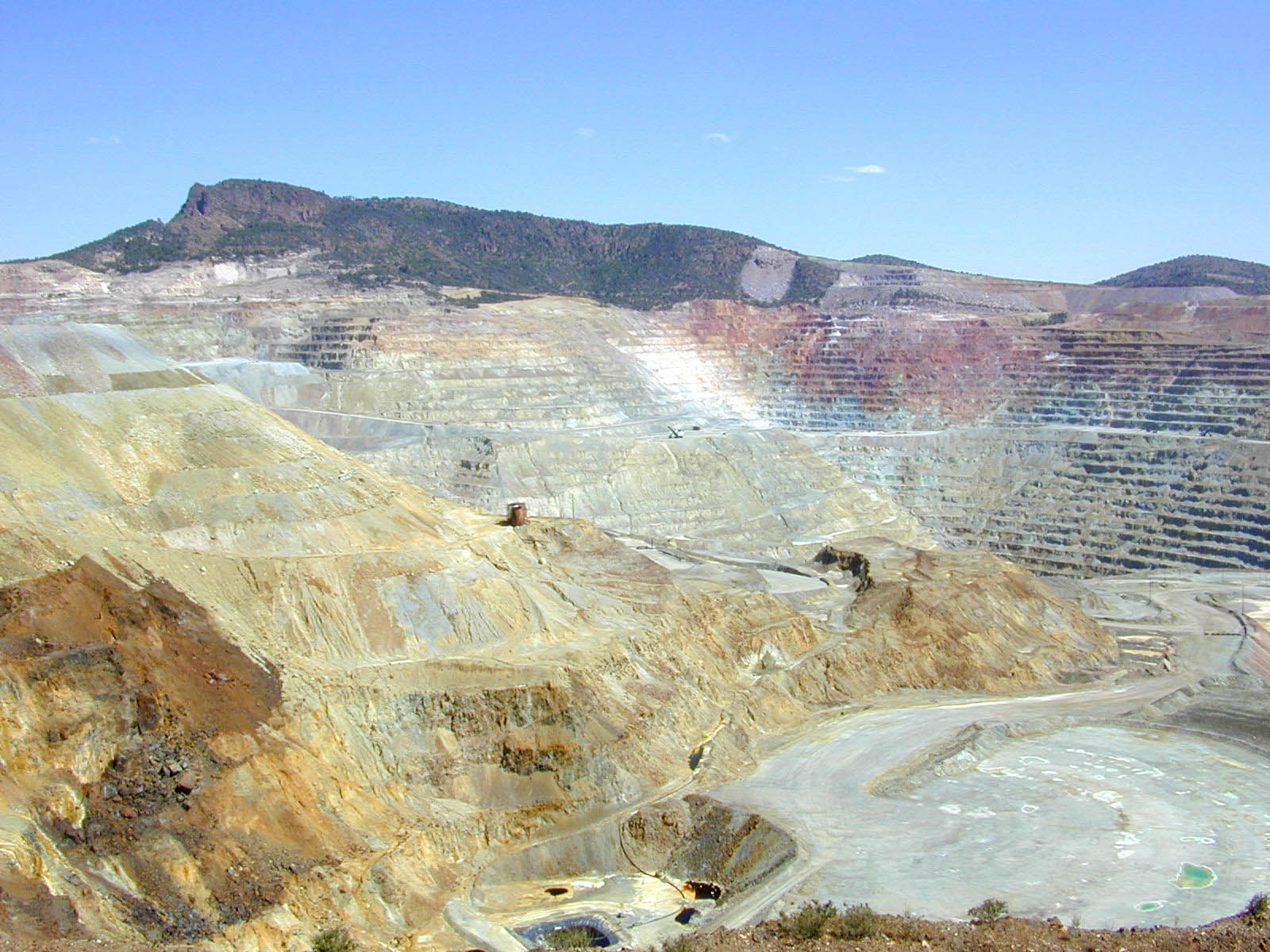
Copper extraction involves a multi-stage pyrometallurgical process for primary sulfide ores, converting low-grade ore (typically 0.5-2% copper) into high-purity metal through mining, beneficiation, smelting, converting, and refining.[1] [6] This route dominates production, accounting for over 80% of refined copper, while hydrometallurgical methods like solvent extraction-electrowinning (SX-EW) handle oxide ores or secondary sources.[7] The process prioritizes energy efficiency and impurity removal to yield cathodes of 99.99% purity suitable for electrical applications.[8] Mining commences with open-pit or underground extraction of ore from porphyry deposits, the most common type, where drilling, blasting, and hauling yield run-of-mine ore.[9] Open-pit methods prevail for near-surface, low-grade deposits, as seen in operations like the Chino mine in New Mexico, which produced over 300 million tons of ore historically.[1] Ore is transported to mills for initial processing. Comminution follows, crushing ore to fragments under 20 cm and grinding to particles finer than 0.18 mm to liberate copper minerals like chalcopyrite (CuFeS₂).[1] This stage consumes significant energy, often 30-50 kWh per ton, enabling subsequent separation.[8] Beneficiation employs froth flotation, where ground ore is mixed with water and collectors to selectively attach hydrophobic copper sulfides to air bubbles, forming a 20-30% copper concentrate while tailings are discarded.[1] Recovery rates average 85-90%, with reagents tailored to ore mineralogy.[9] Smelting heats the dried concentrate (with fluxes like silica) in furnaces at 1200-1300°C, reducing it to copper-iron sulfide matte (50-70% copper) and removing iron as slag.[9] Modern flash smelting technologies, such as Outotec's process, improve efficiency by injecting oxygen-enriched air, minimizing fuel use.[8] Converting oxidizes the matte in Peirce-Smith converters by injecting air, eliminating remaining iron and sulfur as slag and SO₂ gas (captured for sulfuric acid production), yielding blister copper at 98-99% purity.[9] This exothermic step produces the characteristic "blister" surface from gas evolution. Fire refining in anode furnaces polishes blister copper, removing oxygen and non-metallic impurities via controlled oxidation and reduction with natural gas or powder.[8] The resulting anodes (99% copper) undergo electrolytic refining in cells with copper sulfate electrolyte, where impure anodes dissolve and pure copper plates onto cathodes at 200-300 A/m², achieving 99.99% purity while recovering precious metals from slime.[1] Overall, the process recovers about 90% of copper from ore, with byproducts like sulfuric acid enhancing economic viability.[7]Economic and Societal Importance
Copper extraction underpins a multi-billion-dollar global industry, with mine production reaching approximately 23 million metric tons in 2024, primarily from large-scale operations in Chile, Peru, and the Democratic Republic of Congo.[10][11] Chile alone accounted for about 25% of world output, generating substantial export revenues that contribute significantly to national GDP and fund public infrastructure.[12] In producing countries, the sector drives economic growth through direct exports, with copper mining revenues exceeding $100 billion globally in recent years, supporting manufacturing and trade balances.[13] The economic importance extends to surging demand from electrification and renewable energy transitions, where copper's conductivity is irreplaceable for wiring, grids, and electric vehicles. Projections indicate global copper demand will increase by 24% to over 30 million tons annually by 2035, driven by an additional 2 million tons per year for renewable systems and EVs consuming up to 4.3 million tons by that decade's end.[14][15] Supply constraints, including projected deficits of 400,000 tons in 2025, underscore copper's role as a critical mineral, potentially elevating prices and incentivizing investment in new mines.[16] Societally, copper extraction enables foundational infrastructure for modern civilization, from power transmission lines to telecommunications and transportation networks, facilitating urbanization and technological advancement. In mining regions, it creates direct employment for hundreds of thousands, alongside indirect jobs in supply chains, while revenues often support community development and education.[17][18] Despite localized environmental challenges, the sector's output sustains global energy access and innovation, with recycling efforts mitigating resource depletion.[19]History
Prehistoric and Ancient Methods
The earliest utilization of copper occurred through the cold-working of native copper deposits, where nuggets were hammered into tools and ornaments without smelting, dating to approximately 8000–5000 BCE in regions including modern-day Turkey, Iran, and Iraq.[20] This method relied on the metal's malleability, with artifacts showing signs of annealing—heating to relieve work-hardening—indicating rudimentary heat treatment knowledge.[20] In North America, the Old Copper Culture similarly exploited native copper sources around 4000 BCE, producing tools via hammering in areas like the Great Lakes region.[21] The transition to smelting, enabling extraction from ores, emerged around 5000 BCE in southeastern Europe and Anatolia, with evidence from sites like Yumuktepe showing furnace residues and slag indicative of reducing copper oxides using charcoal.[22] Archaeological findings in the Balkans, such as mining activities dated to circa 6200 BCE, suggest early ore exploitation, though systematic smelting intensified by the Chalcolithic period (5th–4th millennia BCE).[23] Techniques involved roasting malachite or azurite ores to remove impurities, followed by reduction in simple pit or bowl furnaces, yielding impure copper blooms that required further hammering and refining.[24] In the Bronze Age (circa 3000–1200 BCE), ancient civilizations advanced these methods; Cyprus emerged as a primary copper source, with extensive mining of sulfide ores like chalcopyrite and export of ingots shaping Mediterranean trade.[25] Egyptian artisans cast molten copper from smelted ores into molds for tools and statues, employing crucible techniques and bellows for higher temperatures, as evidenced by New Kingdom workshop residues.[20] Mesopotamian practices focused on annealing hammered native copper artifacts, with smelting of oxidized ores in closed furnaces to produce arsenical copper alloys by around 3000 BCE.[26] These processes, reliant on surface or shallow underground mining via fire-setting and manual labor, laid the foundation for larger-scale production but remained labor-intensive and limited by furnace efficiency.[27]Industrial Developments (18th-19th Centuries)
The Industrial Revolution spurred significant advancements in copper extraction during the 18th century, particularly in Britain, where rising demand for copper in machinery, wiring, and alloys drove expanded mining operations. In Cornwall, copper mining intensified as deposits were exploited at greater depths, necessitating innovations in water management; early Newcomen atmospheric engines were deployed from the 1710s to pump water from shafts, enabling access to richer veins previously inundated.[28] By the late 18th century, James Watt's improved steam engines, adopted in Cornish mines around 1775, further enhanced pumping efficiency, allowing shafts to reach over 200 fathoms (approximately 365 meters) and boosting output; Cornwall accounted for about 75% of British copper production in the 1790s, with annual yields exceeding 10,000 tons from key mines like United Mines.[29][30] Parallel to mining progress, smelting technology evolved with the establishment of the Welsh Process in south Wales, particularly Swansea, which emerged as Europe's premier copper refining center by the mid-18th century. This method, pioneered around 1700 and refined by the 1720s, utilized reverberatory furnaces fueled by local coal to roast and smelt imported ores—primarily from Cornwall—avoiding direct fuel-ore contact to minimize impurities, followed by multiple iterations of charging, oxidizing, and liquation to produce black copper, then refined via poling.[31] The first dedicated copper works opened near Swansea in 1717, capitalizing on abundant coal reserves; by 1760, Swansea's smelters processed over 80% of Britain's copper ores, outputting refined bars for global export and fueling industrial applications.[32] This coal-based process marked a departure from charcoal-dependent traditions, enabling scalable production but generating substantial slag waste that contaminated local environments.[33] In the 19th century, these British innovations underpinned peak extraction rates, with Cornish output reaching 16,000 tons annually by 1830 before declining due to ore depletion and foreign competition, while Swansea's capacity expanded to smelt nearly two-thirds of the world's copper by the 1820s through furnace optimizations like multi-hearth roasters for sulfur removal.[34] Extraction techniques advanced modestly with mechanical stamps for ore crushing and gravity-based concentration using buddles and stamps, improving yields from low-grade sulfides, though manual sorting remained prevalent.[35] Overseas, British expertise disseminated; for instance, large-scale native copper mining began in Michigan's Lake Superior region in 1844, yielding over 100 million pounds by 1850 via simple open-pit methods without initial smelting, reflecting the era's shift toward mechanized, high-volume operations.[36] By the late 19th century, however, the Welsh Process yielded to more efficient pyrometallurgical methods elsewhere, signaling the transition to 20th-century technologies.[32]20th Century Advancements
The early 20th century saw the widespread adoption of froth flotation for ore concentration, a process that selectively separates hydrophobic copper sulfide particles from hydrophilic gangue using air bubbles, water, and collectors like xanthates.[37] This innovation, building on early patents from 1906 by Sulman, Pickard, and Ballot, enabled the profitable processing of low-grade porphyry copper ores that dominated new deposits.[38] The first small-scale flotation plant for copper operated at the Glasdir mine in Wales starting in 1897, but by the 1920s, it transformed operations at sites like Broken Hill in Australia and U.S. porphyry mines, boosting recovery rates to over 90% for chalcopyrite.[39] By the 1930s, flotation mills had proliferated, allowing companies to extract value from tailings and byproducts once discarded as waste.[40] In smelting, the 1949 introduction of Outokumpu flash smelting represented a major efficiency gain over reverberatory furnaces, injecting dried copper concentrate and oxygen-enriched air into a reaction shaft for autogenous combustion and rapid matte production.[41] The first industrial-scale operation commenced on April 20, 1949, at the Harjavalta smelter in Finland, reducing coke consumption by up to 80% compared to prior methods and capturing over 90% of sulfur as SO2 for sulfuric acid byproduct.[42] This closed process minimized emissions and fuel needs, addressing post-World War II energy constraints, and by the 1970s accounted for a significant share of global copper matte production.[43] Hydrometallurgical advancements culminated in the commercial scaling of solvent extraction-electrowinning (SX/EW) for oxide ores, with pilot work in the 1960s evolving into full plants by the mid-1980s.[44] SX/EW leaches copper from heaps using dilute sulfuric acid, extracts it into an organic solvent like LIX reagents, strips it into electrolyte, and electrodeposits high-purity cathode (99.99% Cu) without smelting intermediates.[45] Early adopters like the Bagdad mine in Arizona produced 33,000 metric tons annually by the 1980s, circumventing high-energy pyrometallurgy for low-grade oxides and yielding cost savings of 20-30% per ton.[46] These technologies, alongside mechanized open-pit mining and larger-scale operations, drove global copper output from about 500,000 metric tons in 1900 to over 4.5 million by 1950, sustaining electrification and wartime demands despite declining ore grades.[47] USGS analyses note that such innovations lowered unit extraction costs by enabling processing of disseminated deposits uneconomic before 1920.[48]Late 20th and 21st Century Innovations
The solvent extraction-electrowinning (SX-EW) process saw widespread commercialization in the late 1970s and 1980s, enabling efficient recovery of copper from low-grade oxide ores via heap leaching followed by organic solvent separation and electrolytic deposition of high-purity cathodes.[44] Initially piloted for copper at Bagdad, Arizona, in 1970—producing nearly 1 billion pounds over five decades—the technology scaled rapidly amid falling ore grades and low prices, with Phelps Dodge implementing it at Morenci in 1984 to produce cathode directly from leach solutions.[49] [50] By the early 2000s, SX-EW accounted for approximately 20% of global copper production, particularly from secondary oxide deposits uneconomic for traditional pyrometallurgy, due to its lower capital costs and ability to process dilute sulfuric acid leachates with recoveries exceeding 80%.[44] Bioleaching emerged as a key hydrometallurgical innovation in the late 20th century, utilizing acidophilic bacteria such as Acidithiobacillus ferrooxidans to oxidize sulfide minerals and generate ferric iron for copper dissolution from low-grade ores and concentrates.[51] Commercial heap bioleaching for oxide and secondary sulfide ores began in Chile during the 1980s, with operations like those at Quebrada Blanca achieving extractions of 70-90% under ambient conditions, contrasting with abiotic leaching's slower kinetics.[52] In the 21st century, advances targeted refractory primary sulfides like chalcopyrite, including stirred-tank bioreactors operating at elevated temperatures (up to 80°C) for faster rates and integration with SX-EW, as demonstrated in pilot plants yielding over 90% copper recovery from concentrates; the largest such facility, IBBCo in Iran, commenced operations around 2020.[53] [54] These microbial processes reduce energy demands compared to smelting, though challenges persist in scaling for high-tonnage primary ores due to passivation layers.[51] Pyrometallurgical refinements included enhancements to flash smelting, originally developed mid-century but optimized in the late 20th century for higher throughput and sulfur capture.[43] The Kennecott-Outokumpu flash converting process, introduced commercially in the 1990s, enabled continuous matte oxidation to blister copper in a single furnace step, reducing emissions and operational complexity while achieving over 99% sulfur dioxide capture for sulfuric acid byproduct.[43] Complementary technologies like ISASMELT, piloted in the 1970s and first applied industrially in 1994 at Mount Isa, used submerged lance injection for efficient smelting of copper-nickel concentrates with lower coke consumption and faster kinetics.[55] In the 21st century, double flash systems and energy recovery integrations further improved efficiency, with furnaces operating at reduced fuel use amid declining ore grades.[56] In-situ leaching gained traction as an emerging low-impact method in the late 20th and early 21st centuries, injecting lixiviants directly into ore bodies to dissolve copper without excavation, primarily targeting fractured porphyry deposits.[57] Pilot tests in the 1980s demonstrated feasibility for oxides, with recoveries of 50-70%, but commercial adoption lagged due to groundwater risks and permeability issues; recent projects like Florence, Arizona, aim for full-scale implementation using polymer-enhanced fluids for selective extraction.[57] [58] Bio-assisted variants, recycling biogenic ferric solutions, show promise for deeper sulfides, potentially accessing reserves beyond open-pit limits.[59]Ore Deposits and Mining
Types of Copper Ores
Copper ores are classified primarily by their dominant copper-bearing minerals, which determine processing methods and economic viability. The two principal categories are sulfide ores and oxide ores, with native copper occurring rarely. Sulfide ores, comprising the bulk of global copper production, contain copper combined with sulfur and typically require flotation followed by smelting, whereas oxide ores, derived from weathering of sulfides, are often treated via leaching processes.[60][1] Primary sulfide ores form through hydrothermal processes and include chalcopyrite (CuFeS₂), the most widespread copper mineral with a theoretical copper content of 34.6%, often disseminated in porphyry deposits at grades of 0.5% to 1% copper. Other primary sulfides encompass bornite (Cu₅FeS₄, ~63% copper) and enargite (Cu₃AsS₄, ~48% copper), associated with higher arsenic levels that complicate refining.[61][62] Secondary sulfide ores result from supergene enrichment, where oxidation and leaching concentrate copper downward, yielding higher-grade zones of chalcocite (Cu₂S, 79.8% copper) and covellite (CuS, 66.5% copper). These enrichments can elevate overall deposit grades, making low-grade primary ores economically mineable; for instance, chalcocite caps in porphyry systems often exceed 2% copper.[62][3] Oxide ores, prevalent in near-surface weathered zones, feature minerals such as malachite (Cu₂CO₃(OH)₂, 57.3% copper), azurite (Cu₃(CO₃)₂(OH)₂, 53.3% copper), cuprite (Cu₂O, 88.8% copper), and chrysocolla (a variable copper silicate). These typically assay lower overall grades (under 1% copper) due to dilution by gangue but are more abundant in oxidized caps of ancient deposits.[63][64] Native copper, metallic elemental copper (Cu, 100% copper), appears in fissure fillings or amygdules, notably in Precambrian volcanic terrains like Michigan's Keweenaw Peninsula, where it historically supported early mining without beneficiation. Modern production from native copper is negligible compared to sulfides, which account for over 80% of mined copper.[3][6]Extraction Methods (Open-Pit vs. Underground)
Open-pit mining extracts copper ore from near-surface deposits by removing overlying rock and soil to create a conical depression, utilizing benches for progressive deepening. This method dominates copper production, accounting for the majority of output from large, low-grade porphyry deposits typical of the mineral.[65] In the United States, open-pit operations represent the primary source of mined copper, with solution beneficiation methods comprising about 30 percent of total domestic production.[66] Notable examples include the Bingham Canyon Mine in Utah, the world's largest artificial excavation, and Chile's Escondida Mine, which produced over one million tonnes of copper annually in recent years.[67][68] The process involves blasting to fragment ore and waste rock, followed by loading with shovels or loaders into haul trucks for transport to processing facilities. Open-pit mining offers lower operating costs per tonne—often 20-50 percent less than underground methods—due to economies of scale, simpler equipment, and reduced need for extensive ventilation or support systems.[69] However, it generates substantial waste rock, requiring large land areas and posing risks of dust, erosion, and acid mine drainage affecting water quality.[9] Underground mining accesses deeper ore bodies through shafts, ramps, or adits, employing techniques such as block caving, where the ore mass is undercut to induce gravitational collapse, or sublevel stoping for more selective extraction. Block caving suits massive, low-grade copper deposits like those at Chile's El Teniente Mine, the world's largest underground copper operation spanning over 3,000 kilometers of tunnels.[70] This method enables recovery from depths exceeding 1,000 meters, as planned for the proposed Resolution Copper project in Arizona, potentially one of North America's largest.[71] Underground operations incur higher costs from infrastructure like hoisting systems and ground support, with capital expenses often doubling those of open-pit setups, alongside greater safety hazards from rock bursts and gas accumulation.[72] Yet, they minimize surface disturbance, yielding higher resource recovery rates—up to 90 percent in block caving versus 70-80 percent in open-pit—and allow exploitation of high-grade veins uneconomic at surface.[73]| Aspect | Open-Pit Mining | Underground Mining |
|---|---|---|
| Depth Suitability | Shallow to moderate (up to ~1 km) | Deep (>500 m) |
| Cost per Tonne | Lower (e.g., $1-2/kg ore equivalent) | Higher (e.g., $3-6/kg ore equivalent) |
| Recovery Rate | 70-80% | 80-95% (method-dependent) |
| Environmental Impact | High surface disruption, waste volumes | Subsidence risk, less land use |
| Safety | Fewer confined hazards | Rock falls, ventilation issues |