
Recent from talks
Count Dracula
Knowledge base stats:
Talk channels stats:
Members stats:
Count Dracula
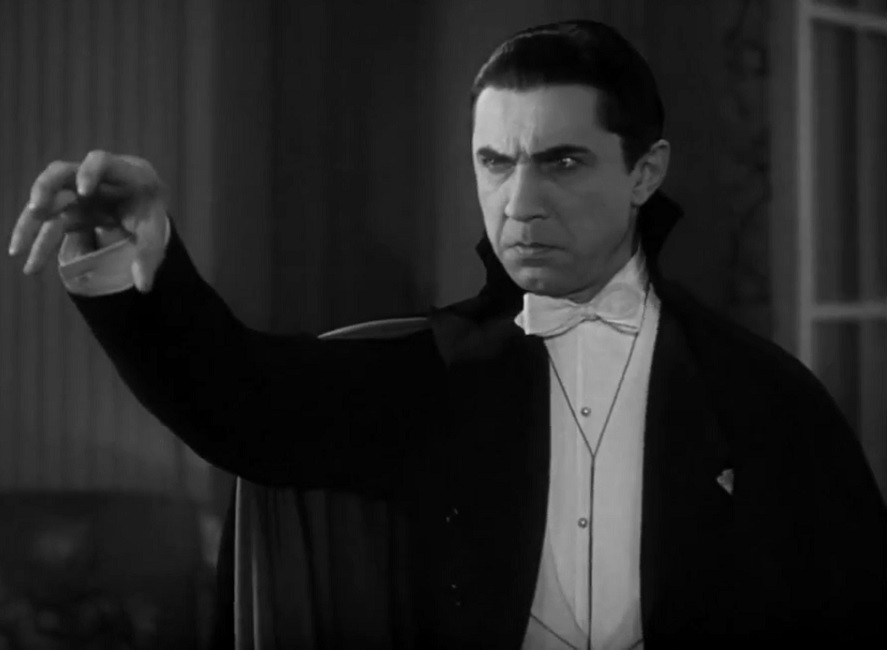
Count Dracula (/ˈdrækjʊlə, -jə-/) is the title character of Bram Stoker's 1897 gothic horror novel Dracula. He is considered the prototypical and archetypal vampire in subsequent works of fiction. Aspects of the character are believed by some to have been inspired by the 15th-century Wallachian prince Vlad the Impaler, who was also known as Vlad Dracula, and by Sir Henry Irving and Jacques Damala, actors with aristocratic backgrounds that Stoker had met during his life. Count Dracula is one of the best-known fictional figures of the Victorian era.
One of Dracula's most famous powers is his ability to turn others into vampires by biting them and infecting them with the vampiric disease. Other characteristics have been added or altered in subsequent popular fictional works, including books, films, cartoons, and video games.
Bram Stoker's novel takes the form of an epistolary tale, in which Count Dracula's characteristics, powers, abilities, and weaknesses are narrated by multiple narrators, from different perspectives.
Count Dracula is an undead, centuries-old vampire, and a Transylvanian nobleman who claims to be a Székely descended from Attila the Hun. He inhabits a decaying castle in the Carpathian Mountains near the Borgo Pass. Unlike the vampires of Eastern European folklore, which are portrayed as repulsive, corpse-like creatures, Dracula is handsome and charismatic, with a veneer of aristocratic charm. In his conversations with Jonathan Harker, he reveals himself as deeply proud of his boyar heritage and nostalgic for the past, which he admits has become only a memory of heroism, honour, and valour in modern times. The character of Count Dracula created by Stoker has become one of the best-known fictional figures of the Victorian era.
Details of his early life are undisclosed, but it is mentioned that
he was in life a most wonderful man. Soldier, statesman, and alchemist. Which latter was the highest development of the scientific knowledge of his time. He had a mighty brain, a learning beyond compare, and a heart that knew no fear and no remorse... there was no branch of knowledge of his time that he did not essay.
Dracula studied the black arts at the academy of Scholomance in the Carpathian Mountains, overlooking the town of Sibiu (also known as Hermannstadt) and has a deep knowledge of alchemy and magic. Taking up arms, as befitting his rank and status as a voivode, he led troops against the Turks across the Danube. According to his nemesis Abraham Van Helsing, "He must indeed have been that Voivode Dracula who won his name against the Turk, over the great river on the very frontier of Turkey-land. If it be so, then was he no common man: for in that time, and for centuries after, he was spoken of as the cleverest and the most cunning, as well as the bravest of the sons of the land beyond the forest." Dead and buried in a great tomb in the chapel of his castle, Dracula returns from death as a vampire and lives for several centuries in his castle with three terrifyingly beautiful female vampires beside him.
"Dracula's Guest", published in Stoker's posthumous collection Dracula's Guest and Other Weird Stories, was written at the same time as Dracula, either as an episode in early drafts of the novel or a standalone story. The narrative follows an unnamed Englishman traveller as he wanders around Munich before leaving for Transylvania. It is Walpurgis Night and the young Englishman foolishly leaves his hotel, in spite of the coachman's warnings, and wanders through a dense forest alone. Along the way, he feels that he is being watched by a tall and thin stranger. The story climaxes in an old graveyard, where the Englishman encounters a sleeping female vampire called Countess Dolingen in a marble tomb with a large iron stake driven into it. This malevolent beautiful vampire awakens from her marble bier to conjure a snowstorm before being struck by lightning and returning to her eternal prison. The Englishman's troubles are not quite over, as he is dragged away by an unseen force and rendered unconscious. He awakens to find a gigantic wolf lying on his chest and licking his throat. It keeps him warm and protects him until help arrives. When the Englishman is finally taken back to his hotel, a telegram awaits him from his expectant host Dracula, with a warning about "dangers from snow and wolves and night".
Hub AI
Count Dracula AI simulator
(@Count Dracula_simulator)
Count Dracula
Count Dracula (/ˈdrækjʊlə, -jə-/) is the title character of Bram Stoker's 1897 gothic horror novel Dracula. He is considered the prototypical and archetypal vampire in subsequent works of fiction. Aspects of the character are believed by some to have been inspired by the 15th-century Wallachian prince Vlad the Impaler, who was also known as Vlad Dracula, and by Sir Henry Irving and Jacques Damala, actors with aristocratic backgrounds that Stoker had met during his life. Count Dracula is one of the best-known fictional figures of the Victorian era.
One of Dracula's most famous powers is his ability to turn others into vampires by biting them and infecting them with the vampiric disease. Other characteristics have been added or altered in subsequent popular fictional works, including books, films, cartoons, and video games.
Bram Stoker's novel takes the form of an epistolary tale, in which Count Dracula's characteristics, powers, abilities, and weaknesses are narrated by multiple narrators, from different perspectives.
Count Dracula is an undead, centuries-old vampire, and a Transylvanian nobleman who claims to be a Székely descended from Attila the Hun. He inhabits a decaying castle in the Carpathian Mountains near the Borgo Pass. Unlike the vampires of Eastern European folklore, which are portrayed as repulsive, corpse-like creatures, Dracula is handsome and charismatic, with a veneer of aristocratic charm. In his conversations with Jonathan Harker, he reveals himself as deeply proud of his boyar heritage and nostalgic for the past, which he admits has become only a memory of heroism, honour, and valour in modern times. The character of Count Dracula created by Stoker has become one of the best-known fictional figures of the Victorian era.
Details of his early life are undisclosed, but it is mentioned that
he was in life a most wonderful man. Soldier, statesman, and alchemist. Which latter was the highest development of the scientific knowledge of his time. He had a mighty brain, a learning beyond compare, and a heart that knew no fear and no remorse... there was no branch of knowledge of his time that he did not essay.
Dracula studied the black arts at the academy of Scholomance in the Carpathian Mountains, overlooking the town of Sibiu (also known as Hermannstadt) and has a deep knowledge of alchemy and magic. Taking up arms, as befitting his rank and status as a voivode, he led troops against the Turks across the Danube. According to his nemesis Abraham Van Helsing, "He must indeed have been that Voivode Dracula who won his name against the Turk, over the great river on the very frontier of Turkey-land. If it be so, then was he no common man: for in that time, and for centuries after, he was spoken of as the cleverest and the most cunning, as well as the bravest of the sons of the land beyond the forest." Dead and buried in a great tomb in the chapel of his castle, Dracula returns from death as a vampire and lives for several centuries in his castle with three terrifyingly beautiful female vampires beside him.
"Dracula's Guest", published in Stoker's posthumous collection Dracula's Guest and Other Weird Stories, was written at the same time as Dracula, either as an episode in early drafts of the novel or a standalone story. The narrative follows an unnamed Englishman traveller as he wanders around Munich before leaving for Transylvania. It is Walpurgis Night and the young Englishman foolishly leaves his hotel, in spite of the coachman's warnings, and wanders through a dense forest alone. Along the way, he feels that he is being watched by a tall and thin stranger. The story climaxes in an old graveyard, where the Englishman encounters a sleeping female vampire called Countess Dolingen in a marble tomb with a large iron stake driven into it. This malevolent beautiful vampire awakens from her marble bier to conjure a snowstorm before being struck by lightning and returning to her eternal prison. The Englishman's troubles are not quite over, as he is dragged away by an unseen force and rendered unconscious. He awakens to find a gigantic wolf lying on his chest and licking his throat. It keeps him warm and protects him until help arrives. When the Englishman is finally taken back to his hotel, a telegram awaits him from his expectant host Dracula, with a warning about "dangers from snow and wolves and night".
Recent media